Secure virtual data room for business: Features and benefits
- Last Updated : July 27, 2026
- 82 Views
- 5 Min Read

A secure data room sounds like a niche tool until you are the one sharing legal files, vendor contracts, or investor documents outside your company.
The upload is easy. The hard-hitting question is: Who can see what, for how long, and what proof will you have later?
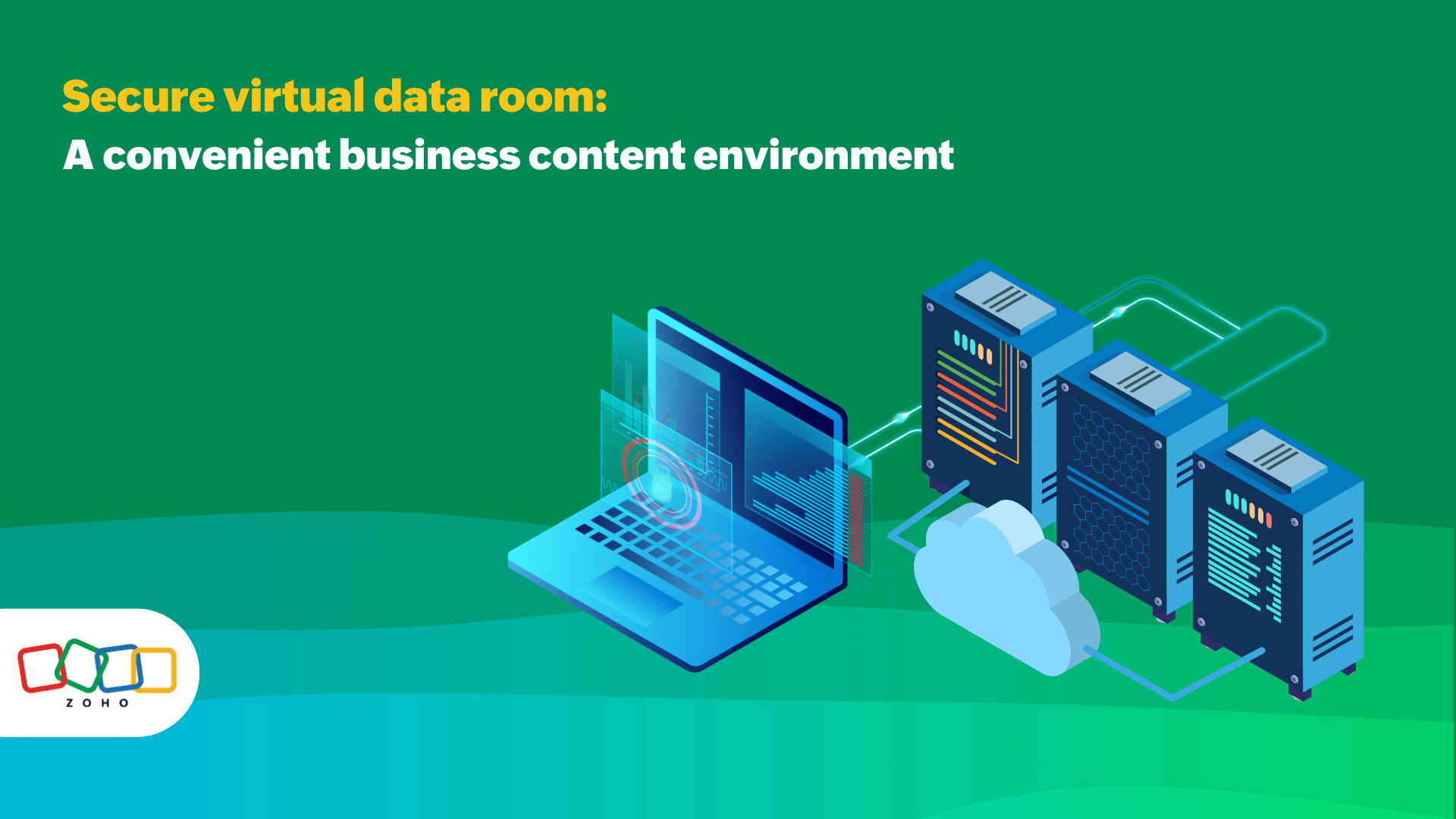
The situation calls for a tightly controlled online workspace for sensitive business documents that combines structured file organization, encryption, granular permissions, identity checks, auditability, and time-bound sharing so companies can collaborate on high-stakes work without losing governance.
What is a secure data room and why it matters
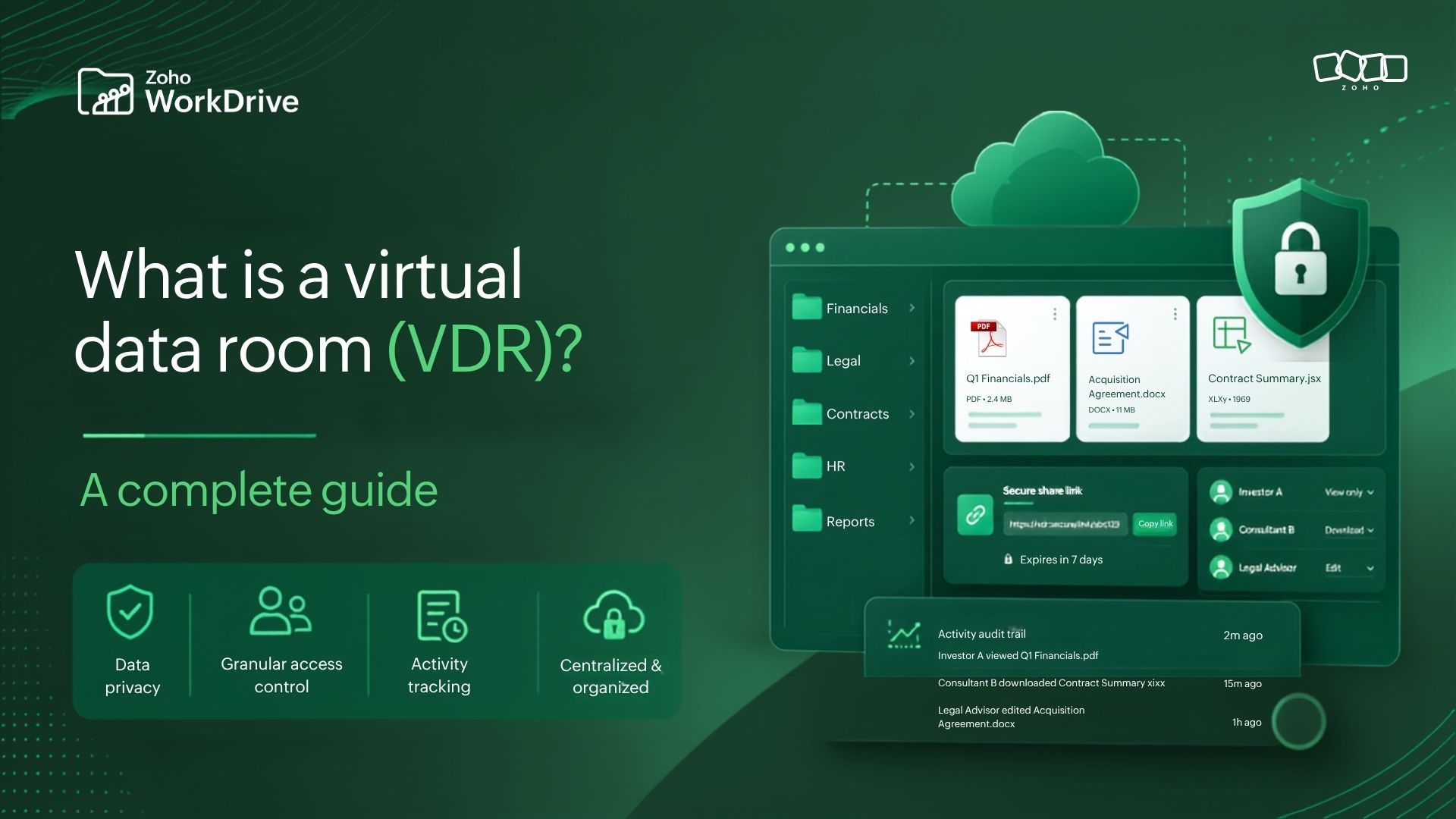
A virtual data room is not just cloud storage with folders. In practical terms, it is a controlled environment for sensitive business content, where access, visibility, retention, and evidence matter as much as storage. That is why virtual data rooms are commonly associated with audits, fundraising, and other multi-party review processes where confidentiality and traceability matter.
That difference matters because a normal shared folder may help you move files, but a secure data room is meant to help you govern those files.
If outside counsel, investors, auditors, healthcare partners, or payment-related stakeholders are reviewing documents, you usually need more than a link. You need to know whether sharing is limited, how long access lasts, whether access can be role-based, and whether the system can support access control, logging, and evidence of use.
For SMBs, that may mean a simpler room for fundraising or legal review. For enterprises, it often means deeper segmentation, more formal governance, and stronger review workflows.
However, the primary secure data room question is really a workflow-centric question: can your teams collaborate quickly and keep security and governance intact?
What makes a secure data room work
To put it simply, a secure data room usually comes down to a handful of practical controls.
Strong access control: Under the HIPAA security rule, regulated entities must allow only authorized persons to access ePHI, and they must implement audit controls and transmission security as well. The same logic shows up in broader privacy guidance: security should ensure personal data is accessed, altered, disclosed, or deleted only by authorized people.
Encryption and protected transmission: The ICO specifically points to encryption as an important measure where appropriate, and WorkDrive encrypts at rest with 256-bit AES and protected in transit.
Auditability: NIST’s log management guidance says sound computer security log management is part of effective enterprise security, and the HIPAA security rule explicitly requires mechanisms to record and examine activity in systems containing ePHI. If your data room cannot show meaningful activity history, it may be convenient, but it is not especially governable.
Time-bound and purpose-bound sharing: A secure data room should let you share only what is needed, with the right people, for the right length of time. Zoho WorkDrive has admin-level controls for where files may be shared, role-based permissions, and share links that expire. It also offers watermarking to help discourage unauthorized reuse.
Structure: Sensitive collaboration breaks down fast when naming conventions drift and important files end up scattered across email, chat, and local drives. Data Templates let teams attach custom metadata to files and require those properties at the Team Folder, folder, or sub-folder level, which is useful when you want business context attached to contracts or expiring records.
Regulations and standards behind secure sharing
A secure virtual data room is not a single legal category. Depending on the industry and department, multiple standards of compliance may apply.
For rooms dealing with personal data, GDPR and similar requirements in other countries are relevant. For ePHI related rooms, HIPAA is a major concern. For cardholder data, PCI compliance comes in.
Compliance becomes simpler when file access, auditability, and governance are built into the workflow, but the exact requirements still depend on the data, the industry, the parties involved, and finally, your internal controls.
So what makes a secure data room checklist?
A good secure data room should help you answer most of these questions, quickly:
Can you limit access to only authorized users or roles?
Can you protect data in transit and at rest?
Can you set expiration on external access?
Can you watermark sensitive files?
Can you classify and search files using meaningful metadata?
Can you produce activity evidence or collection reports when needed?
Can you collect files from outside parties without exposing other submissions?
Can you support the legal or regulatory context of the data involved, whether that is privacy, healthcare, or payment-card-related information?
Can your teams actually use it without creating workaround chaos? That part is not a regulation, but it definitely is a reality.
If the answer is mostly yes, then you are looking at a workflow that can support real governance. If the answers teeter on the neutral or no then it may be time to tighten things up.
This is where WorkDrive fits well into the conversation because it is not just a place to park files. It combines encryption, two-factor authentication, admin-level sharing controls, role-based permissions, expiring share links, watermarking, structured metadata through Data Templates, and secure file collection workflows.
For firms of any size, such a tool can mean a cleaner fundraising or legal review process. It can support more repeatable governance across departments that share sensitive files with external parties. The wins are not just with security. It is fewer loose attachments, less versioning confusion, better collaboration, and stronger evidence when somebody asks, “Who had access to this, and when?”
FAQ
What is a secure data room?
A secure data room is a controlled online workspace for sensitive business documents. It is designed for confidential collaboration and usually includes structured access, encryption, auditability, and time-bound sharing for workflows such as due diligence, audits, fundraising, or legal review.
Is a secure data room the same as cloud storage?
Not really. Cloud storage focuses on storing and syncing files primarily. A secure data room adds a new layer of governance controls around those files, such as granular permissions, protected external sharing, logging, and workflow-friendly structure for sensitive reviews.
Which regulations matter most for a secure data room?
That depends on the data. For example, privacy-heavy rooms may need to align with GDPR, healthcare documents will trigger HIPAA requirements, and cardholder data triggers PCI DSS requirements. The room itself is not the focus of regulation; the data inside it determines the regulatory lens.
What features should businesses look for first?
Start with access control, encryption, auditability, expiring external access, and structured organization. After that, look for workflow features such as metadata, secure inbound collection, and evidence that the provider follows strong security standards.
Can SMBs use a secure data room, or is it only for enterprises?
SMBs absolutely use them, especially for fundraising, contract review, and partner collaboration. Enterprises typically need more segmentation and governance, but the underlying need is the same: being able to share sensitive files without losing control.
A secure data room should make sensitive work feel more controlled, not more complicated. Try Zoho WorkDrive to explore a secure, structured, and audit-friendly way to organize collaboration around high-value business content!