Four letters that belong in the CX Hall of Fame
- Last Updated : February 26, 2026
- 157 Views
- 6 Min Read

At Simplified CX, we value history because it's a treasure trove of valuable lessons. Looking back at the past helps you find both strategies to emulate and pitfalls to avoid. Well, what else can be a wholesome relic of the time bygone other than letters? So we decided to present four letters from the past that contain insightful CX lessons.
Why wait? Grab a mug of hot chocolate and get ready to walk down memory lane with us.
1. Letter Clay tablet to Ea-Nasir
Let's go in chronological order and start from 3,776 years ago. And no, that's not a typo—you read it right. The first letter in this article comes from around 1750 BCE, and this one was inscribed on a clay tablet unearthed in the ancient city of Ur in Mesopotamia (roughly corresponding to modern-day Iraq). Discovered in the 1920s by Sir Leonard Woolley, a British archaeologist, this tablet holds the Guinness world record for being the world's oldest customer complaint.

The tablet contains the angry outburst of a person called Nanni, who seems to have spared no words to express his dissatisfaction about receiving low-quality copper ingots from a merchant named Ea-Nasir. Among other things, the tablet also refers to the ill-treatment that Nanni's servant received from Ea-Nasir. Interestingly, the team of archaeologists found a handful of other similar tablets containing complaints while excavating the site, prompting Forbes to jokingly call Ea-Nasir the worst businessman of the 18th century BCE.
Why is this letter relevant today?
Simply because it demonstrates that quality, focus on ethics, and emotional intelligence have been basic, unchanging customer expectations from time immemorial. The fact that there are similar tablets from that period reveals that customers have always wanted to make the best out of their purchases. There's no way to confirm it, but researchers theorize that Ea-Nasir most likely saw a dip in his fortune over time. So that's it: Quality, ethics, and emotional intelligence will be CX cornerstones forever and ever.
2. Jack B. Scott's letter about Charles Proteus Steinmetz
The second letter in this article is one that's legendary and widely shared, and it comes from the year 1965. However, it isn't a letter that a customer sent to a business, but one that a reader sent to the Life magazine.
Back in April that year, the magazine published an article on the electrical genius Charles Proteus Steinmetz on the occasion of his birth centenary. In it, the writer had mentioned a meeting between Steinmetz and Henry Ford regarding a complex technical issue that the automobile pioneer was facing at one of his plants. There weren't any specific details about the meeting in the article, but that changed when Life received a letter from one Jack B. Scott.
Here's Scott's letter, which was published in the 14 May, 1965 edition of the magazine.
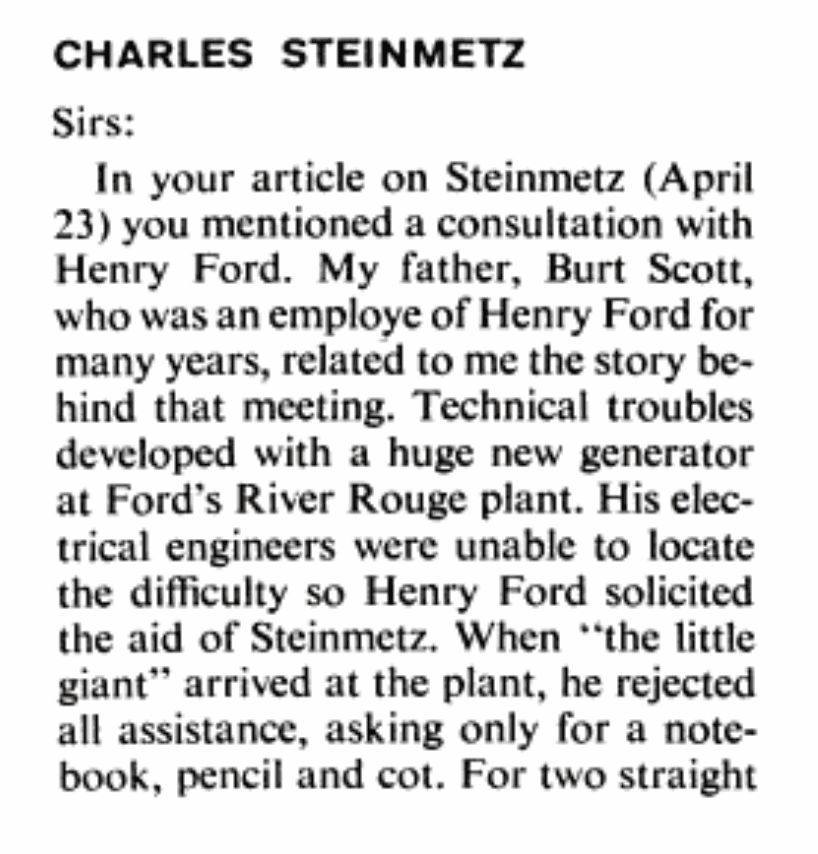
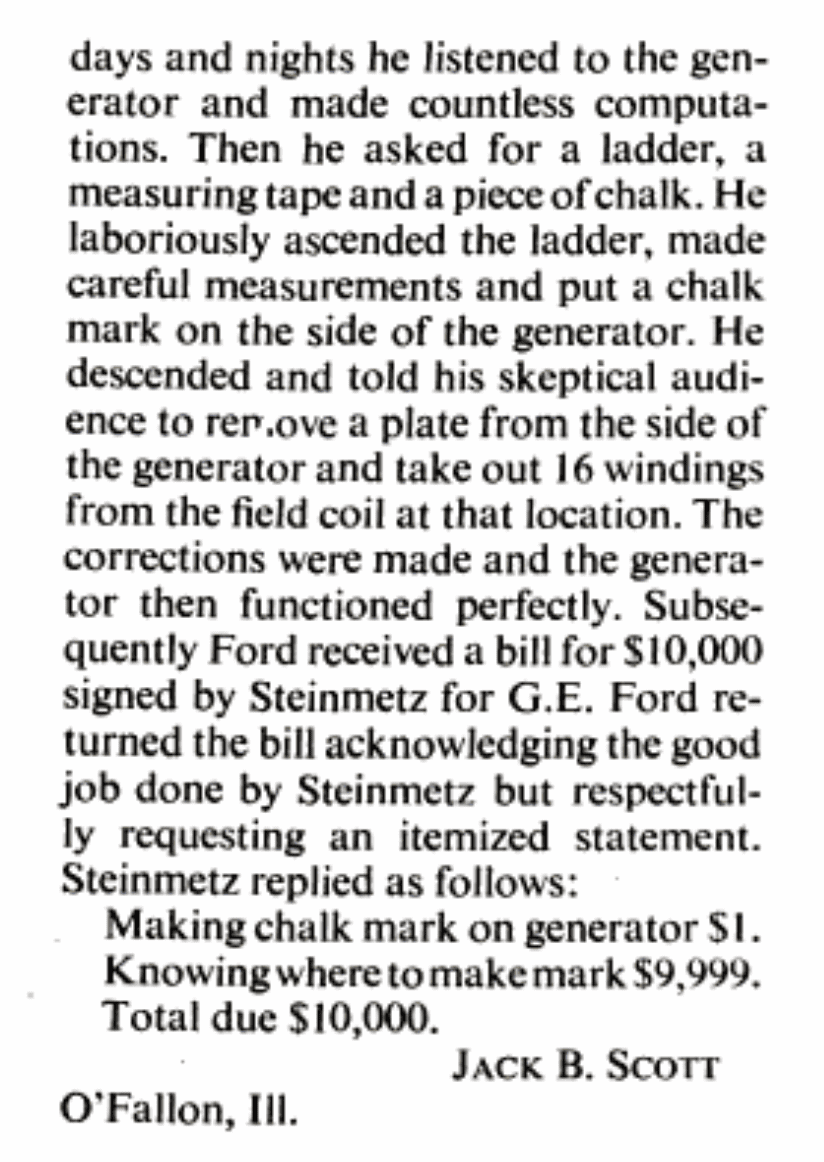
Steinmetz's invoice mentioned in the letter is the stuff of legends, and I'm sure you'd have at some point read a variation of this anecdote without knowing the details.
Why is this letter relevant today?
Besides throwing light on Steinmetz's sense of humor, the letter also demonstrates the importance of knowledge in CX. Based on Scott's words, we can surmise that Ford had no qualms about paying the amount quoted. And why not? It was primarily because Steinmetz figured out what went wrong and gave the exact solution for it without too much back and forth. One can attain that level of expertise only if they prioritize technical knowledge and update themselves constantly. When it comes to customer-facing roles, whether it's sales or support, being deeply knowledgeable about your offering and the industry you operate in makes a lasting impression on customers and helps you earn both their respect and trust. Funnily enough, this also applies to chatbots that handle support or sales inquiries; they should either give customers the right solution or hand over the conversation to a human agent.
Now that we've seen two letters from the distant past—one from a century or so ago and another from a few millennia ago—let's look at two from the not-so-distant past.
3. A three-year-old girl's letter to Sainsbury's
This is a letter that went viral on the Internet over 15 years ago, and I remember reading about it when the news came fresh out of the oven.
Oven? What?
Well, three-year-old Lily Robinson had a question regarding a certain type of bread sold at Sainsbury's, a large supermarket chain in the UK. She felt that their naming decision was incorrect and pointed it out to them directly, as you can learn from her mother's blog post.
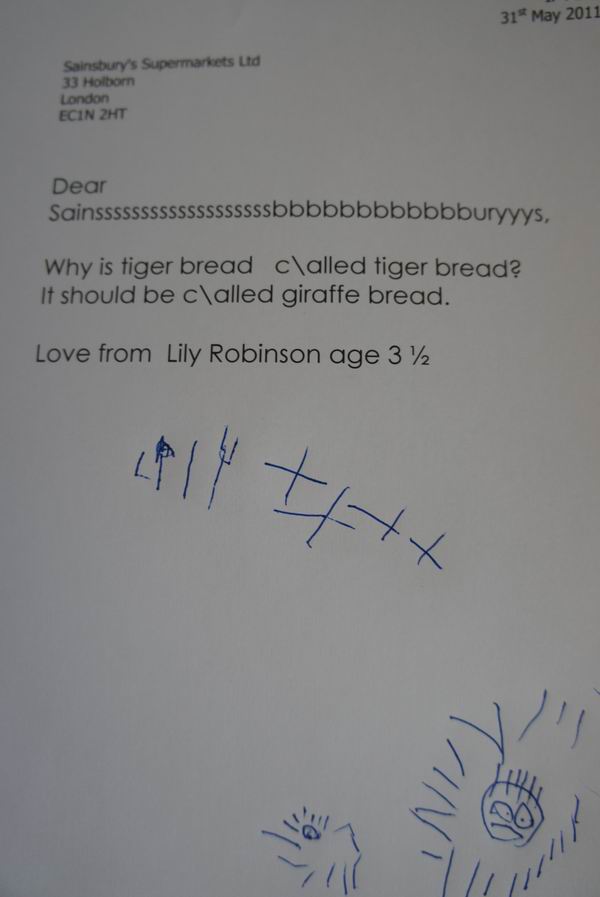
What transpired next is the reason both this letter and Sainsbury's reply—sent by a representative called Chris King—find a place in the CX Hall of Fame. Below is Chris's wholesome reply, which Lily's mother had shared in a subsequent blog post.
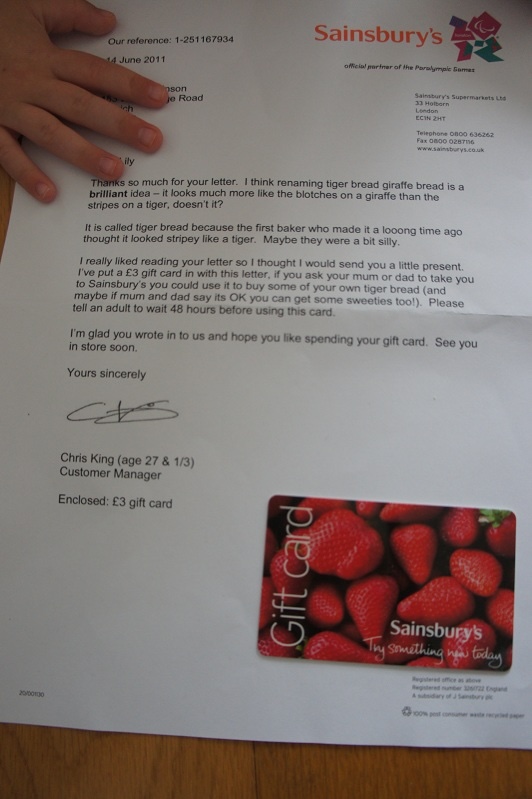
Chris's thoughtful words and gentle tone won the hearts of people all over the world, and even prompted Sainsbury's to act upon Lily's feedback. The best part is that to this day, the bread continues to be called giraffe bread and has not reverted to its old name, tiger bread.
Why is this letter relevant today?
If there's something that this interaction that's warmer than freshly baked bread underlines, it's the importance of customer feedback and the earnestness with which one acts upon it. Look at this worrying statistic from a recent study, for instance: 80% of business leaders believe that they're meeting customer expectations, whereas it's only 24% of customers who actually feel so. This contrast speaks volumes about the misalignment between C-suite perceptions and customer realities. And how can you bridge this chasm? Take a long and hard look at your customer support and feedback management processes and approaches. Invest in a robust VoC tool that helps you glean customer requests from all touchpoints and prioritize your development efforts accordingly.
Now let's move on to the last letter for this article.
4. A music shop owner's letter to a struggling customer
This letter predates the one that Lily Robinson wrote to Sainsbury's, but the world learned of its existence only years later, thanks to a Reddit post.
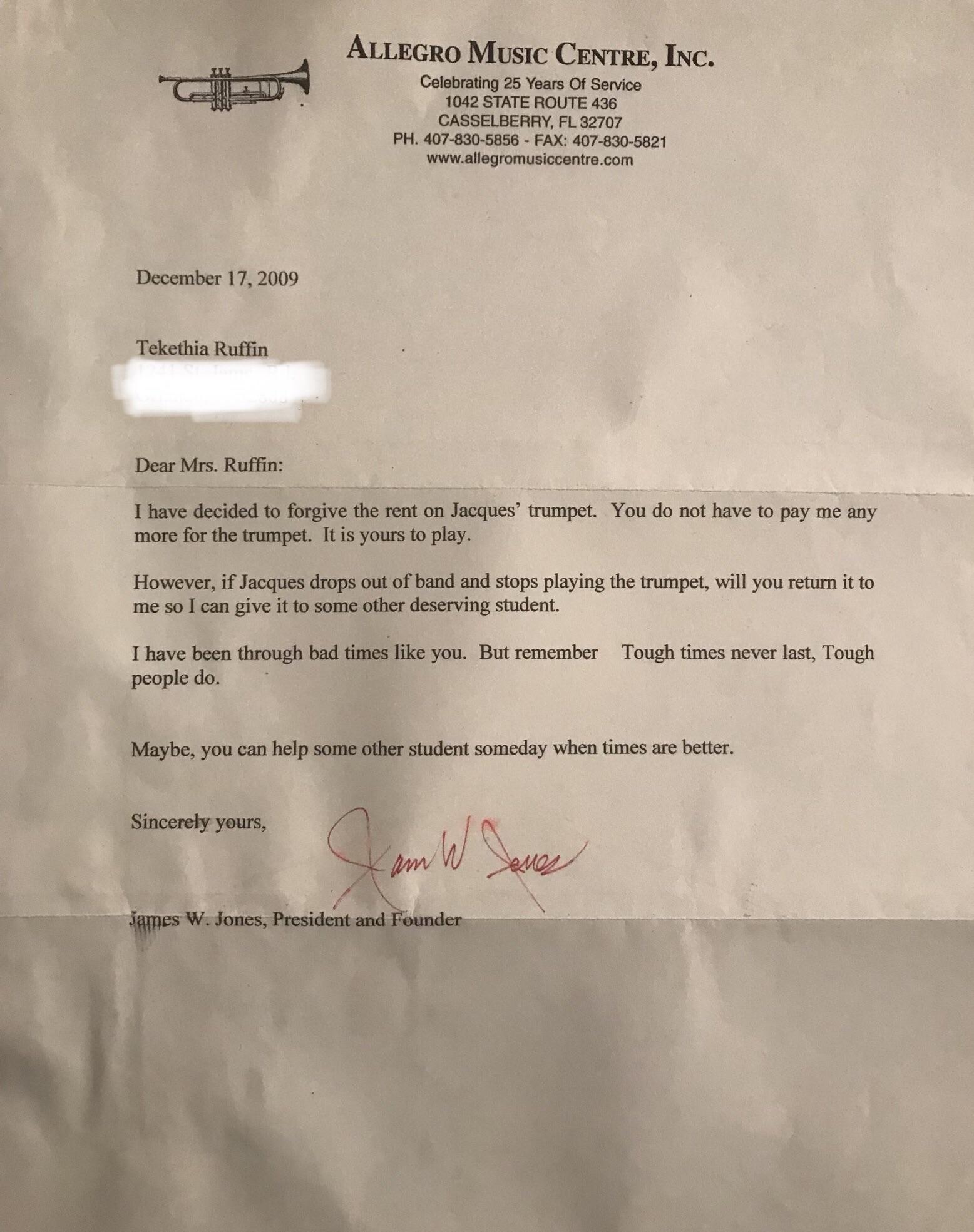
Here's the backstory: Jacques Ruffin, the Reddit user who made the post, played the trumpet in his school band. In 2009, his mother was struggling to make payments for his trumpet, which she had rented from a local music shop called Allegro Music Centre. James W. Jones, the owner of the shop, became aware of this situation and wrote her this letter conveying that he understood her struggles and that she doesn't have to pay the rent anymore. The online world fell in love with Mr. Jones's kind-hearted gesture from close to a decade before, and the letter went viral immediately.
Why is this letter relevant today?
On this blog, we keep stressing the role of empathy in CX, and this letter is a solid demonstration of why it matters.
Whether it's a business owner or a customer, everyone goes through tough times every now and then. Mr. Jones's recognition of this fact, backed by solid supportive action, is the reason this letter decorates our CX Hall of Fame. Such acts of kindness make a huge positive impact on the customer community, leading to more loyalty and advocacy. While it's easier for small/regional businesses to exhibit such gestures consistently, large enterprise-level companies can also do their bit however possible. The online pet food retailer company Chewy shows how it's done.
However, it's also crucial that you don't look at empathy as a business strategy, but as a CX value to which you adhere. It doesn't matter whether a kind gesture leads to further commercial gains or not; it only matters that it touches a customer's life positively.
Hope you enjoyed reading these letters and the timeless, invaluable lessons that they teach us. Are there any other letters that you think belong to the CX Hall of Fame? Feel free to share them in the comments.