

What is
AR inspection?
Augmented reality (AR) inspection, also known as remote visual inspection, is a type of inspection that uses augmented reality to enhance a construction site or assembled product with digital overlays such as text, images, or 3D objects. Inspecting officials conduct this type of inspection when the location is far off or if it requires their immediate attention. It helps them operate effectively within time constraints and prevent delays on their part.
Here's how augmented reality is transforming the quality of inspections


Conduct remote inspections anytime
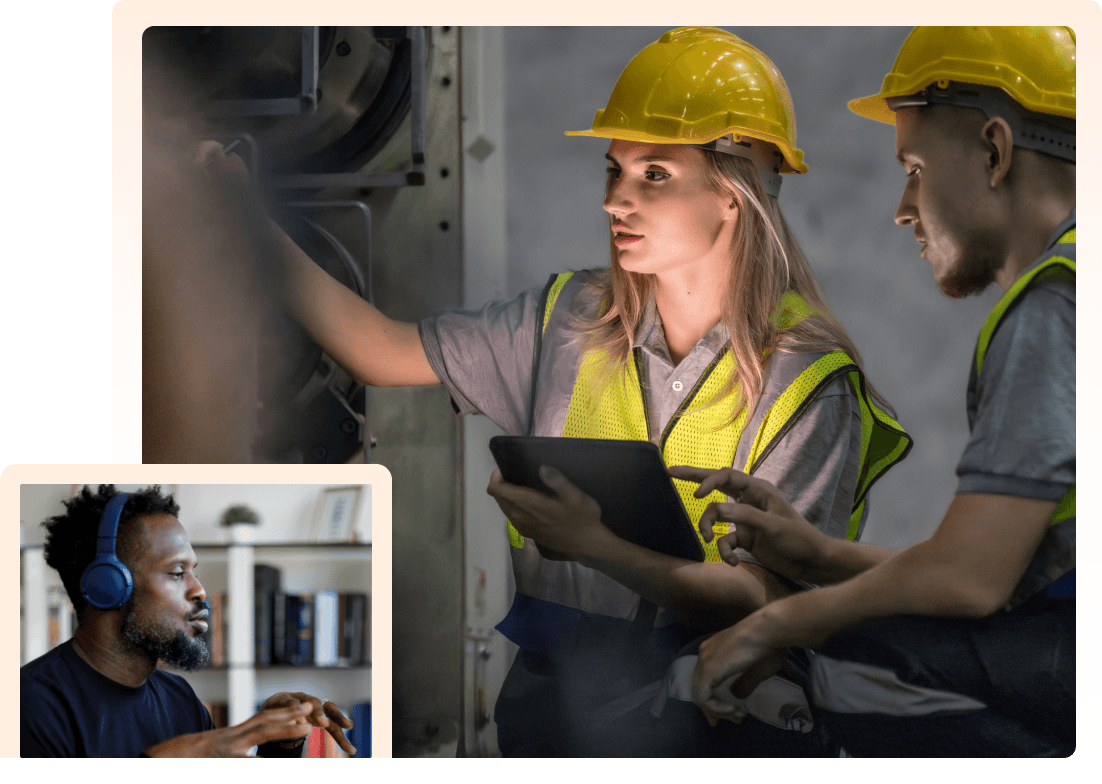
On-site inspections require the physical presence of the inspecting official, and it takes a significant amount of time to travel to the location, especially if they are far away from each other. With augmented reality live streaming, the inspecting official can connect with the on-site crew and get live visuals of the ongoing project, right from their office. It helps them cover many sites in a day and conduct remote inspections seamlessly.
Provide visual instructions for your ground crew
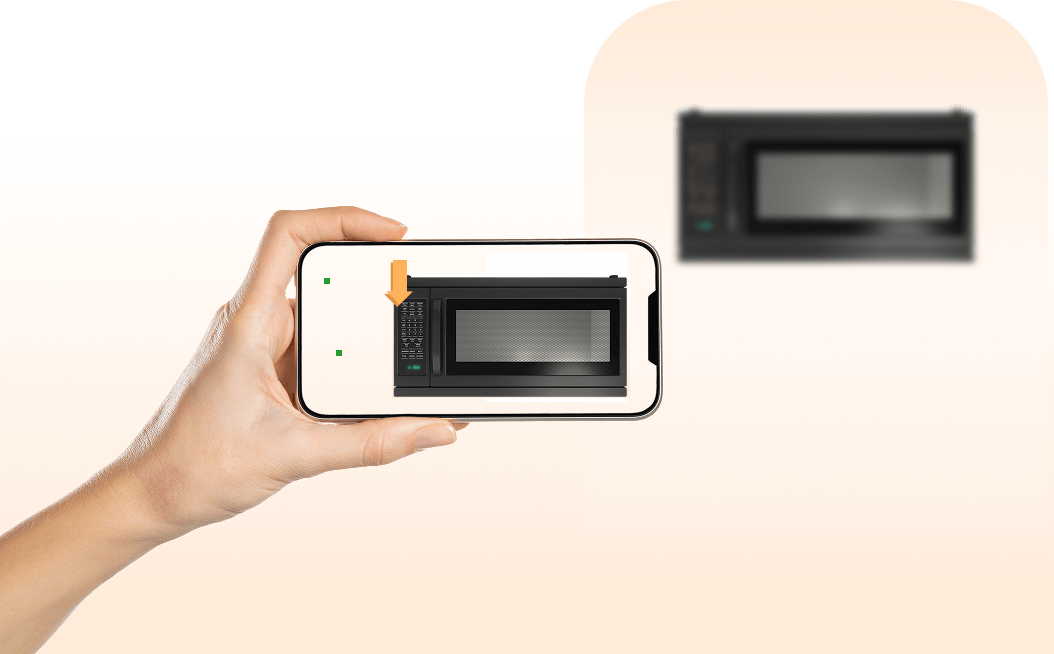
Conventional video calls do not facilitate spatial interaction, which leads to inaccuracy in gaining visual context. This can be resolved with augmented reality, where inspecting officials can use spatial tools like AR annotations to provide visual cues and interact with the ground crew effortlessly. They can point to specific areas of the site and highlight objects to guide the crew through the inspection process by enhancing the live camera stream with a digital overlay.



Detect and record defects with ease
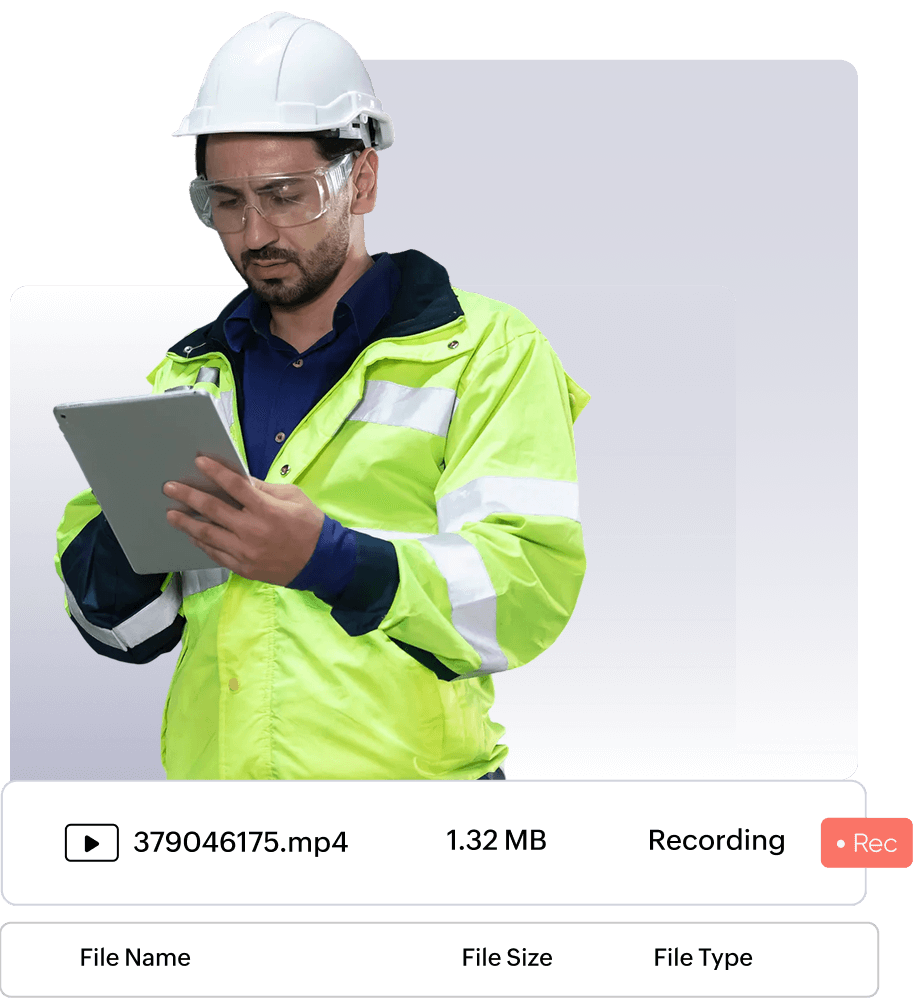
Onsite inspections require comparison and documentation to be done simultaneously, where site inspectors have to shuffle paperwork constantly and ensure everything is documented in the right manner. Augmented reality inspections can ease this burden by digitizing this process, where they can capture snapshots, jot down critical information in session notes, and even record the entire inspection process for future reference.
Share diagrams or fine print in session
Along with chat and voice, Zoho Lens allows inspectors to share important files like blueprints, legal documents, or compliance checklists with the on-site crew via chat. This ensures all participants are on the same page and reduces discrepancies in the inspection process.

Inspect hands-free with smart glasses
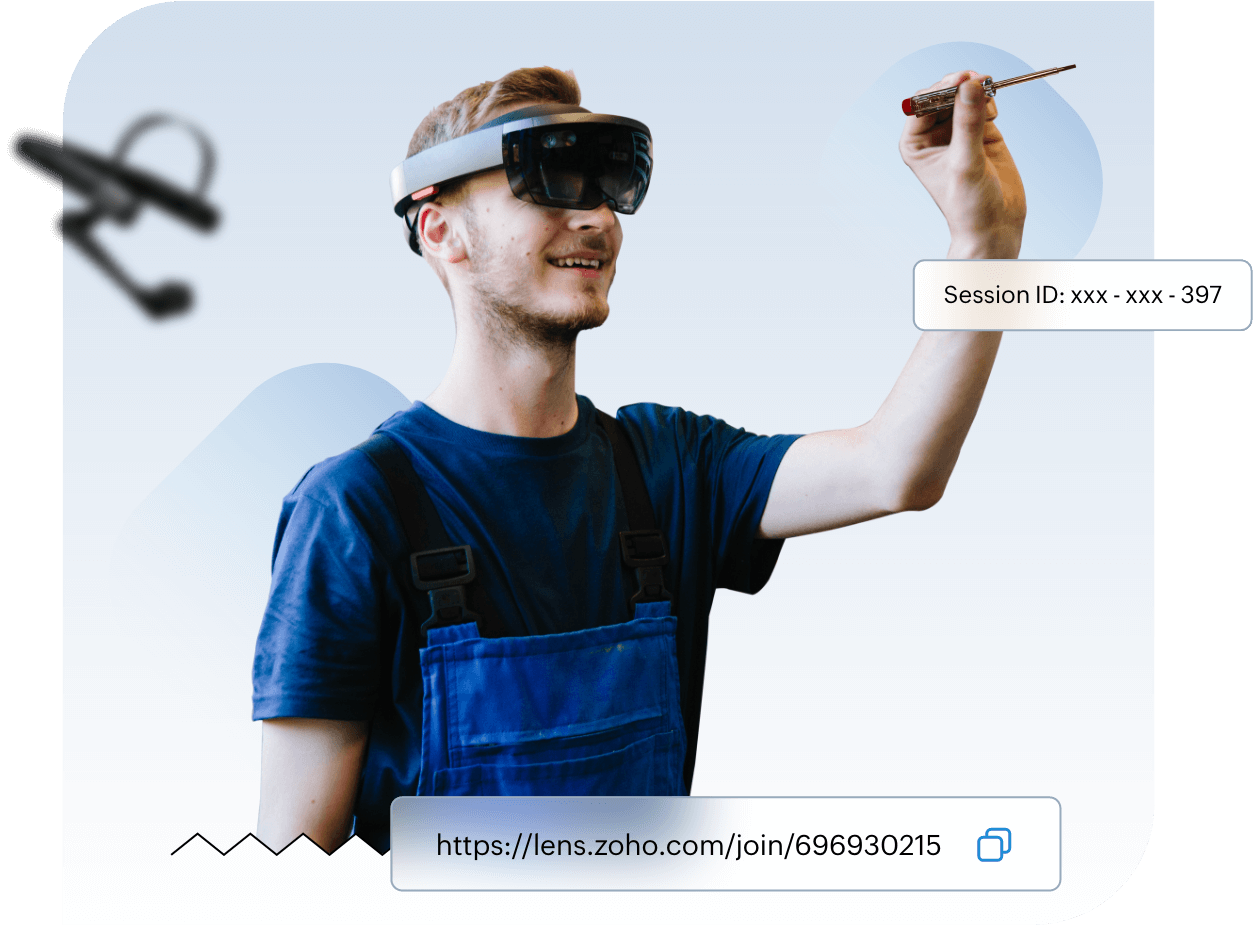
Zoho Lens is supported on major smart glasses like Apple Vision Pro and Meta Quest. Inspectors can initiate a virtual quality inspection from a smart glass to experience higher immersion and provide instructions seamlessly using gestures, as if they were physically present with the ground crew.
How AR quality inspection works
Start a session.
Inspecting officials need to initiate a Zoho Lens session for conducting a remote inspection. They can share the link via email, SMS, or other messaging apps.
See what your crew sees
Once a site worker joins the session, they can share live visuals of the site through their device camera.
Inspect the site using AR tools
With AR tools, the inspecting official can point out anomalies, measure remote objects, add instructions to individual annotations, and document critical events.
What are the benefits of conducting quality inspections through AR?
Improved convenience
AR inspections translate to reduced travel times and improved productivity with minimal effort for inspecting officials. They can schedule inspections at their convenient time, streamlining their availability without any hassle.
Unified and paperless documentation
Inspecting officials need to have the necessary paperwork in hand before heading out to an inspection. That includes blueprints, checklists, and other documents that are relevant to the project. AR inspections help bring documentation under one umbrella, making it easier to access and review them at any time.
Improved production efficiency
Manufacturing industries that rely on regular inspections or stage-wise inspections for quality assurance benefit from AR inspections. They can get inspections done at a moment's notice and move the product through quality control without delays, enhancing production efficiency and throughput.
Future AI trends in AR-powered quality inspections
AI has immense potential to transform the way inspections are conducted in today’s world. When combined with AR, organizations can achieve greater quality in less time and effort through AI-enhanced visual inspection. Agentic AI systems will become the norm, where quality checks and inspections are completed with little to no human intervention. It can be further advanced through the integration of AI-powered AR systems with IoT for proactive quality control. Data from IoT sensors and previous inspections are studied by AI to identify recurring issues or malfunctioning parts and alert the respective crew to rectify it before it affects production. Crew members can then use AR to visualize the issues identified by AI, get crucial feedback from AI, and fix the issue promptly.
How AR quality inspections are used for various industrial processes
We’ve listed a few scenarios where augmented reality is used to conduct quality inspections, especially in industrial setups.
Assembly line verification
Products go through a series of quality checks when they pass each stage in the assembly line. With augmented reality for quality inspections, inspecting officials can conduct these quality checks from afar and mark deviations directly on the camera stream. Assembly crews can look at the markings and promptly start working on corrections.
Incoming goods inspection
Every part or piece of equipment that comes into the manufacturing plant needs to go through quality assurance to avoid complications in later stages. Managers can take a quick look at these incoming goods through an AR session and document the condition of each part within the session. Inspection data can be viewed later by the concerned department for maintaining records and audits.
Safety compliance audits
Besides the product, the safety of the manufacturing plant plays a key role in business reputation. Site inspectors ensure businesses adhere to the safety standards in place through safety compliance audits. Using augmented reality for industrial quality inspections, they can schedule safety inspections ahead of time and reduce their paperwork burden through digital work instructions.
Key features to enhance the quality of AR-based inspections
Live camera streaming
Zoho Lens allows you to access the camera stream of your on-site crew to view the inspection site in real time. You can take a closer look with the Freeze or Magnify tools to pause the camera stream or zoom in to a certain area respectively.
Collaborative AR tools
Packed with powerful AR tools like AR annotation, AR comments, and AR measurement, Zoho Lens empowers inspectors to analyze the site in augmented reality, highlight issues, measure remote objects, and add comments anywhere on the camera stream.
Scanning and documentation tools
Inspecting officials can use the virtual code reader in Zoho Lens to scan QR codes and barcodes from labels on parts or equipment to get crucial details during the inspection. They can also store information in session notes and capture a snapshot of that equipment for adding more context.
Flashlight
Zoho Lens allows inspecting officials to control the flashlight on the remote device and brighten up the dark areas on the camera stream. The flashlight can be controlled by both the inspecting official and the site worker.
Work instruction
Inspecting officials can replicate their workflow step by step, add the necessary documents, and save them as work instructions in Zoho Lens. They can execute that work instruction in any Zoho Lens session and conduct inspections effortlessly.
Geolocation
Site workers can share their location with an inspecting official within the session itself. The inspecting official can then view the location on a map application of their choice. They can also request the location when they need to verify the inspection site.
Multi-participant sessions
With Zoho Lens, inspecting officials can invite two or more inspectors to the session and they can work alongside each other during the remote inspection. Their interactions on the camera stream are differentiated by the color of their annotations.
Comprehensive reports
Zoho Lens maintains reports on all sessions conducted in an organization. They are categorized based on session count, session duration, and the technicians who conducted the session. Separate reports are maintained for work instructions initiated in a remote inspection.
Frequently Asked Questions
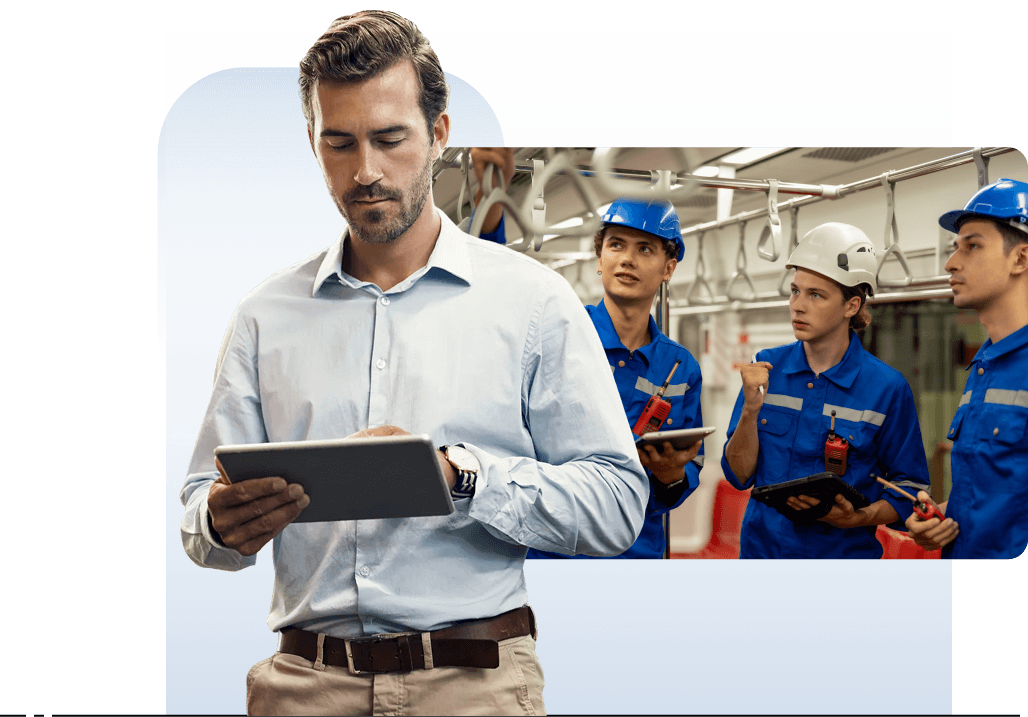
The end devices that are used by the ground crew during an AR-based inspection would be smartphones, tablets, smart glasses, or head-mounted displays (HUDs). In heavy industrial setups, rugged devices are used for extra durability and safety. Admins can review and maintain the quality of inspections with AR from their desktops and laptops at any time.
On its own, AR cannot "detect" defects. It can capture visuals of the equipment and overlay information on it. But when it is integrated with artificial intelligence (AI) capabilities, the AI + AR system can now automatically detect anomalies and deviations based on the AI's training and historical data, and highlight them accurately for the user through digital arrows or shapes.
Yes, AR quality inspections are perfect for remote teams. With the help of remote inspection software like Zoho Lens, inspecting officials can instantly connect with remote teams for a virtual quality inspection where they can use tools to highlight anomalies and suggest next steps while documenting the entire process for audit.
Choose the remote inspection software that allows you to conduct virtual inspections through AR, record sessions for future reference, and manage related activities in one place. Ensure that your remote crews are onboarded ahead of time and your inspecting officials have the required access to conduct inspections without hindrance.
Equipment maintenance checks
Any machinery involved in the production process undergoes regular maintenance for uninterrupted throughput. By using augmented reality in quality inspections, inspectors can oversee maintenance procedures in real time, capture any missed defects, and guide the crew in fixing them.