- HOME
- Know Your Tech
- Multiexperience development: Top benefits and best practices
Multiexperience development: Top benefits and best practices
- Last Updated : March 31, 2026
- 285 Views
- 10 Min Read
Think about how your users connect with your business today. They may use a mobile app, visit your website, speak to a chatbot, or even access your service through a wearable device. Each of these experiences matters. But building and maintaining them separately can be time-consuming and complicated.
Highlights
- Multiexperience development builds apps that deliver consistent experiences across web, mobile, voice, wearables, and other digital touchpoints.
- Key platform components include cross-platform compatibility, real-time data syncing, AI integration, and flexible UI design.
- Low-code and no-code tools within multiexperience platforms speed up app creation and reduce dependency on large development teams.
- Common challenges include managing diverse devices, keeping data secure across touchpoints, and integrating with older systems.
- Businesses that use multiexperience development can improve user engagement by meeting users on their preferred devices and interfaces.
This is where multiexperience (MX) development helps. It allows you to create apps that work across different platforms, all from a single setup. You can offer a consistent experience without repeating work for each device or interface.
If you’re running a business or leading a team, this approach makes it easier to meet user expectations and respond faster to changing needs. Instead of juggling disconnected tools, you build once and deliver across all channels. The result is a smoother experience for your users and fewer delays for your team.
What is multiexperience development?
Multiexperience development refers to the process of building applications that provide a unified experience across multiple digital touchpoints, such as websites, mobile apps, wearables, augmented reality (AR), virtual reality (VR), and voice interfaces. It uses various interaction modalities like touch, voice, motion, and vision, allowing users to interact with an application in ways that suit their preferences.
The goal is to provide a consistent and smooth experience, no matter the device or interaction type. From a technical perspective, multiexperience development requires integrating various technologies to ensure that an application functions effectively across different platforms.
These technologies include responsive design for web and mobile interfaces, voice recognition for voice assistants, AR/VR integration, and sensor integration for wearables. The end result is a more flexible and adaptive application that can interact with users through multiple channels.
The benefits of multiexperience development
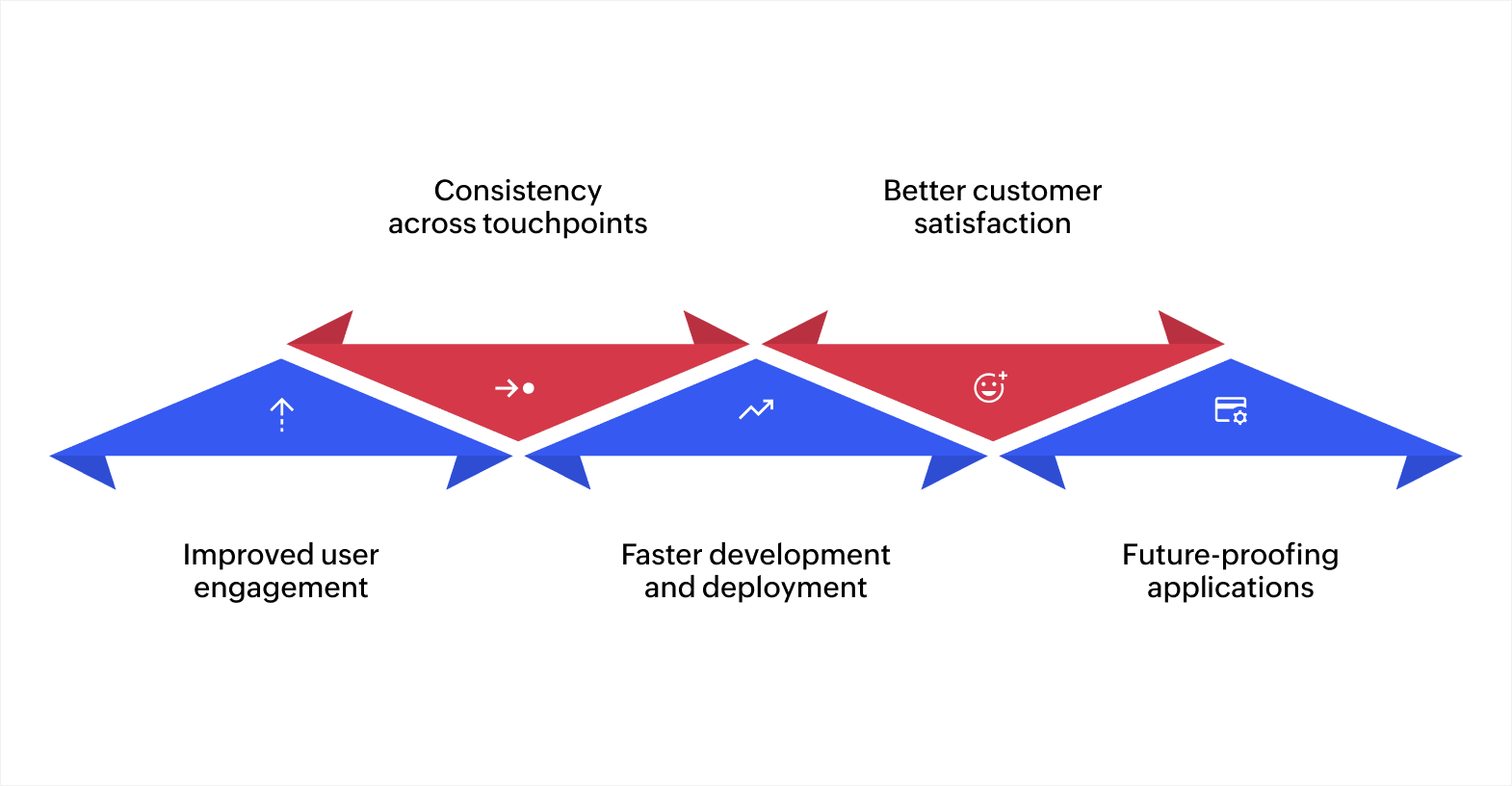
1. Improved user engagement
Multiexperience development platforms (MXDP) offer users the flexibility to interact with the application on their preferred devices, whether through touch, voice, or motion. This flexibility leads to higher engagement because users can pick up their interactions across different touchpoints without interruption.
2. Consistency across touchpoints
MXDPs allow businesses to ensure that the app’s design, functionality, and user interface remain consistent, regardless of the device or platform. This consistency is important not only for improving user satisfaction but also for ensuring that developers don’t have to build separate versions of the same app for different platforms.
This is achieved through cross-platform development tools and shared backend services, which help maintain consistency in data handling and user interactions.
3. Faster development and deployment
By using a multiexperience development platform, businesses can build applications that work across multiple devices and interaction methods right from the start. The development process is faster because it eliminates the need for building separate apps for each platform. Additionally, using a single development environment helps reduce duplication of effort, making deployment quicker and more cost-effective.
4. Better customer satisfaction
Customers expect flexibility in how they interact with applications. A multiexperience development platform enables businesses to offer that flexibility, which in turn boosts customer satisfaction. This is supported by smooth integration between different devices and the backend infrastructure that ensures real-time data synchronization and consistent application performance.
5. Future-proofing applications
As new technologies emerge, such as next-gen wearables, AI-driven assistants, and advanced AR/VR systems, multiexperience platforms allow businesses to quickly integrate these advancements into their apps.
This future-proofing is possible due to the modular nature of MXDPs, which allow businesses to add new features or integrate new devices with minimal disruption to the existing app structure.
Challenges of multiexperience development
1. Managing multiple touchpoints
Developing for a wide range of devices introduces complexity in terms of ensuring that each device’s unique capabilities and limitations are taken into account. Whether you’re designing for smartphones, wearables, or AR systems, each touchpoint has its own set of user interactions, APIs, and data processing needs. This means businesses must implement adaptive designs, APIs, and services that cater to these varying requirements.
2. Ensuring consistency across devices
Providing a consistent user experience is challenging, especially when designing applications for devices with different screen sizes, processing capabilities, and input methods.
From a development standpoint, businesses must ensure that the application’s core functionality and user interface are flexible enough to adapt to different environments while maintaining a consistent look and feel.
3. Data security and scalability
With data being exchanged across multiple devices and platforms, maintaining secure data handling is important. Multiexperience applications often collect sensitive user information, which increases the risk of data breaches.
Businesses need to implement strong encryption, secure authentication, and real-time data protection across all touchpoints. Additionally, the scalability of the infrastructure must be addressed to handle an increasing number of users and devices without compromising performance.
4. Integration with legacy systems
Many businesses are still reliant on legacy systems that were not designed to support multiexperience development. Integrating these older systems with new platforms often requires complex data mapping, API development, and other technical adjustments. Businesses need to carefully plan how legacy and new systems will interact to avoid disruptions and ensure smooth data flow across all touchpoints.
These challenges require careful planning and strong solutions. Businesses must prioritize flexibility, security, and integration to create a truly cohesive experience across all devices. By doing so, they can effectively harness the power of multiexperience development while minimizing risks.
Key components of multiexperience development
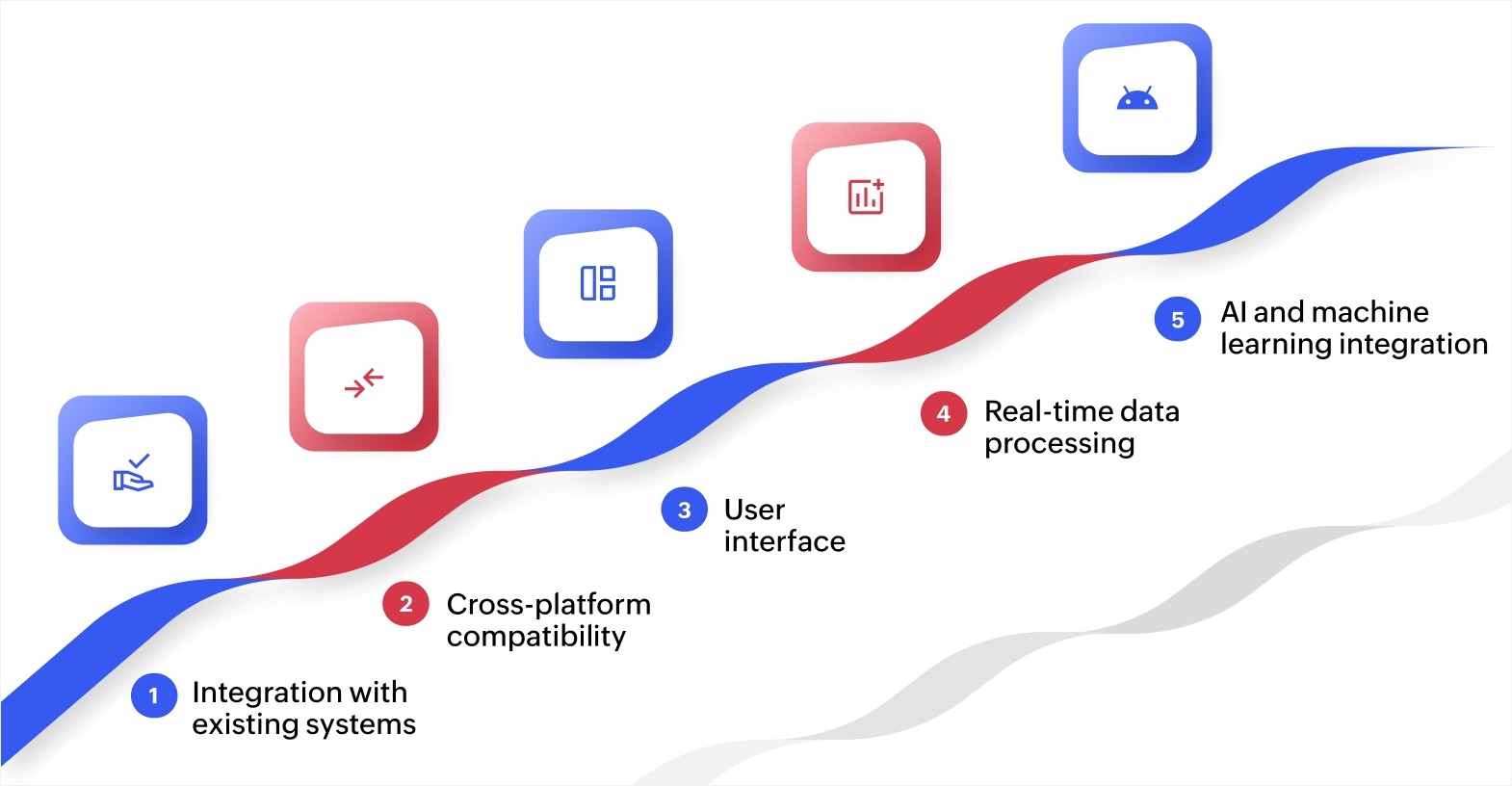
1. Integration with existing systems (APIs, databases, enterprise software)
MXDPs should easily integrate with your existing systems, such as APIs, databases, and enterprise software. This integration ensures smooth data flow and reduces the need for major changes to your infrastructure.
- API support: Pre-built connectors allow quick integration with existing tools and systems.
- Legacy system compatibility: MXDPs should also work with older systems, allowing you to modernize without disruption.
By integrating with current systems, MXDPs enhance operational efficiency and create a unified view of your business operations.
2. Cross-platform compatibility (mobile, web, IoT, AR/VR)
An MXDP must work across different platforms, from mobile devices to IoT and AR/VR. This ensures a consistent experience, regardless of the device used.
- Consistent experience: The platform adjusts to the device, providing a uniform user experience.
- Emerging tech support: MXDPs support IoT and AR/VR, expanding how users interact with your app.
Cross-platform compatibility ensures accessibility and consistency, helping you reach users on a wider range of devices.
3. User interface (UI) design flexibility
MXDPs offer flexibility in designing user interfaces that are intuitive and adaptable across different platforms.
- Responsive design: Automatically adjusts the UI for different devices, from mobile to desktop.
- Customization: Allows design elements to be tailored to your brand’s look and feel.
UI design flexibility ensures that your application is both functional and visually appealing across all platforms.
4. Real-time data processing and synchronization
Real-time data processing ensures that users receive up-to-date information across platforms, creating a more dynamic user experience.
- Instant updates: Changes made by users are reflected immediately across devices.
- Data consistency: Information stays synchronized, regardless of the device used.
Real-time data synchronization keeps your application accurate and responsive, enhancing the user experience.
5. AI and machine learning integration for personalized experiences
AI and machine learning make it possible to personalize experiences by analyzing user behavior and providing relevant recommendations.
- Personalized content: AI tailors content based on user preferences and history.
- Predictive insights: Machine learning anticipates user actions, offering proactive solutions.
Integrating AI and machine learning into your MXDP helps provide personalized experiences that increase user engagement and satisfaction.
Implementing these features helps improve operational efficiency, enhance user engagement, and drive growth with minimal coding and reduced IT dependency.
How multiexperience development platforms work
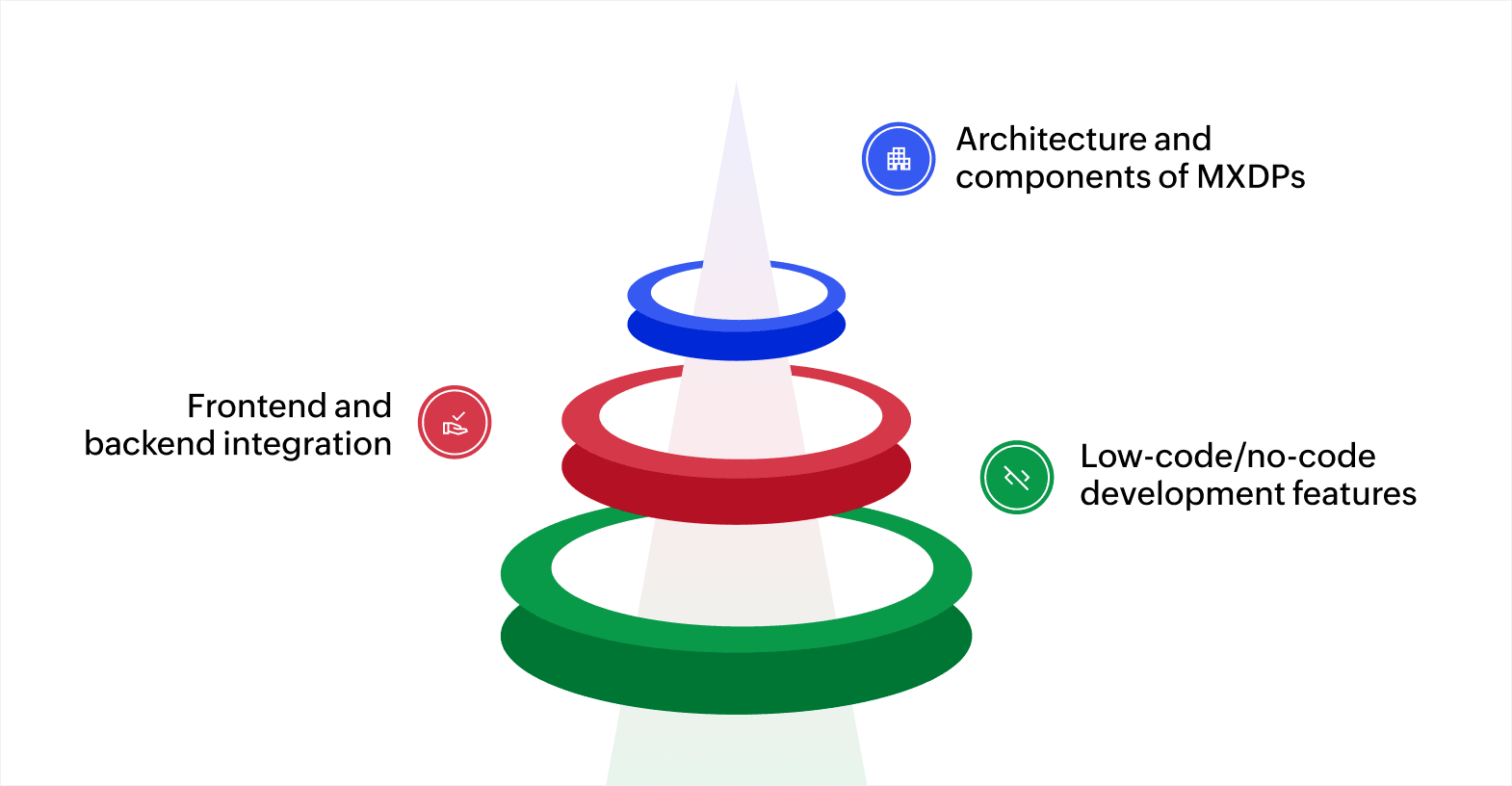
MXDPs provide a comprehensive solution for businesses to develop applications that function seamlessly across multiple channels, such as web, mobile, voice, wearables, and even IoT devices. These platforms offer businesses the ability to deliver a consistent and cohesive user experience, regardless of the device or interface being used.
Here’s how they work:
- Unified approach: MXDPs combine various tools and frameworks to support both frontend and backend development. This integration ensures that businesses can provide cross-channel user experiences.
- Cross-channel capabilities: Whether it’s mobile apps, web portals, or voice interfaces, MXDPs allow you to create consistent applications that work across all devices and platforms.
- Cloud-based infrastructure: By relying on cloud-based services, MXDPs enable businesses to scale applications as needed while maintaining security and efficiency.
1. Architecture and components of MXDPs
- Frontend: The user interface (UI) elements such as forms, buttons, and navigation controls are designed to ensure that users have a smooth and intuitive interaction with the app.
- Backend: The backend of MXDPs handles the business logic, data processing, and storage. It ensures that the application runs efficiently across different platforms and devices.
Moreover, MXDPs are designed to integrate with APIs and third-party services, enriching applications with additional functionalities like payment gateways, CRM systems, and more.
2. Frontend and backend integration
- Smooth communication: The frontend focuses on creating a user-friendly interface, while the backend manages data and business logic. This seamless communication ensures that any action on the frontend (e.g., form submission, button click) is processed correctly in real time on the backend.
- Real-time updates: Modern MXDPs allow businesses to update data and sync user actions instantly across all devices. For instance, if a customer updates their information on a mobile app, that data will automatically reflect on other platforms connected to the same application.
3. The role of low-code/no-code development features in multiexperience development
- Reduced IT dependency: With low-code/no-code tools, users can design, build, and deploy applications without relying heavily on IT teams, reducing operational delays and speeding up time-to-market.
- Intuitive development: Drag-and-drop functionality, pre-built templates, and simple logic flows allow users to create custom applications quickly, making the development process more accessible to business users.
- Increased agility: These features allow for faster iterations, ensuring that applications are continuously improved based on real-time feedback from users and stakeholders.
The need for multi-experience development platforms
With the fast growth of devices and diverse ways users interact with technology, businesses face the challenge of providing a consistent experience across many platforms.
Multiexperience development platforms are key to managing this complexity. These platforms enable businesses to build applications that provide a unified user journey across different devices and interaction methods.
Technically, MXDPs simplify the integration of various technologies. They allow businesses to create applications that seamlessly connect with multiple devices.
For example, MXDPs can integrate web services, APIs, cloud platforms, and AI-driven interfaces like chatbots and voice assistants. This integration enables developers to build adaptive applications with minimal redundancy.
Top 3 multiexperience development platforms in the market
Several platforms lead the market in providing MXDP solutions. These platforms cater to a wide range of business needs, from SMBs to large enterprises. Below is an overview of some of the most popular MXDPs:
- Zoho Creator: Zoho Creator is a flexible platform that serves both SMBs and enterprises. It allows businesses to create custom applications with minimal coding, offering a user-friendly interface and powerful integrations to automate workflows and optimize operations.
- OutSystems: OutSystems is widely known for its fast application development capabilities. It supports both web and mobile app development with minimal coding and provides extensive support for integrations, making it ideal for large enterprises.
- Mendix: Mendix is a low-code application development platform focused on collaboration and continuous delivery. It’s particularly suitable for businesses working on large-scale and cross-functional projects.
| Factor | Zoho Creator | Mendix | OutSystems |
| Ease of use | Visual drag-and-drop builder with guided scripting | Fast setup with visual development tools | Collaboration-focused, but steeper learning curve |
| Best for | Growing businesses and enterprises | Mid-to-large enterprises | Large-scale, cross-functional teams |
| Integration support | 1,000+ pre-built integrations and REST APIs | Strong support for complex integrations | Good integration capabilities |
| Customization | Full customization; higher-tier plans unlock more options | High customization for complex apps | Strong customization with focus on delivery pipelines |
| Scalability | Cloud-based, auto-scaling infrastructure | High scalability for enterprise workloads | Scalable for large projects |
| Pricing | Flexible plans for different business sizes starting at $8/user/month, billed annually | Can be expensive for smaller teams, with pricing starting at $998/month | Enterprise-level pricing starting at $36,300 annually |
| Collaboration tools | Team-based app building with role controls | Standard collaboration features | Strong collaboration and continuous delivery tools |
Here’s a breakdown of how these platforms compare:
Each platform has its strengths. The right choice depends on your team size, technical needs, integration requirements, and budget.
Best practices for implementing multiexperience development
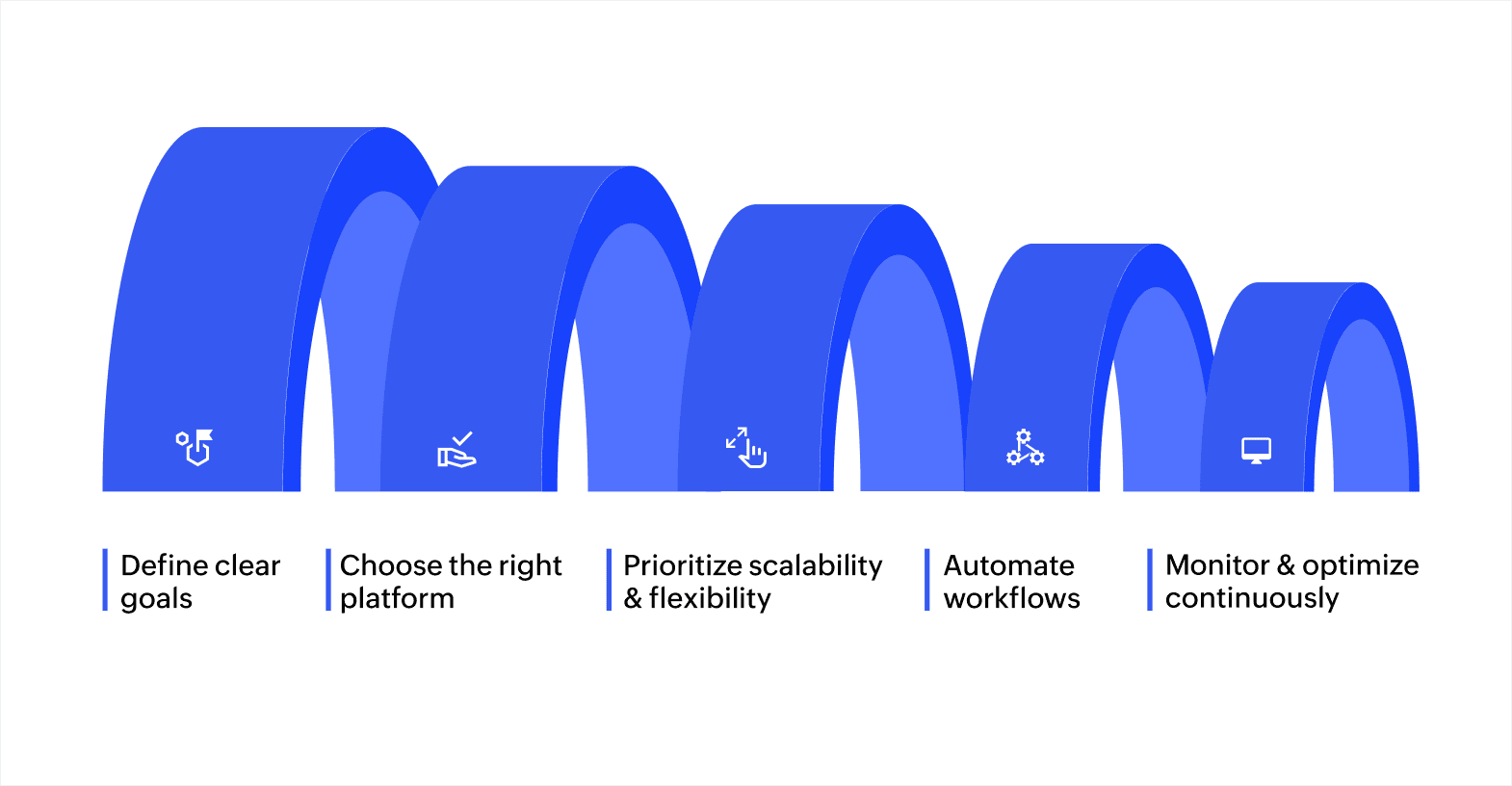
To use the full potential of multiexperience development, here are some best practices to follow:
1. Define clear goals and user expectations: Establish specific business objectives and understand your users’ preferences across different touchpoints. This helps you create applications that effectively address their needs.
2. Choose the right platform: Select a multiexperience platform that integrates seamlessly with your systems, supports customization, and is flexible enough to evolve with your business. Platforms like Zoho Creator offer a low-code environment for easy application development.
3. Prioritize scalability and flexibility: Ensure that your platform can scale as your business grows. Cloud-based solutions offer the flexibility to quickly adapt to new requirements without disruption.
4. Automate workflows: Automate routine tasks to improve operational efficiency and reduce human error. Multiexperience platforms enable automation with minimal coding.
5. Monitor and optimize continuously: Keep a close watch on application performance and user feedback. Regular optimization ensures that your solutions remain aligned with business objectives and user demands.
By following these steps, businesses can not only simplify operations but also future-proof their digital solutions for long-term success.
How multiexperience development can transform your business
Multiexperience development platforms enable businesses to create unified, seamless applications that deliver consistent user experiences across multiple touchpoints. By adopting these platforms, businesses can enhance user engagement, improve operational efficiency, and stay ahead of evolving technological trends.
Zoho Creator is an AI-powered low-code platform that simplifies application development. With features such as a drag-and-drop interface, cross-platform compatibility, AI-powered assistance, and real-time analytics, Zoho Creator enables businesses to build custom applications effortlessly.
Additionally, its strong integrations, workflow automation, data security measures, and multi-language support ensure that businesses can simplify operations, maintain brand consistency, and provide secure, scalable solutions.
Sign up for free today and experience how easy it is to automate workflows, improve efficiency, and create seamless digital experiences across all platforms.
FAQ
1. How does multiexperience development differ from traditional app development?
Multiexperience development creates applications that offer a consistent experience across multiple platforms, like mobile, web, and voice interfaces. Unlike traditional app development, which focuses on one platform, MXD ensures seamless user interaction across all devices. This approach saves time and reduces redundancy.
2. What are the key technologies integrated into multiexperience development platforms?
MXDPs integrate technologies such as responsive web design, voice recognition, AR/VR support, and sensor integration for wearables. These tools enable smooth interaction across various touchpoints, ensuring consistency in user experience. The result is flexible, adaptive applications.
3. How can businesses ensure data security in multiexperience development applications?
Businesses can secure data in multiexperience applications by using strong encryption, secure authentication, and real-time data protection. Ensuring compliance with data privacy regulations across all touchpoints is important. This helps protect sensitive user information across multiple platforms.
4. Can multiexperience development platforms integrate with existing legacy systems?
Yes, MXDPs can integrate with legacy systems through custom APIs and connectors. This allows businesses to modernize their applications while maintaining existing infrastructure. The integration ensures smooth data flow between old and new systems.
 Bharathi Monika Venkatesan
Bharathi Monika Venkatesan is a content writer at Zoho Creator. Outside of work, she enjoys exploring history, reading short novels, and cherishing moments of personal introspection.