
- HOME
- Know Your Tech
- Technical debt: Common causes and prevention strategies
Technical debt: Common causes and prevention strategies
- Last Updated : March 31, 2026
- 203 Views
- 9 Min Read
Your codebase worked well a few months ago. Updates were simple and new features integrated smoothly. But now, does every change take a lot of time?
This often happens because of technical debt. It accumulates when teams prioritize speed over maintainability, skip proper documentation, or work with outdated systems.
Highlights
- Time pressure creates development shortcuts that sacrifice code quality, testing, and documentation for immediate delivery.
- Poor planning results in architecture that can't scale, making future updates and feature additions increasingly difficult.
- Changing requirements without refactoring creates fragmented codebases that become harder to maintain over time.
- Legacy systems lack compatibility with modern tools, requiring costly maintenance and limiting innovation.
- Preventive practices like coding standards, automated testing, and regular reviews keep systems maintainable as they grow.
This blog post breaks down in detail what causes technical debt in modern software development. You'll learn the most common factors that create it and also some effective strategies to prevent it.
What is technical debt?
Technical debt refers to the maintenance costs that accumulate when development teams take shortcuts in the design, development, or deployment of software systems. These shortcuts are often made to speed up delivery, meet deadlines, or simplify complex tasks, but they create inefficiencies that will need to be addressed later. In essence, it’s the "cost" of not building something the right way from the start.
While these decisions might appear beneficial in the short term, they tend to accumulate over time, creating friction and barriers for future development. This "debt" often results in increased maintenance costs, slower development cycles, and a greater likelihood of encountering system failures or performance bottlenecks as the system evolves.
What causes technical debt: Common reasons explained
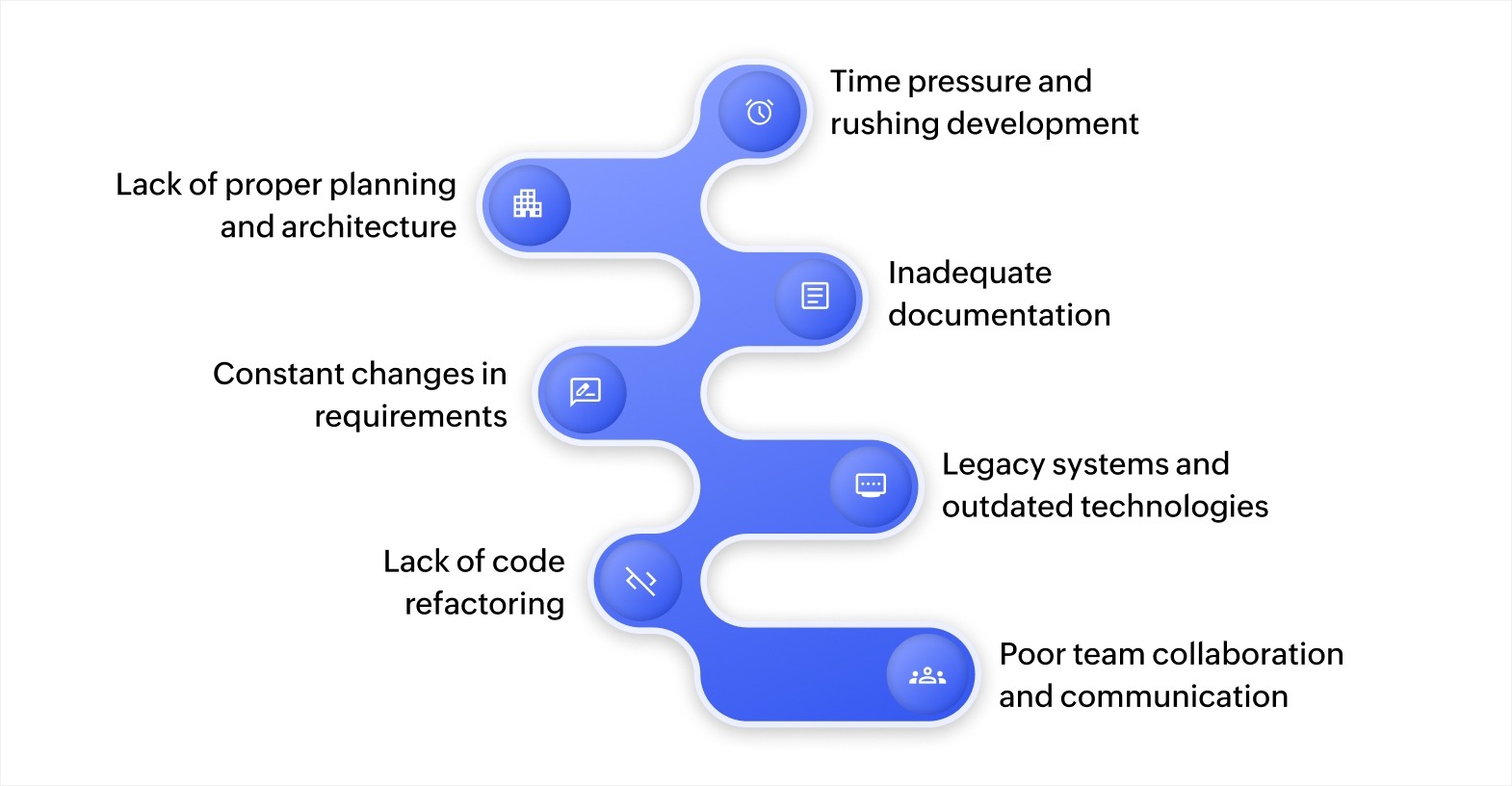
Knowing what causes technical debt is key to managing and reducing its impact on your systems and projects. Below, we break down the most common causes of technical debt and explain how each contributes to its accumulation.
Time pressure and rushing development
Meeting tight schedules often forces teams to choose speed over quality. The development cycle gets compressed, testing gets reduced, and documentation gets skipped to deliver features on schedule.
- Why it matters: Shortcuts in coding, testing, and documentation address immediate delivery needs but create structural problems. Code that works immediately lacks the organization needed for long-term stability.
- The impact: The time saved initially is spent later fixing errors, debugging, and improving the quality of the software. Over time, this increases the technical debt as the system becomes harder to manage and update.
Gartner reports that 55% of respondents identified prioritizing certain features over others as a common cause of technical debt. This occurs when the focus is on delivering features quickly while leaving other important elements incomplete.
Lack of proper planning and architecture
Proper planning and architecture are fundamental to any successful development project. Without a solid blueprint, you may end up with a system that is difficult to maintain and scale.
- Why it matters: Skipping the architecture phase or choosing a quick solution can lead to a system that is inefficient and inflexible, requiring constant fixes and upgrades.
- The impact: Without a good architectural foundation, your system will become more complex over time, making it harder to scale or modify. This adds to the technical debt and slows down future development.
Investing time in proper planning ensures that your system is built on a solid foundation, making it easier to update and maintain in the future.
Inadequate documentation
Good documentation is essential for long-term software maintenance. Without clear, up-to-date documentation, it’s harder for developers to understand the code and make necessary updates.
- Why it matters: When there's no clear documentation, developers struggle to understand the logic behind certain code segments, leading to confusion and errors.
- The impact: This often results in developers introducing bugs or redundant solutions, increasing the cost of future updates. Proper documentation makes the system easier to manage and reduces the risk of errors.
Constant changes in requirements
Frequent changes to project requirements can cause the codebase to become inconsistent and more difficult to manage. Constant shifting of requirements adds layers of complexity to the project.
- Why it matters: Each time the project’s requirements change, it requires revisiting and modifying the code. This leads to a fragmented system that’s difficult to scale and update.
- The impact: A constantly evolving project creates a patchwork of code that’s harder to maintain and more likely to introduce errors. Technical debt builds up as the system becomes harder to modify without causing issues.
Defining clear, stable requirements before starting the development process and limiting changes throughout can help reduce this source of technical debt.
Legacy systems and outdated technologies
Many businesses rely on legacy systems and outdated technologies because they are familiar or cost less in the short term. However, these systems accumulate technical debt over time as they become harder to maintain and update.
- Why it matters: Legacy systems often lack compatibility with newer technologies, making it difficult to implement modern features or scale the system.
- The impact: Over time, these outdated systems require more maintenance, and the cost of keeping them running increases. Legacy systems can hinder innovation and slow down development.
Migrating from legacy systems to newer technologies can help reduce technical debt and ensure your infrastructure is flexible and scalable.
Lack of code refactoring
Code refactoring is the process of improving existing code without changing its external behavior. Neglecting to refactor code regularly can result in a messy, inefficient codebase that’s harder to maintain.
- Why it matters: As the codebase grows, it becomes more complicated and harder to manage. Without refactoring, your code will become bloated and inefficient, leading to performance issues.
- The impact: Failing to refactor the code regularly means that your software will become increasingly difficult to maintain, requiring more time and resources to update or fix. This increases technical debt as the codebase grows.
Regular refactoring ensures that your code remains clean, efficient, and easier to update as your system evolves.
Poor team collaboration and communication
Effective communication and collaboration among team members are essential for minimizing technical debt. When teams don't align on coding practices, standards, or goals, it leads to inconsistencies and inefficiencies in the system.
- Why it matters: Poor collaboration can result in duplicated efforts, inconsistent code, and missed opportunities for optimization. These issues can compound over time, leading to technical debt.
- The impact: Misunderstandings and misalignments within the team create unnecessary complexity in the system. This adds to the technical debt and makes future development more difficult.
Encouraging open communication and collaboration among team members helps ensure that the project moves forward smoothly and reduces the risk of introducing errors.
Multiple factors contribute to technical debt. Recognizing these causes helps you address them proactively rather than reactively managing their consequences.
How to avoid technical debt
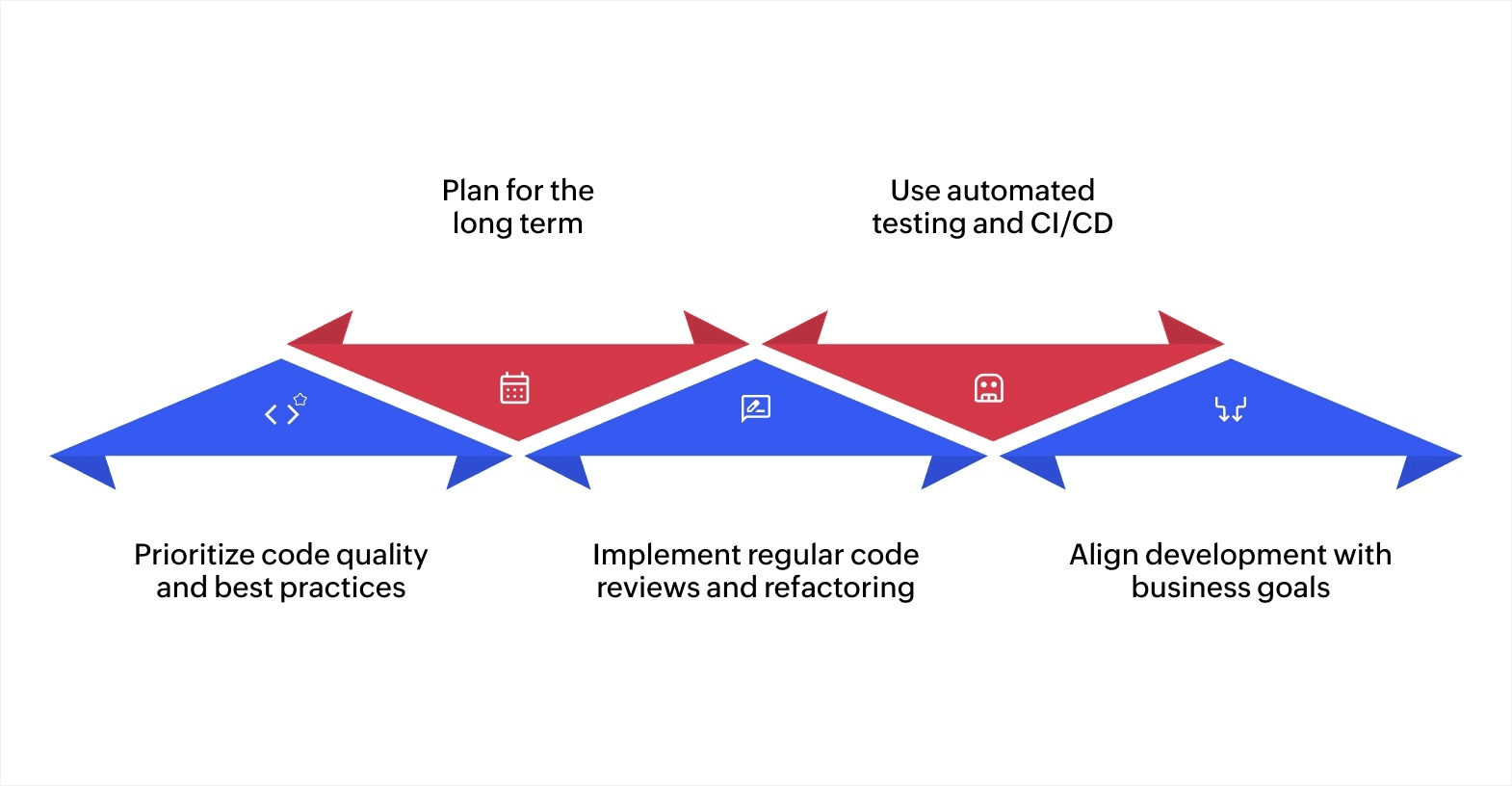
Technical debt is an important challenge for any organization striving for long-term stability. However, with proactive strategies in place, you can prevent its accumulation and keep your systems efficient. Below are key practices to help you reduce technical debt:
Prioritize code quality and best practices
Teams must adopt coding standards and best practices that prioritize clean, maintainable code. This includes:
- Code consistency: Implement linting tools (like ESLint for JavaScript or Pylint for Python) to enforce coding standards, ensuring readability and minimizing errors.
- Design patterns: Use patterns such as MVC (model-view-controller) or Singleton for reusable, scalable code.
- Code complexity management: Tools like SonarQube help identify overly complex code parts that could signal inefficiencies and lead to technical debt.
These practices ensure a well-structured codebase that will be easy to maintain and scale, which is important as businesses increasingly shift to modernization strategies to stay competitive.
Plan for the long term
Technical debt often arises when short-term goals compromise future scalability. To minimize this:
- Ensure scalable architecture: Adopt modular architectures that allow components to evolve independently, reducing the impact of debt during scaling. Microservices can also help manage technical debt when implemented with clear service boundaries and operational maturity.
- Use cloud-native solutions: Utilize services like Amazon Web Services (AWS) Lambda, or Azure Functions for flexible, scalable infrastructure that adapts as your business grows.
- Avoid premature optimization: Focus on functional solutions first. Over-optimizing too early can introduce unnecessary complexity, leading to future rework.
Long-term planning ensures your system can scale efficiently without introducing avoidable debt. As the application modernization market continues to grow, businesses are increasingly recognizing the value of planning ahead for scalability.
A low-code platform like Zoho Creator can significantly reduce technical debt by simplifying application development processes and making it easier to scale over time. Learn more about how low-code solutions can help reduce technical debt here.
Implement regular code reviews and refactoring
Regular code reviews and refactoring are vital for keeping your codebase clean and efficient:
- Code reviews: Use GitHub or GitLab for peer reviews, ensuring that potential issues are identified early.
- Refactoring: Refactor code to improve its structure without changing functionality. This reduces complexity and improves maintainability.
- Technical debt backlog: Use tools like Jira to track technical debt, ensuring it's prioritized and regularly addressed.
These practices help detect inefficiencies early, ensuring your code remains manageable and scalable, especially as your team embraces modern application architectures.
Use automated testing and continuous integration/continuous delivery (CI/CD)
Automated testing and CI/CD tools are important in managing technical debt by detecting issues before they escalate. For businesses building custom applications, Zoho Creator provides features like version control and sandbox environments, enabling developers to implement CI/CD-like workflows effectively. Additionally, Zoho QEngine can be integrated into these workflows to automate testing, ensuring that only high-quality, bug-free releases are deployed.
- Automated testing: Implement frameworks like JUnit or pytest to run tests automatically, ensuring new changes don’t introduce bugs or regressions.
- CI/CD pipelines: Automate testing and deployment with tools like Jenkins, CircleCI, or Travis CI, ensuring consistent code quality.
- Test coverage: Use tools like Istanbul or JaCoCo to ensure high test coverage, particularly in important parts of your code.
These processes catch issues early, preventing them from evolving into larger technical debt. As organizations continue to modernize their systems, these tools will become increasingly essential to maintaining quality during the development process.
Align development with business goals
Ensuring your development efforts align with business objectives helps prevent the accumulation of technical debt:
- Agile methodologies: Use Agile practices to regularly assess and prioritize technical debt alongside new features, ensuring alignment with business needs.
- Tech debt visibility: Track both technical debt and new feature development in tools like Jira to ensure neither is overlooked.
- Cross-functional collaboration: Involve both IT and business stakeholders to ensure technical solutions are aligned with long-term goals.
This alignment helps ensure technical decisions are made with the long-term vision in mind, preventing unnecessary debt, which is particularly important as businesses undergo digital transformation to stay competitive in a growing market.
These strategies work together to prevent technical debt from accumulating. They require commitment but deliver returns through faster development and easier maintenance over time.
How to reduce technical debt and build scalable solutions
Technical debt is an ongoing challenge that can hinder the growth and scalability of any organization. By understanding what causes technical debt, such as rushed development, poor planning, legacy systems, and communication breakdowns, you can take proactive steps to prevent it. Key strategies like prioritizing code quality, planning for long-term scalability, conducting regular code reviews, and using automated testing and CI/CD practices will help minimize technical debt.
As businesses continue to modernize, AI-powered low-code platforms like Zoho Creator play an important role in simplifying application development while enabling better scalability. With its user-friendly tools and intuitive development environment, Zoho Creator can help you reduce technical debt and ensure your applications are easier to maintain and update over time.
Don’t let technical debt hold your business back. Sign up for free and build scalable, efficient applications for the future!
FAQ
1. How does technical debt affect team productivity?
Technical debt often leads to slower development cycles as teams spend more time fixing issues caused by previous shortcuts. This can divert focus from building new features, ultimately slowing down progress and increasing frustration among developers. The need to repeatedly address legacy code or outdated systems takes away valuable time that could otherwise be spent on innovation and growth.
2. Can technical debt be measured?
Yes, technical debt can be measured using various tools and metrics. Metrics like code complexity, test coverage, and the frequency of bugs or defects can help quantify the amount of debt. Tools such as SonarQube, Jira, and GitHub Insights provide valuable insights into the state of your codebase, allowing teams to prioritize areas that need refactoring and improvements.
3. What role does legacy technology play in causing technical debt?
Legacy systems and outdated technologies are a major source of technical debt. These systems often require costly and time-consuming maintenance, lack compatibility with modern tools, and may not scale effectively. As businesses try to integrate new technologies, the gaps between legacy systems and modern infrastructure create significant inefficiencies, resulting in technical debt.
4. How can a low-code platform help reduce technical debt?
Low-code platforms like Zoho Creator can significantly reduce technical debt by simplifying the application development process. By offering visual development tools, prebuilt components, and automation, low-code platforms minimize manual coding errors, simplify collaboration, and allow faster iterations. This leads to more scalable, maintainable systems with less reliance on complex, legacy code.
 Bharathi Monika Venkatesan
Bharathi Monika Venkatesan is a content writer at Zoho Creator. Outside of work, she enjoys exploring history, reading short novels, and cherishing moments of personal introspection.