- HOME
- All Products
- File Management
- Litigation hold explained: What businesses need to preserve when legal action is expected
Litigation hold explained: What businesses need to preserve when legal action is expected
- Published : August 31, 2026
- Last Updated : September 1, 2026
- 14 Views
- 6 Min Read
One day, everything’s business as usual. The next, someone mentions a demand letter, an inquiry from a regulator, or a formal complaint from a previous employee. They’re not lawsuits, but they’re the kinds of moments that could lead to one.
And, unfortunately, it’s more common than you might think. According to a recent litigation survey, 70% of organizations were involved in at least one regulatory proceeding in 2024, up from 61% the year before.
Once legal action is on the table, you have new obligations on your plate. Routine habits like auto-deleting old emails or clearing out shared drives can turn into a legal liability overnight. That’s exactly where a litigation hold comes in. It’s a formal process for pausing those ordinary cleanup tasks and preserving anything that might matter to the potential case at hand.
Feeling overwhelmed? That’s normal, but this guide is here to make the process a little easier. We’ll cover what a litigation hold requires, how one gets triggered, what needs to be saved, who’s responsible for making it happen, and the mistakes that commonly get companies into trouble.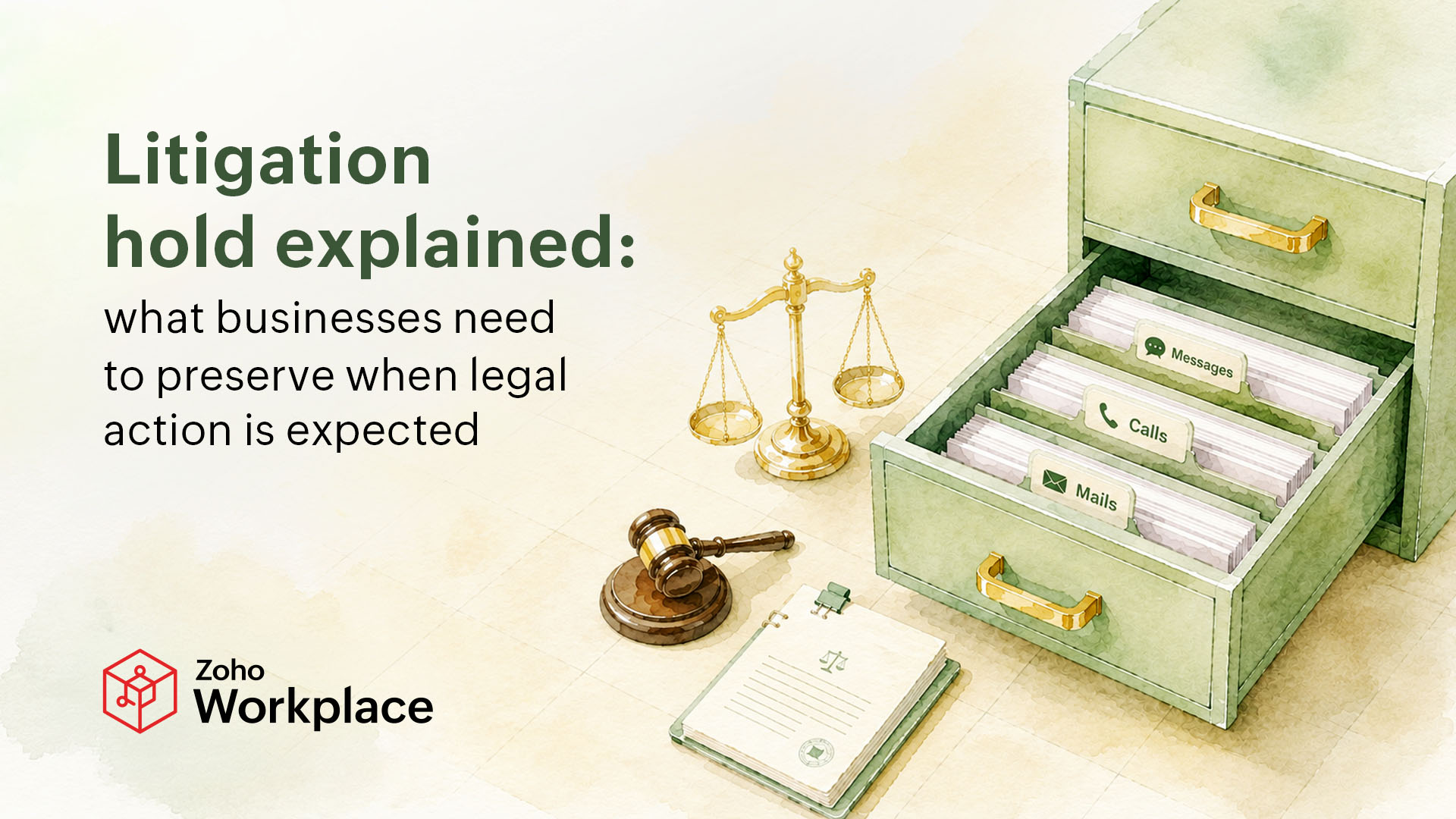
What exactly is a litigation hold?
A litigation hold is essentially a straightforward instruction to stop deleting things. That includes emails, chat messages, shared files, calendars, contracts—anything that might matter to a potential legal case needs to stay put, whether it’s digital or sitting in a file cabinet.
Even if the concept is unfamiliar to you, it’s not a new one. For decades, courts have recognized that companies need to preserve evidence once they reasonably expect legal action—it’s even included in the Federal Rules of Civil Procedure. That “expect” word is crucial (and something that a lot of organizations miss). The rule doesn’t start when a lawsuit lands on your desk. It starts the moment you have real reason to believe that one’s coming.
When that happens, a litigation hold puts your normal data habits on pause. Things like auto-deletion, retention schedules, and routine cleanups need to stop until the hold lifts. Fail to do that, and you’re looking at something called “spoliation,” the legal term for evidence that’s been destroyed, altered, or has gone missing when it should’ve been preserved. Courts don’t take it lightly, even when it wasn’t intentional.
What triggers a litigation hold?
A litigation hold kicks off when legal action is “reasonably anticipated.” That means there isn’t a single moment or checkbox that starts one. There are several different types of events that could signal it’s time to start saving things. Some of the most common include:
- Demand letters: A formal letter from an attorney making a claim or threatening legal action.
- Employee complaints: Especially ones that involve discrimination, harassment, retaliation, or wrongful termination. Those often escalate quickly.
- Regulatory inquiries or subpoenas: Any request from a government agency or third party asking you to produce records.
- Workplace accidents or injuries: A serious incident where someone could reasonably pursue legal action, like a significant injury on the job or even on your premises.
- Contract disputes: A vendor, partner, or client makes it clear that they intend to pursue a breach-of-contract claim.
- Internal knowledge of wrongdoing: If your company becomes aware of conduct (like a data breach, safety violation, or financial misconduct) that could reasonably lead to legal action.
None of these are a guarantee that a lawsuit is coming your way, but each one is the kind of signal that courts point to when deciding whether a company should have started preserving evidence. Waiting for an official notice usually means you’re already behind. By then, your preservation duty may have already applied for weeks (or even months).
What businesses (really) need to preserve
Once a hold is in place, it impacts more than most people expect. Everyone thinks of emails, but anything that could reasonably relate to the matter at hand (regardless of where it lives) should be saved.
This includes obvious stuff like contracts, financial records, HR files, and physical paperwork. But here’s a non-exhaustive list of some of the other things teams tend to overlook:
- Emails: They’re usually the first thing people think to save. But because they seem so simple, it’s much easier to skip things like forwarded threads and personal accounts used for work.
- Chat and collaboration tools: Instant messaging platforms or project management tools are increasingly where real conversations seem to happen. Remember to include these, along with DMs and private channels (not just public ones).
- Calendars and meeting records: Having a clear record of who met when and with whom can matter just as much as what was said in that conversation.
- Cloud files and shared drives: Docs, spreadsheets, and shared folders, including version history where it exists.
- Text messages and mobile data: If work conversations happen on personal or company phones, those are fair game, too.
- Voicemails and recorded calls: They may not be “documents” in the traditional sense, but they’re still discoverable.
- Metadata: Timestamps, edit history, or other behind-the-scenes details that show when something was created or changed.
Ultimately, relevance matters more than format. If something could reasonably connect to the potential legal action, it needs to be saved.
Keep in mind that many of these tools have their own retention settings. So, someone will have to go in and manually override those defaults—otherwise auto-deletion could sneak in and undo the litigation hold without anyone noticing.
Who’s responsible for a litigation hold—and who has to follow it
A litigation hold is typically issued by legal counsel—whether it’s an in-house team or outside counsel your company works with. Whoever fills that role is responsible for recognizing the trigger, defining the scope, and sending out a formal hold notice once litigation is reasonably anticipated.
If your company doesn’t have counsel on retainer yet, that responsibility falls on whoever spots the trigger first. That’s often a manager, HR, or someone in leadership. They don’t need to handle the hold themselves, but they do need to recognize the moment and get legal guidance quickly.
After that, though, it’s everybody’s job to follow the hold. A hold notice typically goes out to anyone who may have relevant information—from an HR manager or a project lead to a frontline employee or an executive. Once someone receives a notice, they’re expected to stop deleting anything connected to the potential legal action, even if it means overriding their own habits or a tool’s default settings.
IT also usually plays a supporting role here by helping identify where relevant data lives, suspending auto-deletion where needed, and making sure the hold actually sticks across systems. But complying with the hold isn’t their responsibility alone. Everybody who gets the notice plays a role.
5 common mistakes that get companies in trouble
Even organizations that take litigation holds seriously can get some details wrong. Many mistakes come from thinking of the hold as a task to check off rather than an ongoing responsibility. Here’s a quick look at a few of the most common blunders to watch out for:
1. Waiting too long to issue the hold: Once someone notices a trigger, it’s time to get moving. Delaying a hold notice by weeks or months (even without any intent to destroy evidence) can still be treated as negligence if you lose relevant data in the meantime.
2. Keeping the scope too narrow: Limiting a hold to a handful of obvious people or one data source leaves a lot of exposure. If a manager’s Slack DMs or an employee’s texts turn out to be relevant, “Oops, we forgot” doesn’t carry a lot of weight for your defense.
3. Treating the notice as a one-time email: Sending out a hold notice once but never revisiting it makes it more likely that people forget or that tools reset to their default retention settings.
4. Skipping acknowledgement and follow-up: Sending a notice isn’t the same thing as confirming that people actually understood it and are serious about complying. Without documented acknowledgements and periodic check-ins, a hold is hard to defend if it’s ever challenged in court.
5. Lifting the hold too early: A hold should only be lifted once legal counsel confirms the matter is genuinely closed. That could mean a case was settled or dismissed, an appeal window passed, or a regulatory inquiry was formally concluded. Don’t assume a hold is over without that explicit sign-off.
Ultimately, avoiding these mistakes just requires that people pay attention to the hold—all the way from noticing the trigger to confirming the hold is over.
Keep what matters now, so you’re covered later
Nobody wants to be the reason a legal matter turns out badly. So, the moment it feels like something could escalate, preservation is no longer optional.
Fortunately, triggering and complying with a litigation hold doesn’t require a law degree. You simply need attention, a clear process, and a willingness to hit pause. At the end of the day, courts don’t ask if you meant to lose the evidence—they just ask why it’s gone.
 Kat Boogaard
Kat is a freelance writer focused on the world of work. She writes for both employers and employees, and mainly covers topics related to the workplace such as productivity, entrepreneurship, and business success. Her byline has appeared in The New York Times, Fast Company, Business Insider, Forbes, and more.