- HOME
- Email security
- How to combat brand impersonation during the holiday season
How to combat brand impersonation during the holiday season
- Last Updated : March 6, 2026
- 404 Views
- 7 Min Read

The holiday season is when online shopping hits an all-time high. From clothes and home decor to gadgets, gift cards, and festive presents, consumers flock to ecommerce platforms in search of the best deals. Brands, in turn, flood the internet with attractive discounts and limited-time offers, creating a vibrant but crowded digital marketplace.
But while shoppers hunt for bargains, cybercriminals are looking for opportunities to exploit this high-traffic period. With consumers rushing through purchases and brands pushing out frequent promotions, attackers know this is the perfect moment to blend in unnoticed.
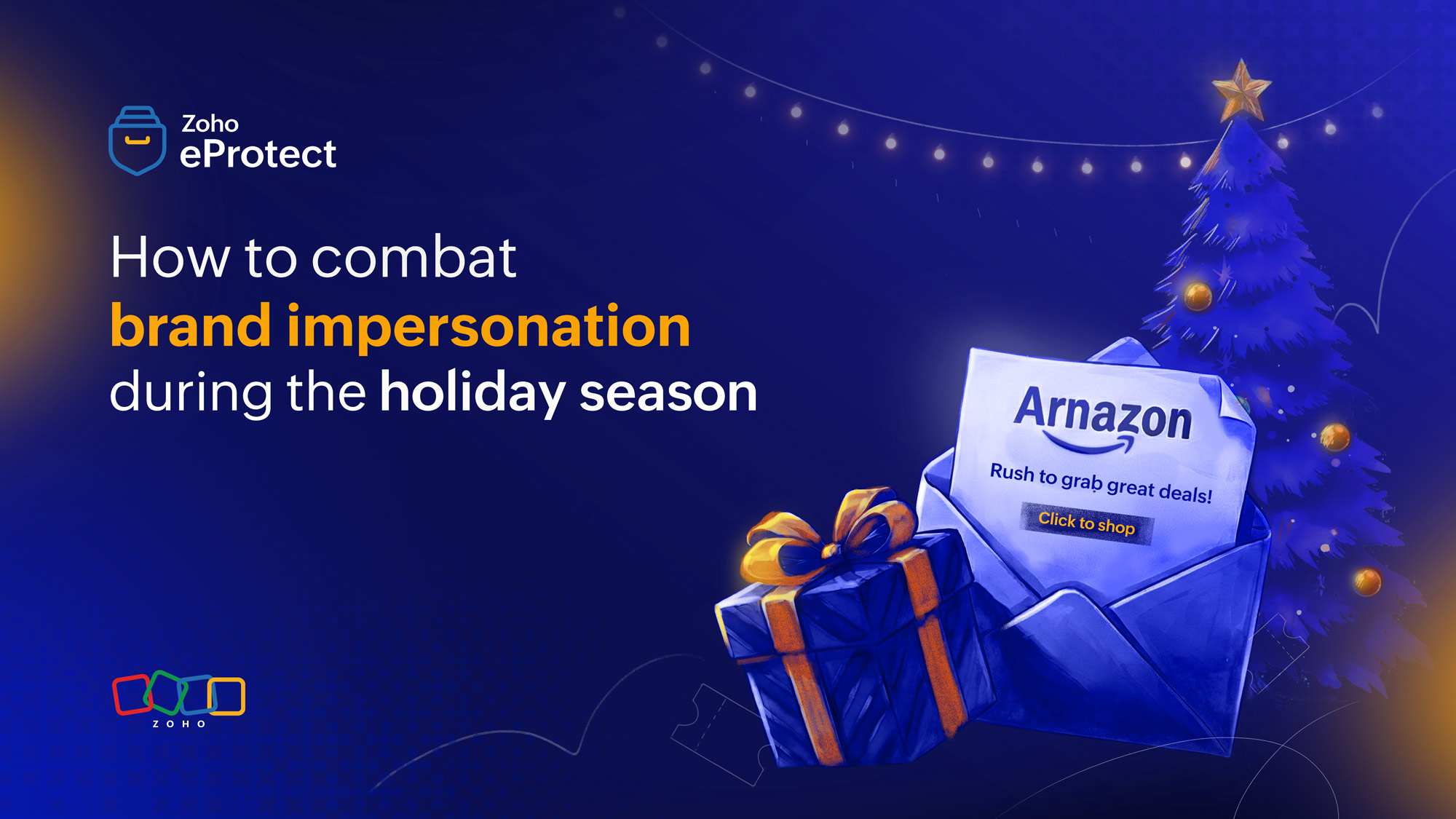
A common tactic is brand impersonation, where cybercriminals pose as well-known companies, create fake ads or websites, and promote offers that seem irresistible. Because legitimate brands often run holiday discounts, it becomes even harder for customers to distinguish genuine deals from scams. As a result, unsuspecting shoppers may place orders, share payment details, or disclose personal information on fraudulent sites and fall victim to financial loss and data exposure.
These impersonation scams impact both the consumers who lose money and data, and businesses whose reputation and revenue take a hit. In this article, we'll break down what brand impersonation really is, the common tactics used, why these scams peak during the holiday season, and how both brands and consumers can protect themselves.
What is brand impersonation?
Brand impersonation is a tactic in which cybercriminals mimic the identity of a well-known company to deceive customers. They replicate official logos, websites, emails, social media profiles, and even ad campaigns to appear legitimate. Their goal is to trick users into clicking malicious links, sharing sensitive information, or making payments on fraudulent platforms.
These scams work because they exploit the trust customers have in established brands. When fake communication closely resembles the real thing, consumers often don't question its authenticity, making it easier for attackers to steal data, money, or login credentials.
Why attackers choose the holiday season
There are several reasons why the holiday season could be a lucrative time for cybercriminals. Some of them are:
Increased online shopping: The surge in purchases gives attackers more opportunities to blend phishing emails and fake offers with legitimate brand communications.
High volume of promotional emails: Consumers expect discounts, making them more likely to trust and click links without scrutiny.
Sense of urgency: Limited-time sales and fast-moving deals make users act quickly, lowering their guard and increasing the likelihood they'll fall for scams.
Distracted consumers: Holiday planning, travel, and gifting mean people are less attentive to signs of fraud.
Higher transaction noise: With so many order confirmations, shipping updates, and notifications, it's easier for fake alerts to slip through unnoticed.
Brands operating at peak speed: Marketing teams send frequent campaigns and support teams handle high ticket volumes, making it harder to catch impersonation attacks early.
Attackers profit more easily: With higher spending and widespread trust in seasonal offers, scams have a higher success rate—and bigger financial returns—for cybercriminals.
Common impersonation tactics used
Attackers use several deceptive techniques to mimic trusted brands and mislead consumers. One of the most common methods is email spoofing, in which fraudulent emails appear to come from legitimate brand addresses. Cybercriminals also use domain impersonation to trick users into entering their credentials or making payments. Cloned websites that replicate the design, layout, and branding of official pages are frequently used to capture sensitive information.
Beyond email and websites, attackers also set up fake social media profiles and pose as brand support teams, and run fraudulent ads promoting unrealistic discounts. These tactics are often combined with urgent messaging to push consumers into acting quickly without verifying authenticity.
Commonly impersonated brands during the holiday
During the holidays, attackers target brands that consumers interact with most, especially those tied to shopping, payments, and deliveries.
Online retail brands
Large ecommerce platforms and popular retail chains are among the most impersonated. Attackers mimic promotions and offers to trick shoppers into entering card details or logging in to fake portals. High shopping volume makes these scams particularly effective.
Technology brands
Tech companies offering smartphones and gadgets frequently see impersonation spikes during holiday sales. Scammers create fake product giveaways and subscription renewals that appear to come from trusted brands, which prompts users to click malicious links or share credentials.
Shipping carriers
With deliveries peaking during the holidays, attackers impersonate major shipping companies to send fake tracking updates or failed delivery notices. These messages nudge recipients to take action without thinking too much.
Indicators of brand impersonation
Customers and businesses should watch for both technical red flags and suspicious behavioral cues that suggest a message or website may not be legitimate.
Technical indicators
- Lookalike domains: Slight misspellings, added characters, or unusual top-level domains (e.g., .shop or .buy)
- Incorrect email headers: Sender address not matching a brand's official domain
- Missing HTTPS: No secure padlock, or the presence of certificate errors on checkout pages
- Low-quality assets: Blurry logos, distorted graphics, or mismatched colors
- Unusual URLs in links: Redirects or shortened links leading to unknown sites
Behavioral indicators
- Unexpected urgency: Messages pushing immediate action, such as "Your account will be blocked today"
- Too-good-to-be-true offers: Deep discounts, free gifts, or unrealistic promotions
- Requests for sensitive information: Asking for passwords, OTPs, or payment details via email/SMS
- Unfamiliar communication style: Tone, language, or formatting that doesn't match the brand's usual style
- Poor grammar or spelling errors: Frequent language mistakes that legitimate brands typically avoid
How to protect your brand from impersonation
Businesses must take a proactive, multi-layered approach to prevent attackers from misusing their identity. We'll discuss some of the basic protective measures below.
Configure SPF, DKIM, and DMARC
Implementing SPF, DKIM, and DMARC ensures that only authorized servers can send emails on your behalf. These protocols prevent spoofing and help receiving mail servers block malicious emails pretending to be your brand. This acts as a foundation of strong email identity protection.
Use a strict DMARC policy
Moving from "none" to a stricter DMARC policy—such as "quarantine" or "reject"—ensures spoofed emails are blocked before reaching customers. A strict policy offers stronger protection, especially during peak seasons, by preventing unauthorized senders from impersonating your domain in phishing or scam campaigns.
Set up BIMI
BIMI is a recent and emerging email specification that enables brands to associate an official logo with their emails. It displays your verified brand logo in the recipient's inbox, reinforcing trust and making fake emails easier for customers to spot. When combined with DMARC enforcement, BIMI strengthens brand recognition and helps users identify your legitimate communications.
Monitor for lookalike domains and webpages
Regularly scan for domains or webpages that closely resemble your brand's identity. Attackers often register lookalike sites to steal customer information or run fake promotions. Early detection enables quick takedowns and helps prevent fraudulent activity from spreading widely during high-traffic periods.
Secure public-facing brand assets
Ensure your official website, social media profiles, and digital ads are consistently monitored and verified. Use HTTPS, valid certificates, and platform verification tools to prevent spoofing. Maintaining strong security and clear branding across all channels helps reduce opportunities for attackers to impersonate your business online.
Strengthen internal processes
Educate marketing and support teams to identify impersonation attempts and respond quickly. Establish clear escalation paths, coordinate with legal teams for takedowns, and routinely review access controls and vendor configurations. Strong internal alignment minimizes the impact of brand impersonation incidents.
How to prevent brand impersonation scams
Customers can protect themselves from impersonation scams by staying alert and verifying every interaction before taking action.
Verify the email sender
Always check who the email is actually from before opening links or responding. Fraudulent emails may use a brand's name in the display field but originate from unrelated or suspicious domains. Look closely at the sender address, user name, and domain extension. Small inconsistencies often reveal impersonation attempts that are designed to trick users quickly.
Double-check URLs and website spellings
Scammers frequently create fake websites that look nearly identical to real ones, using misspellings or slight variations in the domain name. Before entering personal or payment details, inspect the URL for accuracy, ensure it begins with HTTPS, and avoid clicking links that redirect unexpectedly. These simple checks help prevent credential and payment theft.
Use official channels for purchases and support
Always rely on the brand's official website or verified social media accounts for shopping and customer assistance. Avoid interacting with links sent via unsolicited emails or messages. Official channels follow consistent communication patterns and offer safer, authenticated pathways. This significantly reduces the risk of falling prey to scammers posing as legitimate support or sales teams.
Be wary of deals that are too good to be true
If an offer seems unusually generous or unrealistic compared to typical brand discounts, it's likely a scam. Cybercriminals often use unbelievable deals to lure users into clicking malicious links or sharing payment details. Verify promotions directly on the brand's official website rather than trusting unexpected emails or ads that promise steep savings.
Don't share sensitive information over email
Legitimate brands will never ask for passwords, OTPs, payment card numbers, or personal details through email or messaging platforms. If you receive such requests, it tends to be fraudulent. Avoid engaging with such emails. Always navigate to the brand's official website to manage your account securely.
Report suspicious emails immediately
If an email contains suspicious elements such as unexpected offers, unfamiliar senders, or urgent requests, report it to the brand and your email provider. Reporting helps companies take faster action against impersonation attempts and protects other customers from falling victim. Deleting the email after reporting ensures you don't accidentally click or engage with malicious content.
Deploy an email security solution
Using a robust email security solution adds an extra layer of protection by filtering out malicious and spoofed messages before they reach your inbox. By analyzing the sender reputation, these tools identify fake domains and block high-risk messages, reducing your chances of becoming a victim of brand impersonation scams.
Wrapping up
Brand impersonation scams continue to rise—especially during the holiday season, when consumers are overwhelmed with deals and communications from multiple brands. By understanding how these scams work and taking proactive steps to identify suspicious activity, both businesses and customers can significantly reduce their risk. Ultimately, preventing impersonation is a shared responsibility that ensures safer online experiences and preserves trust in the brands we rely on.
eProtect is a cloud-based email security and archiving solution that provides an additional layer of security for email accounts. The solution offers advanced threat detection mechanisms that can secure on-premise and cloud email accounts from evolving email threats. eProtect is the security solution that powers Zoho Mail, a platform that millions of users trust.