- HOME
- Know Your Tech
- Project management methodologies for implementation success
Project management methodologies for implementation success
- Last Updated : February 2, 2026
- 552 Views
- 12 Min Read
You’ve probably been part of a project that looked promising at the beginning. But somewhere along the way, timelines slipped, teams got stuck, and the final outcome didn’t match the original goal. It happens more often than you think. And, usually, the problem isn’t the idea itself. It’s the lack of a clear and consistent approach.
Highlights
- Project management methodologies prevent confusion by defining roles, tracking progress, and keeping teams aligned throughout execution.
- Structured approaches set boundaries for project scope, reducing unexpected work that affects timelines and budgets.
- Effective resource allocation reduces waste and delays by matching team capacity with actual project demands.
- Regular evaluation catches issues early, allowing teams to adjust timelines, budgets, and workflows before problems escalate.
- Methodology selection depends on project complexity, team structure, stakeholder involvement, and organizational culture.
This is where a solid project implementation methodology can make a real difference. It gives your team a practical way to plan, track, and complete work without confusion or last-minute stress.
Choosing the right methodology matters when you’re coordinating teams, managing cross-department work, or building custom applications for daily operations. Some projects need flexibility, while others demand structure. In this article, you'll explore 10 proven project management approaches. You’ll also learn when to use each one so you can choose what works best for your goals.
What is project implementation methodology?
Project implementation methodology is a structured approach used to manage and execute a project from start to finish. It involves defining the processes, tools, and techniques for effective project planning, management, and completion. By adopting a well-defined methodology, businesses ensure that projects are delivered on time, within budget, and meet the desired quality standards.
This methodology serves as a guide for project managers and teams, helping them stay organized, allocate resources efficiently, and track progress. It also plays a key role in reducing risks and improving collaboration, ultimately driving the success of the project.
The importance of project implementation methodology
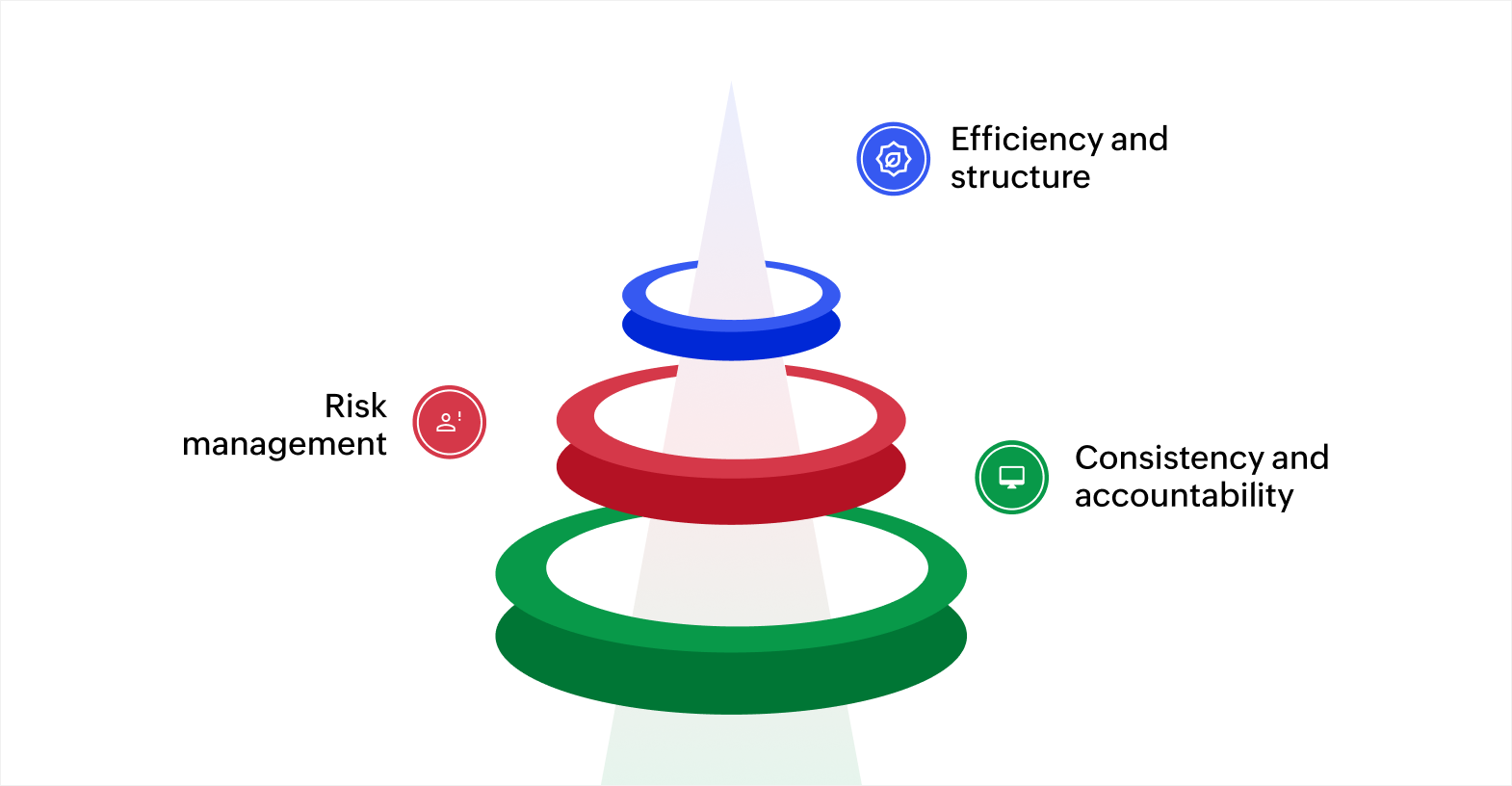
Having a solid project implementation methodology is vital for achieving consistent success. Here’s why:
- Efficiency and structure: A clear methodology provides a framework that helps teams organize tasks and allocate resources efficiently. This structure makes it easier to stay on schedule and meet deadlines, ensuring that the project progresses smoothly.
- Risk management: By following a methodology, project managers can identify potential risks early in the process. This proactive approach allows teams to address issues early, reducing the chance of delays or disruptions.
- Consistency and accountability: When a methodology is in place, each team member knows their role and responsibilities. This clarity promotes accountability, reduces misunderstandings, and fosters better teamwork.
The global project portfolio management market was valued at $5,712.7 million in 2024 and is projected to reach $12,252.6 million USD by 2030, growing at a CAGR of 14.2% from 2025 to 2030. This growth highlights how important it is for businesses to adopt structured approaches to project execution.
The benefits of implementing a solid methodology
Companies using structured project approaches see real improvements in delivery speed, how they use resources, and how teams work together. Here's how an effective project implementation methodology can help:
- It prevents unexpected work from adding up: A clear methodology sets boundaries for what the project includes and how changes will be approved, preventing extra tasks from delaying timelines.
- It helps teams coordinate better: When different departments work on the same project, a shared methodology creates regular checkpoints and clear handoffs that reduce communication delays.
- It makes progress visible: Methodologies include set milestones and indicators that show exactly where work stands, making it easier to spot slowdowns before they cause problems.
- It improves planning for people and time: Structured approaches help project managers estimate staffing and time needs more accurately, reducing the risk of overloading teams or finding help at the last minute.
- It builds repeatable success patterns: Teams can review finished projects to see what worked well and apply those same approaches to new work, creating organizational knowledge over time.
- It catches problems early: Methodologies include review points where teams look at potential issues, allowing them to address problems while they're still small and manageable.
A project implementation methodology provides a structured process that helps teams deliver consistent results—even when projects grow in complexity.
The top 10 project implementation methodologies for success
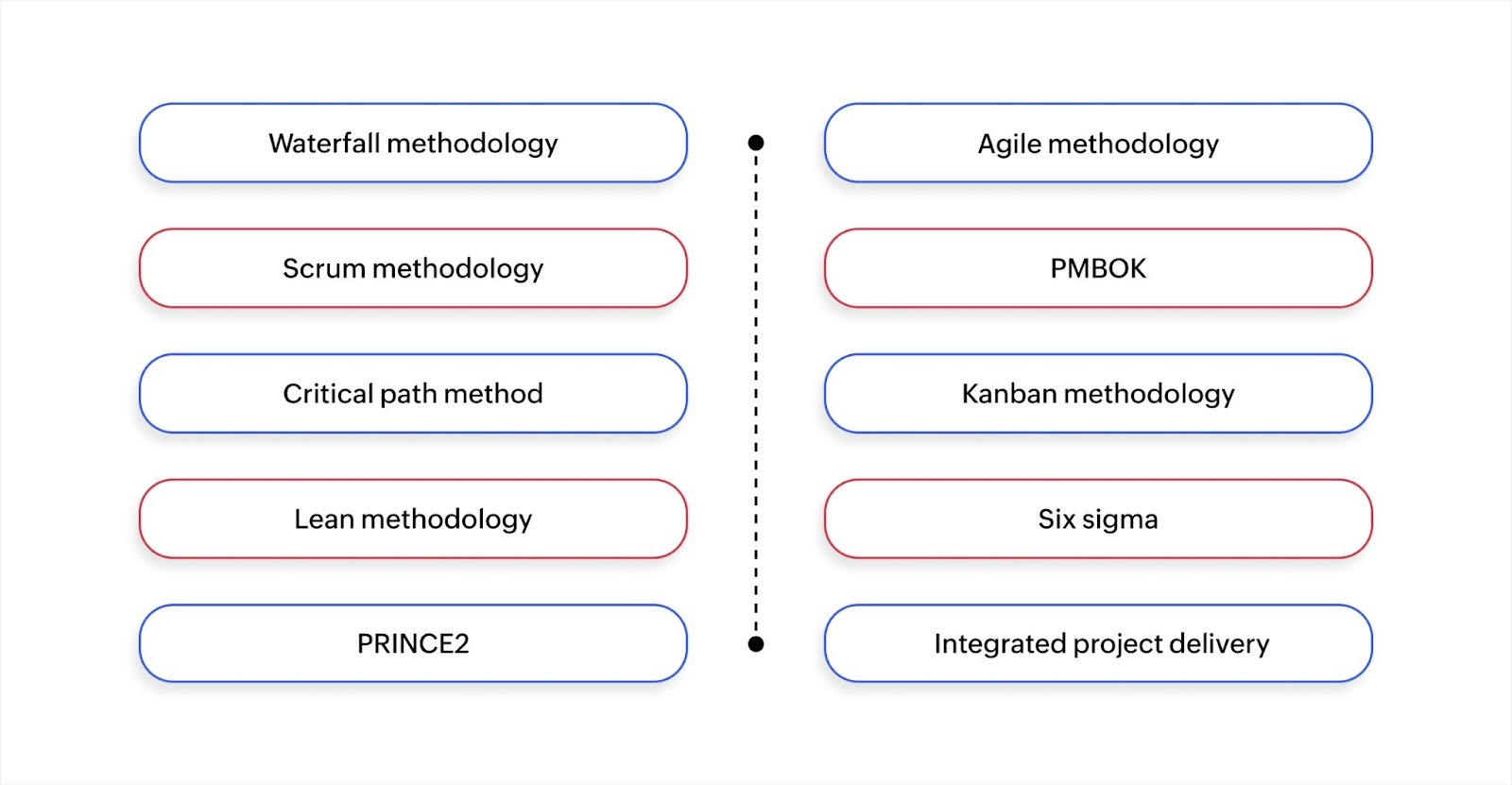
Selecting the right project implementation methodology is a fundamental decision that determines how effectively a project is managed, executed, and delivered. From software development to construction, different methodologies are designed to meet unique project needs, improve efficiency, and enhance overall performance. Here’s a breakdown of the top 10 methodologies that can drive project success, with insights into when and how each approach can be used.
1. Waterfall methodology
Waterfall is one of the most traditional project implementation methodologies. It follows a linear and sequential process where each phase must be completed before moving on to the next. This methodology is often used in industries where requirements are fixed from the outset, and changes are minimal.
Key points:
- Ideal for projects with clear, unchanging requirements.
- Commonly used in construction, manufacturing, and engineering.
- Requires thorough upfront planning and scheduling.
- Well-suited for projects where mistakes or changes are costly.
Waterfall projects benefit from predictable outcomes because the process is rigid and ensures that each phase is fully completed before progressing to the next. It’s a straightforward method for teams looking for structure and less flexibility in their processes.
2. Agile methodology
Agile project management is characterized by its flexibility and adaptability. It breaks down projects into smaller, manageable units called sprints, enabling teams to adapt to changes quickly based on feedback. This method promotes continuous delivery and constant improvement.
Key points:
- Best for software development and projects requiring frequent updates.
- Teams work in short cycles (sprints), allowing for incremental improvements.
- Emphasizes collaboration and client involvement throughout the project lifecycle.
Agile is designed to enable teams to respond quickly to client feedback, making it easier to align the end product with evolving expectations. It works best when customer input plays an important role in shaping the product or project direction.
3. Scrum methodology
Scrum is a subset of Agile, but it’s more structured. It divides projects into fixed-length sprints, typically two weeks long. Scrum teams hold daily stand-ups to review progress and address any obstacles that may arise. The Scrum Master ensures that the team stays on track and facilitates the process.
Key points:
- Focuses on quick, iterative cycles (sprints) for fast delivery.
- Works best with small teams (under 10 people) for efficient collaboration.
- Requires well-defined roles and responsibilities within the team.
Scrum is most effective in projects that require fast adjustments, frequent communication, and where innovation is continuous, making it ideal for software development and fast-paced business environments.
4. Project management body of knowledge (PMBOK)
PMBOK is a widely recognized approach developed by the Project Management Institute (PMI) and offers a detailed set of best practices for managing projects. Instead of a single approach, PMBOK supports multiple project management methodologies by organizing work into five process groups: initiating, planning, executing, monitoring and controlling, and closing.
Key points:
- Provides a structured approach to managing any type of project.
- Includes knowledge areas like scope, cost, quality, and risk management.
- Ideal for large-scale projects with multiple stakeholders and complex processes.
PMBOK provides a comprehensive guide that allows teams to approach projects systematically. It ensures a uniform approach to project management and is useful when dealing with complex, multi-faceted projects.
5. Critical path method (CPM)
The critical path method is used to map out a project’s tasks, identify dependencies, and determine the longest path to completion, known as the critical path. This methodology focuses on task duration and is vital for managing time-sensitive projects.
Key points:
- Helps identify task dependencies and prioritize key tasks.
- Effective for projects with fixed deadlines.
- Best used for construction, manufacturing, or engineering projects.
CPM is effective for managing projects that are highly dependent on task sequences. By identifying the important path, project managers can ensure that delays are minimized, keeping the project on track.
6. Kanban methodology
Kanban is a visual project management method where tasks are represented on a board and move through stages like "To do," "In progress," and "Completed." This approach helps visualize work processes and limit work in progress to improve efficiency.
Key points:
- Uses a visual board to monitor work progress and avoid overburdening the team.
- Ideal for projects with a steady flow of tasks that need to be tracked continuously.
- Works well in manufacturing, software development, and operational processes.
Kanban is a great tool for continuous process improvement, making it highly effective for managing workloads in agile environments. It encourages transparency, enabling teams to see how work is progressing at any given time.
7. Lean methodology
Lean is an operational philosophy focused on reducing waste and improving efficiency. While not always a standalone project implementation methodology, it works well for process-driven projects and continuous improvement initiatives where reducing unnecessary steps directly impacts outcomes.
Key points:
- Best suited for process improvement projects rather than traditional project delivery.
- Common in manufacturing, healthcare operations, and software development workflows.
- Promotes ongoing refinement and quick decision-making based on real data.
Lean's focus on simplifying processes makes it valuable for projects centered on operational efficiency. Organizations use it to optimize workflows, reduce costs, and improve output quality through systematic waste reduction.
8. Six Sigma
Six Sigma is a data-driven methodology that seeks to improve quality by identifying defects and removing causes of variability. It uses statistical tools to analyze and improve processes, ensuring that output meets high standards.
Key points:
- Focuses on reducing defects and improving quality through statistical analysis.
- Works well for large organizations where process consistency is key.
- Common in manufacturing, healthcare, and customer service.
Six Sigma is ideal when quality control is a high priority. It helps organizations achieve consistent results by eliminating errors and minimizing variability in their processes.
9. Projects in controlled environments (PRINCE 2)
PRINCE2 is a structured project management methodology that breaks down projects into stages, ensuring continuous control and clarity at each phase.
Key points:
- Emphasizes stages, roles, and clear definitions for project governance.
- Suitable for large, complex projects requiring rigorous control and defined deliverables.
- Widely used in government projects, private enterprises, regulated industries, and UK/EU-based organizations.
PRINCE2 ensures that projects are well-defined, with clear guidelines for each phase, making it ideal for managing large projects with significant stakeholder involvement and governance needs.
10. Integrated project delivery (IPD)
IPD is a collaborative project management approach that aligns the interests of all key stakeholders—including the client, contractors, and designers—to work as a unified team. This methodology fosters joint risk management, shared rewards, and efficient decision-making.
Key points:
- Focuses on collaboration and shared responsibility for project outcomes.
- Ideal for projects requiring intensive teamwork and shared risk.
- Common in construction, healthcare, and other long-term, complex projects.
IPD promotes teamwork and shared accountability, ensuring that all parties have aligned goals and that risks and rewards are distributed equitably. This methodology is highly effective in industries where collaboration and efficient problem-solving are essential.
Each one of these project implementation methodologies has its advantages and is customized for different project needs. Selecting the right methodology based on your project requirements will help simplify operations, improve efficiency, and ensure better outcomes. By understanding each method’s unique strengths, you can make an informed decision on how to best manage your project, ensuring success from start to finish.
Overcoming implementation challenges through methodology
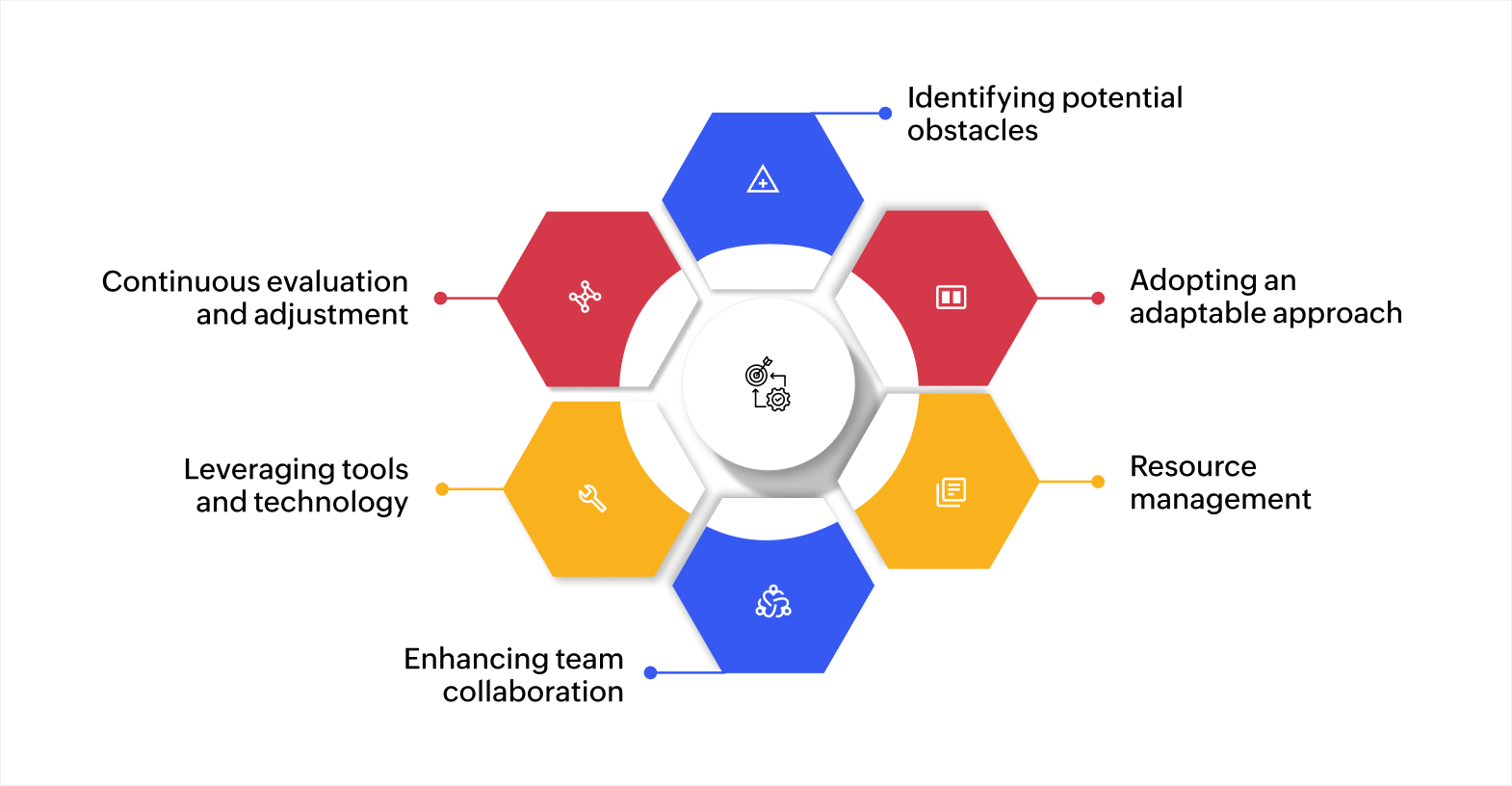
A structured project implementation methodology is essential for successfully navigating the challenges of project execution. By identifying obstacles early and using a well-defined process, you can ensure smoother implementation and better outcomes.
1. Identify potential obstacles
The first step in overcoming challenges is recognizing potential roadblocks before they arise. Common challenges include:
- Resistance to change.
- Technical issues.
- Unclear project objectives.
- Resource constraints.
Anticipating these obstacles within your project implementation methodology allows you to address them proactively and keep the project on track.
2. Adopt an adaptable approach
A flexible methodology helps you adjust to unforeseen challenges without derailing progress. An adaptable approach enables you to:
- Modify timelines when necessary.
- Reallocate resources to high-priority areas.
- Revise goals based on emerging insights.
By embedding flexibility into your methodology, you allow your team to respond effectively to challenges while maintaining their focus on project objectives.
3. Manage resources
Efficient resource management is key to preventing delays and inefficiencies. A well-structured methodology ensures that resources are allocated effectively by:
- Setting clear resource allocation guidelines.
- Monitoring usage regularly.
- Adjusting allocations based on project needs.
This approach helps you avoid overuse or underuse of resources, ensuring a smooth project flow.
4. Enhance team collaboration
Clear communication across teams is important for success. A lack of alignment can lead to confusion and delays. To improve collaboration:
- Schedule regular team check-ins.
- Clearly define roles and responsibilities.
- Use project management tools for transparency.
Fostering collaboration through your project implementation methodology keeps teams aligned and aware of progress, minimizing the risk of misunderstandings.
5. Leverage tools and technology
Project management software, like Zoho Creator, simplifies implementation. It enables you to:
- Automate repetitive tasks.
- Track progress in real time.
- Integrate with existing systems.
Incorporating technology into your methodology simplifies workflows, reduces manual errors, and boosts team productivity.
6. Continuous evaluation and adjustment
Regular evaluation ensures that the project stays on track. Make adjustments as needed by:
- Measuring progress against goals.
- Using data to inform decisions.
- Gathering feedback to identify and resolve issues early.
This iterative process helps keep the project aligned with objectives and ensures timely course corrections.
Implementing a clear project implementation methodology helps overcome challenges efficiently. By focusing on flexibility, effective resource management, collaboration, and the right tools, you can address obstacles before they become problems, ensuring successful project execution.
How to choose a project implementation methodology
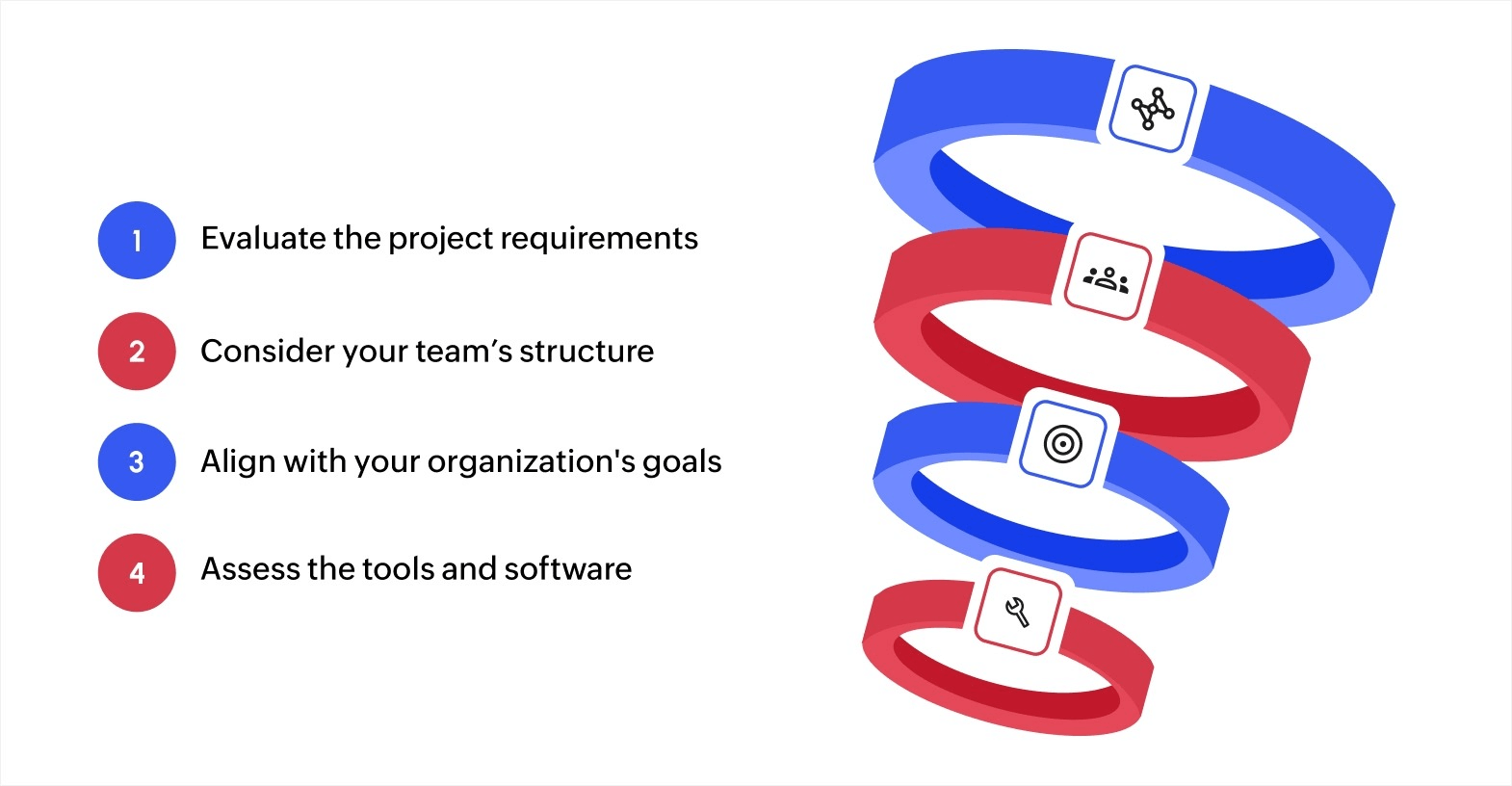
As businesses adopt more agile and flexible methodologies, choosing the right project implementation methodology becomes even more important to success.
1. Evaluate the project requirements
The nature of your project plays a key role in selecting the right methodology and depends on several factors.
- Fixed vs. flexible requirements: Does your project have defined goals, or will the requirements evolve throughout the process? If your project needs flexibility, Agile might be suitable. For well-defined, fixed requirements, Waterfall may be a better approach.
- Project complexity: How complex is your project? For unpredictable or evolving projects, Agile offers flexibility. For simpler, more structured projects, Waterfall may be the better option.
- Timeline and resources: Does your project have strict deadlines and resources? If so, Waterfall provides a clear, step-by-step approach. Agile is better for projects with ongoing changes and flexible timelines.
- Stakeholder involvement: Will stakeholders need frequent updates and input? Agile methodologies support continuous collaboration, making them ideal for projects with high stakeholder engagement.
2. Consider your team’s structure
Your team’s size and experience with certain methodologies are key factors in the decision-making process.
- Team size: Agile works well for small, self-managing teams, while Waterfall may be more suitable for larger teams with defined roles and responsibilities.
- Experience: If your team is already familiar with a specific methodology, it may be more efficient to stick with it rather than investing time in training for a new one.
- Working style: Consider whether your team prefers flexibility and autonomy, or if they perform better with structured, step-by-step processes. Agile is suited to self-organizing teams, while Waterfall provides more clearer guidance and direction.
3. Align with your organization's goals
The methodology you choose should reflect your company’s culture and goals.
- Company culture: If your organization values speed and adaptability, Agile may be the best choice. If stability and predictability are more important, Waterfall could be a better fit.
- Existing processes: Consider whether your company already has an established methodology. Adapting to existing practices may be faster and more efficient than introducing a completely new approach.
4. Assess the tools and software
Your tools should align with the methodology you choose.
- Compatibility: Some platforms, like Zoho Creator, are versatile enough to support multiple methodologies. Others may be tailored to a specific approach, so ensure that your tools align with the methodology you plan to implement.
- Proficiency: Choose tools that your team is comfortable using. If your team needs to learn new software, consider the learning curve and the time it will take to integrate the tools with your chosen methodology.
Selecting the right project implementation methodology involves evaluating the project requirements, understanding your team’s dynamics, aligning with your company’s goals, and ensuring compatibility with your existing tools. By taking these factors into account, you’ll make a more informed decision that will increase the likelihood of project success.
Implement project methodologies effectively
A well-structured project implementation methodology is key to overcoming challenges and driving project success. Whether you choose Agile, Waterfall, or a hybrid approach, having a clear methodology ensures that your team stays aligned, tasks are prioritized, and progress is effectively tracked. However, the right methodology is only part of the equation. The tools you use to manage and implement your project are just as important.
Zoho Creator is an AI-powered, low-code app development platform that helps you manage projects more effectively. With features like automated workflows, real-time collaboration, custom application building, and smooth integration with your existing systems, Zoho Creator ensures that your project management methodology is executed smoothly from start to finish. It simplifies task tracking, resource allocation, and progress monitoring, making it easier for your team to stay on track.
Ready to take your project management to the next level? With Zoho Creator, you can implement your project methodologies efficiently and drive better results.
FAQ
1. How do you evaluate the success of a project implementation methodology?
To measure success, track project performance through key metrics such as on-time delivery, budget adherence, and the quality of deliverables. Regular feedback from stakeholders also helps assess if the methodology is achieving the desired outcomes.
2. Can a project implementation methodology be customized to suit your business needs?
Yes, methodologies like Agile or Waterfall can be tailored to fit the specific requirements of your project. This can include adjusting timelines, processes, and workflows to match your business goals and project scope.
3. How do you manage risk in a project implementation methodology?
Managing risk involves identifying potential issues early, assessing their impact, and implementing proactive strategies. Regular monitoring, reviews, and feedback loops throughout the project ensure that risks are reduced before they become significant problems.
4. What role do stakeholders play in a project implementation methodology?
Stakeholders play an important role by providing valuable input, ensuring that project goals align with business objectives and offering feedback at key milestones. Their engagement helps keep the project on track and ensures that the final product meets expectations.
 Stephen
Stephen is a product marketer at Zoho Creator. An avid writer, he plies his trade evangelizing low-code during the day and pens songs at night. Sneakerhead and sushi enthusiast too.