- HOME
- Know Your Tech
- The role of business process management in digital transformation
The role of business process management in digital transformation
- Last Updated : November 30, 2025
- 375 Views
- 9 Min Read
Have you invested in new technology only to see your processes stay the same? You buy the latest tools for your company, migrate everything to the cloud, and wait for the transformation. But then, nothing changes. Work still takes too long. Errors still happen.
Highlights
- BPM is essential for digital transformation, helping businesses streamline processes, boost efficiency, and improve cross-team collaboration.
BPM software automates tasks, enhances decision-making, and reduces costs, driving productivity and innovation.
Implementing BPM ensures better agility, allowing businesses to adapt quickly to new challenges and scale efficiently.
By optimizing workflows and reducing bottlenecks, BPM supports smoother and faster digital transformation.
The problem isn’t the technology. You need to redesign how work flows through your organization first. Business process management provides this foundation. BPM helps you map your current workflows, identify what's broken, and fix it before you automate it.
This guide breaks down in detail how BPM fuels digital transformation—and how you can easily plug BPM into your own workflow.
What is business process management?
Business process management is how you analyze, improve, and automate the way work gets done in your organization. It involves mapping out your regular activities, finding inefficiencies, and implementing changes that make operations faster and more consistent.
What is digital transformation?
Digital transformation is a crucial shift that organizations must embrace to stay ahead in today's competitive environment. An estimated 90% of organizations are undergoing some form of digital transformation. This shift helps teams focus on meaningful work by providing timely information and automating routine tasks that don’t require human intervention.
Now that we understand digital transformation, let's explore how BPM contributes to and supports this process.
10 ways business process management fuels digital transformation
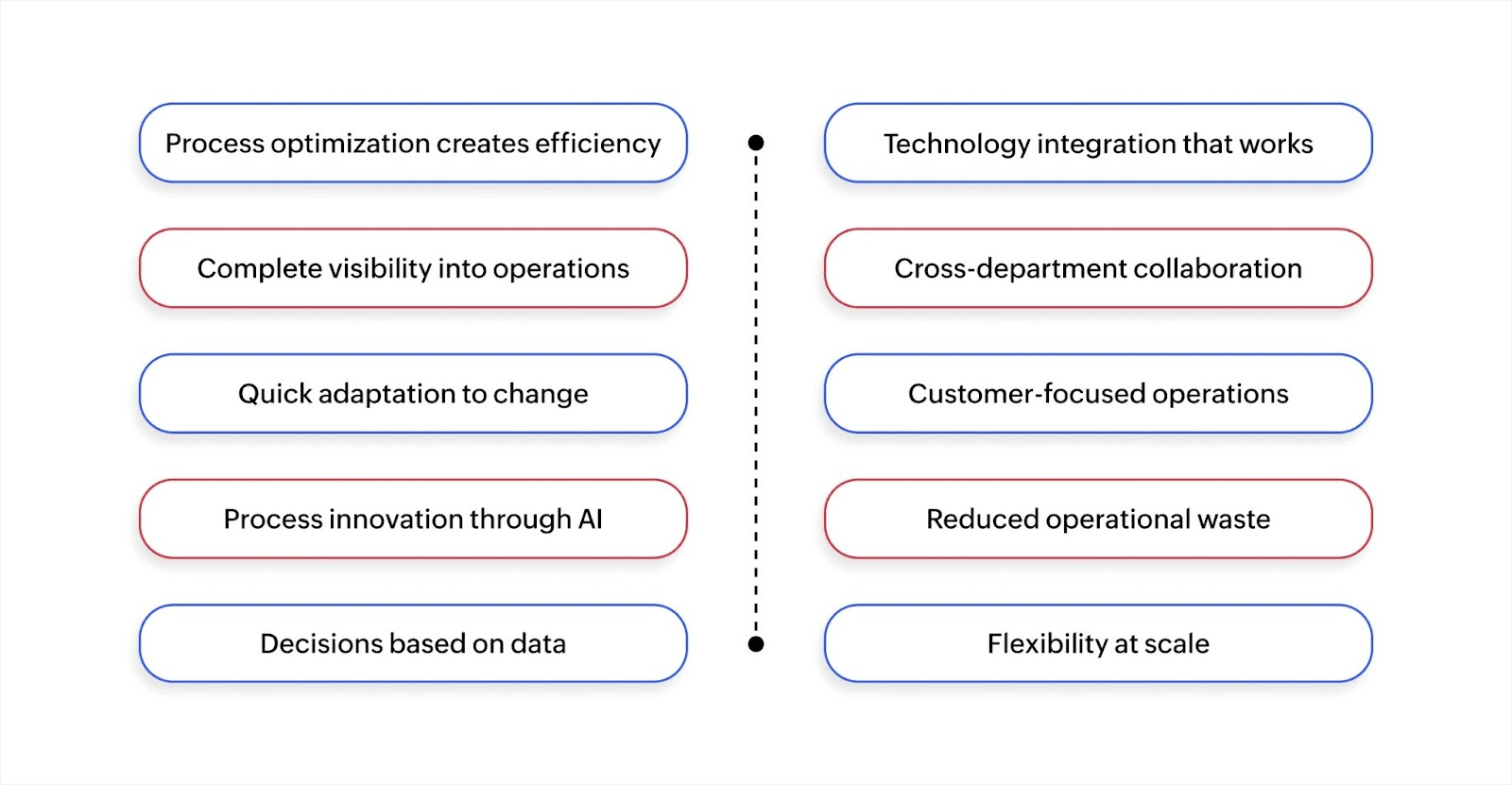
BPM provides the foundation that makes digital transformation actually work. Here’s how it supports digital transformation across businesses:
1. Process optimization creates efficiency
Your workflows can have unnecessary steps, manual handoffs, and approval bottlenecks that slow everything down. BPM helps you map these processes, identify what's not working, and redesign them before you add technology.
For example, when your invoice approval process takes two weeks because it moves through five different people, BPM helps you analyze whether you need all five approvals. You can reduce it to two approvals for invoices under a certain amount, with automated routing based on invoice value. Your digital tools can then automate this improved workflow, reducing costs and speeding up operations.
2. Technology integration that works
Digital transformation often means adopting cloud platforms, AI tools, and data analytics. BPM makes sure these technologies connect properly to your operations instead of creating more disconnected systems.
When you understand your end-to-end workflows through BPM, you can see exactly where new technology fits. For instance, when implementing a new CRM system, BPM helps you map out your current sales process first.
You can then configure the CRM to match your actual workflow, rather than limiting your team to work around rigid software features.
3. Complete visibility into operations
BPM software maps your workflows, tracks performance metrics, and documents procedures in one place. You can see exactly how work moves through your organization, which helps you spot improvement opportunities and make better decisions about where to focus.
This visibility becomes crucial when connecting multiple systems and departments during digital transformation. You can identify where data gets stuck, where approvals create delays, and where teams need better coordination.
4. Cross-department collaboration
Digital transformation connects departments, and BPM enables this by documenting how people, systems, and data connect across teams.
When you map a customer onboarding process, you often find that it touches sales, finance, IT, and customer success. BPM provides visibility into these handoffs, showing where delays occur and where information is lost.
Teams can see how their work affects others downstream and collaborate on improvements instead of optimizing only their small piece of the process.
5. Quick adaptation to change
Low-code BPM features let you configure and adjust processes without waiting for IT resources. You can test improvements quickly, gather feedback, and refine your approach based on real results.
With Zoho Creator, this flexibility becomes essential when market conditions shift or customer needs change. You can modify workflows in days instead of months, keeping your operations responsive to business demands.
6. Customer-focused operations
BPM puts your customer at the center of process design. You map customer journeys, identify where they experience friction, and redesign processes to create smoother interactions.
For example, when customers complain about slow response times, BPM helps you trace the entire support workflow. Redesigning the process and adding automation lets you route tickets directly based on issue type, cutting response time significantly.
7. Process innovation through AI
BPM platforms with AI capabilities help you find inefficiencies you can miss manually. Real-time data shows you where bottlenecks occur, letting you continuously improve operations.
This automated insight helps you stay ahead of problems before they affect your business. You can spot patterns in delays, predict where issues will occur, and address them proactively.
8. Reduced operational waste
Automation reduces manual work, minimizes errors, and cuts downtime. This frees your team to focus on work that requires human judgment rather than repetitive data entry.
The cost savings compound as you scale these improvements across your organization. Teams spend less time on administrative tasks and more time on strategic work that drives growth.
9. Decisions based on data
With centralized data from your digital tools, you can generate insights and apply them across processes. For instance, analytics can show you which products move slowly, helping you adjust inventory management and improve supply chain forecasting.
This data-driven approach replaces guesswork with evidence. You make decisions based on what's actually happening in your operations, not assumptions about what should be working.
10. Flexibility at scale
BPM platforms help you adapt quickly when market conditions change. Whether you're launching new products or adjusting to demand shifts, you can modify operations smoothly without disrupting existing work.
This scalability means your transformation efforts grow with your business. What works for 50 employees can expand to support 500 without rebuilding your entire system.
Did you know that 85% of organizations are adopting Business Process Management (BPM) solutions to drive their digital transformation? When you use BPM software, you can improve operations and support continuous improvement, setting up your business for sustained growth.
While BPM software offers significant benefits, it’s important to understand why overlooking BPM can hinder your digital transformation efforts.
Why you shouldn't skip BPM in digital transformation?
Without a solid BPM foundation, companies risk executing ineffective or fragmented digital transformation initiatives.
Insufficient governance: Lack of proper oversight leads to poorly managed change.
Poor adoption of new tools: Employees may struggle with or resist the implementation of new technology.
Lack of standardization: Without clear processes, integration becomes difficult and inconsistent.
These issues often result in disconnected systems that complicate rather than streamline operations. As a result, organizations may fail to fully realize the benefits of new technologies or achieve the level of integration needed to stay competitive.
With a clear understanding of the importance of BPM, let’s discuss how to effectively integrate BPM software into your digital transformation strategy.
Integrating BPM software into digital transformation

Integrating BPM software and digital tools into your business may seem like a challenge, but breaking the process down into clear, actionable steps makes it much easier to manage.
Here’s a step-by-step guide to help you get started and drive your digital transformation:
Assess your current processes
Start by looking at how work actually gets done today. Map your existing workflows and identify where you use technology. Find areas where inefficiencies exist and check if your organization is ready for change.
For example, if you trace your accounts payable process end-to-end, you'll often see employees manually entering data from invoices into three different systems. This creates delays and errors that cost time and money.
Identify key areas for transformation
Look for specific problems that affect your business results. Common examples include:
Production bottlenecks: Waiting for materials because purchasing and production don't share real-time inventory data.
Customer service delays: Support tickets get stuck in manual routing queues before reaching the right person.
Repetitive data entry: Employees copy information between systems multiple times per day.
Approval slowdowns: Expense reports sit in email inboxes for weeks without action.
Target areas where improvements will deliver clear value to your operations or customers.
Select the right tools
Choose BPM tools and digital technologies that align with your business needs. Consider platforms like Zoho Creator that support workflow automation, integrate seamlessly with your existing systems, and scale as your business grows.
Implement and start small
Begin with a pilot project in one area. Use feedback from employees and performance data to refine your approach. Make sure your new systems work as expected before expanding.
For instance, if you start with your expense approval process, you can track how much time it saves and how employees respond. Use these insights to improve before rolling out automation to other areas.
Monitor, adjust, and scale
Continuously monitor the effectiveness of the new processes to ensure optimal performance. Once the initial changes show positive results, expand them to other parts of your organization.
Provide training and support
Ensure your team is well-prepared to adopt the new tools. Provide thorough training, in-app guidance, and ongoing support to make sure everyone can confidently use the new systems. Employee buy-in is critical to the success of any transformation initiative.
Continuous improvement
Regularly monitor performance, gather feedback, and assess your workflows to find new areas for improvement. As your business grows and evolves, your processes should adapt with it to maintain efficiency and alignment with your business goals.
How Zoho Creator can drive your digital transformation
Incorporating BPM into your digital transformation strategy is a powerful way to streamline operations and boost efficiency. With a clear plan, businesses can manage this transformation smoothly, ensuring sustained growth and adaptability.
Zoho Creator enables your digital transformation with a flexible, low-code platform designed to streamline business processes and drive efficiency. Here’s how:
Custom apps: Build tailored applications for any business function with minimal coding.
Workflow automation: Automate repetitive tasks to improve speed and reduce errors.
Seamless integrations: Connect Zoho Creator with other Zoho apps and third-party tools for unified workflows.
Real-time insights: Track performance with customizable dashboards and reports for data-driven decisions.
Scalability: Easily scale as your business grows, adapting to new needs and challenges.
Security and compliance: Ensure data protection with enterprise-grade security and regulatory compliance.
Zoho Creator simplifies process automation and app development, enabling your business to optimize operations and drive sustainable growth.
Conclusion
Business process management (BPM) is a powerful tool for businesses looking to enhance efficiency and streamline operations. Start small by automating a single workflow in your business, whether it's a simple approval process, data entry task, or customer management function.
By focusing on one area, you'll see immediate improvements in speed, accuracy, and collaboration. As you begin to recognize these benefits, you can gradually expand BPM across other workflows, optimizing your operations step by step. The key is to take action and start making small but impactful changes.
Embrace automation to reduce manual work, minimize errors, and drive productivity. The transformation doesn't have to be overwhelming. Start today with Zoho Creator and design custom workflows that fit your business needs.
FAQ
1. What is the role of business process management (BPM) in digital transformation?
BPM helps businesses streamline and automate their processes, making them more efficient and effective. It plays a crucial role in digital transformation by driving agility, enhancing productivity, and aligning operations with business objectives.
2. How does BPM help businesses adapt to digital changes?
BPM allows businesses to automate workflows and improve collaboration, which enables them to respond quickly to new digital demands. It helps organizations stay flexible and scale operations as needed.
3. What’s the difference between BPM and digital transformation?
While BPM focuses on optimizing internal processes, digital transformation involves a broader shift. It involves adopting new technologies to improve all aspects of business operations, with BPM being a key enabler of that transformation.
4. How can BPM software make digital transformation easier for SMBs?
BPM software automates routine tasks and integrates various business functions, making it easier for SMBs to modernize without a steep learning curve. It allows businesses to improve efficiency, save time, and enhance customer satisfaction.
5. What kind of digital tools should businesses use to integrate BPM?
Look for low-code platforms, like Zoho Creator, that enable businesses to quickly create custom workflows and applications. These tools should offer automation, scalability, and seamless integration with other systems to drive a smooth digital transformation.
 Ashwin Raj S N
Ashwin is a Growth Marketer for Zoho, with a passion for learning new things. In his spare time, he enjoys spending time with his family and friends, watching anime, and travelling.