- HOME
- More
- Best Practices
- Email disclaimer: Definition, examples, and best practices
Email disclaimer: Definition, examples, and best practices
- Published : December 24, 2025
- Last Updated : January 12, 2026
- 1.2K Views
- 8 Min Read

Ever scrolled to the bottom of a password reset or a monthly statement email and wondered why there’s always a tiny block of text sitting quietly at the end? Most people ignore it but that little section called “email disclaimers” often does some heavy lifting behind the scenes.
Transactional emails may look simple, but they involve some of the most sensitive customer interactions, like money being moved, accounts being updated, and identities being verified. That’s exactly where email disclaimers step in.
In this guide, we break down what an email disclaimer is, why it matters, and how to craft one that’s clear, compliant, and perfectly suited for each type of transactional email.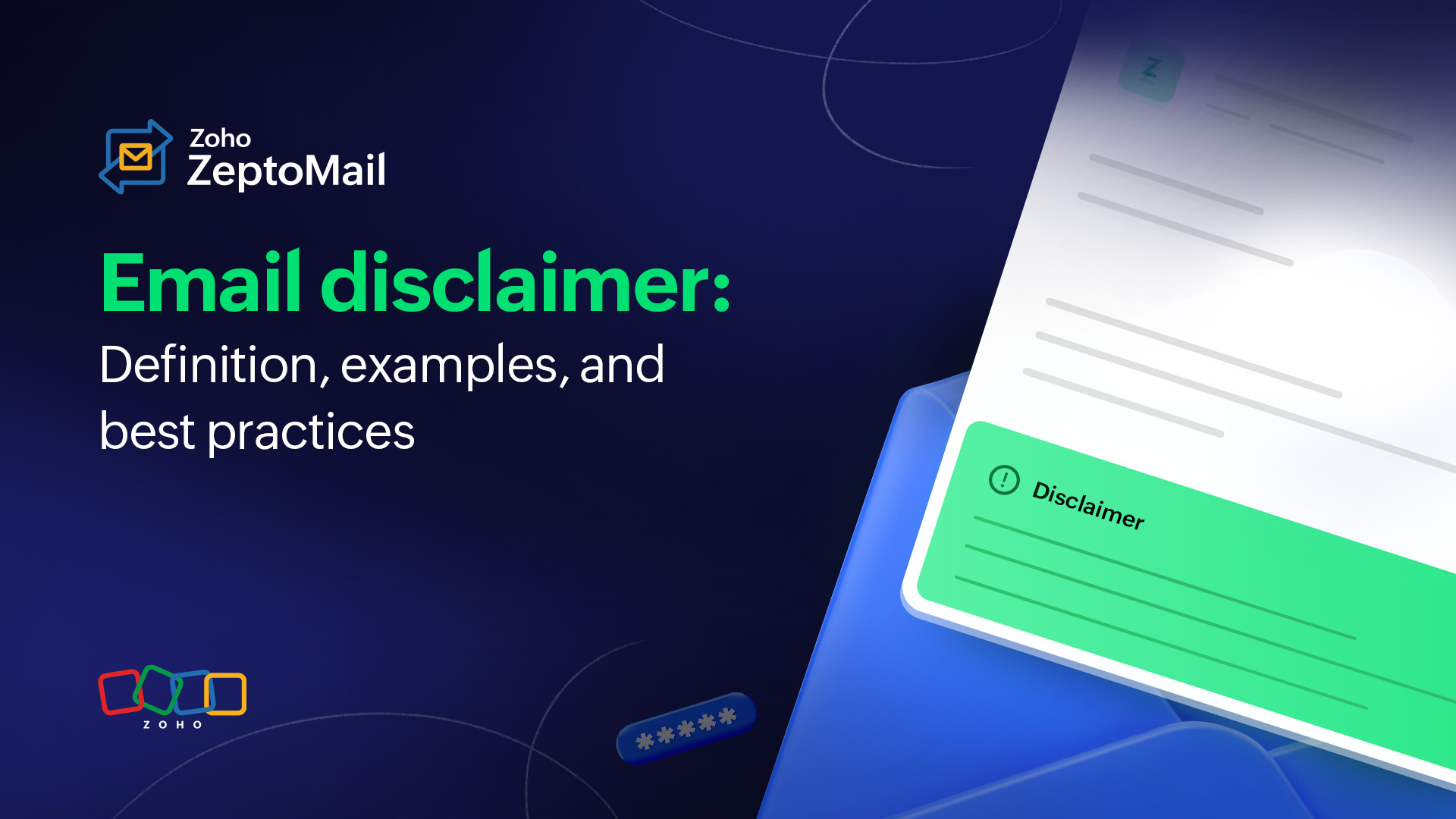
What is an email disclaimer?
An email disclaimer is a short statement usually placed at the bottom of an email to clarify legal, privacy, or security-related information.
Think of it as a polite little signboard that says: “Here’s what this email means, what you should or shouldn’t do with it, and how we’re protecting your information.”
What is the importance of an email disclaimer?
Email disclaimers do more than sit quietly at the bottom of a message. They help protect your business, guide your users, and ensure clarity in situations where accuracy and security matter.
Protect your business legally
Disclaimers help reduce liability by clarifying how the information in the email should be used and who it’s intended for. They may not remove all legal risks, but they show that your business communicates responsibly.
Tell the recipient how to handle sensitive content
Transactional emails often contain confidential details such as account activity, payments, or verification information. A disclaimer tells users how to handle this content safely and helps prevent misuse or accidental sharing.
Set expectations on privacy, accuracy, and use
Details in transactional emails, such as delivery timelines or system updates, can change. Disclaimers help set the right expectations by noting possible variations and pointing users to your privacy policy.
Add a layer of security awareness
A short reminder about not sharing sensitive details can help users stay alert to phishing attempts or suspicious activity. It reinforces safe digital habits and protects both the user and your business.
Guide users when things go wrong
If something looks incorrect or unauthorized, disclaimers can tell users exactly how to respond. This may include contacting support, verifying an action, or reviewing their account for unusual activity.
When should you have an email disclaimer in transactional emails?
Not every transactional email requires a long legal paragraph. But whenever emails involve personal details, order information, money, login credentials, or verification codes, adding a disclaimer becomes a necessity.
You should definitely include disclaimers in transactional emails that deal with:
Customer identity or account details.
Financial transactions.
Confidential legal information.
Security actions like OTPs and password resets.
What should you include in an email disclaimer?
A good email disclaimer isn’t meant to scare readers with legal jargon. It’s simply there to clarify, protect, and guide. Depending on the type of transactional email you’re sending, your disclaimer can include one or more of the following notices.
1. Confidentiality notice
This tells the recipient that the information in the email is private and meant only for them. This can be added when sending legal emails, account updates, or any finance-related messages.
2. Security and safety reminders
A quick reminder not to share passwords, OTPs, card PINs, reset links, or personal details with anyone. Every bank or business that sends security emails, login alerts, or password resets includes a safety disclaimer to encourage users to stay cautious and protect their information.
3. Accuracy, updates, and liability disclaimers
Shipping or delivery updates can occasionally change or have a delay, so this disclaimer clarifies that the information shown reflects the most recent update available at the time of sending. It can also include a simple note that certain delays or variations may occur due to third-party systems or service providers.
4. Data protection and privacy notes
A privacy note tells recipients that their information is handled securely and in line with your company’s privacy policy. Email disclaimers can be added to almost any transactional email, since most of them contain personal or account-related data.
5. Unauthorized action warnings
These warnings notify users to contact support immediately if they didn’t initiate or approve the action mentioned in the email. This is especially helpful for account changes, payment alerts, and login notifications. It adds an extra layer of security by encouraging users to act quickly if something seems suspicious.
Email disclaimer examples for transactional emails
Below are use-case-specific examples you can adapt directly for your needs.
1. Account-related emails
These emails confirm activity on the user’s account, so the disclaimer helps verify authenticity and alerts them in case the action was not initiated by them.
Use cases: Order confirmations, account updates, subscription changes, signup verifications
Sample disclaimer:
“This email was sent regarding your account activity with us. If you didn't request this action or believe this message reached you in error, please contact our support team immediately. Do not share this email or any verification details with anyone.”
2. Security-focused emails
Security emails involve OTPs, password resets, or sensitive access links. A disclaimer reinforces safe digital practices and warns users about fraud.
Use cases: OTPs, password resets, PIN resets
Sample disclaimer:
“For your security, do not share the OTP, reset link, or any part of this email with anyone. We will never ask for these details. If you didn’t initiate this request, please secure your account and contact support immediately.”
3. Legal or confidential emails
Legal emails often contain privileged information meant only for the intended recipient. The disclaimer ensures confidentiality and sets legal boundaries.
Use cases: Legal notices and compliance emails
Sample disclaimer:
“This email and any attachments may contain confidential or legally privileged information intended only for the recipient. If you are not the intended recipient, please delete this email and notify us. Unauthorized use, copying, or sharing of this content is strictly prohibited.”
4. Finance and billing emails
These emails contain payment details or transaction summaries. Disclaimers clarify accuracy, address discrepancies, and remind users not to share financial information.
Use cases: Payment confirmations, invoice emails, refund notifications, transaction alerts
Sample disclaimer:
“The transaction details in this email reflect the most recent update from our systems. If you notice any discrepancy or did not authorize this payment, please contact our billing or support team immediately. Please avoid sharing this email, as it may contain sensitive payment information.”
5. Delivery and shipment emails
Shipment details can change due to external logistics factors. A disclaimer sets expectations and helps identify unauthorized orders.
Use cases: Shipment confirmations, delivery updates, tracking notifications
Sample disclaimer:
“This update reflects the latest tracking information provided by our delivery partner. Actual delivery times may vary due to carrier availability or external factors. If you did not place this order or believe you received this email by mistake, please contact our support team immediately."
6. Banking emails
Banking emails deal with highly sensitive financial and identity information, so disclaimers must cover fraud prevention, confidentiality, and regulatory guidance.
Use cases: OTP emails, PIN reset emails, payment emails, statement emails, password reset emails, account recovery emails
Sample disclaimer:
“Please do not share your internet banking details such as your user ID, password, card number, CVV, or OTP with anyone over phone or email.
RBI does not contact individuals for Savings Accounts, Current Accounts, Credit Cards, or Debit Cards. Ignore any calls or emails claiming otherwise.
Avoid clicking on links from unknown or untrusted sources that ask for confidential information.
This email is confidential and may contain privileged information. If you are not the intended recipient, please delete it and avoid sharing or using its contents. Internet communication may not always be secure or error-free.
The sender is not liable for any errors or omissions. We follow strict security measures to protect your information. Learn more."
7. Bond purchase emails
Bond purchases involve volatile market pricing and confidential investment details. The disclaimer clarifies that information may vary and must remain private.
Use case: After a bond purchase is made.
Sample disclaimer:
“This email contains confidential bond purchase information intended solely for the named recipient. The details provided here, including pricing and investment specifics, should not be shared, forwarded, or distributed to anyone else. If you are not the intended recipient, please delete this email immediately and notify us. Unauthorized access, copying, or disclosure is strictly prohibited.
The bond pricing, yields, and availability reflected in this email are based on the latest system update at the time of sending. Bond markets can change quickly, and final pricing will be confirmed only upon settlement. The financial institution is not responsible for changes in market conditions that may impact yield or price.”
8. Stock exchange emails
Stock-related emails communicate investment risks and transaction details. The disclaimer ensures that users understand market risks and that the information is not investment advice.
Use case: Transactions made after buying and selling stocks.
Sample disclaimer:
“Investing in shares involves market and credit risks. The value of your investment may fluctuate based on interest rate movements, issuer performance, and market conditions. Past performance is not indicative of future results. Please review all offer documents carefully or consult your financial advisor before making investment decisions. Learn more.
Avoid clicking on links from unknown or untrusted sources that ask for confidential information."
9 best practices for writing an email disclaimer
1. Avoid long paragraphs
You may have a long list of cautions or instructions, but if the disclaimer looks like a giant block of text, most people will skip it. Break your points into short, readable sentences. Keep it concise, relevant, and easy to scan.
2. Use simple language
Your disclaimer shouldn’t feel like a courtroom document. Avoid heavy legal jargon and overly complex sentences. Stick to clear, everyday language that helps users understand what they should or shouldn’t do, why it matters, and how to stay safe.
3. Avoid outdated legal terms
Disclaimers should always reflect your current policies, regulations, and practices. Outdated or contradictory statements not only confuse users but can also lead to compliance issues. Review and update your email disclaimers periodically to ensure accuracy.
4. Don’t hide the disclaimer
While disclaimers naturally belong at the bottom of the email, they shouldn’t be impossible to find. Avoid tiny font sizes or overly faint colors. The goal is to make sure readers can see it if they need it, even if it’s not the main focus of the email.
5. Stay transparent about data handling and privacy
Users value honesty, especially when their personal or financial information is involved. Your disclaimer should clearly explain how customer data is collected, used, stored, and protected. Even a brief line pointing to your privacy policy can help reassure users that their information is handled responsibly.
6. Tailor the disclaimer to the email type
A one-size-fits-all disclaimer doesn’t work for transactional emails. A password reset email needs a security warning, while a payment confirmation needs accuracy and fraud-related information. Customize your disclaimers so they match the purpose and sensitivity of the email.
7. Maintain a consistent tone
Your disclaimer should reflect your brand’s voice. Even if the content is formal, avoid sounding harsh or intimidating. A calm, professional tone keeps the message reassuring while still conveying importance.
8. Add a clear action step when relevant
If users need to report unauthorized activity, contact support, or avoid clicking suspicious links, make sure you tell them exactly what to do. Adding a clear hyperlink or call-to-action can guide them easily and help protect them from potential fraud.
9. Highlight compliance standards
Including small visual badges or short mentions of standards like GDPR or HIPAA can help reinforce trust. These cues quickly show users that your business follows recognized data protection requirements and handles their information responsibly.
Wrapping up
Transactional emails may look simple on the surface, but they carry some of the most sensitive information your customers receive from you. A thoughtful email disclaimer doesn’t just “tick a compliance box”, it builds trust, protects your business, and gives your audience clarity when they need it the most. When written well, it becomes more than a legal footnote—it’s a quiet assurance that you value transparency and privacy, and you take security seriously.