5 proven ways to get more Google reviews from happy customers
- Last Updated : June 12, 2026
- 59 Views
- 3 Min Read


Most businesses don't actually have a bad review problem. They have a “happy customers forget to leave reviews” problem.
A customer finishes a great meal, loves the service, says they’ll definitely come back, and life moves on. By the time they get home, the moment is gone.
That's why businesses that consistently get Google reviews are usually not luckier; they're just better at asking at the right moment and making the process easy.
The good news is that getting more Google reviews doesn't require awkward scripts or aggressive follow-ups. Most of the time, small changes in timing, convenience, and consistency make the biggest difference.
Here are five tactics that actually work in the real world.
1. Ask right after a positive moment
Timing matters more than wording.
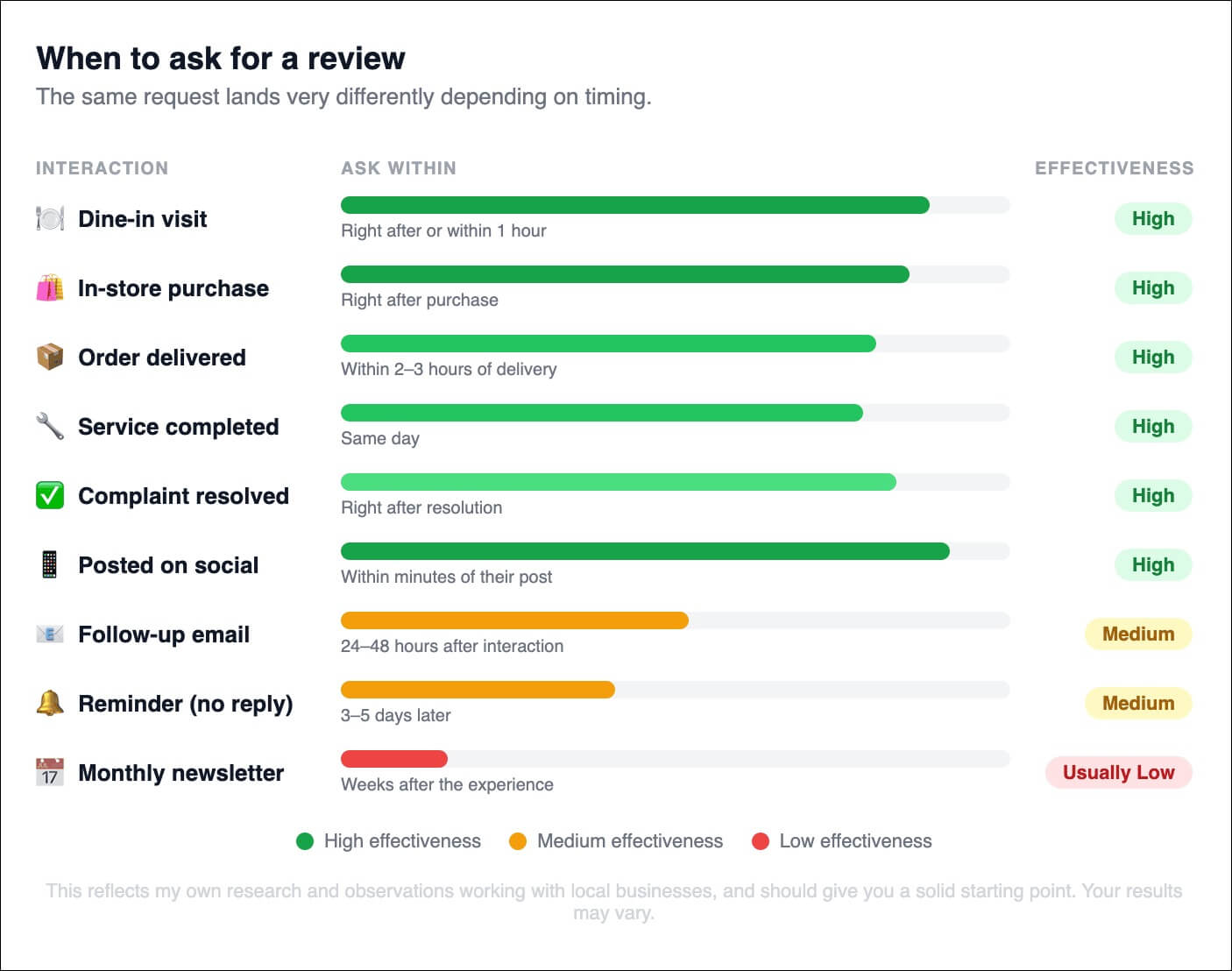
The best review requests happen when the customer is already feeling satisfied and the experience is still fresh. A restaurant can ask right after customers compliment the food, a home service business can ask immediately after the job is completed, and a clinic can ask after a patient says they had a smooth experience.
That emotional high point is your trigger moment.
Many businesses wait too long and send generic review emails days later. By then, customers have mentally moved on.
The simplest approach usually works best:
“Glad everything worked out well. Would you mind leaving us a quick Google review? Here’s the link.”
That's it. Just ask.
2. Stop making customers search for your business
One of the biggest mistakes businesses make is telling customers to find them on Google and leave a review.
Too many steps kill momentum. The fewer clicks between the good experience and the review page, the higher the chances of getting the review.
Google already gives businesses a direct review link inside the Google Business Profile dashboard. Copy it and use it everywhere:
SMS follow-ups
Email receipts
WhatsApp messages
QR codes at checkout
Printed invoices
Appointment follow-ups
Businesses using review management platforms like Zoho Publish often centralize this process so teams can request reviews consistently without manually copying links every time.
Besides, SMS usually works better than email for many local businesses because customers are already on their phones when the experience happens.
As review activity grows, managing responses becomes equally important. Our blog on How to respond to Google reviews (with examples for every star rating) includes practical response examples businesses can actually use.
3. Ask when customers are already posting online
If a customer posts your food, product, or service on their Instagram story or tags your business online, there's a very good chance they're also willing to leave a Google review.
A simple message like this often works: “Really appreciate the post. If you have a minute, we’d love a Google review, too! Here’s the link.”
Businesses often overthink review requests, but most customers respond well when the message feels human instead of automated.
4. Respond to existing reviews publicly
Customers notice whether businesses respond to reviews before deciding to leave one themselves. An active review section signals that the business actually pays attention.
Even short replies help:
“Thanks for coming in.”
“Glad you enjoyed the experience.”
“Appreciate the feedback.”
According to BrightLocal’s Local Consumer Review Survey, 80% of consumers said they would use a business that responds to reviews, while 42% said they are unlikely to use a business that ignores reviews altogether.
That gap matters.
Speed matters, too. Slow responses can reduce trust, especially when customers compare businesses side by side. Our blog on How review response time impacts trust and rankings explores this shift further.
5. Build a repeatable process instead of relying on memory
The businesses that consistently collect reviews usually make it part of operations:
Staff asks at checkout
SMS requests go out automatically
Review links are added to receipts
Follow-up reminders are scheduled
QR codes are visible in-store
Businesses also need to stay within Google’s guidelines. Google discourages practices like pressuring customers, selectively asking only happy customers, or collecting multiple reviews from the same device repeatedly.
The goal is to remove friction for real customers who already had a good experience. That difference matters.
Final thoughts
Most happy customers aren't avoiding reviews because they dislike your business; they just get distracted.
Businesses that earn more Google reviews usually understand that customers are far more likely to leave feedback when the request feels immediate, simple, and natural. That's why review generation works best when it becomes part of the customer experience instead of a last-minute marketing task.
As Google reviews continue influencing local rankings, customer trust, and buying decisions, businesses that consistently manage reviews will almost always have an advantage over businesses that leave it to chance.