How review automation saves time for multi-location businesses
- Last Updated : June 5, 2026
- 75 Views
- 4 Min Read

Let's be honest. Managing reviews across multiple locations is a nightmare.
You've got 10, 20, maybe 50+ locations. Each one has its own Google Business Profile. Each one is getting reviews every single day. Some are five stars with glowing praise. Some are one-star rants about a cold burger or a rude front desk. Some don’t say a word and just drop a rating. And every single one of those reviews expects a response.
Now multiply that by every location you manage. Yeah. That's the problem.
41% of consumers always read reviews before choosing a business | 47% of consumers won’t use a business that has fewer than 20 reviews | 80% of consumers say they’re likely to use a business that responds to all of its reviews |
Source: BrightLocal Local Consumer Review Survey 2026
The businesses falling behind aren't lazy. They're just doing it manually. And the manual process doesn't scale.
That's where review automation comes in. And if you're running a multi-location business, it might be the single most important operational upgrade you haven't made yet.
The hidden cost of doing it manually
Here’s what the manual review process actually looks like at scale. Someone on your team logs into each Google Business Profile one by one. They check for new reviews. They draft a response. They copy-paste it. They tweak it slightly so it doesn’t sound robotic. They post it. Then they move on to the next location.
Now, many businesses are turning to tools like ChatGPT to speed this up. But even then, someone still has to review the response, adjust the tone, make sure it fits the situation, and post it manually.
And that's just for the responses. We haven't even talked about tracking sentiment trends, flagging fake reviews, identifying which locations are performing well and which ones are quietly sinking in reputation.
Every unanswered review is a missed opportunity. Worse, it's a signal to potential customers that you don't really care.
What review automation actually does
Automation doesn't mean sending the same canned response to every review. That would be equally terrible. What good automation does is give your team the structure, speed, and intelligence to respond meaningfully at scale.
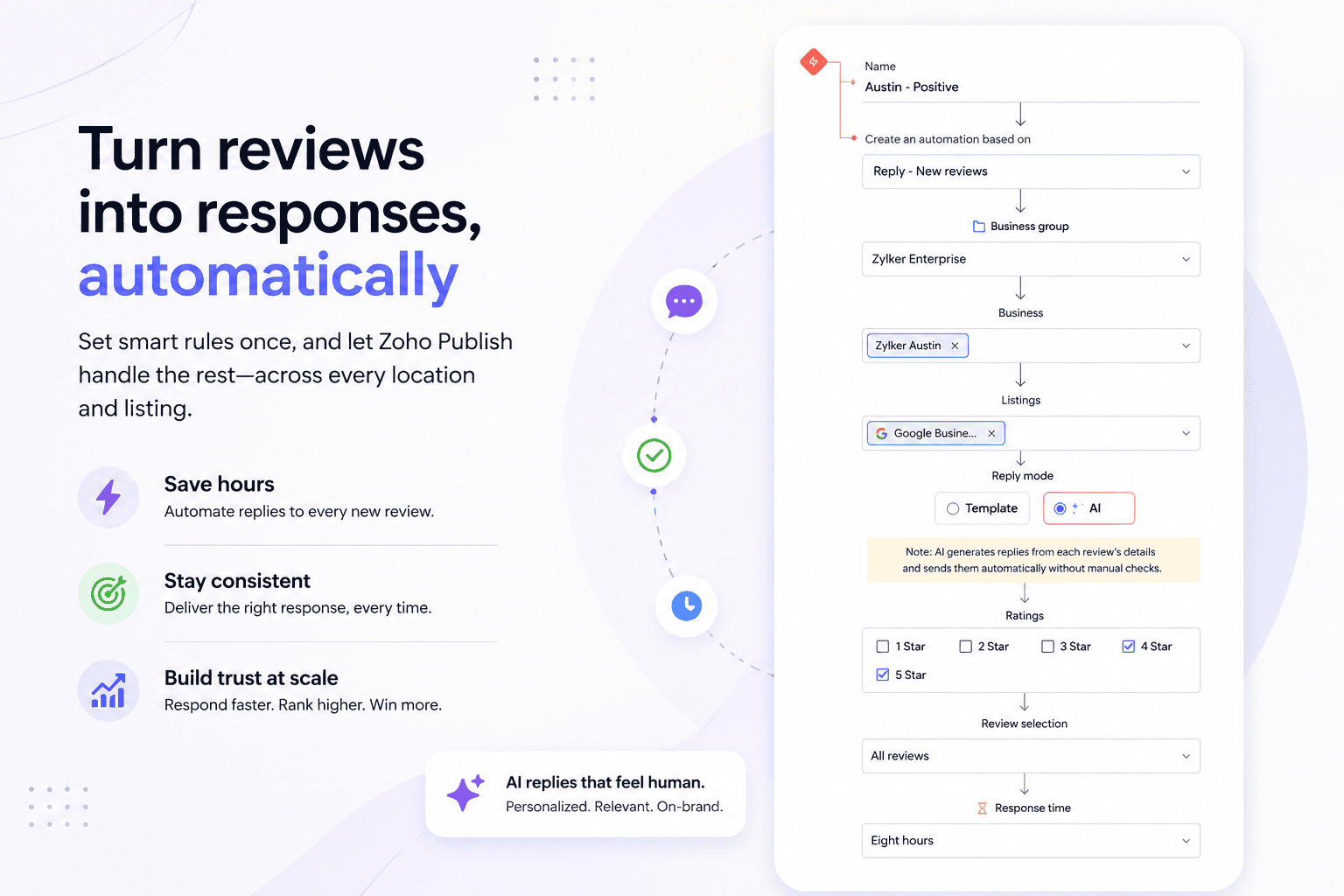
Here's what that looks like in practice for a multi-location business:
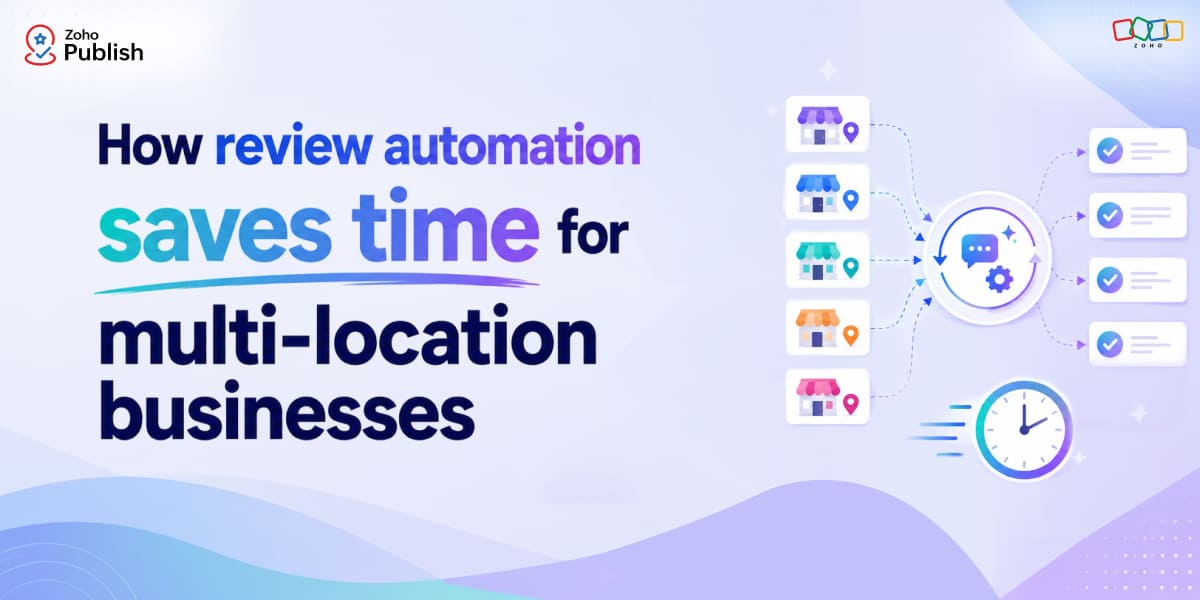
Review alerts: The moment a new review hits any of your locations, the right person gets notified. No more logging into 30 dashboards. No more reviews slipping through the cracks for two weeks.
Response templates with smart personalization: You set the tone and the framework. The system fills in the specifics like the reviewer's name, the location, and the nature of the feedback. It doesn't sound robotic because it isn't.
Know when to automate, know when to escalate: Not every review needs human intervention. Routine five-star reviews can be handled by AI-powered automation instantly, while one-star reviews get converted into support tickets and routed to an experienced team member who can actually resolve the issue. The right response from the right person, every time.
Beyond responses, automation keeps your entire review operation running without anyone having to babysit it. Reviews are assigned to the right team members. Notifications go out instantly. Responses are sent on time using templates or AI across every location, every day. No dropped balls. No missed reviews. No location quietly falling behind while everyone's focused on something else.
And because nothing slips through, your response rate stays consistent. Google pays attention to that. Consistent engagement across your profiles tells Google your business is active and worth surfacing. When you're managing dozens of locations, that consistency is only possible with automation doing the heavy lifting.
The franchise problem is real
If you run a franchise system, you have an additional layer of complexity. Individual franchisees own their locations, but you own the brand. What happens when a franchisee ignores reviews for three months? Their local ranking suffers, customer trust declines, and your brand reputation takes a hit. In fact, this is one of the most common reputation challenges for multi-location brands. The problem often goes unnoticed until a customer complaint lands in your corporate inbox.
Automation solves the visibility problem. A centralized review management system means corporate can monitor sentiment across all franchise locations in real time. You can set baseline response standards. You can flag locations that need support. And you can do all of this without micromanaging every individual operator.
Think of it like a franchise operations manual, but for your online reputation. You set the rules. The system helps everyone follow them.
This is exactly what Zoho Publish was built for
All of this, the alerts, the responses, the visibility, the franchise oversight, is what Zoho Publish handles under one roof. Here's how it actually works in practice.
The AI response engine generates on-brand, personalized replies in seconds. Not copy-pasted templates that scream 'written by a robot.' Actual contextual responses that you can review, tweak, and post with a single click. For high-volume locations dealing with dozens of reviews a day, this alone saves hours every week.
Automation rules take it further. You set the logic once: send a thank you for every five star review, route one star reviews to your most experienced team member, delay responses on positive reviews so they feel natural, not instant. You can also use multiple templates in the background so responses stay varied and don’t sound repetitive.
Sensitive reviews shouldn't go to just anyone. Zoho Publish lets you route critical feedback to the right person automatically, so your most important customer conversations always get the attention they deserve.
The bottom line
Your reputation isn't built in a single great review. It's built review by review, response by response, location by location, consistently over time.
The businesses winning at local search right now aren't the ones with the biggest teams or the biggest budgets. They're the ones that have made consistency non-negotiable. They show up, they respond, they stay present — and they use the right systems to make that possible at scale. Manual review management had its moment. That moment is over.