- HOME
- HR insights
- What manual HR processes are really costing your businesses
What manual HR processes are really costing your businesses
- Last Updated : August 19, 2026
- 221 Views
- 4 Min Read
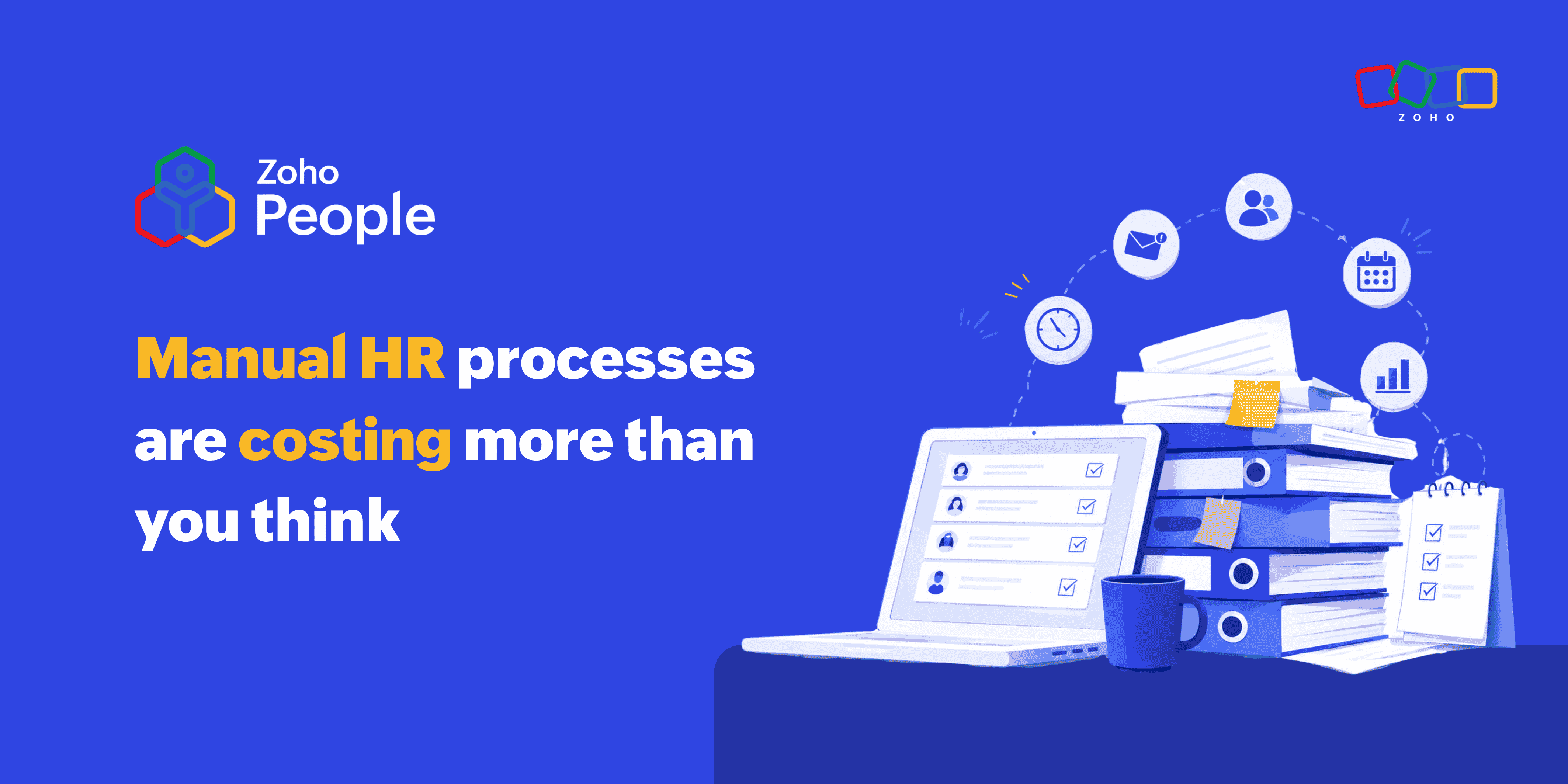
As an HR professional, you start your day by approving a few leave requests. Then come attendance corrections, leave approvals, employee queries, onboarding paperwork, timesheet approvals, and performance review reminders. Before you know it, half the day is gone, and the strategic initiatives you planned to work on are pushed to tomorrow.
When your organization is small, these manual HR processes may seem straightforward and easy to manage. But as your workforce grows, these everyday tasks become increasingly time-consuming and difficult to keep up with.
The hours spent on repetitive administrative work take away time HR teams could spend on strategic initiatives that improve employee experiences and help people thrive. Over time, these operational bottlenecks can reduce productivity, increase the risk of human error, delay decision-making, and make it harder for HR to deliver real business impact.
In this blog post, we'll uncover the hidden costs of manual HR processes and explore how HR automation can help streamline operations, improve employee experiences, and free HR teams to focus on work that drives real business value.
#1: Increased risk of human errors
Manual HR processes often require HR teams to enter the same data or record across multiple documents, spreadsheets, and systems. Even a small oversight, such as entering incorrect information or failing to update a document, can cause errors in HR processes that rely on this data.
For example, say an HR team receives a leave request via email and approves it. However, they forget to update the employee's leave balance in their spreadsheet after the leave is taken. Later, the employee applies for more leave based on the incorrect balance, and the request is approved again. Now the HR team has to recalculate the employee's leave balance, communicate the error, reverse or adjust the approval if necessary, and update the records.
Correcting these errors can take a lot of time and effort, especially as your workforce grows. When you have centralized HR automation software to manage employee records, data gets updated automatically across different modules whenever there is a change. This can save hours and improve data accuracy significantly.
#2: Poor employee experience
Employees usually expect HR operations to be hassle-free. Manual processes can cause bottlenecks that lead to repeated follow-ups, delayed responses, unclear request statuses, and reliance on HR for every piece of information. All of this can create frustration and lower employee trust.
For example, say a new employee joins the organization, but because HR's new-hire alert gets buried in IT's crowded inbox, the employee doesn't receive their laptop or system access on their first day. This lack of alignment creates a poor impression and leads to added stress that could have been avoided.
Over time, these inconsistent experiences reduce employee satisfaction, and even simple tasks can become time-consuming for both HR teams and employees alike. Most HR software systems come with a dedicated self-service portal that enables employees to apply for leave, mark their attendance, send and track approvals, complete onboarding, and take up training programs.
#3: Compliance challenges
When HR teams rely on manual processes to manage operations, it's easier to miss compliance deadlines, overlook updates to employee records, and lose visibility into approvals and audit trails. These errors can result in heavy penalties, legal risks, failed audits, and other compliance risks.
For example, say an HR team tracks mandatory compliance training in a spreadsheet and sends reminder emails to employees. While adding new hires to the tracker, they accidentally leave out a few people. As a result, those employees miss the required training, and HR only identifies the gap during an audit.
This changes with a dedicated HRMS portal. HR teams can use it to centralize employee records, access audit trails, and send automated reminders for every compliance activity.
#4: Lack of visibility into workplace trends
Manual HR processes often mean scattered workforce data—across spreadsheets, email threads, and other systems. This makes it challenging to actually analyze data. Even overlooking a single piece of information can lead to inaccurate reports and unreliable workforce insights.
For example, say leadership wants to see which departments have the highest turnover rate to plan next quarter’s hiring and retention strategies. HR has to find exit information from one spreadsheet, current headcounts from another, and department assignments from an HRIS export. It takes days to verify the numbers and prepare a comprehensive report, during which time leadership had to make a decision without the data at all.
When these insights are not available, organizations may not be able to make informed decisions, address workforce challenges early on, and support business planning. Having centralized HR software can provide HR teams access to readily available reports that offer actionable insights by analyzing key employee data.
Wrapping up
While manual HR processes may seem manageable as you start, the hidden costs can become evident as your organization begins to scale. From increased human errors and compliance challenges to poor employee experiences and limited workforce visibility, these inefficiencies prevent HR teams from focusing on work that truly drives business value.
 Tarika
Content Specialist at Zoho People