- HOME
- HR insights
- The hidden costs of poor employee data management
The hidden costs of poor employee data management
- Last Updated : July 29, 2026
- 132 Views
- 4 Min Read
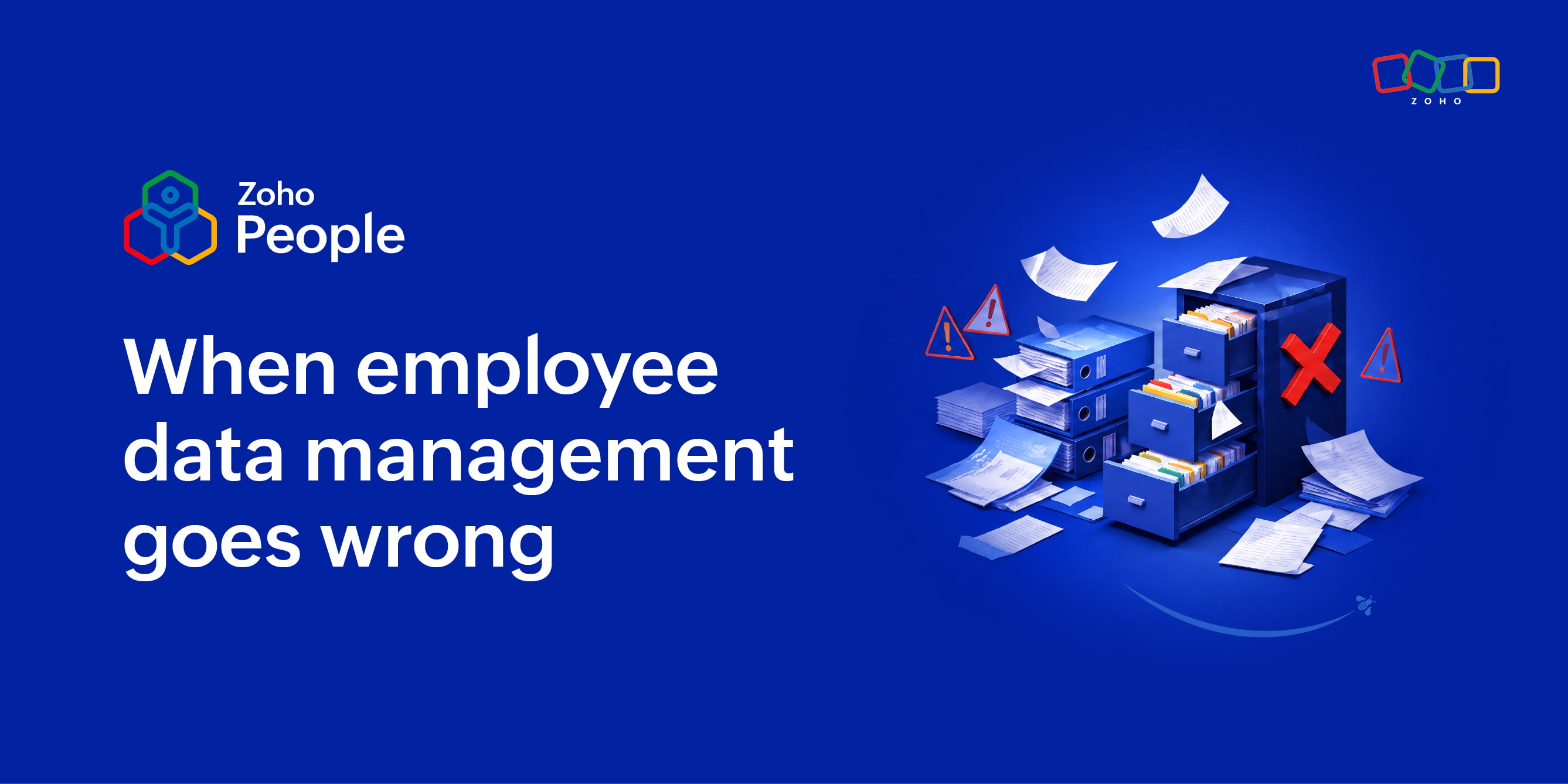
According to Wing Security, ex-employees still have access to sensitive company data in 63% of organizations. While HR teams continue embracing digital workplaces, critical issues such as outdated employee records, duplicate profiles, and inactive users often go unnoticed.
Maintaining clean and accurate employee data has never been more important, especially as organizations increasingly rely on automation, analytics, and AI-driven HR systems. When left unaddressed, poor employee data management can quickly evolve from an operational issue into a serious business risk.
Here are four hidden costs of poor employee data management and what HR teams can do to address them before they become larger business problems.
#1: Compliance and security risks
Some organizations still struggle to remove access to their former employees, contractors, and inactive users. A number of loopholes, including a disconnected HR system, manual onboarding processes, poor data management practices, and more, contribute to this. Outdated access permissions can cause a number of risks as well. Former employees with access to company systems can misuse the information deliberately or unintentionally, which can result in identity theft, financial fraud, or even operational disruptions.
When you have to align with stringent compliance laws, these poor data management practices could result in heavy fines, legal complications, reputational damage, and loss of customer trust.
For example, if an ex-payroll administrator continues to have access to employee salary records or tax information because their account was never deactivated, it can create serious compliance concerns during an audit. Similarly, if inactive users continue to retain access to customer or employee personal data, organizations may fail to meet data privacy and access control requirements as per GDPR or HIPAA.
Solution: Be sure to set up automated workflows that grant, update, and revoke employee access to company systems based on their employment status. Conduct frequent internal audits to review inactive accounts. Make use of an integrated business application to ensure data syncs happen automatically. Set clear processes and assign DRIs to maintain accurate data.
#2: Rising software and licensing costs
When HR teams retain inactive users and duplicate employee profiles, they end up paying additional software licenses for these outdated accounts, too. For example, a former employee’s accounts across HR, communication, training, and payroll apsp may still remain active months after their exit, leading to unnecessary charges. In some cases, an employee who changes departments or rejoins the organization may even end up with multiple accounts across systems, each occupying separate licenses. Poor visibility into software usage and the lack of a centralized process to remove inactive and duplicate accounts are some of the biggest reasons for this. Over time, this can increase software costs significantly and affect budgeting.
Solution: Keep a centralized employee directory to make sure only active employees have access to your software systems. Conduct regular audits to keep user and license information updated.
#3: Poor workforce visibility
Another challenge with inconsistent recordkeeping is loss of visibility into accurate workforce data. When looking for insights about headcount, reporting structure, or even general workforce data, HR teams end up getting inaccurate information. For example, an employee who has transferred departments may still appear under their previous manager in one system, while duplicate employee profiles may cause the same employee to be counted twice in workforce reports. This issue usually stems from manual data entry and having multiple disconnected systems.
Solution: Set up automated workflows and dedicated DRIs to make sure data gets updated as soon as there is any organizational change. Encourage HR, finance, payroll, and IT teams to work in sync to make sure updates are communicated effectively across departments. Monitor workforce data regularly to identify issues early.
#4: Increased errors in core HR processes
Lack of accurate data in the form of outdated, duplicated, or incomplete entries can directly cause errors in your core HR processes, including payroll, performance tracking, and benefits. For example, an employee with incorrect attendance data may receive inaccurate salary payouts, while outdated reporting structures can affect approvals, appraisals, and workflow assignments. Similarly, duplicate employee profiles can lead to repeated records, incorrect leave balances, or errors in employee reporting. These errors can increase the administrative overload on HR teams by causing payroll inaccuracies, delayed salary processing, and reporting inconsistencies.
Solution: Create data validation rules for data entry, like mandatory fields, format rules, and drop-down restricted values. This prevents incorrect and incomplete data from entering your system. Develop automated workflows to flag redundant or repetitive data entries. Creating workflows to automate data sync and updates whenever there are any updates, promotions, transfers, and exits can also help maintain accurate records across systems.
Wrapping up
As organizations continue building digital workplaces powered by automation, analytics, and AI, the quality of employee data becomes increasingly critical. Outdated records, inactive users, and duplicate employee profiles may appear to be small administrative issues, but over time, they can impact security, compliance, operational efficiency, software costs, and workforce decision-making.
 Tarika
Content Specialist at Zoho People