- HOME
- Industrial IoT
- 3 Pillars of Real-Time Industrial IoT Operations: Speed, Intelligence & Control
3 Pillars of Real-Time Industrial IoT Operations: Speed, Intelligence & Control
- Last Updated : March 30, 2026
- 178 Views
- 4 Min Read

In the fast-evolving world of Industrial IoT (IIoT), machines, assets, and processes generate vast amounts of data every second. However, competitive advantage doesn’t come from simply collecting more data, but it comes from acting faster, smarter, and with greater precision.
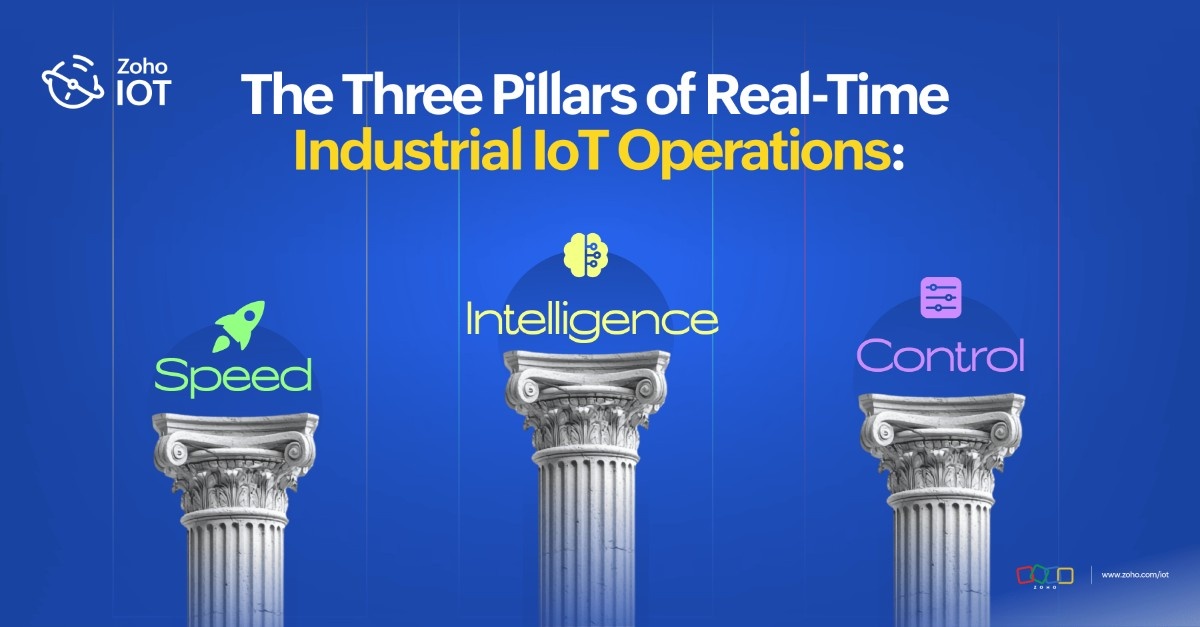
Real-time IoT success is built on three foundational pillars: Speed, Timing, and Control. Together, they transform raw sensor data into actionable intelligence and measurable business outcomes.
Pillar 1: Speed - Capturing the Critical Moment
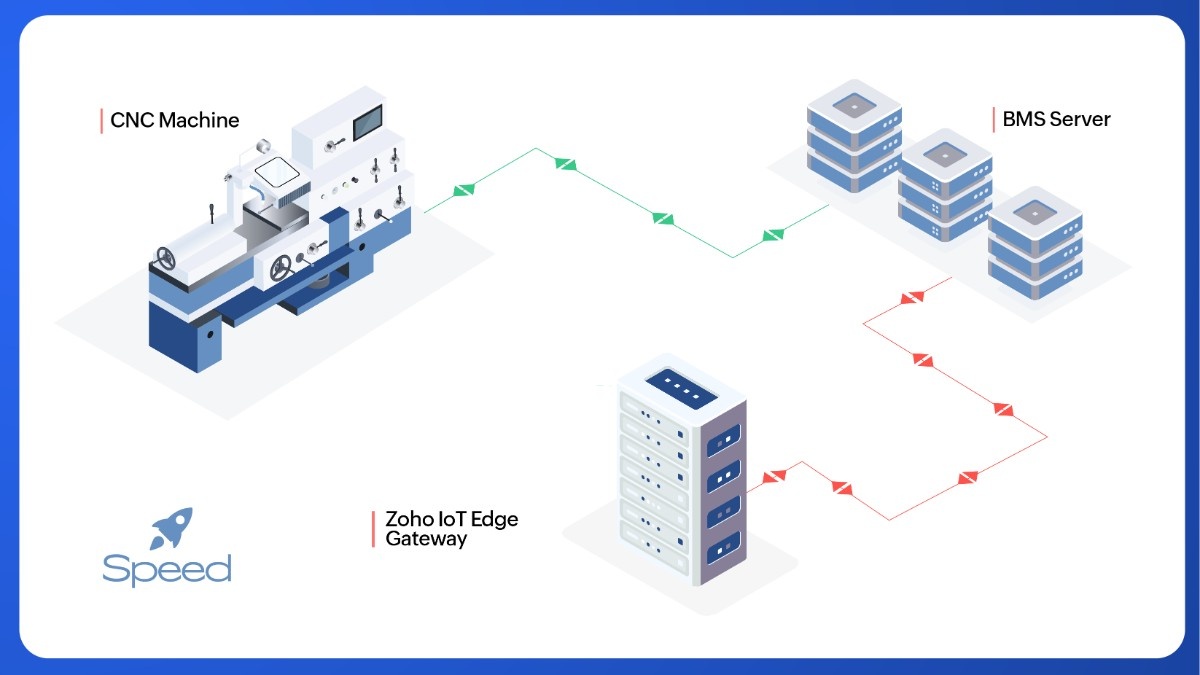
Speed in Industrial IoT isn’t just about fast dashboards or quick-loading charts. It’s about detecting and ingesting events the instant they occur like capturing the "heartbeat" of your operation.
- Reality: A sudden vibration spike in a CNC machine or a micro-surge in energy consumption may only last milliseconds. If your system polling rate is too slow, these signals disappear, and the catastrophic failure might not be felt until weeks later.
- Edge: Modern platforms must process high-frequency data across edge and cloud environments. By moving processing to the Edge, you eliminate the latency of sending data to the cloud and back, allowing for split-second reactions.
Whether it’s high-speed production lines, distributed logistics fleets, or critical smart infrastructure, Speed in smart manufacturing ensures no critical event slips through. It captures the moment before it escalates into costly downtime.
Pillar 2: Intelligence - Powering Smarter Decisions
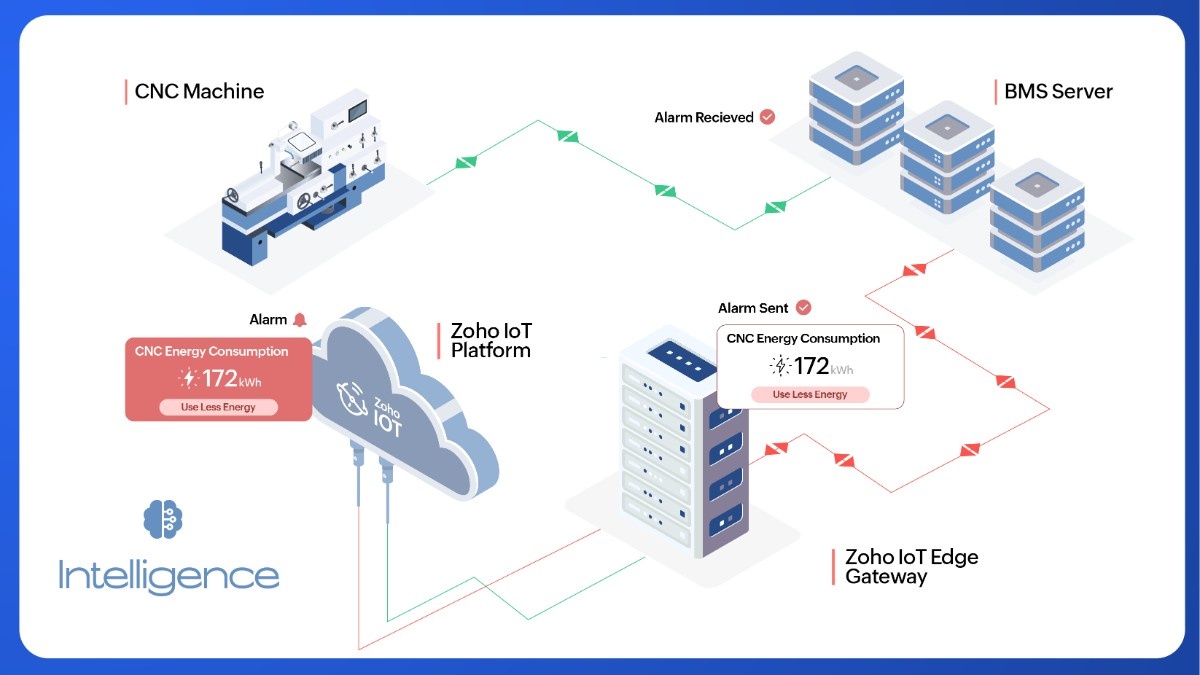
If Speed is the engine, Intelligence is the brain. Fast data without intelligence is just noise. High-speed streaming without context often leads to alert fatigue which is a dangerous state where maintenance teams begin to ignore notifications because most alerts are false positives or operationally irrelevant.
Intelligence is the decision layer. It determines when data truly matters and when action is actually required. Advanced systems like Zoho IIoT deliver Right-Time Intelligence through:
- Contextual Thresholds
Moving beyond static high/low limits to understand operational context. For example, a temperature of 80°C may be normal during a startup phase but critical during idle conditions. - Multi-Condition Rule Engines
Triggering alerts only when meaningful patterns occur such as high pressure combined with low oil levels instead of reacting to isolated anomalies. - State-Based Alarms
Filtering out transient or expected deviations that don’t require human intervention, ensuring that when an alarm sounds, it truly demands action.
Alarm rules turns raw speed into decision-ready insight. It ensures teams react to what is important, not just what is happening while also dramatically increasing trust in the IoT system.
Pillar 3: Control - Driving Efficiency Through Execution
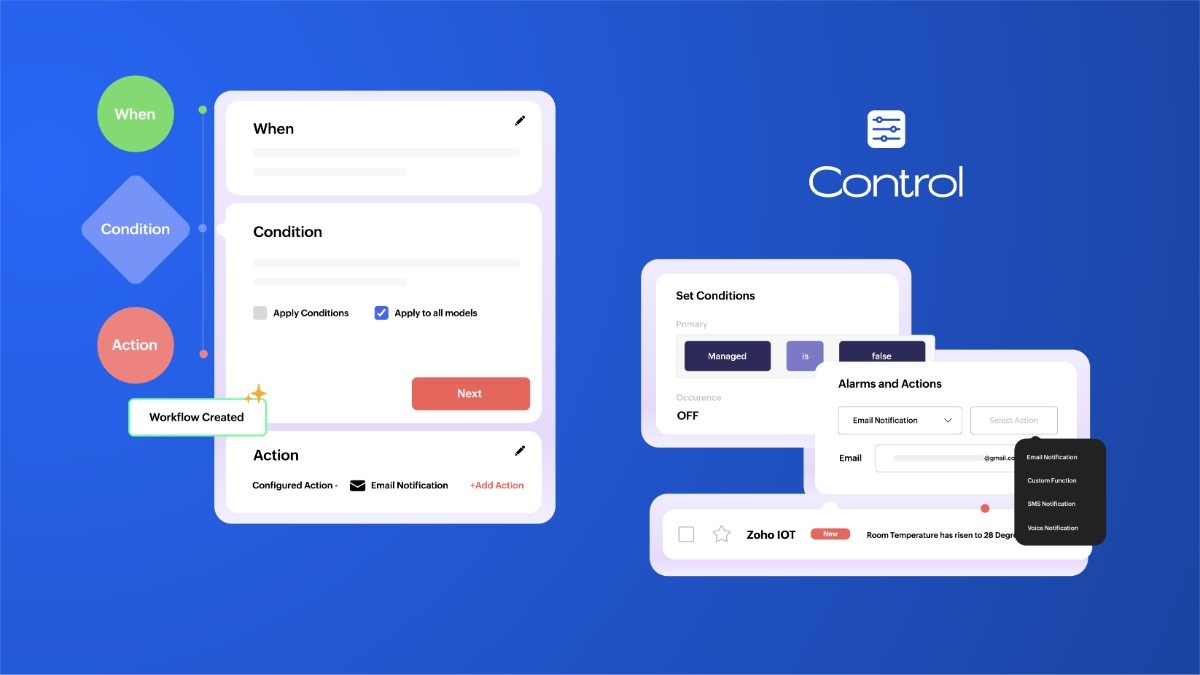
Insights only create business value when they trigger an outcome. Control is the bridge that spans the gap between detection and execution. In a manual system, a detected fault waits for a human to see a dashboard and walk to the machine. In a "Smart" system, control happens in real-time.
True operational control allows you to close the loop:
- Automated Workflows & Remote Commands: Triggering immediate actions, such as slowing a conveyor belt or adjusting a thermostat, directly from the platform.
- Intelligent Incident Escalation: If a Level 1 alert isn't acknowledged within specific timeline, the system automatically creates a work order and intimated the service or maintenance personnel as well.
- Unified Responses: Enforcing consistent, automated safety protocols across ten different factory locations simultaneously.
By turning awareness into proactive results, Control delivers reduced downtime, optimised asset utilization, and significantly lower operational costs. Check out our platform features to understand how you can customize applications for your unique use-cases.
AI as the Quiet Multiplier
While Speed, Intelligence, and Control form the foundation, AI and Machine Learning act as a force multiplier. When layered over these pillars, operations evolve from reactive to autonomic.
- Speed evolves into Prediction
AI learns the digital behaviour of assets, detecting subtle deviations and patterns invisible to the human eye, often weeks before thresholds are breached. - Intelligence becomes Anticipatory
Instead of reacting after issues occur, AI forecasts when failures are likely based on historical usage, environmental factors, and operating conditions. - Control becomes Adaptive
Workflows move beyond static rules to become self-healing. The system learns which actions were most effective in the past and continuously optimises control logic.
With Zoho IoT’s built-in AI/ML analytics, teams stop chasing incidents and start preventing outcomes.
From Real-Time to “Right-Time” Intelligence
The core question for modern industrial leaders is shifting:
From “What is happening now?”
To “What is likely to happen next? and how do we prevent it?”
This shift unlocks:
- Truly Predictive Maintenance - replacing costly break-fix cycles with planned, data-driven interventions
- Zero Downtime Goals - eliminating surprise failures that disrupt production and margins
- Data-Driven Decisions - moving from gut instinct to evidence backed by millions of data points
For many enterprises, the value created isn’t incremental but it’s an exponential leap in productivity and resilience.
Ready for the Future of IIoT?
As data volumes explode and AI models mature, tomorrow’s industry leaders will be those who master Speed, Intelligence, and Control today. The advantage won’t come from speed alone, but from intelligent systems that think ahead and act at exactly the right moment.
If you wish to see how Zoho IIoT brings these pillars to life through a low-code, scalable platform, talk to our team by scheduling a demo or reach out to us at evaluation@zohoiot.com