Building repeatable processes as your Gulf business expands
Over the past few years, the Gulf has become one of the most expansion-friendly regions for service businesses. Regulatory reforms, investor-friendly policies, and streamlined licensing processes have reduced many of the traditional barriers to entry. For founders looking to expand, the UAE, Saudi Arabia, and the wider region are now more accessible.
- UAE Federal Decree-Law No. 26 of 2020 amended the Commercial Companies Law to allow 100% foreign ownership across most onshore activities.
- In Saudi Arabia, the Ministry of Investment permits full foreign ownership in many sectors, provided it complies with regulatory requirements.
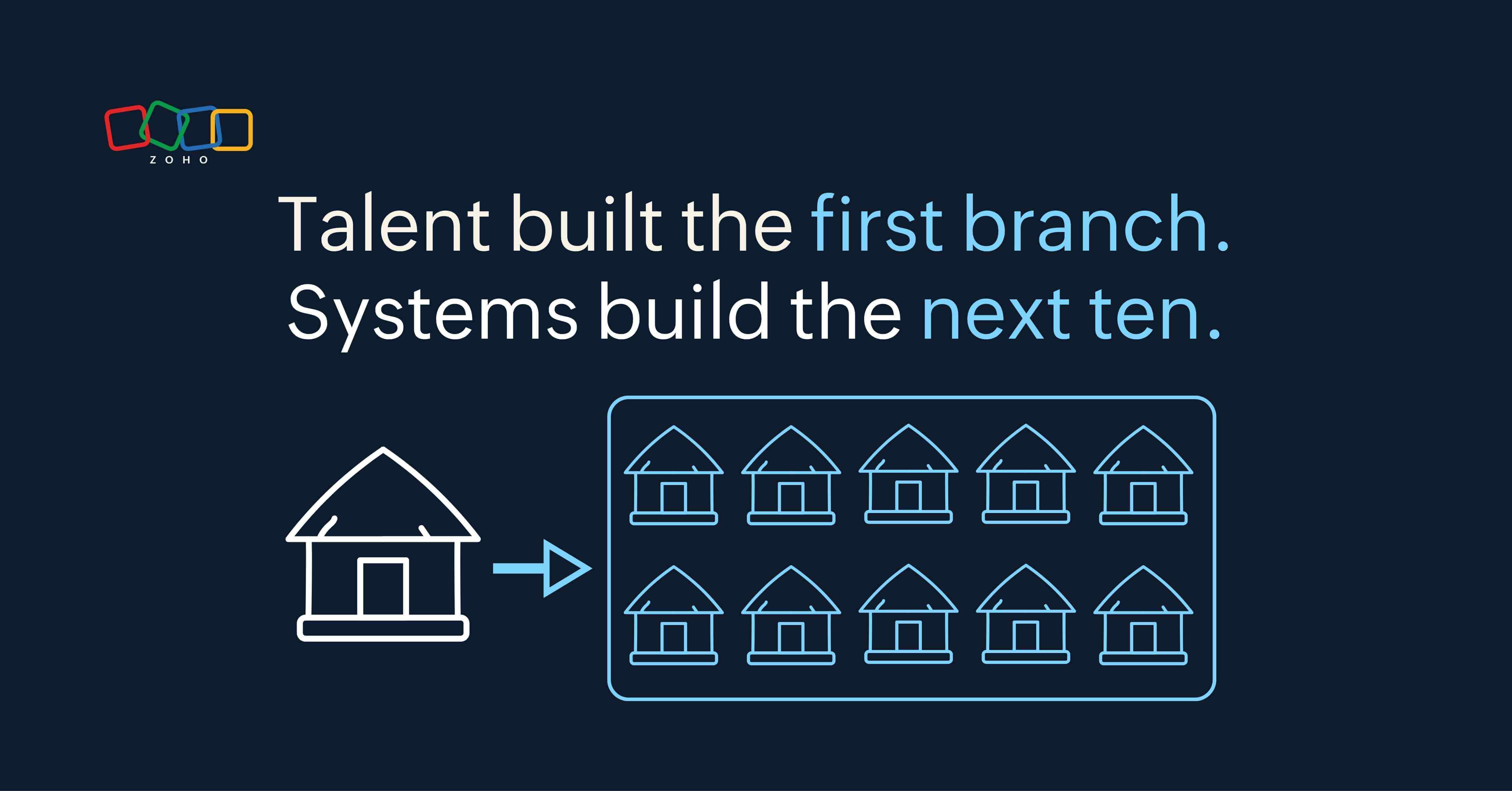
These policy shifts have made market entry significantly easier. But for most service businesses, the real challenge is scaling execution consistently across locations. Scaling a business means adding teams and locations, but it doesn’t mean starting from zero. Every branch already has onboarding steps, billing cycles, and service handoffs in place. The challenge is that they’re often executed differently, shaped by individual habits rather than shared standards. As volume grows, those variations start to affect quality and margins.
AI and automation can improve execution, but only when workflows are clearly defined and aligned across teams. Otherwise, automation just speeds up inconsistency. Before chasing revenue, organisations need to standardise how work actually gets done.
Why expansion breaks execution before revenue
A founder-led services business typically accelerates growth through strong relationships and word-of-mouth referrals. However, when a second location is established, inconsistencies soon emerge: varying client onboarding timelines between teams, delayed invoicing, and inconsistent responses to client complaints. These issues reflect process deficiencies, not hiring gaps.
Many early-stage Gulf service businesses operate more on ingrained habits and experience than on systems. Senior account managers deliver results through personal judgement, but those workflows remain undocumented and non-transferable. As teams expand, this gap shows up as inconsistency in delivery. Implementing standard operating procedures (SOPs) means capturing how work is actually done and making it repeatable across teams. This is how services shift from being personality-driven to process-driven.
- If your process lives in people’s heads, it won’t survive expansion.
- Inconsistency doesn’t appear during expansion. It gets exposed.
Ask your operations team these questions before expanding:
- Can a new hire follow your client onboarding process without asking anyone?
- Do two team members handle the same task the same way?
- Is your billing cycle documented end-to-end?
- If your top performer left tomorrow, would the quality stay the same?
- Do you know which process breaks first when volume doubles?
If you answered "no" to three or more, your organisation has not achieved process adherence, a clear indicator that your current level of operations isn't ready to scale reliably. Using Zoho CRM and Zoho Desk, you can standardise execution by defining mandatory pipeline stages, setting automatic task assignments when deals close, configuring SLA timers, and creating escalation rules that trigger when response thresholds are missed—all before opening a second branch.
Common mistake: Blindly automating first. Automating a broken process doesn't fix it; it just scales the confusion further. Instead, document the current workflow, remove unnecessary variations, assign ownership, and then automate the stable version.
The SCALE framework
Scaling exposes a structural gap. Processes exist, but they are not clearly embedded across teams. Without that structure, consistency becomes dependent on individuals rather than systems.
Most SOP methodologies are designed for large Western enterprises. Gulf service businesses operate differently with bilingual teams, relationship-driven approvals, and a mix of formal and informal communication.
The SCALE framework is built with this context in mind:
- S - Standardise the output. Clearly define what "done" looks like before documenting the steps. This ensures everyone understands the goal and can recognise when it’s met.
- C - Capture the steps exactly as they are performed today. Observe your best performer to document genuine workflows, not an idealised process. This ensures you reflect reality rather than theory.
- A - Assign ownership for each process step. Use a Responsible, Accountable, Consulted, and Informed (RACI) matrix to clarify roles: who does each task, who approves, and who must be informed. With Zoho Projects, you can create and assign tasks clearly within each stage.
- L - Localise processes for context. Adapt workflows to match market-specific needs, including communication channels, required languages, approval flows, and regulatory rules unique to each country or region.
- E - Embed processes into daily-use tools. Ensure the workflow is integrated into platforms your team already uses, so following the process is part of everyone's routine, not a separate step or document.
Common mistake: Documenting aspirational workflows. If your onboarding process involves five hand-offs but really runs as three, document the three. Aspirational SOPs lead to silent non-compliance. Teams ignore them because the documents don't reflect reality. Instead, document exactly what happens today, then improve it deliberately. Start with the real workflow and optimise from there.
Start by identifying your highest-leverage processes
After understanding how the SCALE framework works in context, choosing which processes to document is crucial. Not every process deserves documentation. Instead, use the process priority matrix: Score each process on two dimensions: frequency (how often it runs) and impact (what breaks if it's inconsistent). This prevents teams from over-documenting low-value workflows.
High frequency + high impact = document first, automate second.
For most Gulf service businesses, three processes deserve immediate attention:
1. Client onboarding: This sets expectations, collects data, and builds trust. Inconsistent steps here cause problems. Use a CRM, such as Zoho CRM, to enforce onboarding steps so every deal follows the same stages.
2. Service delivery handoff: This is when work shifts between teams or from sales to operations. Problems arise if these steps vary. Use Zoho Projects to trigger consistent checklists for every new project.
3. Invoice-to-collection cycle: Use Zoho Books to automate reminders and approvals, reducing manual follow-ups.
Here's an example of how to use the process priority matrix:
Client onboarding happens 20 times a month, so it's high frequency. If it's inconsistent, clients lose trust and delays increase, so it's high impact.
Internal meetings happen weekly, so they're high frequency. If they're inconsistent, it causes minor confusion but no revenue loss, so they're low impact.
Based on the matrix, client onboarding ranks higher.
Instead of documenting everything, start by clearly mapping the onboarding workflow—for example: deal confirmation, contract sign-off, data collection, project kickoff, and first service milestone. At each stage, define required data, ownership, and hand-offs.
Once aligned, configure your CRM system to reflect that structure by:
- Making required fields mandatory
- Adding defined onboarding stages
- Automatically assigning tasks when a deal closes
This ensures every client follows the same onboarding flow across all branches.
Quick summary: Start with the process that is both high-frequency and directly tied to client experience or revenue. In most Gulf service businesses, that's client onboarding.
Embedding processes into tools
Many growing businesses believe they have strong processes because they’ve documented them, but documentation alone doesn’t create consistency. Processes only work when they're embedded where work happens. For teams using Zoho, for example, everything happens on the same platform: updating deals, managing tickets, and sending invoices. They don't open a PDF every time they need to complete a task. Embedding a process directly into a tool sits within the workflow people already use. Here are some other use cases:
- When a deal moves to “Closed” in Zoho CRM, onboarding tasks can be automatically created.
- When a ticket breaches the SLA in Zoho Desk, escalation rules can be triggered automatically.
- When an invoice is overdue in Zoho Books, a reminder sequence can be configured to start without manual follow-up.
In such cases, the system guides the workflow. That is the shift from processes people intend to follow to processes the system makes easy to follow.
Monitoring process health across locations
Monitoring process health across locations means checking whether your process is working the same way everywhere. You don't need complex dashboards to monitor process health, all you is need three simple metrics:
1. Turnaround time
How long does it take to complete something?
Example: How many hours are there from getting a lead to completing onboarding?
2. Error rate
How often do mistakes happen?
Example: How many invoices need corrections?
3. SLA compliance
Are you meeting your promised response times?
Example: Did we respond within 24 hours as we promised?
Avoid numbers like tickets handled. They show activity, not quality. Instead, focus on metrics that reflect responsiveness and reliability, such as SLA compliance and first response time. This shift from volume-based reporting to performance-based tracking creates measurable improvements. For example, when WalaPlus in Saudi Arabia operationalised SLA tracking in Zoho Desk, the impact was immediate:
We reduced our average first response time from four to six hours to ten minutes. We have improved by 30% compared to last year.”
— Ahmad Amashah, Customer Service Support Manager, WalaPlus
If SLA breaches increase, pause and investigate:
- Is one branch overloaded?
- Is the SOP unclear?
- Is training inconsistent?
Scaling doesn't require identical operations at every location. It demands disciplined consistency and proactive identification of variations, which must be addressed before they escalate.
Wrapping up
Scaling across the Gulf doesn't fail because of talent shortages or market complexity; it fails from inconsistent execution across teams and locations. Implementing SOPs is the definitive approach to capturing current workflows, driving continuous improvement, and embedding these processes in the tools teams use daily. The businesses that win won't necessarily be the ones that grow fastest; they'll be the ones that embed their processes early and make them visible and repeatable.
FAQs
1. How many SOPs should a growing Gulf business create before expanding?
An ideal way would be to start with five to seven high-impact processes tied to revenue and client experience, such as onboarding, hand-offs, and billing. You don’t need to document everything. Prioritise frequency and impact.
2. What’s the difference between a checklist and a repeatable process?
A checklist lists tasks. A repeatable process defines triggers, ownership, timelines, outcomes, and escalation paths. It explains who does what, when, and what happens if something breaks.
3. Does automation fix inconsistent execution across branches?
No. Automation amplifies the existing process. If it’s unclear, confusion scales. If it’s structured, consistency scales.
4. Which Zoho tools help standardise processes across multiple locations?
Zoho CRM (workflow rules and pipeline controls), Zoho Projects (task templates and approvals), Zoho Desk (SLA automation), Zoho Books (billing workflows), and Zoho Analytics (monitoring dashboards) are some tools that together create a connected operational system.
5. Can Zoho replace dedicated SOP management software?
For most Gulf service businesses, yes. Instead of storing SOPs separately, Zoho embeds processes directly into daily workflows, making compliance automatic rather than manual.
6. How do I monitor whether branches are following workflows in Zoho?
Workflow logs, SLA tracking in Zoho Desk, pipeline reporting in Zoho CRM, and variance dashboards in Zoho Analytics are some commonly followed ways to monitor the workflow adherence.