
How UAE businesses can meet data residency and security requirements
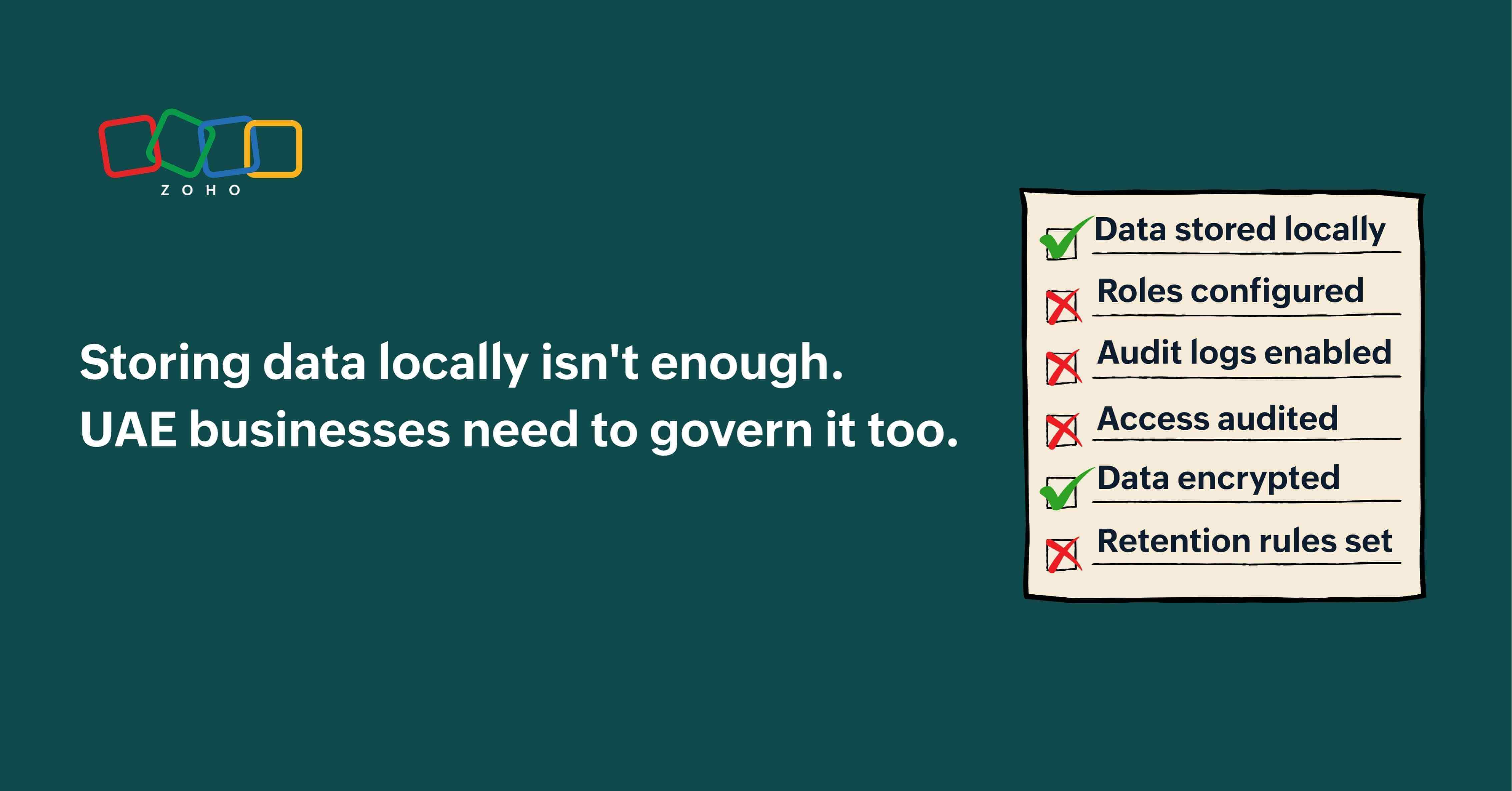
Across the UAE, businesses are expected to protect personal information and comply with evolving data protection and cybersecurity requirements. For many organisations, the challenge is understanding when data can leave the country, how cloud platforms fit into regulatory expectations, and what practical governance measures are required.
How businesses can handle cross-border data transfers
UAE data protection requirements place obligations on organisations when transferring personal data outside the UAE. Businesses must ensure appropriate legal safeguards are in place before customer information is transferred to another jurisdiction. For an ecommerce businesses this is restrictive because they handle customer names and payment details, both of which are personal data. They can't simply transfer this information abroad to use global analytics tools.
Instead, businesses have two practical options.
- The company can use a local data centre that complies with regional regulations. In this setup, personal data remains within the country, and analytics can use this data because no cross-border transfers occur.
- If the company needs to send data outside the country for global processing, it must anonymise the personal data before transfer to remain compliant.
How businesses can meet data residency requirements with a decision model
Businesses can meet residency requirements through a structured evaluation process.
Step 1: Classify data
The data is classified into personal and general data. General data can be transferred with strict safeguards, and personal data should reside in a local data centre or be subject to a rigorous Data Protection Impact Assessment (DPIA). Under the UAE Central Bank’s Consumer Protection Standards, financial institutions must keep all customer and transaction data within the country. Federal Law No. 2 of 2019 (the Health ICT Law) also requires all electronic health information to be stored locally. Additionally, any government data labelled as confidential must never leave UAE territory.
Step 2: Map data flow
Organisations must map their entire data architecture and maintain a Record of Processing Activities (RoPA), documenting how personal data is collected, processed, and stored. Tracking data movement helps verify residency requirements and identify cross-border transfers. It also gives the business a clear view of where personal data sits at any moment, which makes audit responses faster and reduces the risk of accidental non-compliance.
Step 3: Evaluate business risk
Regulators can impose fines and imprisonment for unauthorised transfers. A data transfer violation can damage customer trust and affect partnerships with vendors.
Is your data really compliant just because it’s encrypted or stored locally?
Not necessarily. Compliance depends on how systems are configured and governed in practice. This is where many organisations get it wrong. Common assumptions about cloud and data residency often create a false sense of security.
Compliance myths and execution checklist
Myth 1: Moving to the cloud automatically ensures compliance.
Cloud infrastructure can support compliance, but it doesn't guarantee it. Compliance depends on how systems are configured and how governance policies are enforced.
Myth 2: A local data centre alone ensures security.
Hosting data locally is important for residency requirements, but poor access controls can be risky. Certified environments, such as Zoho’s CST-certified data centres, provide professionally managed infrastructure.
Compliance execution checklist
Organisations need a practical framework to execute data residency requirements.
The RESIDE framework
To move from awareness to action, Organisations need to know what to implement and how to operationalise.
- R - Regional storage: Choose a local DC.
- E - Encryption: Secure data in transit and at rest.
- S - Security controls: Implement role-based permissions and monitoring.
- I - Identity management: Enforce authentication and user policies.
- D - Data governance: Define retention and deletion rules.
- E - Evaluation: Conduct periodic audits and reviews.
Putting that into action involves a few key steps.
How to implement
A typical execution process includes:
- Classifying business data by sensitivity
- Selecting a compliant platform (for example, customer systems like Zoho CRM).
- Configuring user roles and access permissions
- Enabling audit logging and monitoring
- Conducting regular compliance reviews
Payment processing systems require stricter safeguards, while internal workflow applications may need moderate controls. Platforms such as Zoho Creator help organisations build controlled internal applications without managing complex infrastructure.
Choosing compliant cloud platforms for Gulf businesses
When assessing vendors, verify:
- The availability of regional data centres
- Clear data ownership and handling terms
- Security certifications and compliance standards
- Audit and monitoring capabilities
- Transparent service-level agreements
For businesses operating in the UAE, cloud providers should align with local cybersecurity and data governance expectations. Frameworks such as the Dubai Electronic Security Center (DESC) Information Security Regulations and relevant federal data protection requirements provide useful benchmarks when evaluating how providers secure data, manage access, and support regulatory compliance.
Single-vendor environments can simplify governance, while multi-cloud strategies offer flexibility but increase operational complexity. This is often reflected in practice, where teams managing multiple tools struggle with fragmented visibility and control. As one organisation - Backabuddy noted, “We were kind of just really all over the place, using different systems and different tools. But with Zoho, it allows us to use one platform for all of our needs.” In such cases, clearly defined data handling and cross-border transfer policies become essential.
What to look out for:
Compliance challenges stem from governance gaps rather than technological limitations. In misconfigured cloud environments, security incidents occur due to weak identity controls rather than failures in certified cloud infrastructure.
As UAE regulators continue strengthening enforcement, organisations that implement structured governance processes and conduct regular compliance reviews can meet evolving data residency requirements.
FAQs
Do all Gulf countries require local data storage?
Requirements vary by country, but sensitive personal data is often subject to strict residency controls.
Are cloud platforms automatically compliant?
No. Compliance depends on configuration, monitoring, and governance.
How often should businesses review compliance posture?
Quarterly reviews are recommended for most organisations.
How does Zoho help businesses meet data residency requirements in the UAE?
Zoho supports data residency through region-specific data centres in the UAE (Dubai and Abu Dhabi). This allows businesses to store and process data within required geographic boundaries, without setting up their own infrastructure.
Can Zoho help reduce the risks of cross-border data transfers?
Yes. By enabling businesses to host data within regional data centres, Zoho helps minimise the need for cross-border transfers. Where transfers are required, businesses can apply controls such as data classification and anonymisation to remain compliant.
How does Zoho support data governance and security controls?
Zoho provides features such as role-based access control, audit logs, and identity management. These help businesses manage who can access data, monitor usage, and enforce internal security policies in line with regulatory requirements.