- HOME
- Thought Leadership
- Pass The Baton: The Power of Warm Transfer Protocol
Pass The Baton: The Power of Warm Transfer Protocol
- Published : July 15, 2026
- Last Updated : August 3, 2026
- 43 Views
- 6 Min Read

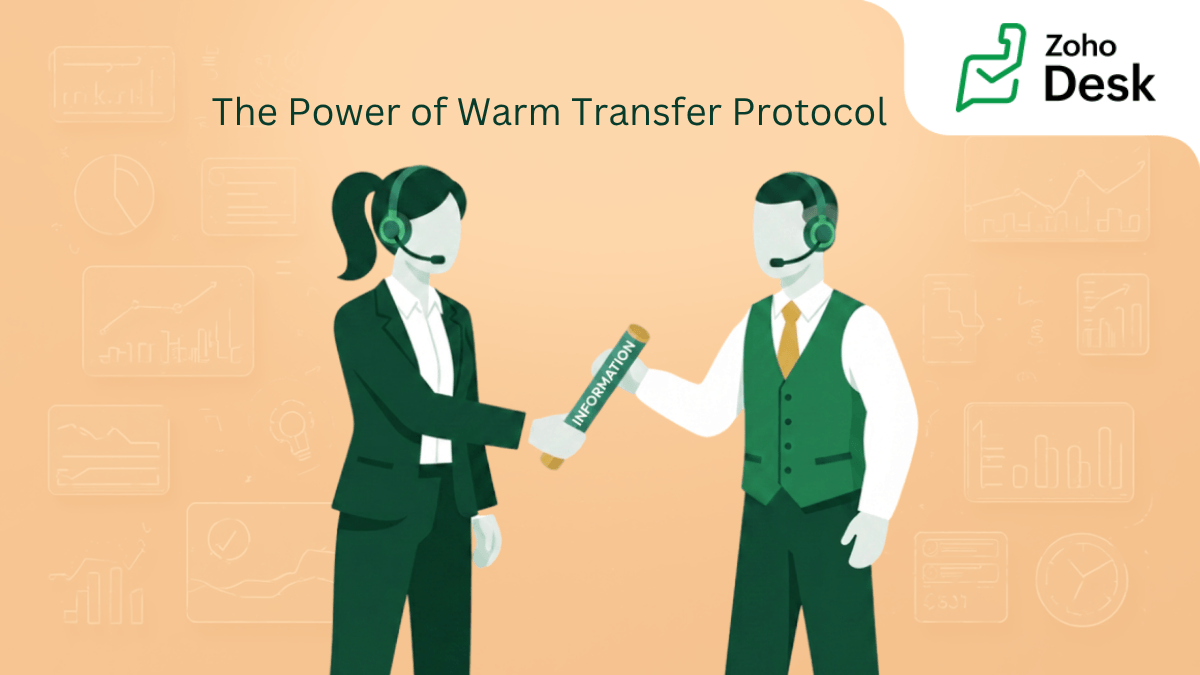
Warm transfer protocol is a method where each support reps is required to brief the next person about the necessary details before handing over a customer call or chat. For example, the next agent to speak with a customer should understand the problem they are facing, any solutions they've tried, the customer's current sentiment, and the urgency of the situation. This helps make sure the next person to interact with the customer is aware of the circumstances before taking over the conversation. It ensures continuity and responsible handling of customer relationships.
Think about explaining a problem to a support agent and learning that it is handled by a different team—then having to repeat the details to the next person. As a customer, you would expect the first representative to share the details from your conversation with the next person before handing it over. Having to repeat the same issues and updating the next person about the steps that were already tried and didn't work is a waste of time and potentially reduces the resolution speed.
For the support reps this might seem like a small inconvenience or a minor issue with an operational procedure but, as a customer, you feel unheard and frustrated.
Warm transfer ensures the next person is briefed about all the details from the call or chat before the handoff. It reflects how well the support teams communicate, collaborate, and take ownership of the customer journey, all of which can positively impact the way customers perceive the business.
How to handle warm transfers in customer service
Instead of abruptly transferring the call to another person, the support rep is encouraged to follow a proper transfer protocol that aims to build a positive experience for the customers.
The protocol guides the reps of the steps they should adhere to before handover:
- Inform the customer regarding the call or chat transfer and explain why it is necessary.
- Brief the next person about the customer details and issue in hand.
- Clearly brief about the solutions that did not work and any relevant details about the customer (repetitive issues, business impact, etc.)
- If necessary, stay on the line to introduce the customer to the next agent.
For example, a customer calls bank support regarding a failed transaction. During discussion, the rep identifies it is a payment gateway issue, informs the customer that it has to be directed to the payment team, and asks them to hold.
The rep reaches out to the payment team, explains the issue, including the amount that failed to transact, the payment gateway used, and the vendor to whom the transfer was done, before reconnecting the call with the customer. This ensures that the customer is greeted by a person who is aware of the situation and is already working on resolving it. The assurance and the confidence the customer experiences help build loyalty and trust.
When should you consider warm transfer the most?
Let us look at some situations where it is important for customer support reps to ensure a warm transfer.
1. Complex issues that require technical troubleshooting or multi-step resolution.
For example, a customer notices duplicate transactions after a payment attempt. The issue requires coordination between fraud detection, transaction processing, and possibly merchant reconciliation.
A warm transfer ensures each step is connected, preventing the customer from navigating multiple disconnected conversations.
2. Cross-department issues such as an issue initially directed to the onboarding team needs further assistance from the technical team.
For example, a bank support rep is enrolling a new customer to their banking app. But he is unable to complete device verification. After trying out the usual troubleshooting steps, the technical team is looped in with all the updates to iron out the process.
3. Escalations where the customer is not happy with the resolution provided and higher authorities need to intervene.
For example, an e-commerce platform's customer is frustrated about delay affecting a high-value order. When they reach the frontline support, there is nothing the representative can do other than share available information and deliver a standard apology.
They need to loop in a supervisor and brief them on the situation. The supervisor may be able to take additional steps to help the customer, such as approving a refund or expediting the delivery.
Common challenges that support reps can address with proper handoff:
- Avoiding customer frustration due to repetitive explanation of the issue
- Loss of context due to handoff
- Delays caused due to knowledge gaps
- Misunderstandings due to technical limitation or language barrier
Best practices for a successful handoff
Every handoff requires the following information to be passed on to the next person for a seamless knowledge transfer.
- Customer identity verification: Full name, unique identifier (Account #, Ticket ID, or Email), and other verification if needed.
- Problem statement: A concise breakdown of the actual problem or the reason for the transfer. Notably the customer’s perspective of the problem should not be diluted. The rep should explain the situation as it is to avoid a context gap.
- Troubleshooting and actions attempted: Steps that were attempted, the outcome, and the expected solution from the other team or person. This avoids redundant loops for the customer and sets the right expectations for the subsequent person.
Business must create a standard operating procedure (SOP) and make warm transfer part of their ticket handling process to ensure adherence. Blueprints are a great way to set such guidelines, for example the list of information that a rep has to share with the next person can be clearly defined within the blueprint so that the rep is prompted to check before transferring the call or chat. Chat or voice transcripts can be attached for the reps to reference during the conversation, which ensures they don't lose any details.
Cold vs. warm transfers
When a transfer is handled poorly the customer has to repeat their issue repeatedly, this leads to confusion and loss of context. This results in micro friction, which compounds over every stage and negatively impacts the customer's experience.
Every time a customer is asked to “explain the issue again,” you are not just losing time, you are also losing their trust and loyalty.
Poor transfers lead to:
- Frustration and anger
- Delays in resolution re-gathering information
- Poor customer satisfaction
- Duplication of information
- Increased chances of miscommunication
While resolving a customer's issue is the main objective in customer support, the customer's emotional experience during the entire process is equally important.
The role of ticketing systems in enabling warm transfers
While mindset drives behavior, systems enable consistency. Modern ticketing and help desk platforms can support warm transfers by:
- Providing a unified view of customer interactions
- Allowing internal notes, comments, and context sharing
- Enabling real-time collaboration between agents
- Maintaining conversation history across channels
When these elements come together, warm transfers become scalable, not dependent on individual effort, but embedded into the workflow.
How to measure if your warm transfer is working?
The effectiveness of a warm transfer is measured by how seamless the experience was for the customer. Here are a few parameters to measure if warm transfer is working:
1. First contact resolution
Are all the transfers leading to resolution? When a ticket is being transferred it should lead to resolution faster. A high FCR even in an interaction involving multiple representatives is a sign of success. It means that the transfers have lead to a faster resolution and not moved the customer to various departments unnecessarily or assigned a call back or moved to a separate ticket. The resolution was provided within a single continuous interaction.
For example, when a technical issue is redirected from the onboarding team to the engineering team and the issue is resolved in the second interaction, it is a sign that the transfer was done in the right direction.
2. Customer satisfaction score
How are CSAT reflecting of the tickets that were transferred? This can directly answer how well or poorly the handoff was handled. For example, if a customer didn't need to repeat themselves after being transferred, they are more likely to give a good rating than the customer who had to tell the same story to three different people.
Even a comparison between CSAT score of tickets that were transferred to scores for tickets that weren't transferred helps provide a quantitative understanding of how the transfer process is working.
The mindset shift to make warm transfer a success:
Rethinking ownership in support is the foundation for consistently delivering warm transfers. The goal is not just to reach resolution but to enable a positive experience for the customer throughout the journey.
This is possible when support representatives are accountable and able to take proactive measures to make the customer feel valued. A mindset shift from fragmented, transactional interactions to ensuring a continuous journey is what warm transfer protocol can provide in customer support.