Bridging the hybrid data gap with ETL pipelines: A strategic approach to legacy and cloud migration

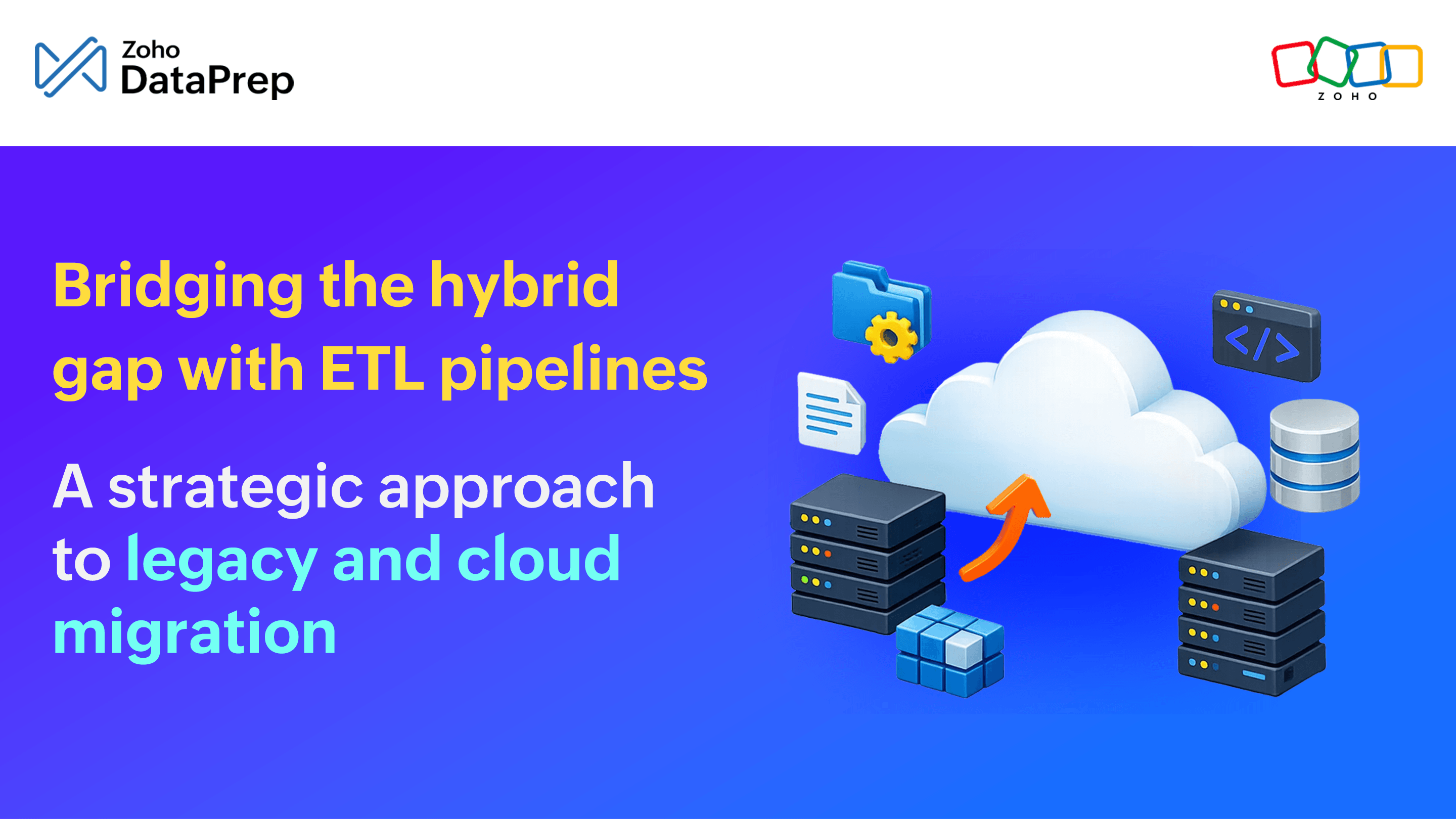
For enterprises, modernizing their core software to take full advantage of cloud innovation is often easier said than done. Cross-department dependencies, large volumes of historical data stored on local servers, and the risk of interrupting critical business workflows can make the transition complex.
The most effective way to migrate from a legacy system to the cloud is usually a hybrid solution. It allows enterprises to continue leveraging existing systems while steadily modernizing workflows on the cloud system over time.
The key to making this depends on a strong data movement strategy where the data layer acts as a bridge between legacy infrastructure and new cloud platforms. This creates a migration approach that is controlled, scalable, and resilient across complex enterprise environments.
The challenge: Moving data in a hybrid world
Most organizations operating in a hybrid state struggle with the transition for years. This happens when they haven't configured the data layer the right way, leading to various issues that build up due to:
System silos: Where core business history lives in specialized on-premise databases that don't naturally talk to cloud applications
Structural inconsistencies: Where data from the legacy systems uses different naming conventions and formatting that don't match the cloud applications
Security risks: Where data is moved across the corporate firewall without a secure, governed bridge, exposing the enterprise to vulnerabilities
The manual dependencies: Where teams spend their productive hours on exporting data, fixing it, and importing it to the systems, leading to stale data, hidden errors, and eroding trust
In a hybrid setup, many organizations find themselves trying to slap on a bandage to make things work between the old and new systems rather than operating from a structured foundation that they can build upon.
The optimal solution: Automating data workflow to make hybrid work for you
If your enterprise is operating in a hybrid system, the goal should be to make it intentional, managed, and seamless.
This is where the data layer becomes crucial. Instead of allowing each system to push and pull data in its own way, you establish a hybrid data layer that coordinates how information moves between the legacy and cloud environments. It acts as a functional bridge that absorbs complexity, so the rest of the architecture can evolve at its own pace.
With a hybrid data layer in place:
Legacy systems continue doing what they do best without being forced into rushed replacements.
Cloud applications receive clean, consistent data without point-to-point integrations for every new tool.
Teams experience hybrid as a single, coherent environment rather than a patchwork of manual workarounds.
The solution is to make legacy and cloud work together, orchestrated through a hybrid data layer that makes the transition feel continuous rather than disruptive.
Five tips for a seamless hybrid data strategy with an ETL pipeline
1. Unifying your data sources
Modernization starts with access. If you can't reach your data consistently and securely, you can't modernize how you use it. A strong data layer treats your local SQL server with the same priority as a modern data API. That's exactly what an ETL pipeline can do.
It implements a secure bridge to pull data from legacy FTPs and local databases into your cloud ecosystem without any manual intervention. This turns hard-to-access data from your legacy systems into an active stream of data movement into your ETL pipeline.
2. Harmonizing data with deep transformations
Once data is fetched from various sources, transformation is crucial. This step ensures that inconsistencies are removed and data is corrected before it's pushed to cloud applications.
The perfect ETL pipeline allows for data transformation, such as standardizing formats, reconciling naming differences, and fixing inconsistencies as information flows through it. Records can also be enriched with missing context during the process. By the time data reaches its destination, it's already aligned with how the business operates in the cloud application.
3. Building resilient pipelines using orchestrations
In an enterprise, manual data handling is more than inefficient—it's a workflow bottleneck. When critical processes depend on people running exports and uploading files, the organization is always one missed step away from a bad decision due to bad data.
Automated orchestration replaces that issue with repeatable, observable ETL pipelines. A well-designed ETL pipeline moves, prepares, and loads data on a reliable loop, ensuring your new systems are always fed with fresh information from legacy servers. Teams can then focus on higher-value work instead of manually moving data and fixing issues.
4. Data activation to put data in motion
Data doesn't create value by sitting in a warehouse. It creates value when it flows into the tools where people make decisions and take action every day.
By activating data—pushing cleaned, enriched information from your central repository back into operational apps—you create a shared source of truth across both legacy and cloud environments. Whether a team member is in the legacy ERP or the new cloud CRM, they see the same high-quality information. That alignment changes the way the business collaborates, plans, and responds.
5. Building secured governance and data quality
As data becomes more distributed and more critical, governance and quality are non-negotiables. They're the safety net that allows you to move fast without losing control.
Built-in quality checks, anomaly detection, and audit trails are important to maintain the reliability of data in your system.
The perfect ETL pipeline has governance embedded into the flow of data—rather than bolted on at the end—to maintain the transparency and assurance required for enterprise-grade operations throughout the hybrid lifecycle.
Building a future-ready strategy
Modernization isn't about abandoning the systems that built your business. It's about creating a better way for those systems to participate in what comes next.
By treating the data layer powered by an ETL pipeline as your hybrid management engine, you create a model where legacy and cloud systems reinforce each other instead of competing.
The result is a path where your data stays clean, your teams stay productive, and your migration stays on track—while giving your enterprise architecture the flexibility to adapt to whatever the next wave of technology demands.
If you're looking for a reliable solution to manage your hybrid data migration, Zoho DataPrep gives you the ETL pipeline, transformation tools, and governance controls to make it work, without the complexity.

Comments