Attendance numbers are always exciting to track, as that's how you assess how your event promotions paid off—but what do they really mean for your business?
Event planners today know that Attendance event success
Imagine you're a B2B company taking part in a tradeshow, like the NRF Expos. Your booth receives footfall in the thousands; the team starts conversations with hundreds of visitors. On paper, attendance is soaring off the charts.
But then you may ask—how many of these attendees are actual prospects? How many legitimate connections have we made? Do we have unified data capture for my CRM to follow-up later?
These questions may seem uncomfortable to deal with, but they give you a far more realistic understanding of attendance, and you end up dissecting the actual count of potential leads, partnerships and customer upsells from the rest.
This is how your attendance metric should actually tie back to baseline revenue and brand growth as an event success indicator.
These are some critical attendance-related KPIs:
Number of registrations:
It is the total count of the overall registrations you have achieved for your event. It helps you understand the effectiveness of your event promotion strategy.
💡Pro tip: You can segment your registration data by aspects like by ticket type, promo code, marketing source (affiliates, social etc.,) in your event planning software to analyze what works. This is also a great list of prospects to keep retargeting long-term, for future events!
2. Registration-to-attendance rate
(Registrants actually attended/Overall number of registrants) x 100
The net percentage of event registrants who actually attended your event. For in-person events, this is typically about 60--80%, and for virtual ones, 40--50% is the average.
💡Pro tip: A heavier drop here indicates issues like ineffective pre-event communications, inadequate follow-up, poor choice of venue/streaming software etc., for your team to fix for the next event.
3. Check-in rate
The proportion of attendees who are successfully verified at the venue/ logged into sessions, showing entry management efficiency.
(Number of attendees successfully checked in/Total number of attendees who arrived on-site or online) x 100
💡Pro tip: If your check-in rate is anywhere >5 mins per attendee, that means it's too slow. With contactless check-in, QR scanning and other tech improvements, you can make this far quicker for attendees.
For example, at their event "Smbhav", the Amazon team checked in about 4,000+ registrants within just 2 days using Zoho Backstage's check-in features.
4. Drop-off rate
This is the percentage of attendees who leave the venue early or skip certain virtual sessions. Analyzing these drop-off points helps you understand what aspects of your event led to engagement drops.
(Number of attendees who left early or skipped sessions/Total number of attendees) x 100
💡Pro tip: To improve your drop-off rate, see how you can make sessions more interactive with gamification, Q&A, polls etc., and also improve qualitative aspects like streaming.
5. Multi-day retention rate
Tracks how many attendees returned each day in multi-day events---crucial for conferences and expos.
(Number of attendees who returned on all event days/Total number of attendees on Day 1) x 100
💡Pro tip: To improve multi-day retention, scatter your "showstopper" tracks such as keynote presentations and activities across the entire schedule, to keep audience returning. And don't leave it to chance: publish agenda updates instantly, trigger automated reminders for day-specific sessions, and surface personalized highlights based on attendee interests.
When your communication, content drops, and session visibility stay perfectly in sync, attendees are far more likely to show up again and stay engaged throughout their entire event journey.
6. No-show analytics
This is a detailed drill-down on what segment of registrants did not show---and how we can address them.
(Number of no shows/Total number of registrants) x 100
💡Pro tip: There will always be a mix of categories in no-show. Ask yourself---which segment is most likely to be a prospect? You can then re-strategize to bring in more of that audience cohort next time.
The more accurate your KPI measurement, the better your understanding and outcome. Traditionally, however, this data is usually fragmented across different reports and platforms, making it difficult to provide a single view of the entire event story.
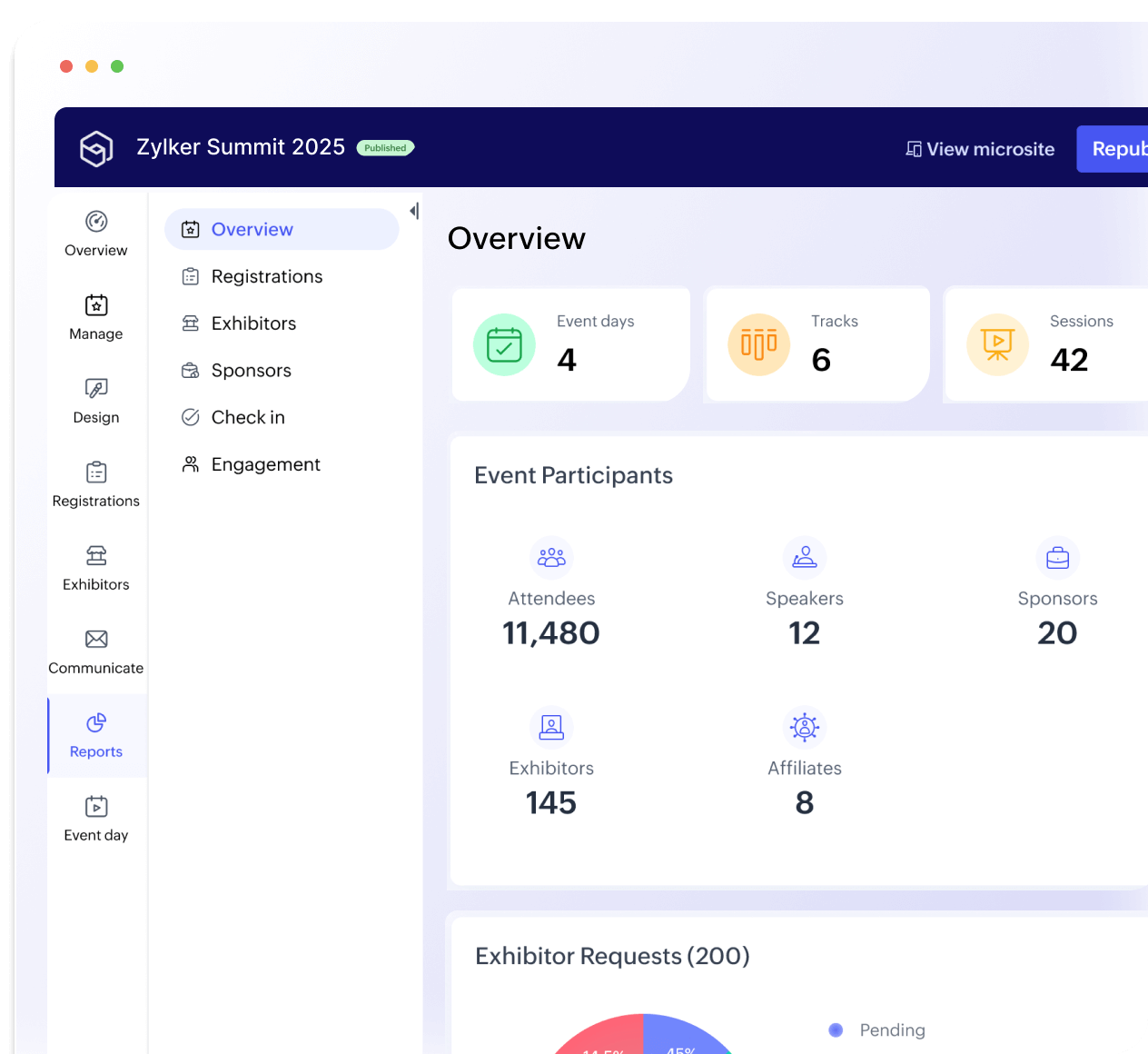
That's why many event teams now rely on integrated event management platforms that unify data from registration to post-event feedback. These platforms bring event insights together in one place, giving planners a unified solution that can track attendance rates, session popularity, sponsor interactions, and even roll out activities for ROI measurement---helping you interpret more accurate outcomes and learn from them.