Planning for safety and security at an event begins well before the first sign-up happens or the first guest arrives. The event safety and security measures, just like the overall event planning, also need to be handled in phases, with ample room for last-minute adjustments and plenty of adaptability. An event planned for 500 attendees could easily swell to 2000, or Scope Creep could derail the best-laid safety and security plans.
Here's what a planned and organized framework for ensuring event safety and security looks like:
Pre-event safety measures: laying the foundation
With pre-event measures, organizers can anticipate risks, streamline event logistics, secure necessary resources, and establish protocols that can be executed well before the event kicks off, which helps minimize accidents and disruptions. Most importantly, this gives organizers clarity and control over the event from the very beginning, keeping security concerns at the forefront of these discussions.
Key steps include:
1. Venue assessment and risk evaluation
Mapping the space and anticipating problem areas are the first two items of every event venue checklist. In the case of a virtual event, this would mean planning the user experience and interface to ensure maximum security and safety while encouraging registrations, engagement, and participation.
For in-person events, a visualization of the event venue by digitally mapping the floor plan helps in identifying potential hazards such as narrow exits, congested pathways, or areas that are prone to crowding. This also allows them to position emergency exits, medical stations, security checkpoints, and signage strategically for maximum visibility.
The dynamic floor planner feature of Zoho Backstage, for example, simplifies booth allocations and helps prevent overlooked risks and ensure every area is accounted for in safety plans. The interactive floor plan can be used to assign tasks to event teams responsible for inspection and compliance checks, and also maintain a centralized record for audits or regulatory requirements.
Here's a quick pre-event safety and security checklist that can be added to your event planning dashboard right away:
- Fire exits and emergency routes
- Structural integrity of stages, seating, and temporary installations
- Accessibility for attendees with special needs
- Adequate signage and lighting
2. Streamlining staff and vendor coordination
Pre-event safety is as much about the physical layout as it is about the people who will participate. Not just the attendees, staff, volunteers, vendors, and sponsors, but everyone needs a brief on protocols, emergency planning, and assigned responsibilities. The sooner these guidelines are conveyed, the better.
Having a mobile app feature like Zoho Backstage within your event management software enables event planners to assign tasks, track progress, and communicate updates in real time.
When these workflows are centralized on a single platform through exhibition and event management software, event organizers can ensure everyone knows their duties and has access to all the relevant documentation and processes at all times. Also, by automating task assignments and onboarding, planners can ensure everyone knows their responsibilities and has access to essential resources.
For instance, the team responsible for stage inspections, equipment checks, or fire extinguisher checks can log completion or flag issues instantly, reducing the risk of overlooked or delayed reporting of safety measures.
3. Crowd management and access control
Managing how attendees move through an event is crucial for safety, especially at large-scale gatherings where overcrowding can become dangerous. Structured crowd control starts with clear entry and exit plans, supported by smart technology and careful coordination. Pre-issued digital tickets and badge printing systems can drastically reduce wait times and congestion at entry points.
By enabling attendees to check in using QR-based passes or pre-printed badges, organizers can streamline access, minimize physical contact, and maintain accurate headcounts. This also allows security teams to flag unauthorized entries or anomalies in real time.
With platforms like Zoho Backstage, event organizers can integrate registration, ticketing, and on-site badge printing into a single system. This creates a seamless experience for both attendees and staff. With live dashboards and mobile access, organizers can monitor entry volume, reassign staff to busier gates, and respond to bottlenecks instantly while maintaining compliance with safety regulations.
By consolidating all event-related activities into a unified digital workflow, event managers also gain real-time visibility and control, ensuring that crowd movement remains smooth, predictable, and safe throughout the event.
During the event: maintaining safety in real time
This is the stage when event safety and security management shifts from planning to execution. In this phase, event managers need to remain fully focused and maintain constant vigilance to respond quickly to any issues.
Here are some key steps:
1. Real-time monitoring:
During the event, real-time monitoring helps planners be proactive and prevent problems before they happen instead of just reacting to them. Modern event technology allows planners to:
- Track attendee check-ins and session participation in real time.
- Receive automated alerts for unusual crowd density or traffic flow.
- Coordinate security and venue teams more efficiently through centralized dashboards.
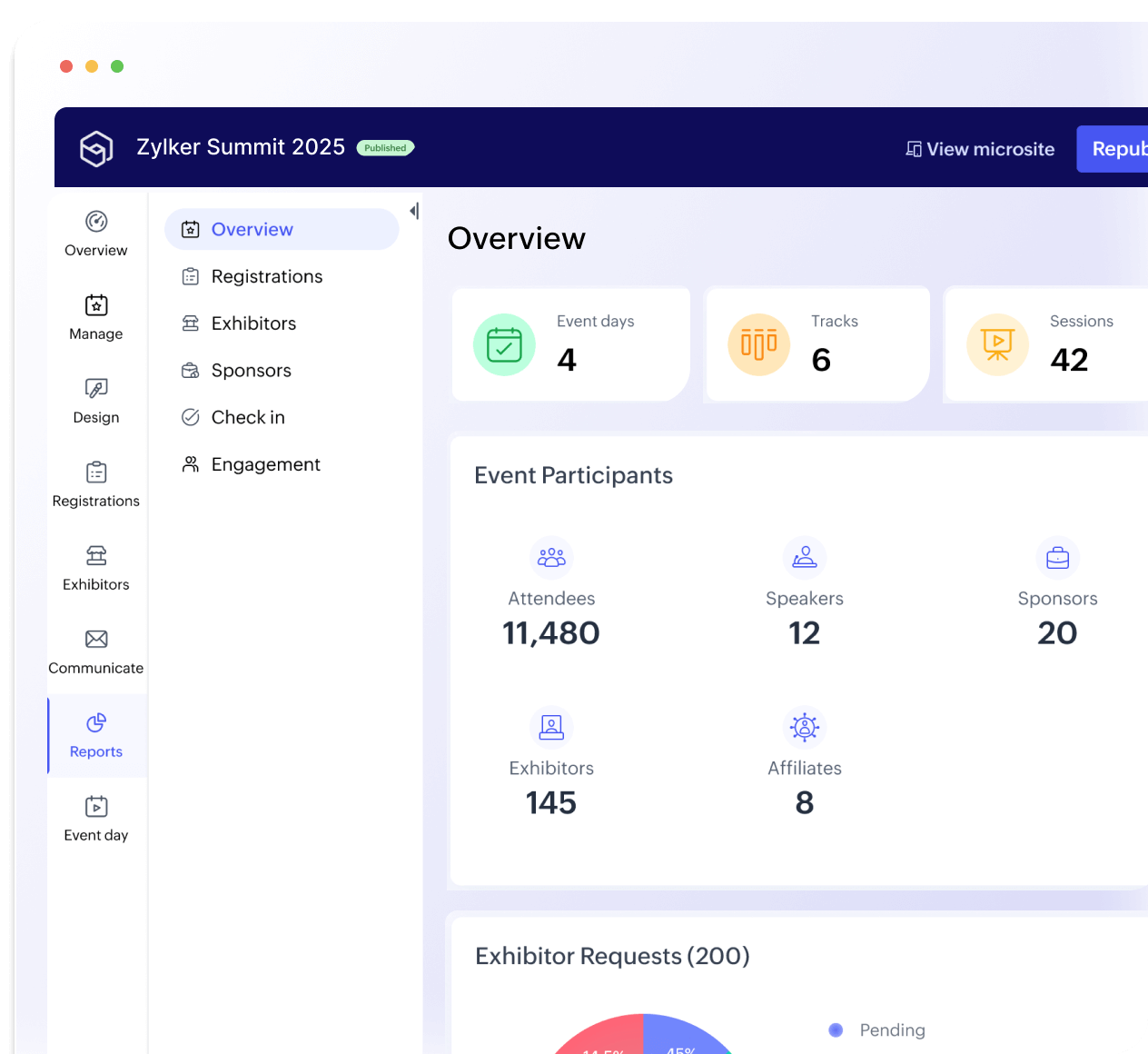
Using a platform like Zoho Backstage, organizers can monitor attendance and session capacity through live dashboards that update instantly across all devices. The Backstage mobile app also allows on-ground staff to access live check-in data, report issues, and receive updates without leaving their post.
By consolidating real-time insights from different event zones into a single view, planners gain a holistic understanding of attendee movement and engagement. This not only enhances safety by identifying potential risks and enabling faster responses, but also improves the overall event experience by minimizing disruptions and crowd-related stress.
2. Emergency preparedness:
Even at the most meticulously planned events, an event manager could face unpredictable situations. Medical emergencies, equipment failures, or sudden weather changes could derail even the best-laid agendas. How well-prepared your event team is to act in those critical moments separates a controlled response from chaos.
A digitized approach ensures that instructions aren't buried in binders or emails. They're live, actionable, and accessible to everyone responsible for keeping the event safe.
The emergency protocols set up during the pre-event stage come into play, which include
- Evacuation procedures and assembly points, mapped out and shared with staff and attendees
- Medical response teams and first-aid stations, at strategic locations
- Reliable communication channels, to broadcast instructions quickly and clearly
By documenting and storing these safety protocols in a centralized event management platform, planners can ensure every team member has instant access to critical information when needed. Using the Zoho Backstage mobile app, for instance, organizers can upload emergency plans, assign responsibilities, and send real-time alerts to staff during an incident.
3. Security measures for virtual and hybrid events
Today, event organizers are increasingly adopting virtual and hybrid formats; safety concerns extend far beyond the physical venue. Cybersecurity now plays a critical role in protecting attendee data, intellectual property, and the integrity of the event experience. Unauthorized access, data breaches, and content leaks can undermine the credibility of event managers and lead to significant financial and reputational losses for organizers and the brand.
To safeguard virtual environments, event organizers should implement:
- Password-protected sessions and secure login credentials for all participants to ensure data integrity
- Tiered access controls that limit entry to verified attendees, sponsors, or speakers
- Real-time monitoring of chat and Q&A sessions to prevent inappropriate or malicious activity and moderate online conduct.
Using a platform like Zoho Backstage, organizers can configure access permissions, restrict entry to registered participants, and manage all virtual sessions from a unified dashboard. The platform also offers integrated moderation tools that allow hosts to monitor engagement and remove disruptive participants in real time, reducing security risks without disrupting the attendee experience.
By embedding these virtual event safety measures into overall logistics and planning, organizers can ensure that hybrid and online components are just as secure and well-managed as their physical counterparts.
Post-event safety and security measures
Safety management does not end when the event concludes. Post-event processes ensure that risks are fully mitigated and valuable lessons are captured for future planning.
1. Debriefing and incident review
Collect feedback from staff, security teams, and attendees to identify any incidents or near misses. Log incidents, track resolutions, and assign follow-up actions to understand what went right, what could be improved, and how to strengthen future safety measures. This process transforms one-off experiences into continuously improving safety systems.
Key steps in an effective post-event safety review include:
- Conducting debrief sessions with staff, vendors, and venue managers to evaluate response effectiveness
- Collecting attendee feedback to identify overlooked safety or accessibility issues
- Analyzing incident reports and response times to refine protocols for future events
- Documenting compliance with local regulations and insurance requirements
2. Data protection and compliance
Attendee data protection is both a legal requirement and a reputational imperative. Event organizers can reduce the risk of data breaches and fines by obtaining consent, encrypting data at rest, and limiting data sharing. With role-based access controls and audit logs, teams can ensure that only authorized staff access sensitive information and that every access is traceable.
By exporting compliance-ready reports and retention logs, event planners can quickly respond to regulatory requests or audits without hunting through emails and spreadsheets. Integrating payment and registration systems into a single platform is another smart way to reduce the numerous data handoffs. It lowers exposure points and simplifies data governance.
For example, by centralizing registration, ticketing, and attendee lists on a single platform like Zoho Backstage, organizers can manage permissions, generate attendee export files, and maintain an auditable trail for compliance purposes.
Bonus: Use this actionable checklist to close the data protection loop:
- Capture consent at registration,
- Enforce least-privilege access,
- Archive or delete data according to policy, and
- Keep exportable incident and audit reports ready for insurers or regulators.
These actions protect attendees and give organizers defensible evidence that they handled data responsibly.
3. Equipment recovery and site safety checks
For event planners and organizers, the work goes on even after the thank-you note is delivered. This is the time to inventory equipment, photograph temporary structures, and assign post-event sign-offs. Pre-built checklist and digital sign-off workflows let event teams mark items inspected or repaired, record damages, and route follow-up tasks to vendors, all with timestamps and owner names for complete accountability. This helps reduce liability and speed up venue handback.
Using task management tied to vendor profiles and equipment records makes recovery predictable: technicians receive automated tasks to dismantle stages, return rented AV equipment, and confirm barrier removal; facilities teams receive reminders for waste disposal and site cleaning.
A quick final sweep checklist:
- Confirm all temporary structures are removed or secured,
- Reconcile inventory against rental agreements,
- Log any damage with evidence, and
- Issue vendor close-out tasks.
Handling these steps digitally helps prevent disputes and makes sure the venue is returned safely and meets all requirements.