What is product analytics? A complete guide
- Last Updated : May 27, 2026
- 327 Views
- 4 Min Read
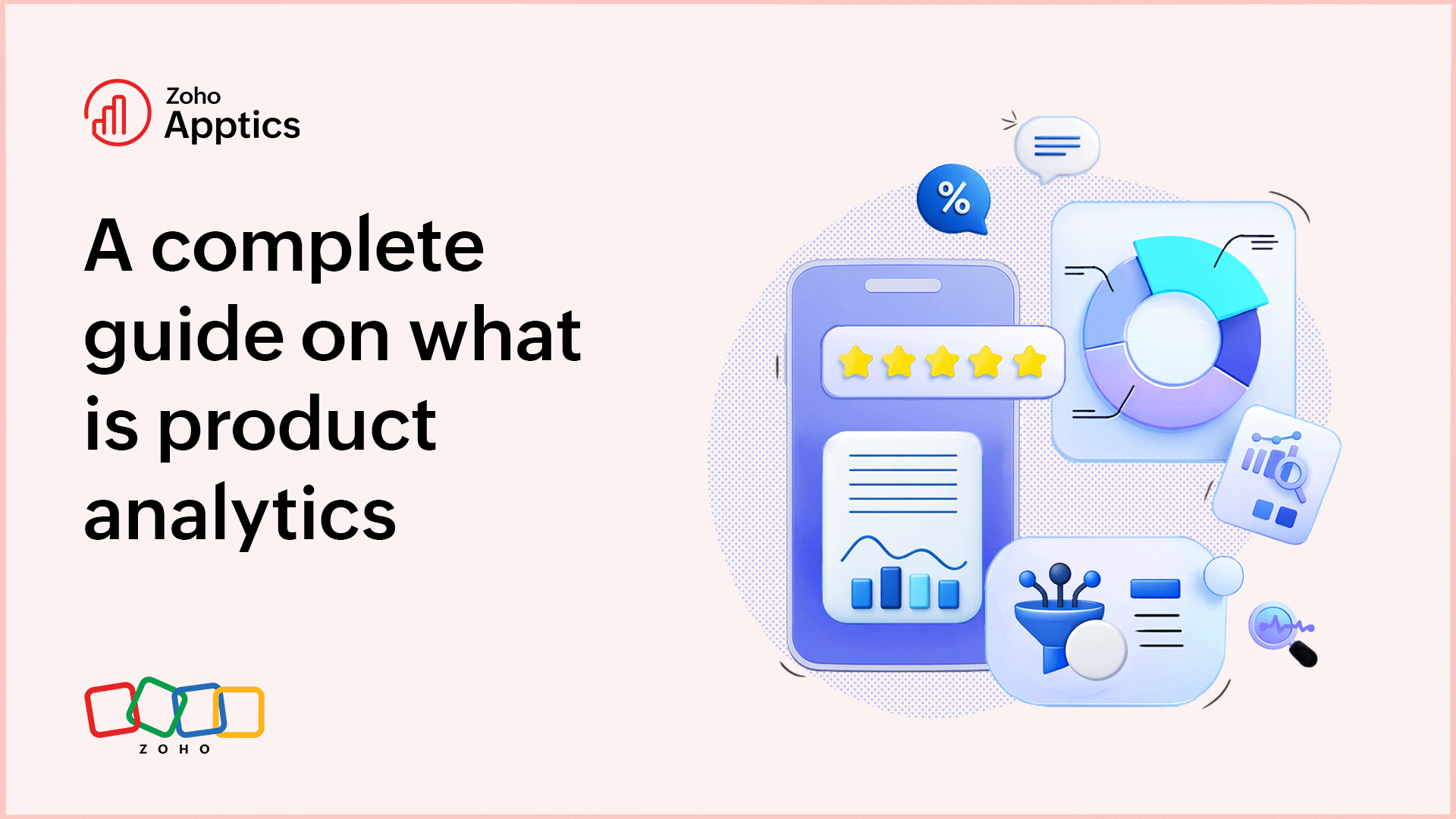
Product analytics is an intelligence tool that tells you how users interact and engage across different digital touchpoints. It helps you take data from user interactions in a product and turns it into actionable insights about user behavior and product performance.
As a business delivering digital experiences, it's crucial to know if your users find value in what you offer. To truly understand and deliver what users want, you need to ask the right questions:
- Do users engage with your product as you intended?
- What challenges do they face while using it?
- Where do users drop off, and why?
- How can you improve their experience based on feedback and input?
Product analytics helps you find answers to these questions. It gives you the clarity to understand your users better, identify friction points and bottlenecks, and make data-driven decisions that move your product forward.
Product analytics vs. other types of analytics
Product analytics is often confused with other analytics tools, but each serves a different purpose.
Type of analytics | Purpose |
| Web analytics | Focuses on traffic, page views, and conversions on websites |
| Marketing analytics | Measures campaign performance, attribution, and acquisition channels |
| Business intelligence (BI) | Aggregates business-level data such as revenue, sales, and operational metrics |
| Product analytics | Focuses on what happens within the product: how users navigate features, where they succeed, where they struggle, and why they churn or stay |
While web and marketing analytics explain how users arrive, product analytics explains what happens after they start using your product. It bridges the gap between user behavior and product decisions.
Why use product analytics?
Product analytics helps teams move beyond assumptions and make decisions based on real user behavior. Some of the key benefits include:
- Measuring product adoption and user engagement: Track key metrics such as sessions, monthly and daily active users (MAU/DAU), events, retention, and funnels. This way, you'll know if people are signing up to your product as an impulsive one-time interaction or if they're a genuine customer who'd love to be your power user.
- Understanding the complete user journey: See how users move across screens, features, and digital touchpoints. Instead of just knowing your checkout failed, product analytics shows you that 40% of users on iPhone 15 dropped off because the pay button was hidden by the keyboard.
- Enabling product-led growth: Improve onboarding, increase retention, and build stickier experiences. Analytics reveals where users get stuck, allowing you to refine the UX based on concrete data instead of guesswork.
- Connecting product insights to business outcomes: Relate usage patterns with cross-functional metrics and KPIs such as conversions, revenue, or customer satisfaction. By seeing which in-app actions lead to long-term retention, you can move beyond vanity metrics and double down on providing the experiences that users truly want.
Who benefits from product analytics?
Product analytics supports multiple teams across an organization, each with a different lens:
Developers and engineering teams
Identify issues faster, understand crashes or performance bottlenecks, and improve stability.
Marketers and marketing teams
Measure feature adoption, optimize engagement strategies, and segment users for personalization.
Product owners and UX teams
Collect qualitative and quantitative feedback and understand how users interact with features and where the experience can be improved.
Customer success and support teams
Anticipate user issues, reduce churn, and provide more contextual support.
In short, product analytics shows you what happens after a user starts interacting with your digital product. It adds a product intelligence layer to your overall business intelligence stack and acts as a critical data source for understanding user behavior and technical context within customer data platforms (CDPs).
How product analytics works?
Product analytics tools typically rely on SDKs (software development kits) that act as a bridge between the application and the analytics platform. These SDKs help collect and process data from in-app interactions.
Modern product analytics solutions also support additional data collection methods such as REST APIs, extensions, and scripts that can automatically capture key data points by default, reducing manual instrumentation effort.
What data do you get from product analytics?
Product analytics provides visibility into how users experience your product through data such as:
Metrics | Data points |
| Core engagement metrics | Sessions, events, screens, APIs, app stickiness, and retention |
| Core usage metrics | New devices, active devices, countries, app versions, platforms, OS versions, and user groups |
| Diagnostic information | Device meta data (type, model, network strength, device orientation, memory space, and battery status), session data (traces of events, APIs, screens, and other user activities), log files, and stack traces |
| Additional attributes | Event properties, user properties, and user profiles and segments |
| User feedback | Store reviews and ratings, in-app ratings, and in-app feedback in the form of text, screen recordings, attachments, and screenshots |
Learn about the 4-layer product analytics framework that helps you understand the core product metrics and get started with product analytics powering meaningful insights.
Product analytics across the product lifecycle
Product analytics plays various roles at every stage of the product lifecycle:
- During development and testing: Identify crashes and errors, uncover usability issues, create closed feedback loops, and improve the product early.
- Post-release: Track adoption, onboarding success, and early user behavior.
- Growth stage: Measure retention, feature usage, and engagement trends.
- Mature products: Optimize experiences, run experiments, and align product decisions with long-term business goals.
Choosing the right approach to product analytics
The real value of product analytics comes when teams can observe, interpret, and act without friction. Product analytics is about collecting what helps you understand, decide, and improve—consistently.
That’s where approach matters more than promises.
Zoho Apptics: A unified product analytics solution
Most product analytics tools focus on what happened inside your product. Zoho Apptics goes a step further by helping teams understand why it happened and what to do next.
Zoho Apptics is designed as a simple and unified product intelligence layer, bringing together usage data, technical context, and user feedback in one place. Instead of switching between multiple tools to piece together insights, Apptics helps teams turn product data into meaningful actions across platforms and teams.
Zoho Apptics is also an MCP-enabled product analytics platform that bridges product data with AI assistants and helps you get contextual and faster insights.
If you’re exploring product analytics for your digital product, Zoho Apptics offers a practical, privacy-first approach to understanding users and building better experiences.
Schedule a demo with our product experts to see how Apptics helps you gain clarity from product data and build with confidence.
 Supraja Gayathri S
Supraja is a Product Marketer at Zoho Apptics with 5+ years of experience in breaking down complex concepts into easy-to-digest, detailed blogs. She loves blending technical content and data with creative storytelling.