Analyzing mobile marketing funnels to increase user engagement and retention
- Last Updated : June 4, 2026
- 273 Views
- 3 Min Read
Every user is unique and has different needs, preferences, and reasons for using your app. While one person might use Instagram for entertainment, another may use it to promote their business. These contrasting patterns make it challenging to predict exactly what your users truly want and what they expect from you.
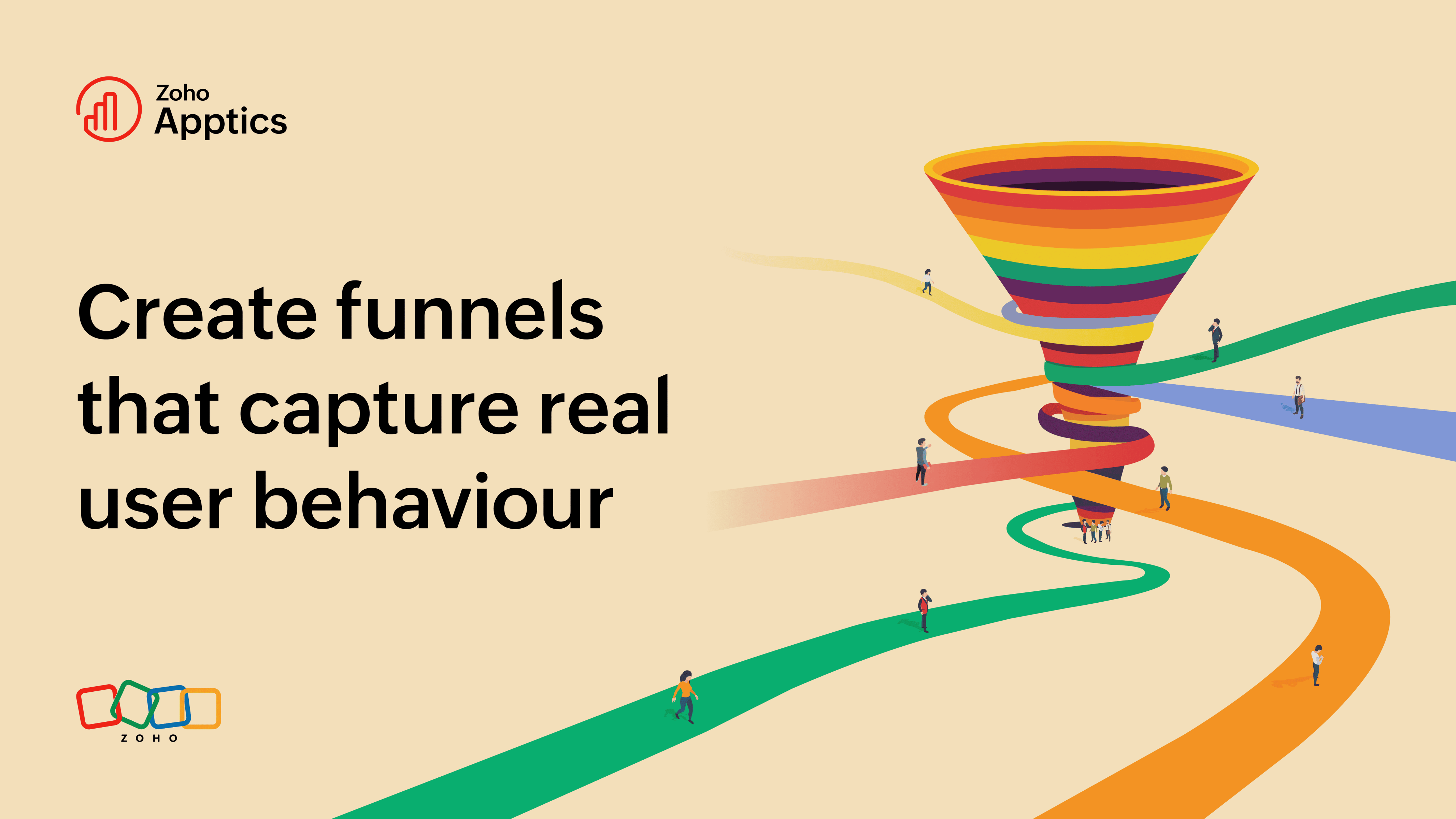
That’s where mobile app marketing funnels play a crucial role. They help you map the different paths users take, understand in-app usage patterns, and analyze where users tend to drop off in their journey.
Since user experiences are spread over multiple digital touchpoints, you need to broaden your horizons when analyzing behavior and adapt your engagement strategy accordingly.
Unlike your typical linear funnels, mobile app marketing funnels are dynamic and have flexible goals that adapt to user flows with multiple user paths.
User engagement today
Users go back and forth within the different stages of the dynamic funnel. User engagement today is dynamic, complex, and continuous. Even if your app has plenty of downloads, that doesn’t guarantee conversions or sustained engagement from users.
Traditional user activation funnels can map out the potential steps a user takes from being onboarded to getting retained as an active user. But what happens when a user stops engaging? As retention drops, you need to re-engage them through re-targeting efforts.
The classic AIDA (awareness, interest, desire, and action) model can't keep up with today's user engagement pattern and multi-touchpoint landscape, especially when AI enters the chat. This is where modern mobile engagement loops come in.
Modern mobile engagement loops
Mobile engagement loops contain four stages:
- Onboarding: Users discover and try your app.
- Conversion: They start taking meaningful actions.
- Retention: They engage regularly as daily or weekly active users.
- Re-engagement: After expected drop-offs, you bring them back through re-targeting efforts.
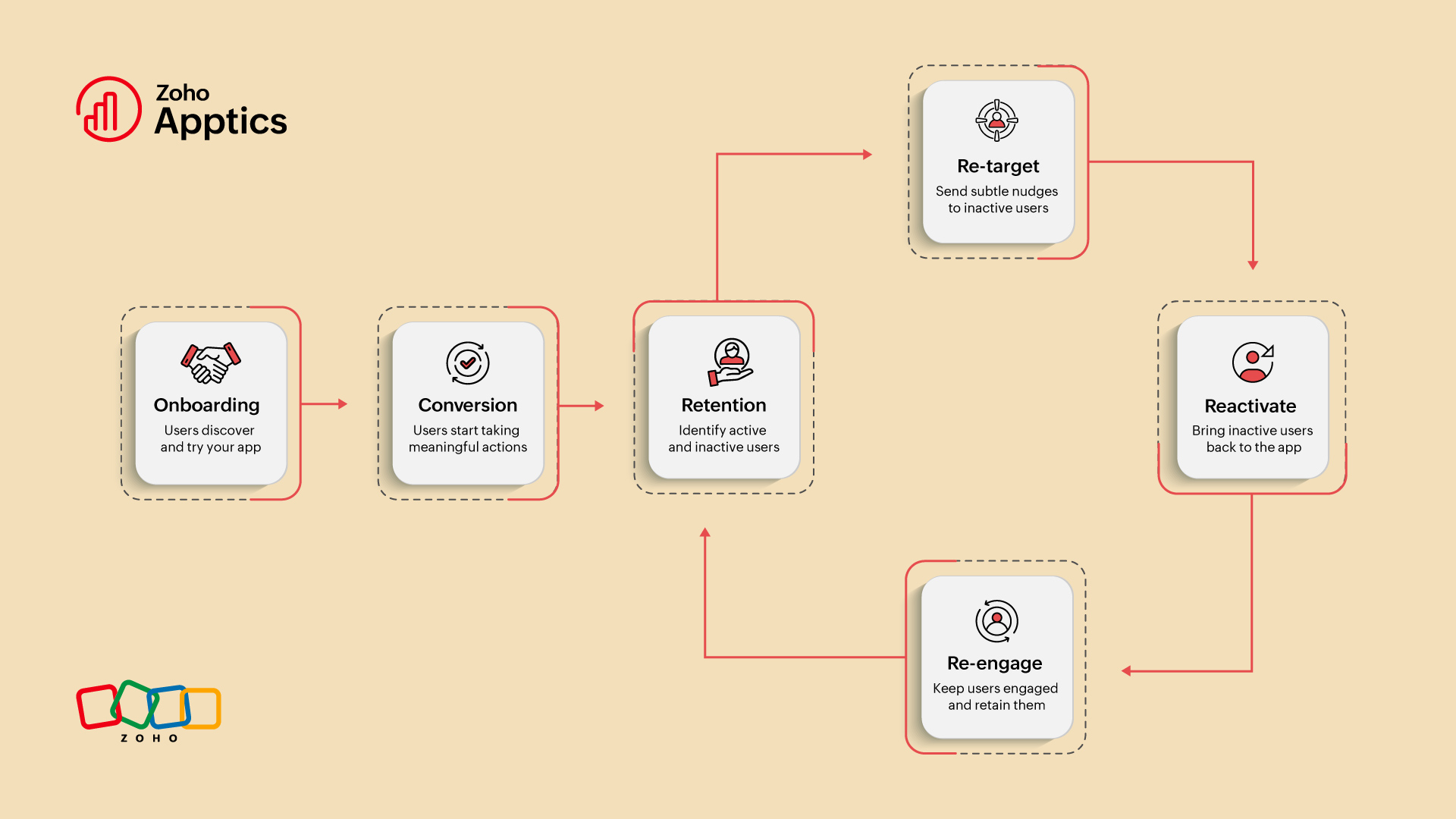
According to statistics, more than 90% of users tend to give up on an app before 30 days. To counter this, you have to reactivate users quickly and incentivize them to perform meaningful actions. That's when re-targeting comes in, helping you engage again with existing app users through push notifications offering discounts or email reminders to complete an action. Reactivate, re-target, re-engage, and repeat. The loop goes on!
Dynamic over traditional funnels
Dynamic funnel flows bring more clarity than traditional funnels. They make funnel analysis easier, highlight bottlenecks better, and uncover opportunities to optimize the user experience.
| Dynamic funnel flows | Traditional funnel flows |
| Multiple and flexible paths | Straight and fixed journey |
| Horizontal in nature (shorter, goal-based flows) | Vertical and linear (top-to-bottom steps) |
| Considers user actions, data, and conditions | Rigid and less adaptable |
| Adapts to real user behavior and drop-offs | Assumes an ideal, one-size-fits-all path |
Dynamic funnels aren't just diversified in nature; they're distinct and measurable.
- Precision: Track conversions and drop-off rates with smaller goals.
- Flexibility: Cater to different user behaviors with multiple funnel paths.
- Optimization: Spot exactly where users abandon flows and fix friction points.
By using flexible horizontal funnel flows instead of rigid vertical ones, you simplify complex journeys and build realistic engagement models.
Simplify marketing funnels for complex user journeys
Whether you're a marketer, product managers, or customer support reps, your ultimate goal is to deliver valuable in-app experiences. The real challenge lies in getting data to build and analyze these dynamic funnels. The right tool can make all the difference.
Zoho Apptics lets you visualize user journeys across mobile, web, and desktop platforms, so you can:
- Track user engagement and adoption.
- Visualize user flows and understand how users interact with your app.
- Create dynamic funnels with a combination of events and screens as steps.
- Compare conversion and drop-off rates across funnels.
- Set smaller, realistic goals to reduce friction points.
- Segment users by user behavior, demographics, or shared characteristics for re-targeting.
- Use re-engagement triggers (like push notifications, emails, and offers).
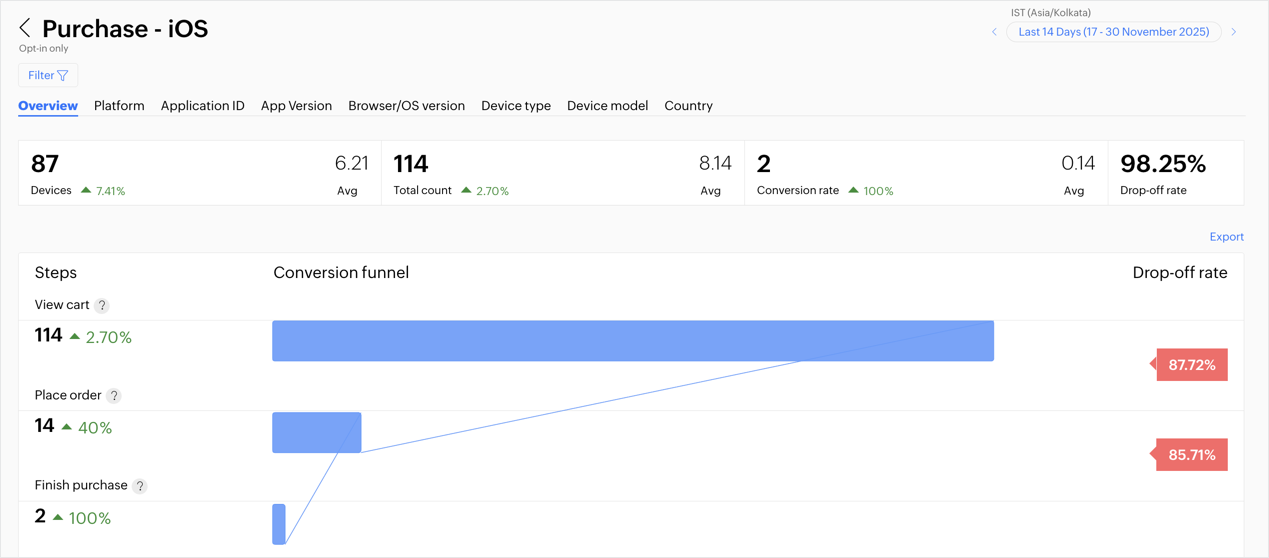
Dynamic, realistic funnels provide clarity on conversions and drop-offs, enabling deeper funnel analysis. Whether you’re looking to fine-tune campaigns, optimize app flows, or re-engage users, you can use these insights to shape your app engagement strategy.
Explore real-world funnel use cases and start building your own dynamic funnels in Zoho Apptics to turn complex user journeys into simple, measurable opportunities.
 Supraja Gayathri S
Supraja is a Product Marketer at Zoho Apptics with 5+ years of experience in breaking down complex concepts into easy-to-digest, detailed blogs. She loves blending technical content and data with creative storytelling.