- HOME
- All Topics
- Collaboration and Digital Workplace
- Breaking down communication silos: Why it’s crucial for business growth
Breaking down communication silos: Why it’s crucial for business growth
- Published : December 5, 2025
- Last Updated : January 1, 2026
- 844 Views
- 6 Min Read
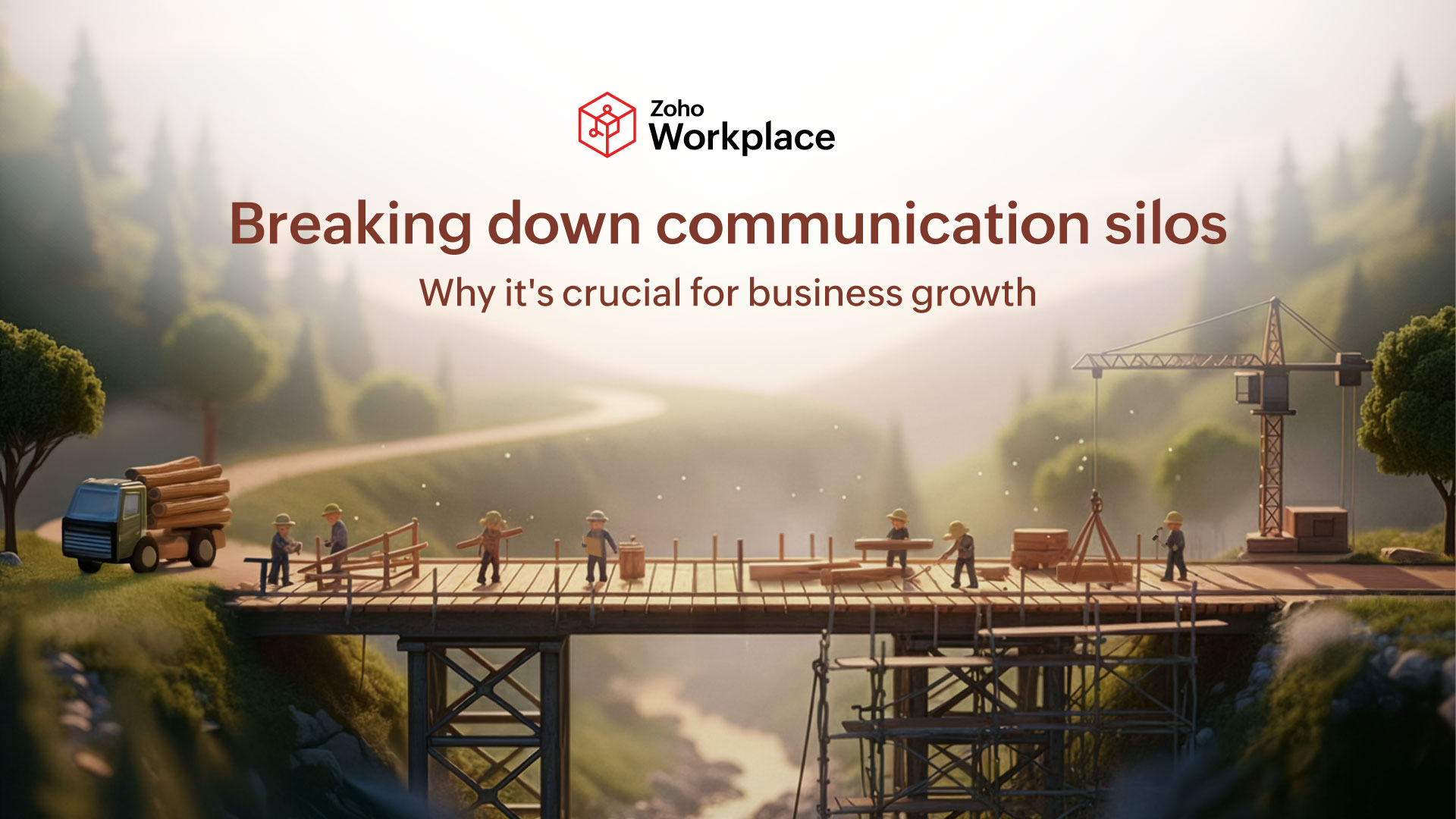
Communication silos quietly erode alignment until innovation stalls and morale drops. Somewhere between chat threads, department hierarchies, and competing KPIs, information becomes trapped. Breaking communication silos down is almost as tricky as understanding how they come to be, so let’s dive right in.
The hidden cost of silos
Communication silos drain resources in ways most companies underestimate. According to one study, data silos cost companies a whopping $3.1 trillion yearly.
Every time one department duplicates work another has already done, it chips away at productivity and profitability. A marketing team might build campaigns that don’t align with sales messaging, or support teams might resolve issues that product teams never hear about. These inefficiencies multiply, creating invisible walls that slow down progress.
What’s worse is how these silos also distort perception. Teams start focusing on their own KPIs rather than the company’s overall goals. When communication breaks down, employees naturally protect their territory. That leads to misaligned strategies, conflicting decisions, and internal competition that benefits no one. The business becomes a cluster of mini-companies instead of a unified whole.
Over time, this isolation poisons company culture. Departments lose empathy for one another and begin to mistrust leadership. Collaboration becomes a chore rather than a norm, and creative problem-solving gives way to defensive politics. Even if teams do communicate, it will be ineffective and without a clear goal.
Financially, silos are devastating. They inflate costs, extend timelines, and cripple innovation cycles. In high-growth environments where speed matters more than perfection, silos are fatal. The only way to stay competitive is to treat communication flow as a business asset, not an afterthought.
Technology alone won’t fix it
Many organizations assume that a new platform will cure their digital interruptions and communication woes. They invest in CRMs, project management tools, and collaboration suites, expecting instant alignment. But technology amplifies whatever habits already exist. When a company’s communication culture is fragmented, adding new apps often makes the problem worse.
To fix silos, companies need shared frameworks, not just shared tools. There should be explicit rules about where information lives, how it’s updated, and who’s responsible for maintaining it. A culture of accountability must exist alongside technology to make it effective.
Leadership sets the tone
Silos thrive in cultures where leadership guards information. When executives communicate selectively or operate behind closed doors, employees mirror that behavior. Transparency doesn’t just happen—it’s modeled. If leaders show that communication is a privilege rather than a norm, trust evaporates from the ground up.
Effective leaders treat openness as strategy, not sentiment. They share the context behind decisions, even the uncomfortable ones. They invite dissent without punishment. They celebrate collaboration across departments instead of just individual wins. These small actions create an environment where employees feel free to communicate without fear.
Metrics should reflect that value. Instead of rewarding siloed achievements, organizations should highlight cross-functional success. Recognizing teams that solve problems together reinforces the behavior you want to scale. Culture shifts when communication isn’t just encouraged—it’s expected and rewarded.
Leaders who embrace transparency also create agility. When everyone has access to real-time information, teams can pivot faster and make smarter decisions. That flexibility is what turns communication into a competitive advantage.
Practical steps to dismantle silos
Breaking silos isn’t a one-time initiative—it’s a disciplined process that requires structure and accountability. Organizations that successfully foster cross-team collaboration tend to anchor it in daily habits, not occasional campaigns.
Start small but make it consistent enough to reshape how information moves through your company. With that in mind, here are practical, high-impact actions that help dismantle silos over time.
Create shared objectives
Instead of measuring each department’s success in isolation, build goals that require interdependence. For instance, tie marketing’s lead generation KPIs to sales’ conversion goals or link customer support satisfaction scores to product development priorities.
This creates a shared incentive to communicate since each team’s success directly impacts another’s. Over time, shared goals replace territorial thinking with collective accountability.
Standardize communication channels
Fragmented communication leads to duplicated efforts and lost information. Choose a core suite of tools—such as one platform for project updates, one for documentation, and one for quick messaging—and train everyone to use them consistently.
This clarity prevents critical updates from being buried across multiple apps or private chats. The goal isn’t to limit communication but to make it reliable and traceable.
Establish cross-functional rituals
Rituals like weekly syncs, demo days, or shared sprint reviews build transparency into the culture. These meetings shouldn’t be status updates but learning opportunities where teams explain what worked, what failed, and how others can apply the insight.
The more frequently teams exchange context, the more naturally they start anticipating each other’s needs. Over time, communication becomes proactive rather than reactive.
Rotate leadership roles in projects
When employees step into leadership roles outside their department, they gain perspective on how decisions affect other functions. For example, having a designer lead a customer experience project with engineers and marketers reveals how priorities differ across teams.
This kind of empathy-driven leadership rotation reduces friction and promotes mutual respect across departments. It also helps uncover process bottlenecks invisible from a single-team view.
Audit workflows quarterly
Communication systems degrade over time. Conduct quarterly audits to map how information flows between teams—where delays occur, what tools go unused, and which processes cause confusion. The point is: for the team to be successful, collaboration has to be open.
Involve team leads in identifying inefficiencies and implementing fixes collaboratively. Regular audits not only prevent silos from reforming but also signal to employees that communication health is a measurable, ongoing priority.
Building bridges across teams
Breaking silos starts with intentional structure. Cross-functional teams, shared objectives, and regular knowledge exchanges create natural alignment points. When departments meet regularly to review goals, friction decreases and understanding deepens. Transparency becomes embedded in the workflow, not added as an afterthought.
But structure alone isn’t enough. Teams must learn to speak each other’s language. Sales shouldn’t treat marketing data as noise, and engineering shouldn’t dismiss customer insights. Building communication bridges requires empathy—the ability to see how another team’s success connects to your own.
Companies can reinforce this through rituals. Weekly interdepartmental standups, shared dashboards, or rotational project roles help employees experience how the business operates as a system. Over time, these habits break down invisible barriers.
What emerges from this process is trust. Once teams start seeing tangible results from open communication—faster projects, better campaigns, fewer surprises—the motivation to maintain it becomes self-sustaining. Collaboration stops being forced and starts being fluid.
Measuring the impact of connection
It’s easy to claim that communication matters; it’s harder to prove it. Yet, metrics can quantify the health of collaboration. Turnaround times, employee engagement, and cross-departmental project success rates are all indicators of how well information flows. When these metrics improve, so does the bottom line.
Organizations that measure communication see a direct link between alignment and growth. Fewer project delays mean faster go-to-market strategies. Higher engagement scores correlate with lower turnover and stronger customer relationships. Data turns collaboration from a soft skill into a measurable asset.
At the same time, feedback loops are essential. Employees need channels to report communication breakdowns and suggest improvements. Continuous feedback keeps the system adaptive and ensures silos don’t creep back unnoticed.
Ultimately, companies that invest in connection don’t just operate better—they evolve faster. Communication isn’t an HR initiative or a culture perk; it’s the infrastructure of growth. When people, processes, and platforms move in sync, business momentum becomes unstoppable.
Conclusion
Communication silos are silent killers of growth, culture, and innovation. Breaking them requires more than tools or policies—it demands trust, accountability, and shared intent. The most successful organizations don’t just talk about collaboration; they live it through transparency, empathy, and aligned goals. Once communication flows freely, growth follows naturally. A connected company doesn’t just move faster—it moves together.
 Gary Stevens
Gary Stevens is the CTO of Hosting Canada, a website that provides expert reviews on hosting services and helps readers build online businesses and blogs. Gary specializes in topics on cloud technology, thought leadership, and collaboration at work.