- HOME
- All Topics
- Workplace Security
- Cloud-sharing services: Balancing accessibility and data security
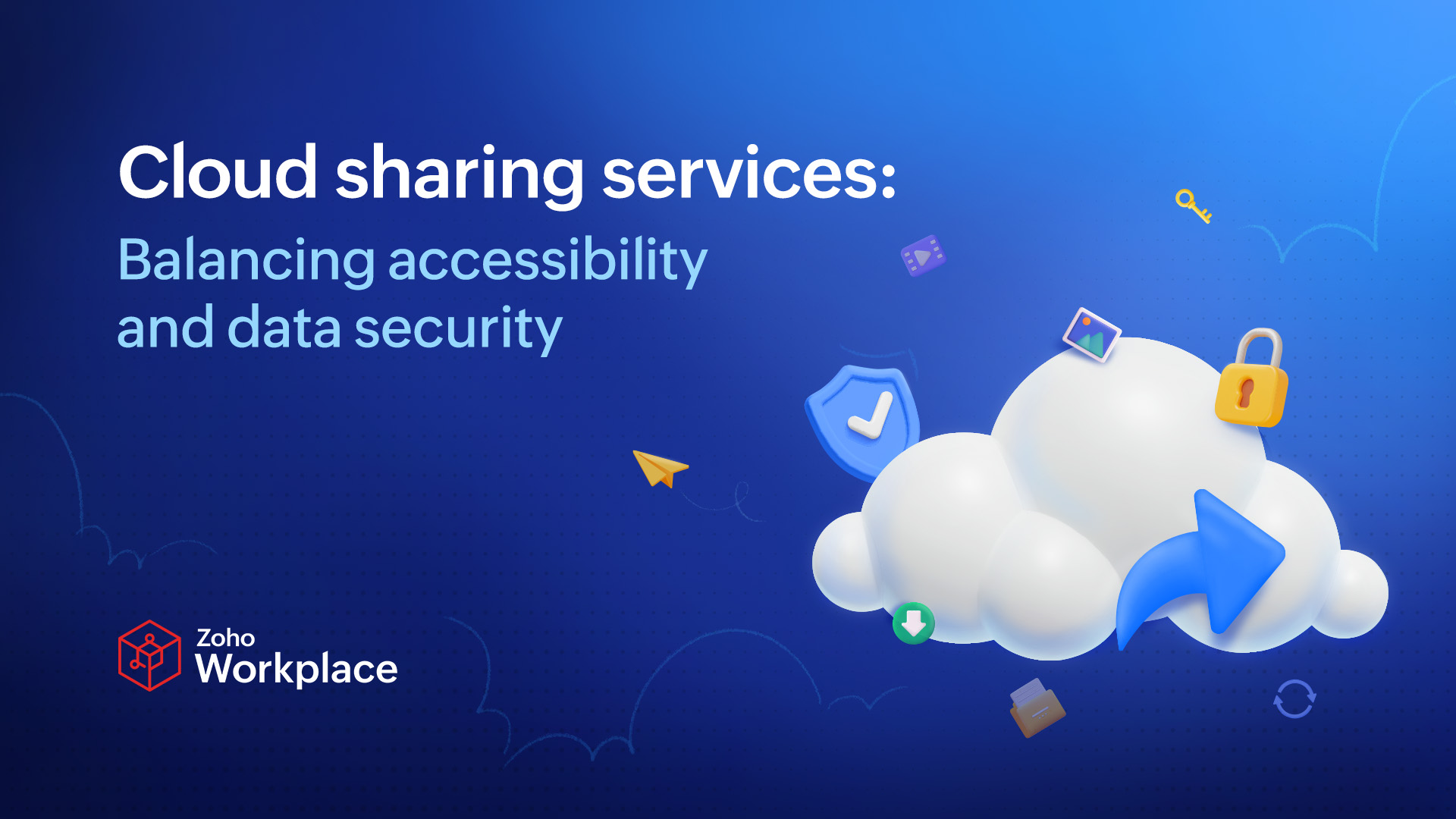
Cloud-sharing services: Balancing accessibility and data security
- Published : March 31, 2026
- Last Updated : April 1, 2026
- 349 Views
- 6 Min Read
Between the spread of cloud-native SaaS tools, AI-assisted workflows, and hybrid work, cloud sharing services are becoming essential for just about every workflow. According to Zippia, 60% of all corporate data worldwide is now stored in the cloud. While cloud-native workflows have significant advantages over the traditional reliance on on-premise tools and systems, they bring a unique challenge: balancing accessibility and data security.
Cloud-sharing services allow employees, contractors, and other contributors to get access to an organization’s data no matter where they work from. Data security only becomes more vital to ensuring precious information isn’t accidentally shared with unauthorized recipients when these recipients can be working from anywhere.
That’s why striking a balance between these two competing objectives is so important. In fact, you need to stop treating them as opposites and make them both part of a single, unified strategy.
Why cloud-sharing services have become a strategic priority
Cloud-sharing services were never quite a luxury, but they’ve also never been as prevalent as they are now. Companies use an average of 106 SaaS apps, with each app both storing and pulling from data on the cloud. Cloud-sharing services are the connective tissue between all of these apps, allowing teams to swap files and data back and forth.
This is especially the case as hybrid and remote work become more popular. While the future may not be fully remote as leaders suggested in 2020, 51% of employees with remote-capable jobs have a hybrid arrangement. Between collaboration with hybrid employees and external contractors, cloud-sharing services aren’t a nice-to-have; they’re essential infrastructure for every workflow.
The problem? They’re also a security weak point, with growing vulnerabilities. The more users access these platforms, the more potential there is for one of them to be a malicious actor, or even simply to side-step essential security measures and accidentally leak data. IT and cybersecurity leaders have to face an endlessly growing potential for attack or simple mistakes.
This can’t be resolved through absolute security measures or a laissez-faire attitude, either. The former increases the risk of shadow IT (end users deploying their own systems without consulting IT) and other compliance gaps. The latter creates unnecessary security risks.
Securing cloud-sharing services is as essential as keeping the traffic lights running in a busy intersection, but that security comes at a cost.
The real cost of getting the accessibility-security balance wrong
Cloud-sharing services can enable everything from working with contractors to ensuring that busy executives can access an essential file at a conference. But while that accessibility is essential, for many organizations it seems to continually conflict with security needs.
IT and cybersecurity leaders set the balance between accessibility and security, and it’s all too easy to get that balance wrong. An approach that’s too strict can lead to frustrated employees and productivity drag. But this doesn’t just result in decreased productivity; employees can even take cyberattacks less seriously. According to Accenture, 46% of organizations deal with cyber fatigue, or an apathy towards cybersecurity. An approach that prioritizes accessibility over security is no better. At worst, it can lead to a data breach, which costs an average of $4.4 million.
The right strategy achieves balance by making data and files easy to access for end users while ensuring that the right measures are in place to prevent unauthorized access and other security issues.
The 5 pillars of secure and accessible cloud sharing
Balancing security and accessibility with cloud-sharing platforms goes beyond picking a platform and trusting its default settings. It depends on building a foundational framework that’s robust enough to meet your organization’s security responsibilities while empowering the innovation that comes from seamless collaboration. This framework has five pillars.
Granular access controls
A cloud-sharing platform should give IT teams the ability to finely regulate who gets access to specific data, how long that access will last, and how that access will change over time. Even if an organization is relatively small, with few distinct roles across a lean team, these measures need to be put into place early so they can scale with you as you grow. Otherwise, it’s all too easy to accidentally create holes in your cybersecurity practice that also grow with you.
End-to-end encryption and data residency
While the largest cloud-sharing services (e.g., Amazon’s AWS and Microsoft Azure) typically offer end-to-end encryption as a standard feature, it’s something worth investigating if you’re considering options outside of the most popular services. Additionally, if your organization operates in multiple regions (or services clients from these regions), you may need to take steps to abide by regulations like GDPR and CCPA.
Zero trust architecture
Trust-by-default is a gateway for malicious actors and potential slip-ups. Zero-trust architecture verifies every potential access and share request through measures like contextual authentication, device posture checks, and continuous validation during active sessions.
Visibility and audit trails
Visibility into your cloud-sharing solution’s security measures is essential to preventing an unnecessarily heavy-handed approach to cybersecurity. Real-time monitoring of sharing activity, with automated alerts for suspicious activity and other irregularities, gives your IT team the intelligence they need to act (or react) where needed rather than maintaining resource-intensive oversight. Similarly, such features create an audit trail that can answer questions if something does go wrong.
User experience by design
Security protocols should work hand-in-hand with end user workflows, not against them. While some elements of your cybersecurity will inevitably create drag in these workflows, it’s important to prioritize accessibility and usability where possible. This includes offering regular training as necessary, using settings that account for how teams collaborate, and making secure sharing experiences as frictionless as possible.
What enterprise leaders should look for in cloud sharing services
Cloud-sharing services are the infrastructure that enable cloud-native collaboration across software tools, which makes choosing the right one all the more important—especially when balancing accessibility and security. Here are some key criteria to reference when choosing the right solution:
- Security certifications (e.g., SOC 2 Type 2)
- Granular admin controls
- Integration with existing IAM (Identity and Access Management) and SSO (Single Sign-On) solutions
- Audit capabilities
- Data residency options
The importance of platform consolidation vs. point-solution sprawl
Many organizations end up using multiple cloud-sharing platforms, and rarely by design. Google Drive might be used for sharing files in some projects, while Slack might be prioritized for quick file exchanges, and Sharepoint is supposed to be the organization’s official cloud-sharing platform.
Instead of accepting this default—as often happens—prioritize consolidation of all file sharing into a single platform. When it comes to cloud sharing that’s both accessible and secure, an all-in-one solution like Zoho WorkDrive excels compared to an amalgamation of multiple platforms.
Don’t sacrifice security for accessibility (or vice-versa)
Where cloud-sharing platforms are concerned, the choice between security and accessibility isn’t one you actually have to make. While they might naturally compete with one another, IT and cybersecurity experts can find the right balance between the two. By basing your cloud-sharing practices on a framework of granular access control, end-to-end encryption, zero trust architecture, visibility trails, and user experience, you can create policies and choose platforms that support that balance instead of bouncing between extremes.
Cloud-native workflows and hybrid work have put more pressure on IT teams to find this balance, but as AI and automation reshape collaboration, these challenges will multiply without the right preparation. Set the stage for the way your teams work by making the right call now.
FAQ
What are cloud-sharing services?
Cloud-sharing services are platforms that enable organizations to store, share, and collaborate on files over the cloud. Think of platforms like Zoho WorkDrive, Google Drive, and Sharepoint. For enterprise organizations, these platforms are essential for centralized file management, version control, access control, and integration with broader workflows.
How do you balance accessibility and security in cloud sharing?
Most organizations can successfully balance accessibility and security in cloud sharing using these five pillars:
- Granular access controls, which include role-based permissions, time-limited sharing links, and default settings that limit sharing privileges.
- End-to-end encryption, protecting data in transit in case it’s intercepted by malicious actors.
- Zero trust architecture, which verifies access instead of trusting it, meaning credentials are continuously verified.
- Visibility and audit trails, like real-time monitoring of sharing activity, automated alerts for suspicious behaviors, and audit logs.
- User experience by design, meaning that security measures don’t work against users.
What security features should enterprise cloud-sharing platforms include?
Cloud-sharing platforms should include the following security features:
- End-to-end encryption
- Role-based access controls
- Audit logging
- Data loss prevention (DLP) integration
- Single Sign-On (SSO)
- Multi-factor authentication (MFA)
How does cloud sharing impact regulatory compliance?
Cloud-sharing solutions can potentially create issues complying with regulations like GDPR, HIPAA, and CCPA, as well as certifications like SOC 2. This can be due to issues in the platforms themselves (e.g., insufficient encryption, access control issues) or because these solutions can lead to less secure workflows (e.g., sharing files with unapproved recipients, transferring sensitive data in plain text files).
What is zero-trust cloud sharing?
Zero-trust cloud sharing involves not assuming that anyone accessing data or files should have access to it. Instead of automatically trusting that access, it’s verified through contextual authentication, device posture checks, and continuous session validation.
 Genevieve Michaels
Genevieve Michaels is a freelance writer based in France. She specializes in long-form content and case studies for B2B tech companies. Her work focuses on collaboration, teamwork, and trends happening in the workplace. She has worked with major SaaS brands and her creative writing has been published in Elle Canada, Vice Canada, Canadian Art Magazine, and more.