Location-level review insights: What multi-store businesses should track
- Last Updated : August 31, 2026
- 18 Views
- 3 Min Read

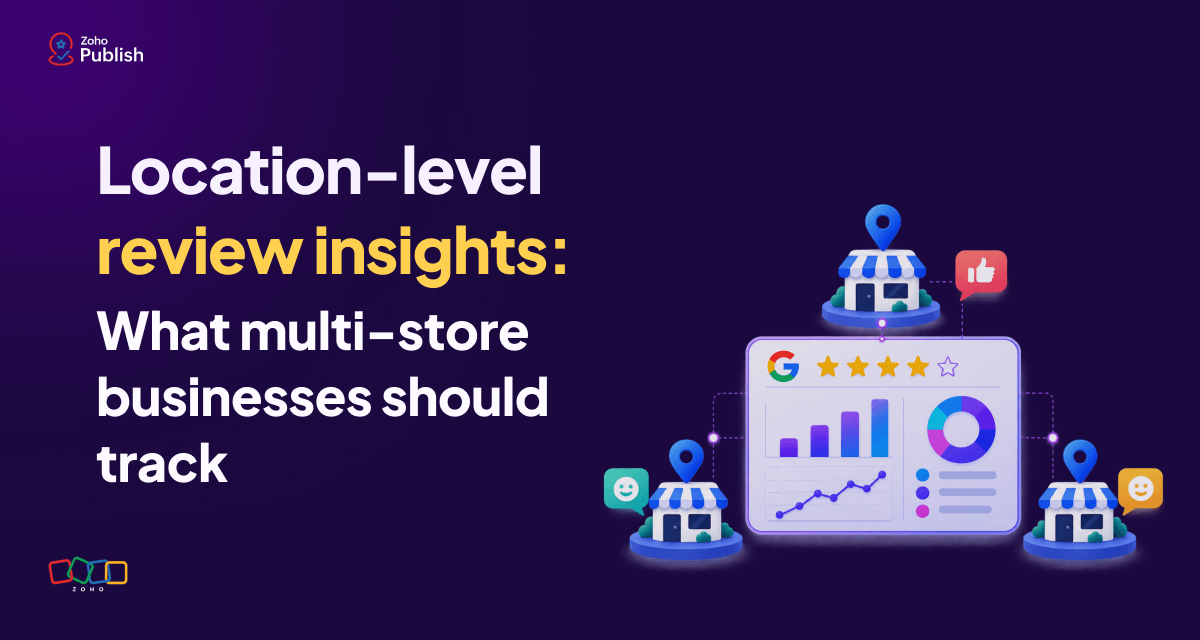
Most multi-store businesses are losing customers because they don't know which locations need attention and why.
A 4.4-star average across your brand might look healthy, but if three stores are slipping to 3.8 while others maintain 4.9, the overall rating hides a problem that customers can already see.
This is why location-level review insights matter. They help you stop treating your brand as one business and start managing it as dozens of unique customer experiences.
One brand. Many reputations.
Customers don't visit your brand. They visit your Austin branch, your Dallas store, or your London outlet. When someone searches for your business on Google, they're deciding whether the location nearest to them looks trustworthy.
Google's local search results reinforce this behavior. Every location has its own Business Profile, review history, photos, ratings, and customer interactions. One exceptional branch doesn't automatically improve another location's reputation.
In other words, a multi-location business doesn't have one online reputation. It has many. The businesses that recognize this early make better decisions because they're solving location-specific problems instead of guessing at company-wide ones.
Related read: The biggest reputation challenges for multi-location brands
The metrics worth tracking
Review count is usually the first number businesses notice, but it shouldn't be the only one.
A location receiving twenty new reviews every month tells a different story from another receiving two, even if both maintain a 4.6-star rating. Low review volume can mean fewer customers are sharing experiences, making each negative review more influential.
Review trends deserve equal attention. Are ratings improving over time? Declining after a staffing change? Remaining consistent? Trends reveal whether operational changes are actually improving customer experience.
Response rate is another overlooked metric. Customers notice when businesses acknowledge feedback. Consistently responding to reviews demonstrates that a location values customer opinions, while unanswered reviews can leave the opposite impression.
Response time matters, too. A thoughtful response delivered within a day often has more impact than one written weeks later. Fast responses show attentiveness, especially when customers report negative experiences.
Then comes sentiment. Star ratings tell you what customers think, while review content tells you why. Repeated mentions of slow service, friendly employees, long queues, clean facilities, or excellent staff reveal patterns that numbers alone can't.
Related read: Best practices for replying to reviews across multiple locations
Compare locations, not just averages
Imagine five stores with an average rating of 4.5. Everything looks fine until you compare each location individually. One branch receives praise for knowledgeable staff, another struggles with inaccurate business hours, and a third repeatedly gets complaints about waiting times.
The average rating doesn't tell that story, but location comparisons do. Looking across locations helps businesses answer questions that averages can't.
Which stores consistently delight customers?
Which locations need operational support?
Are the same complaints appearing across multiple branches, or are they isolated to one location?
The answers often lead directly to better business decisions.
Customer feedback is operational data
A review mentioning confusing parking may point to a signage issue. Complaints about unavailable products may indicate inventory challenges. Praise for specific employees highlights behaviors worth recognizing across other locations.
Each review is a small operational report written voluntarily by a customer. Individually, they're anecdotes, but, collectively, they're patterns.
Businesses that regularly analyze these patterns improve the customer experience itself.
BrightLocal's 2026 Local Consumer Review Survey found that consumers place greater emphasis on recent reviews, higher star ratings, and timely business responses when choosing local businesses. This means businesses should look beyond overall ratings and understand what customers are saying at each location.
AI makes location-level insights practical
Reading fifty reviews is manageable, but reading five thousand isn't. This is where AI becomes useful.
Instead of manually sorting through reviews from every location, AI can identify recurring themes, surface common praise and complaints, detect sentiment changes, and highlight locations that require immediate attention. Rather than spending hours searching for problems, managers can focus on solving them.
What successful multi-store businesses do differently
Businesses with strong local reputations don't wait for ratings to decline before taking action. They review location performance regularly, compare stores instead of relying on company-wide averages, identify recurring customer concerns, celebrate locations performing exceptionally well, and help struggling branches improve before negative trends become permanent. Most importantly, they understand that every location represents the brand independently.
Customers don't experience your headquarters. They experience your nearest store. That is the reputation that influences whether they visit, recommend your business, or choose a competitor.