How online reviews impact customer trust and sales
- Last Updated : June 2, 2026
- 143 Views
- 5 Min Read

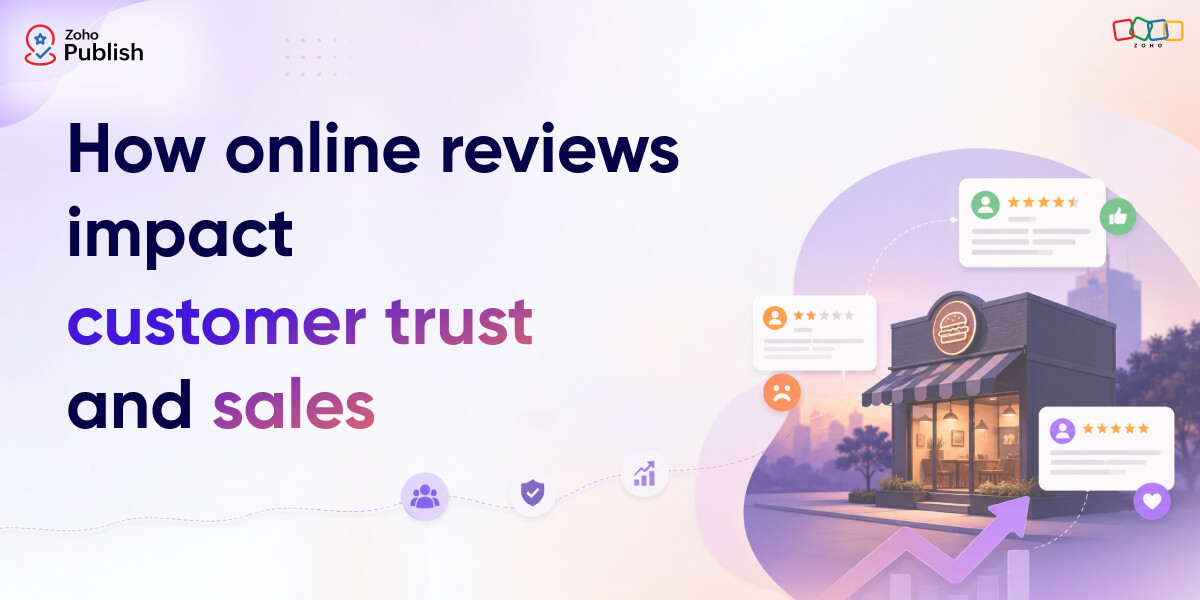
The impact of online reviews is easier to understand when you see how it plays out in a real business. So instead of starting with theories or statistics, let’s walk through the story of a local burger shop and see how customer trust, buying decisions, and sales are quietly shaped by what people read online.
A burger shop opened in a busy neighborhood a few months ago.
The owner spent years dreaming about it. The menu was carefully crafted. The patties were made fresh every morning. Friends and early customers loved the food and kept saying the same thing: “This place deserves to blow up.”
For a while, it felt like it might.
People walked in after seeing the bright signboard from the street. A few food bloggers posted Instagram stories. Weekends were crowded. Then, slowly, things became quieter. Nothing inside the business had changed. The burgers were still good. The staff still greeted customers warmly. But outside the shop, another story had started forming online.
When people searched for the burger shop on Google, they saw only a handful of reviews. One customer complained about a delayed order during opening week. Another mentioned slow service on a crowded Saturday night. The business profile had outdated timetables, and there were barely any recent photos.
A customer deciding between two burger places nearby looked at the reviews for less than a minute and chose the other option. The food was never the problem. Trust was. That is how online reviews influence business today. Quietly, consistently, and often before a customer even walks through the door. Review management has become a core part of building that trust online.
Customers trust experiences more than advertisements
People often trust what strangers say online more than what businesses say about themselves. Before visiting a restaurant, booking a service, or buying a product, customers want reassurance that someone else already had a good experience.
They are not just checking ratings. They are trying to reduce uncertainty.
A calm owner response to a complaint, recent customer photos, or reviews that sound genuine can instantly make a business feel more trustworthy. On the other hand, silence creates doubt much faster than most businesses realize.
A 2024 study published in Humanities and Social Sciences Communications found that trust strongly shapes consumer behavior on digital platforms, especially when customers rely on feedback and signals from other users before making decisions.
Reviews shape buying decisions before customers visit
That shift has changed how businesses grow.
Years ago, a good location or strong advertising could carry a business for a long time. Today, customers often form opinions before they even step inside a store. Reviews have become part of the buying journey itself.
Someone searching for a burger place late at night may compare three businesses within seconds. The restaurant with recent reviews, owner responses, and updated photos usually feels more reliable than the one with outdated information and unanswered complaints.
Trust is built before the first interaction happens. That's also why Google Business Profile reviews matter more than ever today. Customers are making trust decisions directly from local search results, often before visiting a website or speaking to the business.
Businesses sometimes assume reviews matter only after a customer decides to buy. In reality, reviews influence almost every stage of decision-making. They shape whether customers click your listing, compare prices fairly, trust your quality, or choose to visit at all. Even a small sense of uncertainty can push people toward a competitor.
Silence damages trust faster than criticism
This is especially true for local businesses because customers usually have multiple nearby options. When choices are endless, trust becomes the deciding factor.
Interestingly, negative reviews are not always the biggest problem. Ignoring them is.
Most customers understand that no business is perfect. A crowded restaurant can have delays. Orders can occasionally go wrong. What customers pay attention to is how the business responds when something does happen.
A thoughtful response shows accountability. Silence often feels like indifference. In fact, how businesses respond to criticism can directly influence whether customers stay or leave. This was explored deeper in a blog post on how to handle negative Google reviews without losing customers.
People reading reviews are quietly asking themselves one question: “If I spend money here and face a problem, will this business care enough to fix it?”
Your online presence answers that question long before your staff gets the chance to.
Review management is now part of customer experience
That is one reason review management has become more important. Businesses are no longer simply collecting reviews; they are actively managing public trust.
This is exactly where Zoho Publish fits in. Businesses today need a reliable way to monitor reviews, respond consistently, manage listings, and maintain an accurate online presence across platforms from one place. Because trust can fade quickly when a customer sees outdated times, missing information, or unanswered complaints.
Customers are becoming smarter about reviews
Another major shift is that customers have become smarter about reviews themselves. People no longer blindly trust businesses with perfect five-star ratings. In many cases, profiles that look “too perfect” actually create suspicion.
Customers now look for authenticity. They also notice how quickly businesses respond. Slow or inconsistent responses can quietly reduce confidence, especially when customers are comparing nearby options. A previously published article on how review response time impacts trust and rankings in 2026 explores this shift in detail.
They notice whether reviews sound human, whether the business responds naturally, and whether customers mention specific experiences instead of generic praise. A business with honest feedback and genuine engagement often feels more trustworthy than one trying too hard to appear flawless.
That change may actually benefit smaller businesses the most.
A local burger shop that consistently responds to reviews and keeps its online presence active can build stronger trust than a larger chain restaurant that feels distant or disconnected online. Customers remember businesses that make them feel heard.
Trust compounds over time
More positive experiences lead to more reviews. More reviews create more confidence. More confidence brings more customers through the door.
The businesses winning today are not always the ones spending the most money on advertising. They are often the ones building the strongest reputation in public.
That burger shop eventually figured this out.
The owner started responding to every review, both positive and negative. They updated their business profile regularly, added customer photos, and encouraged happy customers to share honest feedback online.
Slowly, new reviews replaced old doubts. The shop became busier again. Weekend crowds returned. But the biggest change was not the number of customers walking in. It was the confidence customers felt before they even arrived.
That is what online reviews truly influence. Not just ratings or rankings, but trust. And once customers trust a business, sales often follow naturally.
Final thoughts
Customers rarely see the full effort behind a business. They do not see the early mornings, the operational stress, the hiring struggles, or the constant pressure to keep everything running smoothly. What they often see first is a Google listing, a few reviews, and the overall feeling your online presence creates.
That small moment shapes trust faster than most businesses expect.
Online reviews are no longer just feedback sitting on the internet. They influence how customers perceive quality, reliability, and care before any real interaction happens. A strong reputation can quietly bring people in. A neglected one can slowly push them away.
The businesses that understand this are not treating reviews as a side task anymore. They are treating them as part of the customer experience itself. In the end, people may seek the product, pricing, or convenience, but they usually choose the business they feel most confident about trusting.