How to handle negative Google reviews without losing customers
- Last Updated : May 8, 2026
- 149 Views
- 6 Min Read

Your business reputation isn't just what you say about yourself. It's everything that happens between you and a customer and what they say about it to the world.
Think about it. A potential customer wants to try a new restaurant, find a reliable plumber, or pick a salon in a new neighborhood. What do they do? They don't just Google the business. They read what other people have to say about it. Word of mouth has always been the most trusted form of influence, and today, that word of mouth lives permanently online on platforms like Google.
Google reviews, in particular, carry a lot of weight. They show up right there in search results and Google Maps before someone even clicks on your website. They influence whether someone walks through your door or scrolls past to your competitor. They also play a role in how Google ranks your business locally, and we've covered that in depth in why Google reviews affect local ranking. That's a lot riding on a few lines of text left by a stranger.
Here's the uncomfortable truth though: no matter how good your business is, a negative review is coming. It's not a matter of if, it's a matter of when and how you handle it.
So let's talk about that.
Why your response matters more than the review itself
Most people reading a negative review aren't just judging your business for the mistake. They're watching to see how you respond to it.
A bad review that gets a thoughtful, empathetic response is actually a trust-builder. It tells potential customers that this business is run by real people who care, who own their mistakes, and who fix things. That's genuinely reassuring.
A bad review met with silence? Or worse, a defensive or condescending reply? That's a red flag.
Your most unhappy customers are your greatest source of learning.
How you handle things when they go wrong tells people far more about your business than when everything goes right. Your response to a negative review is a public statement about what kind of business you are.
Timing plays into this, too. Responding well is one thing, but responding quickly is what actually signals to customers that you're paying attention. We've written about how review response time impacts trust and rankings in 2026, and it's worth a read once you have this part down.
Step one: Don't react. Respond.
You see a one-star review. Your chest tightens. The review feels unfair, or maybe it's flat-out wrong. The instinct is to fire back immediately.
Don't.
Step away from the screen. Give yourself an hour, or even a day if needed. Come back when you can respond from a place of professionalism, not defensiveness. The response you write in anger is almost never the response you'd want published permanently under your business name.
Once you're ready, go back to the review and read it carefully. What exactly is the complaint? Is there a date or detail that helps you identify the situation? Any context you can gather before you respond will make your reply more specific, more genuine, and more useful to the customer.
What a good response actually looks like
A strong response to a negative review does five things:
Greets the customer by name. It immediately signals that this is a real, personalized reply and not a copy-paste template.
Apologizes sincerely. Not an insincere "We're sorry you feel that way." A real apology that acknowledges their experience.
Takes responsibility. Take responsibility. No excuses, no shifting blame. Even if it was a one-off situation, own it.
Offers a path to resolution. Provide a phone number, email, or direct contact. Invite them to come back. Make it easy to fix.
Closes warmly. Thank them for the feedback. It costs nothing, and it matters.
Here's a quick example of how this might look in practice:
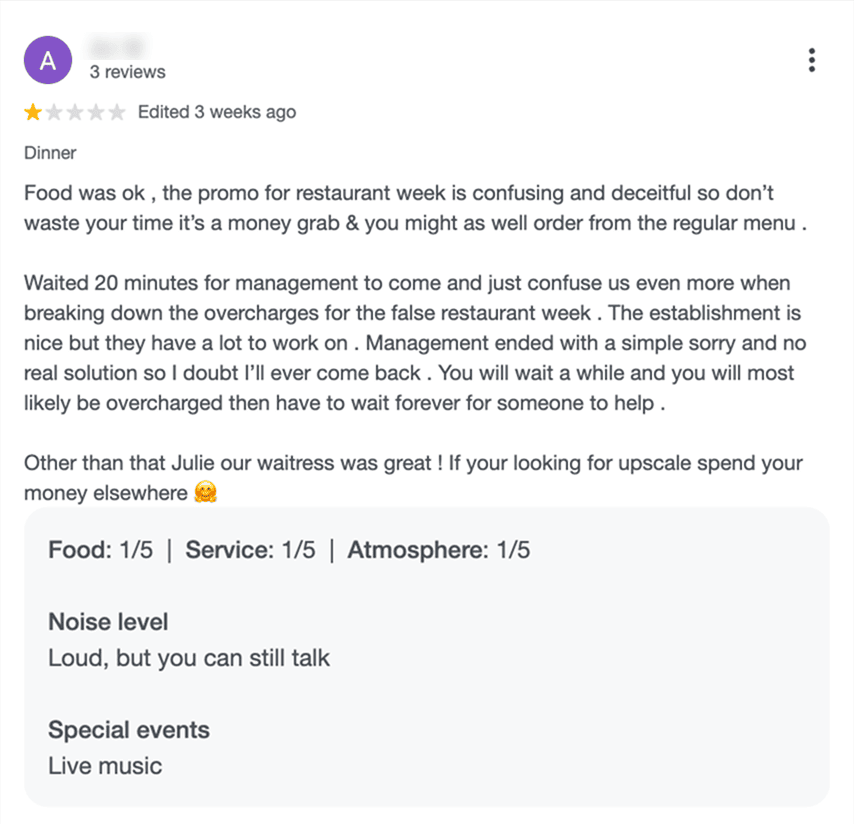
And an example response:
Hi [Name], thank you for taking the time to share your experience. I'm truly sorry we fell short during your visit. This is not the standard we hold ourselves to, and I'd love the chance to make it right. Please reach out to me directly at [email/phone]. We value your feedback, and I personally want to ensure your next experience is a much better one. [Name, Job Title]
Notice what's happening there. It's specific enough to feel real, it's warm, it takes accountability, and it opens a door. That's the formula.
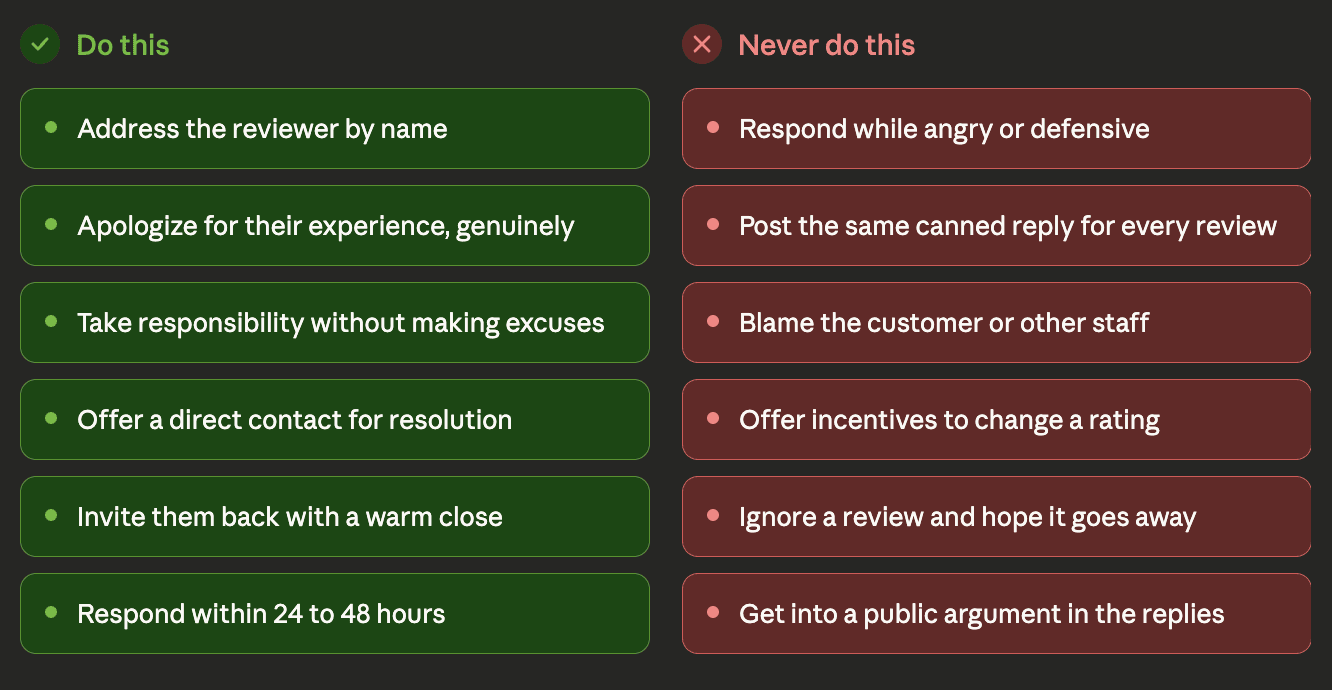
Tip: Your response isn't just for the person who left the review. Every potential customer reading it is watching how you handle things when they go wrong. That's your real audience.
The reviews that feel fake (and what to do about them)
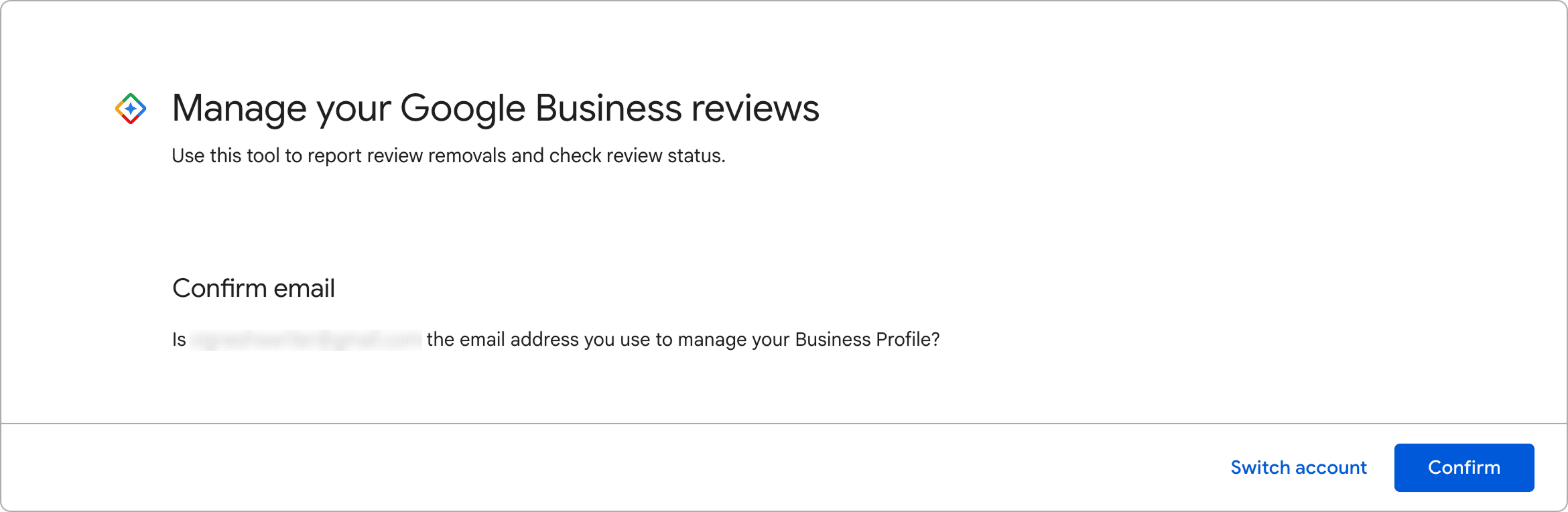
Not every negative review comes from a genuine customer experience. Competitor attacks, review bombing, and spam are real problems in local SEO. If you receive a review that feels off, you have the right to report it.
Google allows business owners to flag reviews that violate their policies. This includes content that contains hate speech, spam, fake experiences, or conflicts of interest. You can report inappropriate reviews directly through your Google Business Profile.
Turning negative reviews into business intelligence
This is the part most businesses miss. Negative reviews aren't just reputation problems to manage—they're free, real-time feedback on what's actually going wrong in your business.
A restaurant getting repeated complaints about cold food? That's a kitchen operations problem. A clinic seeing multiple reviews mention long wait times? That's a scheduling problem. A retail store where customers keep mentioning a rude staff member by name? That's a training problem.
Reviews are telling you things that your internal processes might never surface.
The challenge, especially if you're running multiple locations or managing a high volume of feedback, is that reading through hundreds of reviews manually to spot these patterns is exhausting, and it's exactly the kind of work that falls through the cracks.
This is where Zoho Publish changes things. Its review management tools include smart keyword widgets that automatically surface what customers are complaining about and what they're praising across all your reviews. You don't need to read every single one line by line. The patterns surface for you: specific words around wait times, cleanliness, pricing, or product quality. There's also staff mentions tracking that picks up when a specific employee or their designation is named in a review, positive or negative.
For a franchise owner managing ten locations or a marketing agency handling reputation for multiple clients, this kind of clarity is everything. You can act on problems before they compound, and you can recognize what's actually working across your locations.
When to ask for a review update
If you've successfully resolved a customer complaint offline, it's completely appropriate to gently ask them if they'd be willing to update their review. Most customers are fair. When a business genuinely makes things right, people reflect that.
What you cannot do is offer incentives in exchange for a review update. No discounts, no freebies, no "we'll take 20% off your next visit if you change your rating". Google's policies are clear on this, and violations can get your profile penalized.
Ask sincerely as a follow-up to a real conversation. Keep it low pressure. Most of the time, that's enough.
The bigger picture: One review is never the whole story
A single negative review never sinks a business. What matters is the overall pattern: how many reviews you have, what your average rating is, whether you're consistently responding, and whether your business is actively earning new positive reviews from happy customers.
A healthy body of reviews with a few negatives, all of which have been thoughtfully addressed, is actually more credible than an account with nothing but five stars. It looks real because it is.
The goal isn't a perfect score. The goal is a reputation that reflects a business that genuinely cares, makes mistakes sometimes, and handles them with integrity.
That's how you keep customers.