- HOME
- Employee development
- The skill gap crisis: Addressing the most critical HR challenge
The skill gap crisis: Addressing the most critical HR challenge
- Last Updated : November 25, 2025
- 536 Views
- 4 Min Read

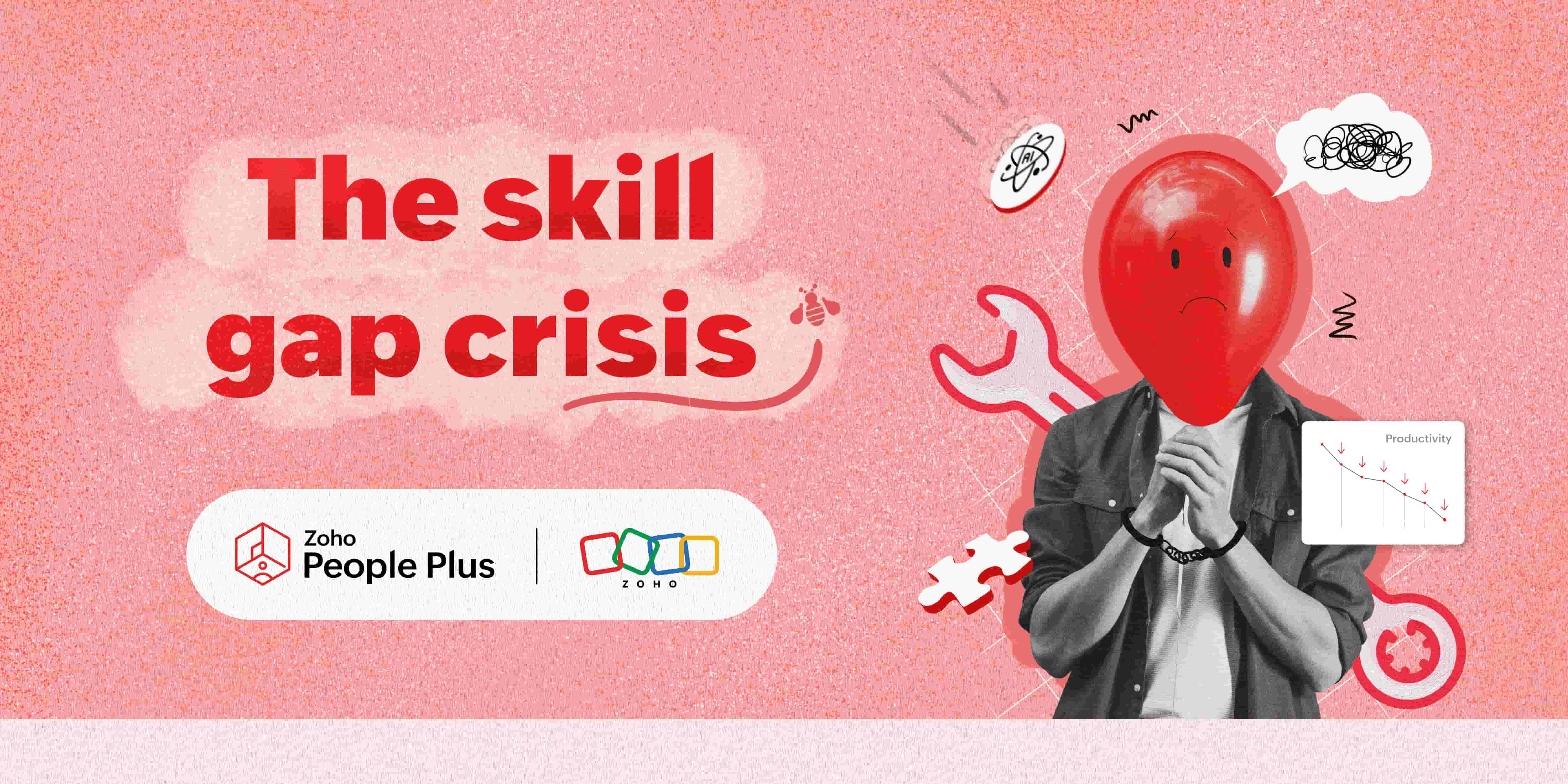
The world of work continues to evolve faster than ever, driven by AI, automation, shifting employee expectations, and digital-first solutions. Skills that were essential just a year or two ago are losing relevance, and filling the gaps has become a top challenge for HR teams. In the rest of the blog post, we'll take a deeper look at the key factors behind the skill gap crisis and how HR teams can stay ahead.
How did we end up here?
There are four main drivers that have made skill gaps a global crisis:
Technological advancements
With tech innovations like artificial intelligence, the Internet of Things, automation, blockchain, augmented reality, and virtual reality, the shelf life of most skills has gone down. As tech tools develop almost continuously, employees are struggling to keep up, and most organizations are not able to train them quickly enough to match the speed of technological change.
Changing workplace models
Remote, hybrid, distributed, flexible, gig, and four-day work models require new skills like digital communication, self-management, collaboration across time zones, and adaptability. While many employees have experience with digital tools, not everyone is prepared to thrive in these newer models.
Lack of clear learning paths
Training without a clear roadmap tied to business needs can widen skill gaps. Reactive training falls short. Employees need a clear plan detailing what, when, and how to learn.
Lack of leadership buy-in
Having leaders who see training and development as a one-time event and an added cost can prevent employees from acquiring future-ready skills. Fragmented training efforts reduce employees' ability to adapt to changing conditions, making it harder for the organization to stay relevant and competitive.
Skills that are now in short supply
Here are three major categories of skills that are now in huge demand among employees:
Technical skills include building and training AI models, data analytics, cloud computing, product development automation, low-code platform skills, and HR tech skills.
Soft skills include adaptability, growth mindset, emotional intelligence, critical thinking, problem-solving, and decision-making.
Leadership skills include people-centric leadership, strategic thinking, ability to influence positively, change management, and accountability.
Five tips to close the skill gaps like a pro
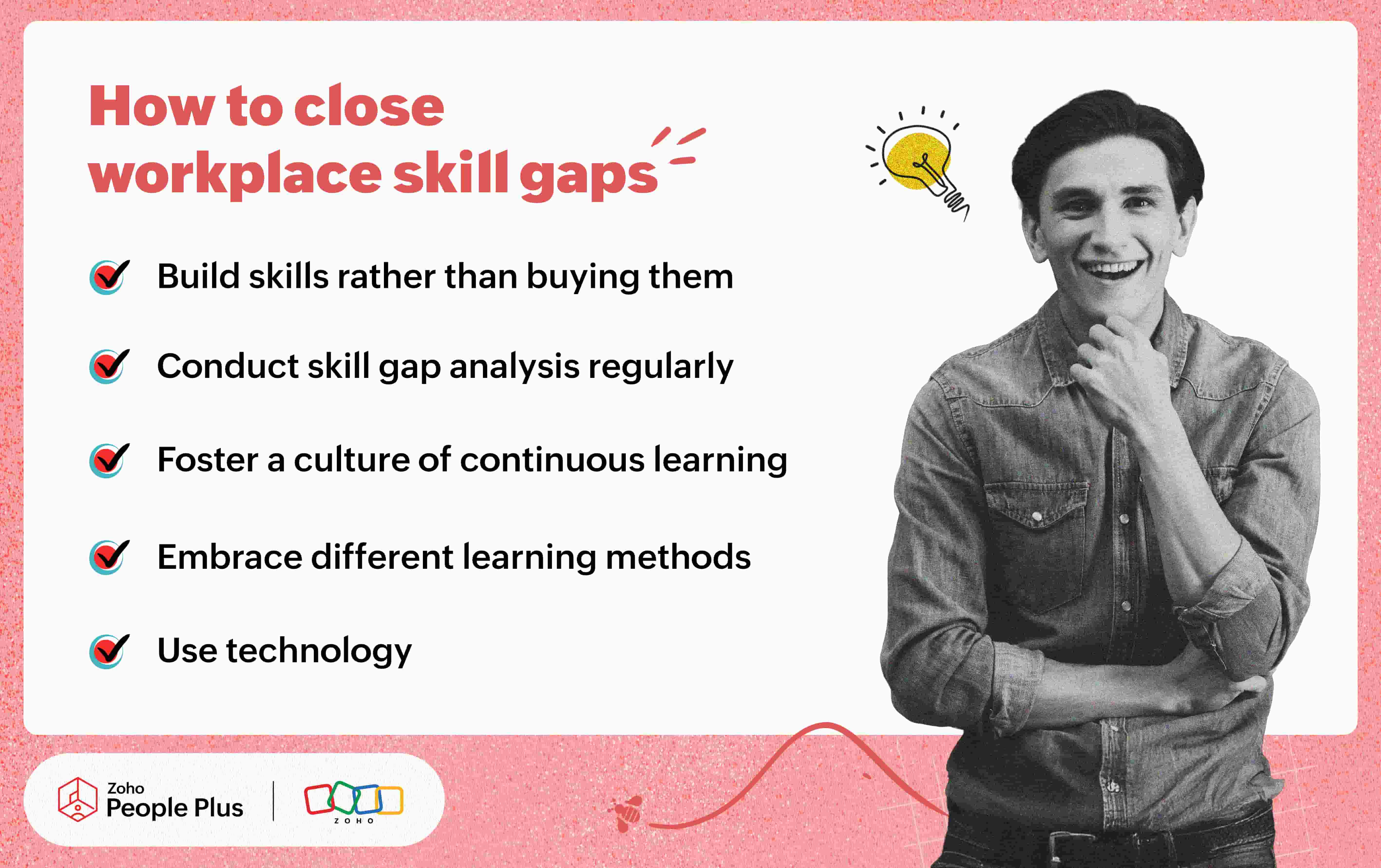
Here's how HR teams can help employees close their skill gaps:
Build skills rather than buying them
Building skills instead of hiring new talent can be a sustainable and cost-effective approach, as it reduces the amount spent sourcing, hiring, onboarding, and training new candidates. Additionally, upskilling efforts can make employees feel valued while motivating them to contribute more. Work closely with your existing employees to understand their skill needs and offer a step-by-step road map that helps them grow. This way, learning becomes more guided and meaningful.
Conduct a skill gap analysis regularly
Performing a skill gap analysis is so important, especially when some skills have a shorter lifespan. Make use of self-assessments, performance reviews, peer reviews, the skill set matrix, and skill assessments to understand what your workforce already knows and what it needs to learn. Then, pinpoint future skill needs by getting a clear idea about your business goals, growth plans, market conditions, and the tech impact in your industry. Comparing both existing and future skill gaps can provide a picture of what's truly missing.
Foster a culture of continuous learning
Learning has to become one of your organization's core values in order to keep up with the evolving skill needs. It has to be embedded in your employees' everyday work. Encourage your C-level leaders to set the tone by providing key updates about what they're learning and how it's helping them grow. Have managers allocate some time to their team for learning every week so that training doesn't feel like something outside their job. You can also have a gamification system in place to make training more engaging and effective. Build peer learning circles to help employees learn from each other and exchange their real-world experiences.
Embrace different learning methods
Sticking to just one training method can limit your employees' motivation to learn, since it may not always align with their needs. Embrace multiple approaches, including self-paced and instructor-led training, blended and micro learning, on-the-job training, mentoring, and more. Options like these can help employees learn more comfortably, which enables them to absorb more knowledge for better outcomes. Provide a mix of resources as well, and give your workforce the flexibility to choose so learning feels personalized, enjoyable, and impactful.
Use technology
A learning management system (LMS) can truly revolutionize your organization's training initiatives. Start using the centralized hub to create all the courses you want your employees to take. Each course can have different modules, batches, sessions, instructors, and resources. A modern LMS enables instructors to host online classes and gives learners a discussion forum to collaborate with their peers. Assessments and assignments can be exchanged on the platform too. Most of LMS solutions also come with mobile applications so that employees can train on the go.
Wrapping up
The skill gap crisis, when ignored, can hold your business back and affect its long-term success. Training should be treated as a priority rather than a one-off initiative. By building skills internally, analyzing gaps regularly, fostering a culture of continuous learning, embracing diverse training methods, and leveraging technology, HR teams can create a resilient, future-ready workforce equipped to thrive in a changing world.