The cost of disconnected tools
- Last Updated : July 30, 2026
- 89 Views
- 13 Min Read
Every business today runs on software, from a few tools to hundreds of them. Often, each was bought by a different team at a different time to solve a real problem. The CRM, the invoicing tool, the support desk, the spreadsheets that somehow never go away—each was the right call at the time.
And for a while, it works. The tools do their jobs, the teams get things done, and the business grows.
Let's take a simple example. A deal closes, and a sales rep marks it as "closed won" in their CRM. An email goes to Finance with the customer's details. A row gets added to the spreadsheet the manager watches. A message goes to the onboarding team on Slack. Finally, a note is added in the CRM to say it's been handed over. One closed deal, six tools, at least ten minutes gone—and none of it was selling.
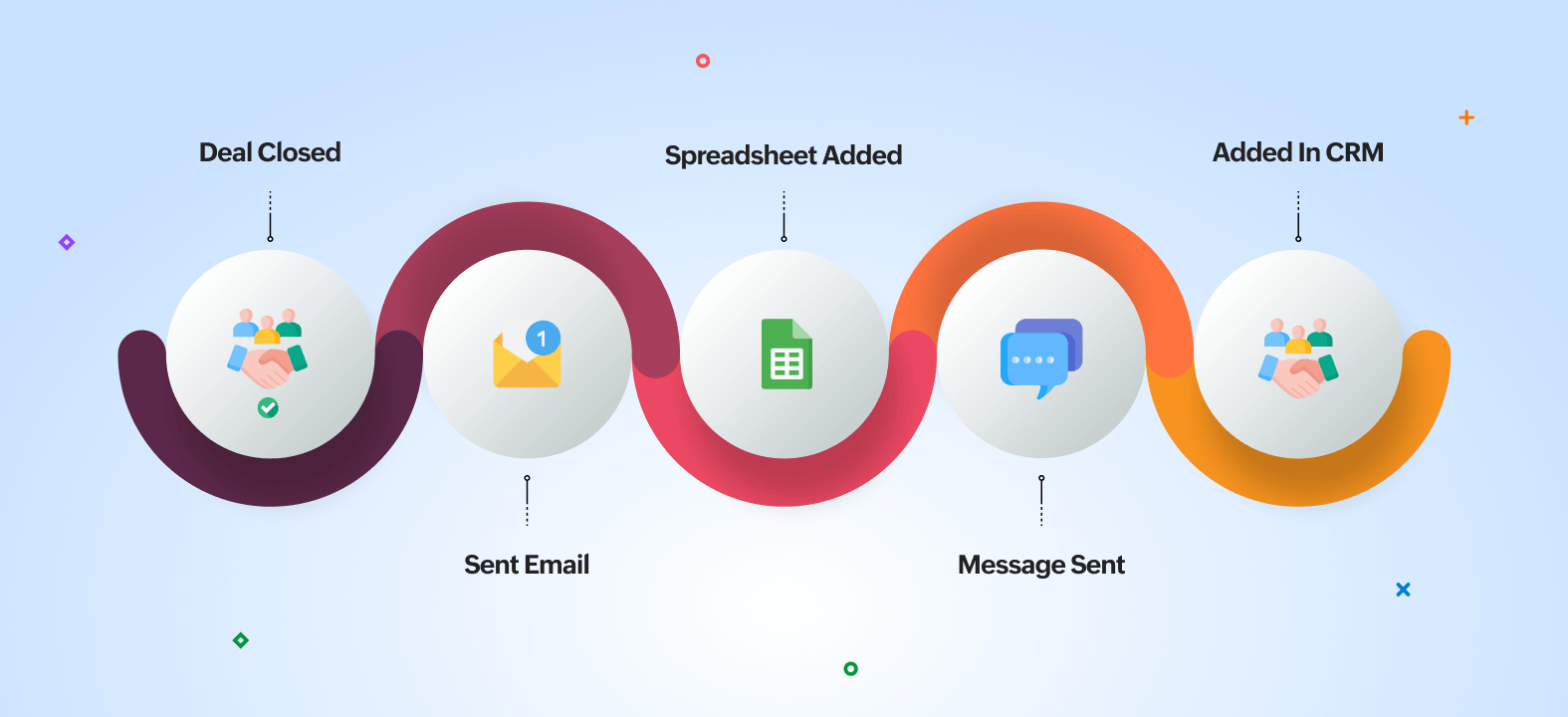
Nobody taught the team to work this way. It happened slowly, as the business bought more software. Nobody planned for the work of getting the tools and their data to talk to each other. Even on the surface of this one simple process, there are unaccounted losses.
There's a name for what your business is accumulating here, and it isn't a tax. It's a debt. Every tool you buy adds principal to the balance. The principal is the work between your tools—the handoffs nobody planned for and nobody hired for. If you don't pay it down, you pay interest on it every day, in manual work, errors, and decisions delayed while someone reconciles the numbers.
You won't see the interest on any invoice. You'll see it in your numbers, just never with a name on it. And it compounds, because every new tool the business adds increases the balance the interest is calculated on.
This article is about that debt. What it is, why it grows on its own, and how to start paying it down
What is integration debt?
It's the cumulative work between your tools that nobody has paid down yet. It's not a tool failure or a sign of bad planning. It's a simple consequence of growing a business one tool at a time and never circling back to connect them.
The principal is the work itself—a deal that has to flow from sales to finance, an order that has to move from cart to inventory to shipping, or a ticket that has to reach engineering and come back to support. That work exists whether you integrate. You can't make it disappear. You can only choose who, or what, does it.
The interest is what you're charged every day for not paying the principal down. Someone copies a number from one tool to another. Someone reconciles two reports that should match. Someone chases an approval that should have been automatic. None of these moments feel like interest; they feel like work. That's the trap. The dollars they cost the business are real, and they show up on the books eventually. They just don't show up with a label on them.
Your business pays this interest in three forms. In money, you lose revenue that arrives late and decisions deferred while someone reconciles. In process, you lose efficiency at every handoff, and workflows turn into things nobody can describe because they live in someone's head. In your workforce, you lose the time and energy of people hired for their judgement, who now spend half their day on data entry.
You see this integration debt before you can name it, but the interest gets paid in money eventually.
It's paid in deals that closed slower than they should have, revenue that's delayed because the handoff between sales and finance broke, and customers who left because nobody followed up. It'll also show up in senior people who quit citing "workload", when the actual problem was that they had the wrong workload. The numbers move in the business's books, but nothing in the books explains why. That's the invisibility that hurts. It's not that you can't see the cost—it's that you can't connect the what to the why.
And this debt compounds without your input. Every new tool the business buys is principal added to the balance, and every addition multiplies the handoffs across the rest of the stack. Nobody signs for the new debt. It just accrues by default, on a schedule the business never agreed to.
Moreover, the interest you pay every day doesn't reduce the principal. Every workaround your team has built is paying it twice.
The visible payment is payroll. Every hour your team spends copying data, reconciling reports, or chasing approvals is on your books as salary. The clever ops lead who built the manual workflow is writing the check, on behalf of the business, in time and energy that could have gone to better work.
The invisible payment is the second-order effect. Manual workflows are slower than automated ones. They introduce errors at every handoff, and they lose customer context between systems. So while you're paying the workaround in payroll, you're also paying it in deals that closed slower than they should have, in customers who churned because the handoff broke, and in revenue that arrived late or never arrived at all. Different charge, same debt.
So the real question isn't about which tools you buy. It's about how well your tools, processes, and people are working together.
The cost of carrying this debt
For most businesses, the carrying cost is much larger than anyone realizes. It doesn't appear as a line item anywhere, but it quietly caps how fast and how well the business can grow.
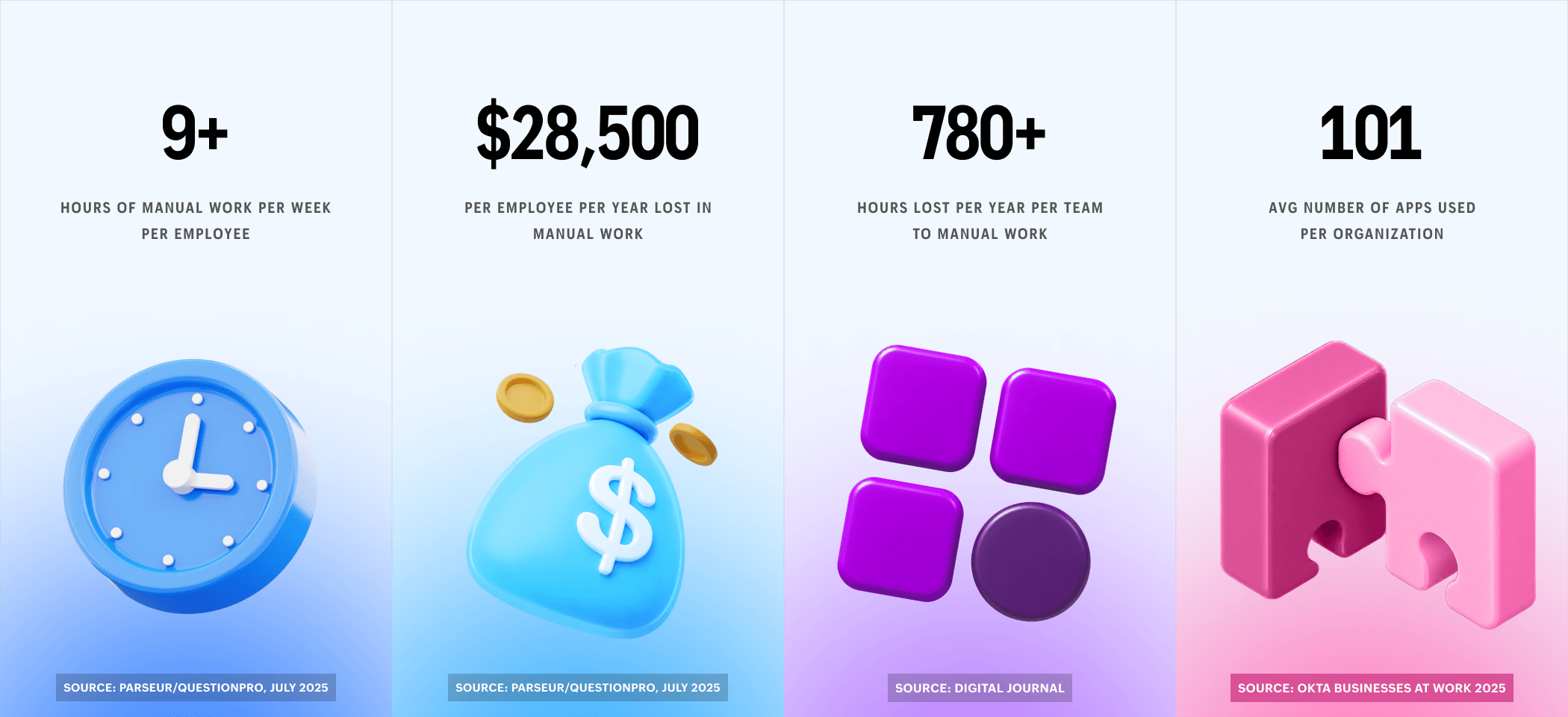
None of this shows up on a balance sheet. The time disappears into calendars that were already full. The dollars disappear into salaries that were going to be paid anyway. And the hours are only the part you can see.
Underlying these are the errors from doing everything by hand, small mistakes that cost someone time, money, or trust. Below the errors are the delays, where something that should take minutes sits waiting for a person to move it along. And below that is the biggest cost of all, the one that never shows up anywhere—the work your best people never got to, because they were too busy holding everything together.
What manual work actually looks like
Most of this interest doesn't feel like interest—it feels like work. Someone at a desk, opening one tool, copying a field, opening another, pasting it in, checking it's correct, closing the tab, and moving to the next thing. It isn't hard work. It's just work that keeps showing up.
For the person doing it, the effect is quieter than exhaustion. It's the quiet erosion of why they took the job. They were hired for their judgment but spend half their day on data entry. Every tool switch breaks their attention. Every manual transfer is a small chance to make a small mistake, which will have to be found and corrected later.
Every step feels productive in the moment and weightless by the end of the day, because none of it produced anything they can point to as their own work. By Friday, they're tired in a way that doesn't feel earned. Over months, the energy that brought them to the job quietly drains away.
The effect on the process is almost the opposite. Manual work makes processes invisible. Nobody writes the steps down because they live in someone's head. Onboarding a new hire becomes shadowing an experienced one, because nobody can quite describe what the experienced one actually does. The process can't be improved because it can't be seen. And when the person leaves, the process leaves with them.
The effect on the business is more structural. Decisions get delayed because the numbers haven't been reconciled yet. Reports are treated as rough estimates because everyone knows they were assembled by hand. Customer experience becomes inconsistent, because the person who handled the question last week isn't the person handling it this week, and the context didn't survive the handoff. Growth plans get revised quietly downward, because leadership knows, without having to say it, that the current way of working can't scale.
Past a certain point, the debt stops being about effort and starts being about fragility. The work still gets done—every quarter, every reporting cycle—but it gets done because specific people are holding it together, not because the systems are. The business looks stable, but the catch is that the stability lives in those specific people. The day one of them gets sick, gets promoted, or leaves, the part of the process they were holding up goes with them.
The interest doesn't feel like a cost. It feels like any other week with manual data work, small delays, and things falling through the cracks. That's the reason most businesses spend years paying it without ever noticing.
Why your debt grows with the business
Think about a small café—one owner, one location, one supplier, a register, a spreadsheet for stock, and a simple accounting tool. Everything fits in the owner's head. When the register runs low on change or a supplier delivery is off by one crate, they notice by the end of the day.
A year later, the café is doing well and opens five more locations. It's the same owner, same supplier, and same tools. Only the scale has changed. Suddenly the sales data from six registers has to be reconciled every night. Stock counts from six spreadsheets have to be matched against one supplier invoice. Six sets of staff hours have to feed into one payroll run. The tools haven't multiplied; the work between them has, and by much more than six times.
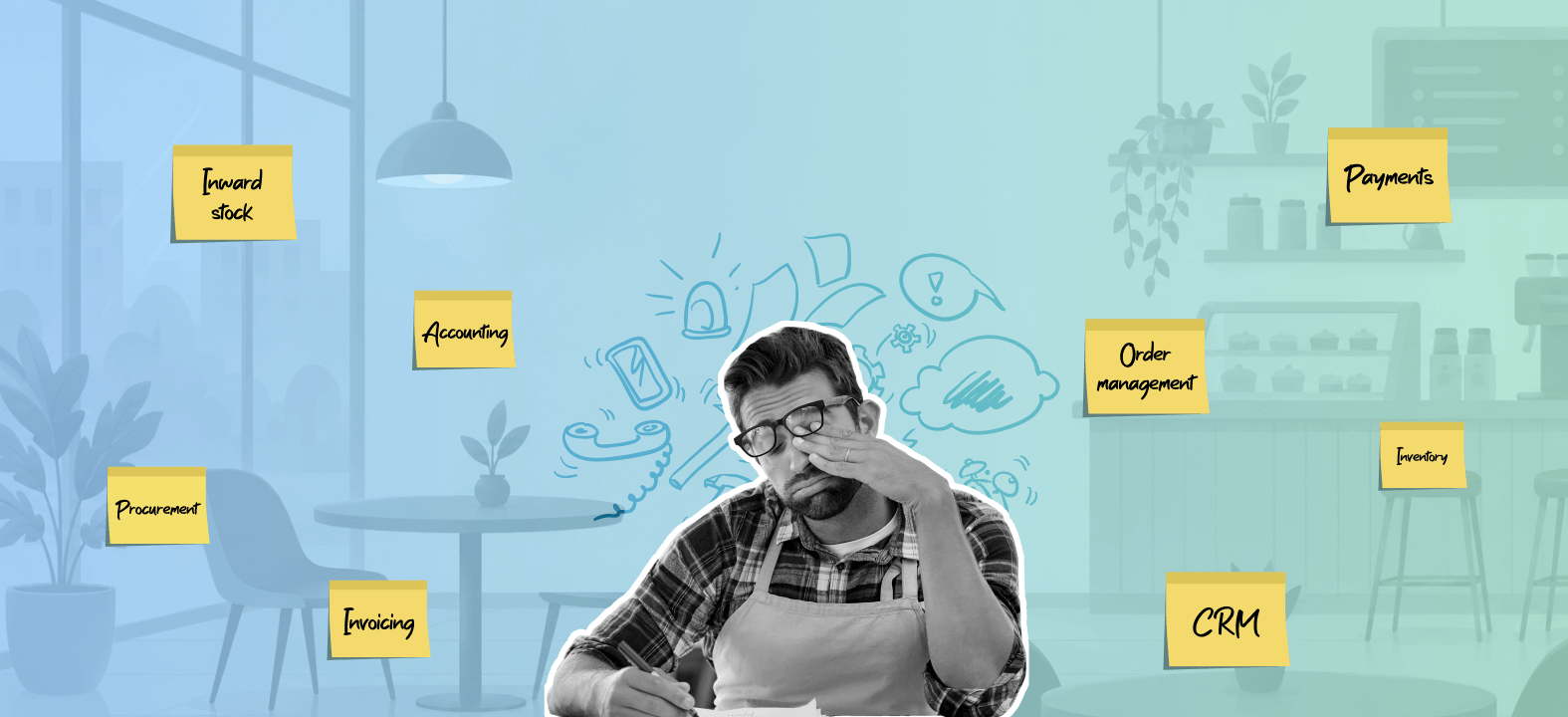
So the debt doesn't disappear as the business grows. It changes shape. A solo founder pays it in late nights, the hours spent on admin instead of with customers or family. A growing team pays it by hiring someone to hold the workflows together. That person is usually an operations manager who's brilliant and overwhelmed, and whose real job, if you watch them for a day, is just to be the glue. A large enterprise pays it in projects that stall for months because the integration team has a six-month backlog, and the strategic work everyone agreed was important just waits—different sizes, same debt.
That's the cost of carrying the debt. What's more interesting is what changes when you start paying it down.
What changes when you pay off the debt
When you pay down the principal, your tools start working together, your processes fall into alignment, and your people finally do the work they were actually hired for.
Your tools start working together
When two tools are integrated, information moves between them automatically. A new customer in your CRM appears as a contact in your invoicing tool without anyone copying anything. An order placed on your ecommerce platform updates your inventory in real time. A support ticket opened in your help desk creates a task in your project tool.
Now think about what that chain of connections adds up to. Someone places an order on your website. The payment goes through, and the order is confirmed. Your inventory tool subtracts the item. Your accounting tool records the revenue. Your shipping partner gets the label request and picks up the package. The customer gets an email with a tracking link. If the order was flagged as a large or first-time purchase, your sales team gets a quiet nudge to follow up. The customer's record in the CRM now shows the purchase, so the next time anyone on your team talks to them, they have the full picture.
None of this required someone to copy data between tools. Every step happened because the tools knew what to tell each other.
It's data moving the way it was always supposed to. The difference is that your team is no longer the carrier.
And because the tools are now connected, the information in them stays consistent. A change in one place shows up everywhere it needs to. That's a small-sounding thing, but its effects are large. Reports become reliable because the numbers match. Customers get a consistent experience because every team sees the same information about them. Decisions get made on current data, not on last week's export.
Your processes fall into alignment
Once your tools are working together, your processes start to align.
A business process is a sequence of steps that cross tools. A lead becomes a customer. That customer places an order, gets an invoice, and maybe later has a support question. Each of these journeys touches multiple systems. When those systems aren't connected, the process has gaps, and people fill the gaps by hand. When those systems are connected, the process runs as a process, not as a relay race.
Aligned processes are faster because there are no manual bridges between steps. They have fewer errors because data isn't being re-entered or re-interpreted at every handoff. And they're easier to improve because you can see the whole thing at once, not just the part that happens in your tool.
And alignment compounds. When sales and finance are aligned, finance spends less time chasing data and more time actually using it. When support and engineering are aligned, customer issues turn into product improvements faster. Each aligned process makes the next one easier to align.
Your people get their time back
When your tools are connected and your processes are aligned, your people stop being the glue. Integration doesn't replace your team. It frees them to do the work they were actually hired for. The manual work leaves, and the higher-value work that's been waiting in the background comes back into play. A sales rep goes back to talking to customers. An ops manager goes back to improving the business, not holding it together. A finance lead goes back to looking at what the numbers actually mean. A support agent has more time for the harder cases that need real attention.
And the money that was tied up in this work goes somewhere useful too. It helps you pay the people you already have better and invest in training and tools that make them stronger. It funds the product work and the campaigns that have been waiting. New hiring, if it comes, comes later and for the right reason.
So the real return on integration isn't savings; it's capacity. You have more of what you need, where you need it, because the business is finally running as one thing instead of many.
And here's where the same compounding starts working for you instead of against you. Every workflow you connect frees a person who can improve the next workflow. Every process you align makes the next alignment easier. Capacity feeds back into more capacity. The interest you used to pay turns into interest you earn.
That's the difference between businesses that scale and businesses that hit a ceiling.
Three ways to pay down the debt
The principal here is the work between your tools. To pay it down, you have to move the handoffs that currently live in people's heads and calendars into systems that run them on their own. Three paths get businesses there.
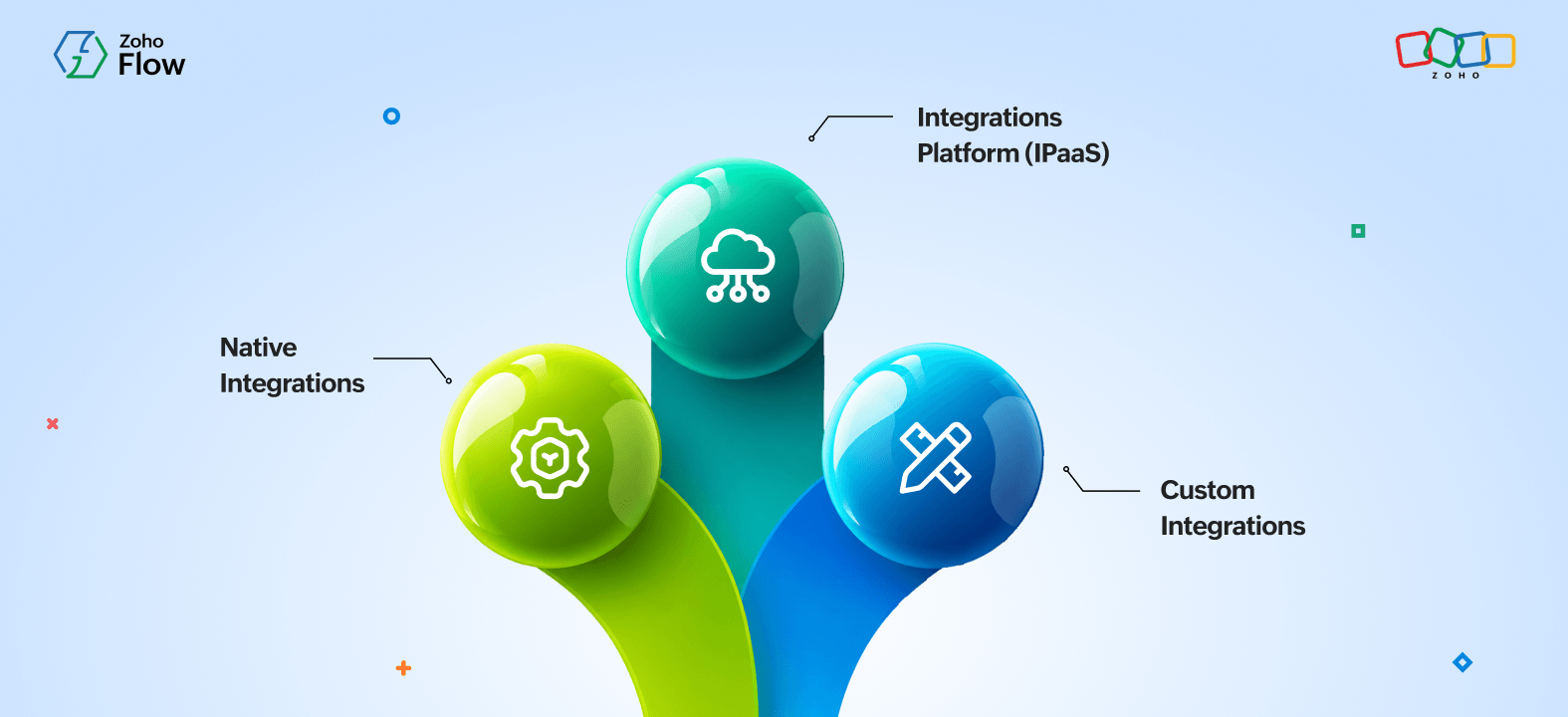
Native integrations are the connectors built into the apps you already use. Many of your tools ship with hooks to talk to other tools. You turn them on, configure them, and a number of common handoffs start running automatically. This is the lowest-cost path to start with, and the right move when the handoffs you need are common and your stack is small. The limit is that native connectors usually cover the most popular pairings and the simpler workflows. The deeper or more cross-functional the work, the faster native connectors run out of room.
Custom integrations are built by your developers. You write the code, you maintain it, you adapt it when an API changes. The strength is total control. The integration does exactly what you need, no compromises. The cost is that every API change, every new tool, and every new workflow becomes a new dev ticket. Custom integrations stay alive only as long as someone keeps maintaining them. Many businesses choose this path, but over time, the maintenance load itself becomes a parallel debt of its own.
An integration platform is a tool purpose-built for the job. It connects to hundreds of apps out of the box, lets you build workflows visually instead of via code, and keeps the connectors current as the apps it talks to evolve. There's a subscription cost, but no developer hours and no scripts to keep alive. Zoho Flow is one of these platforms. You build a workflow once, and it keeps running.
Each path has its own repayment profile—different upfront cost, different ongoing burden, different ceiling on how much debt you can pay down with it. The right path depends on the size of your stack, the complexity of your handoffs, and how fast you need the balance to come down. We'll go through that math, with real numbers, in a dedicated piece on choosing how to pay down your integration debt.
Where to start
You don't pay down the integration debt by rebuilding your stack. You start by finding the one workflow that's costing you the most, the one that touches the most tools and the most people, and connecting it.
This is where Zoho Flow fits in. Flow connects your apps and runs the steps between them automatically. The deal-closing example from earlier, where six tools and ten minutes of manual work follow every closed deal, can run as a single workflow. The CRM update triggers the finance handoff, the spreadsheet entry, the onboarding message, and the note back in the CRM—one trigger, several actions, no manual step in the middle.
Pick one workflow. Watch what changes. Move to the next.
How your business can look without the integration debt
Six hours a day just verifying orders by hand, and three days to ship. During the holiday season, when demand was highest, the team simply stopped accepting new orders because they couldn't keep up.
That was Innoliving, an Italian ecommerce company that sells across dozens of online marketplaces, before they integrated their tools.
Once they connected their tools, aligned the processes between them, and let automation handle the routine work, the shape of their business changed. The team stayed the same size, but the business grew around it. They now process over 2,000 orders a day, up from 100.
Zoho Flow has helped us save over 1,500 hours per year and increased our revenue by over half a million euros per year. Its versatility and limitless capabilities ensured we can run complex workflows and automate our business processes with ease.
Ferdinando Ploschberger, Head of Ecommerce and Online Operations,Innoliving

If any of this sounds familiar, your business is already carrying the integration debt. The only question is whether you keep paying interest on it forever, or start paying down the principal. The businesses that pay it down all do the same three things. They connect their tools, align the processes between them, and give their people back the time they'd been losing to all the work in between.
This is the first piece in a series on integration as a growth strategy. The next piece walks through how to find the workflows that are costing you the most, and how to start automating them one at a time.
 Naman Shroff
Naman leads customer experience and partnerships at Zoho Flow, and looks after go-to-market, growth, and adoption.He spends most of his time talking to the people who use Flow. Small teams stitching a few apps together, large companies running processes that cross half the org. He figured out a while back that the problem barely changes as the company gets bigger. Someone's still copying data by hand. A task is still sitting there waiting on a person to notice it, and no one can say where things stand without asking around. He keeps coming back to the cost that never lands on a report. An hour here, a follow-up that slipped there. It adds up to more than people expect. He'd rather show you the work automation takes off your plate than sell you on automation itself.