Why businesses lose customer trust and how to win it back
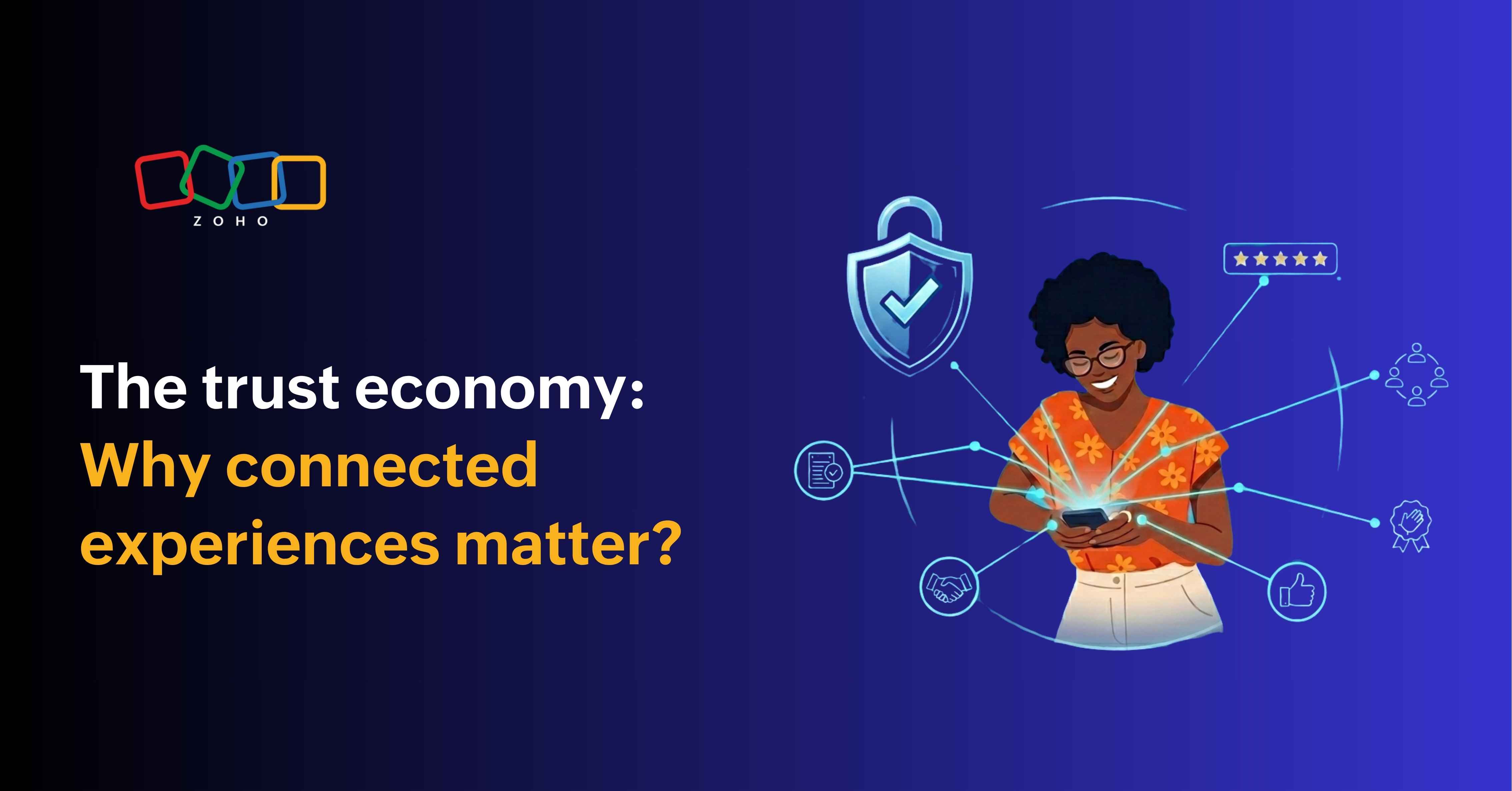
Customers expect businesses to remember their journey, regardless of whether they started the conversation on WhatsApp, Instagram, email, or a support desk. When teams operate with fragmented information, customers are trapped in a frustrating loop of repetition. Over time, that frustration turns into doubt, and doubt is often the first step toward churn.
Why customer trust breaks as businesses scale
Disconnected tools may work when a business is small, but as customer interactions grow, managing operations across separate apps and spreadsheets creates friction for both teams and customers. This is a common challenge in Kenya's digital-first economy, where customers move between WhatsApp, Instagram, M-PESA, email, and phone calls.
As these interactions grow, businesses face several challenges:
Siloed communication: Customer conversations remain scattered across WhatsApp, Instagram, email, and personal devices.
Blind spots in the customer journey: Support teams cannot easily access sales conversations, payment records, or delivery updates.
Fragmented data: The same customer information is stored across multiple systems.
Compliance risks: Customer consent and communication preferences are difficult to track consistently across channels.
Wasted leadership time: Managers spend hours compiling reports instead of focusing on growth.
When a single customer becomes multiple disconnected versions of themselves across departments, teams spend more time rebuilding history than actually helping the customer. Customers don't give second chances easily. PwC's 2025 Customer Experience Survey of more than 5,500 consumers found that 52% stopped using or buying from a brand because of a bad experience, and 29% stopped over poor customer experience either online or in-person. While this survey covers global consumers, the pattern is consistent with what service businesses see across Kenya.
The real cost of disconnected customer management
Disconnected systems may appear affordable initially, but the long-term costs are much higher than businesses expect.
Trust cost : One careless interaction involving customer information may damage a relationship.
Time cost : Teams lose valuable hours switching between systems, searching conversations, rebuilding context, and manually updating records.
Growth cost: As customer volume increases, manual systems slow response times and reduce operational consistency.
What trust-first businesses do differently
Customers don't see sales, marketing, or support teams; they see one business. They expect every interaction to pick up where the last one ended. But as businesses grow, customer information often becomes scattered across tools and departments internally, leading to disconnected experiences for the end user. This approach just won't work in the real world.
A customer experience-focused solution like Zoho CRM Plus brings every customer conversation, sales activity, marketing campaign, and support interaction into one platform, giving teams a complete view of every customer. With Zia, Zoho’s AI assistant, businesses can go a step further by identifying risks, spotting opportunities, and responding faster with the right context at the right time.
The result is a connected customer experience where sales teams understand support issues, marketers respect customer preferences, and support agents have instant access to complete customer histories.
“ Zoho came in handy for us to fast-track the process and give our customers a better experience."
— John Egwu, Chief Operating Officer & Co-Founder, Autochek
The TRUST framework for modern customer relationships
Customer trust is earned through consistent practices. The following principles form the foundation of a trust-first customer system.
Transparency: Customers understand what information is collected and how it is used.
Respect: Customer consent and communication preferences are consistently honoured.
Unified records: Every department uses the same up-to-date customer information.
Security: Customer data access is controlled, monitored, and traceable.
Training: Teams receive continuous guidance on responsible customer communication and data handling.
When these principles are embedded into daily operations, trust becomes a sustainable business advantage.
A stronger way forward for growing businesses
In Kenya, a dissatisfied customer does not necessarily leave a review. They tell their circle, and their circle tells theirs, so you could easily end up losing more than one customer with a bad experience. The businesses that hold onto people are simply the ones who remembered the last conversation, honoured the last preference, and made the next interaction feel like a continuation rather than a fresh start. The businesses that win tomorrow are the ones connecting every customer interaction today.
Ready to close the trust gap?
Explore how Zoho CRM Plus helps businesses unify customer conversations, improve team coordination, strengthen compliance, and deliver seamless customer experiences across every channel.
FAQs
1. Why do customers lose trust in businesses?
Customers lose trust when they face repeated questions, inconsistent communication, and poor service experiences across channels.
2. What causes disconnected customer experiences?
Using separate systems for sales, support, marketing, and payments often creates fragmented customer information.
3. Why is unified customer data important?
It helps teams deliver faster, personalised, and consistent customer experiences across every touchpoint.
4. How does Zoho CRM Plus help?
Zoho CRM Plus connects customer conversations, support, sales, and marketing in one platform to improve customer trust and team coordination.