- HOME
- Know Your Tech
- How to give AI powers to your legacy ERP
How to give AI powers to your legacy ERP
- Last Updated : September 1, 2026
- 0 Views
- 5 Min Read
Every enterprise wants to adopt AI into its platforms, except near the one system it can't afford to break. For enterprises running on legacy ERP systems like SAP ECC or Oracle EBS, that risk is enough to shut down AI adoption before it gets anywhere.
Legacy ERPs are often rigid and run mission-critical operations across finance, procurement, and operations every single day, which is exactly why enterprises won't risk destabilizing them to chase the next AI feature.
That's the tension at the center of most AI-in-ERP conversations: the urgency to modernize, pulling against the risk of touching a system with zero room for failure. While it's usually treated as a choice between the two, there's a more flexible way.
Why modifying the core causes complexity
When you want an ERP to be smarter, the instinct is to build the intelligence directly into the core. In other words, write a custom script inside SAP ECC or build a bot onto Oracle EBS. This lets you modify the core code so the new capability lives right next to the data it touches.
But every custom script, bot, or major customization (like deep code changes or hard-coded business rules) inside the ERP adds a layer of complexity that has to be maintained indefinitely.
None of the custom code upgrades itself when SAP or Oracle ships a new release. Someone has to re-test it and patch whatever broke. Do this across enough features, and upgrades that should take weeks start taking quarters.
The bloat is what turns a routine upgrade into a project that takes months to complete.
Ring-fencing the system of record
The fix involves refusing to modify the core system at all.
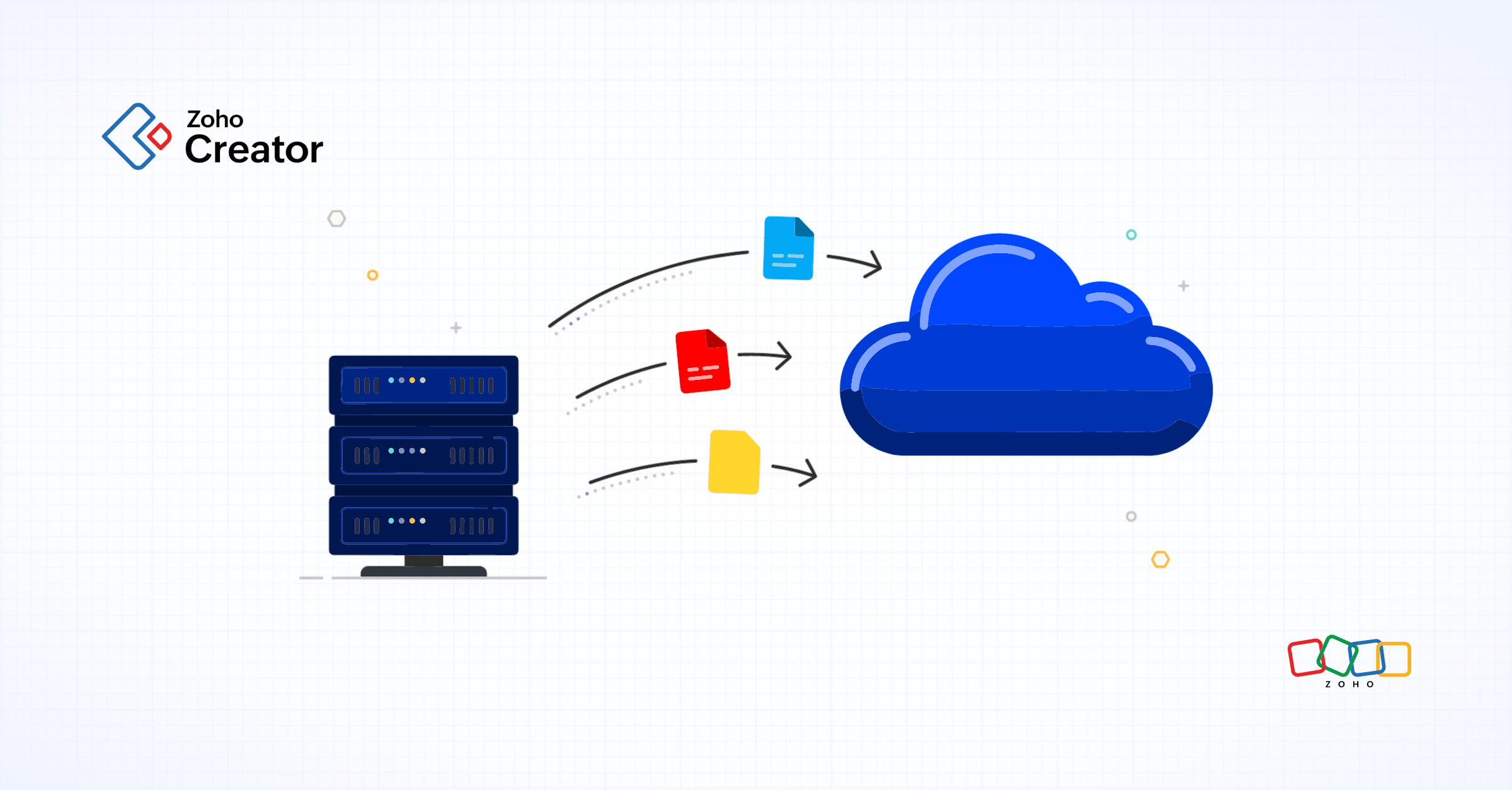
Ring-fencing means drawing a hard boundary around the ERP and controlling everything that crosses it. End users, external systems, and AI agents don't get direct access to the ERP unless there's no way around it. Every other path stays closed.
The ERP's role narrows to a single job: running the mission-critical processes it was meant to handle. This keeps the core clean, consistently, without the drift that comes from years of accumulated exceptions.
Zoho Creator as the dedicated engagement layer
Every custom requirement that can't touch the core still needs somewhere to live. This is a where Zoho Creator comes in.
Zoho Creator is an AI-native platform, built specifically for custom app development. Building on Creator as a dedicated extension layer keeps the ERP core clean while letting the business stay agile. You get AI agents, chatbots, mobile apps, and 1,000+ integrations with popular cloud and on-prem systems, all without ever writing a single line of code into the core system.
This way, the core system stays untouched while the business stays modern.
Here's what that looks like in practice:
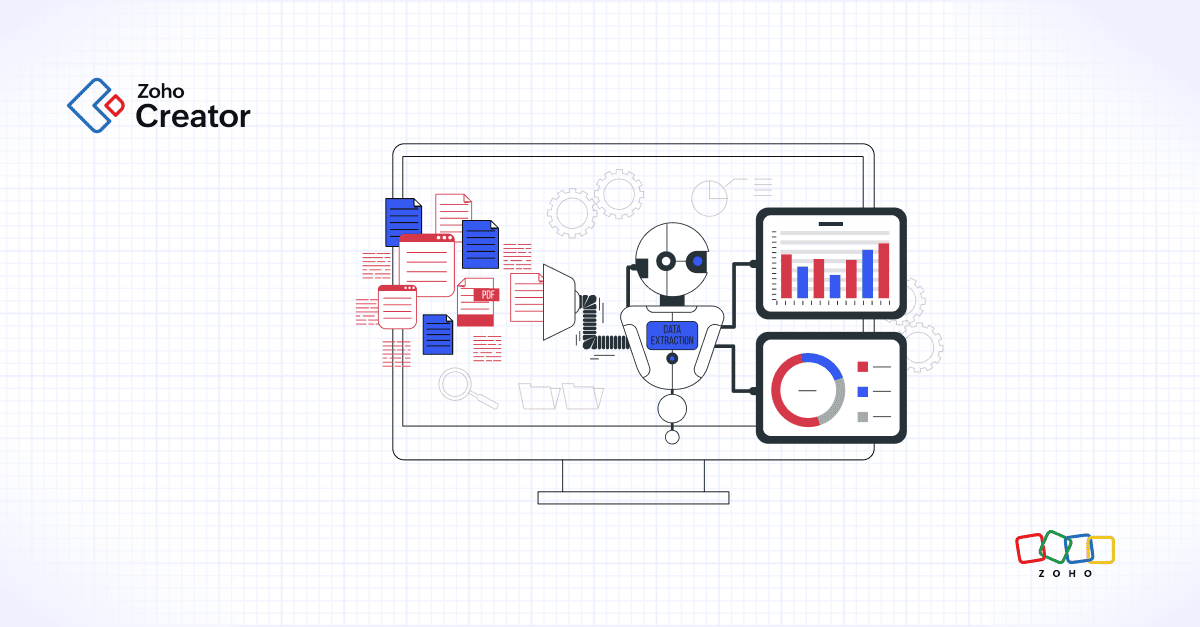
Procure-to-pay: Vendor invoices land in Creator. AI reads them, extracts the data, and routes them for approval. Only a clean, verified record gets posted to SAP ECC or Oracle EBS.
Plant maintenance: Technicians use Creator's mobile tools to diagnose issues and log inspections on-site. Only the finished work order goes into Oracle eAM or SAP PM.
Governed, minimal data pipelines
Both examples rely on the same integration pattern underneath. Creator interacts with the ERP exclusively through secure APIs or connectors, and never through direct code changes or backend access. Data gets pre-validated and processed in Creator first, and only a finished, governed record ever touches the core.
This is what makes the engagement layer safe, secure and reliable. The ERP isn't exposed to raw, unverified input from users, external systems, or AI agents. It only ever sees the output of a process that's already been checked.
Decoupled business agility
Once the core is ring-fenced and the integration pattern is governed, the speed difference becomes obvious. Business teams can build, test, and deploy AI-driven applications in Creator in a matter of weeks, without waiting on a multi-month ERP release cycle to approve, schedule, and roll out the change.
That's the practical pay-off of decoupling: The ERP's release calendar stops being the bottleneck for how fast the business can adapt, while speed and agility become something the business controls.
Simplifying future cloud migrations
Keeping the core clean always pays off the moment a migration is on the table. An ERP free of custom code bloat is dramatically easier to move than one carrying a decade of scripts, bots, and workarounds nobody fully remembers the reasoning behind.
That's true whether the move is SAP ECC to S/4HANA or Oracle EBS to Oracle Fusion. The primary friction in either migration usually isn't the move to the new platform, rather untangling everything that got built into the old one.
Keep that logic in Creator instead, and the core stays ready to migrate, by default.
The final takeaway: The extension layer
Modernizing a legacy ERP with AI capabilities is about placing a flexible innovation layer beside the core—one that can move at the speed the business actually needs, while the ERP remains reliable.
Zoho Creator is where that speed and agility lives.
FAQs
Q1. Can I use my legacy ERP and still leverage the power of AI?
Yes. The key is adopting AI through a dedicated extension layer that connects to the ERP without modifying its core. This keeps the ERP stable while letting the business build and deploy AI capabilities on its own timeline, not the vendor's upgrade schedule.
Q2. What does "ring-fencing" the ERP actually mean?
It means drawing a hard boundary around the ERP and controlling everything that crosses it. End users, external systems, and AI agents only get direct access when there's no way around it, while everything else stays outside the core.
Q3. How does Zoho Creator work alongside SAP ECC or Oracle EBS without touching the core?
Creator connects to the ERP only through secure APIs or connectors. Data gets validated and cleaned in Creator first, so the ERP receives a finished, governed record, never raw or unverified input.
Q4. Does keeping business logic in Creator make future ERP migrations easier?
Yes. An ERP with no custom code bloat is far easier to migrate, whether that's SAP ECC to S/4HANA or Oracle EBS to Oracle Fusion. Keeping that logic in Creator instead keeps the core migration-ready by default.
 Ashetha A
Writing about low-code, app building, enterprise systems, and the stories before, during, and after the build.