

- HOME
- Financial Management
- Why static budgets fail: Rethinking financial planning in a dynamic business environment
Why static budgets fail: Rethinking financial planning in a dynamic business environment
Imagine you are driving from Boston to New York: 100 miles into your journey, you are being asked to take a detour due to ongoing roadwork. Will you take the detour or try continuing on your pre-planned route? If it's the latter, that's what static budgets are like for businesses. You know your business needs to course correct, but static budgeting makes you stick to your original path.
For years, businesses have relied on static budgets to plan their finances. The process is straightforward. You make an estimate of your revenue and expenses for the year based on past patterns and fix the budget for all departments. Come what may, your budget is untouched throughout the year. While this may have been the best approach decades ago, such a model rarely sees success in today's dynamic business environment.
Predictability is a scarce element in today's world. Market conditions are changing by the minute. Geopolitical situations in one part of the world have ripple effects across the globe, customer demands fluctuate, and supply chains get strained more often. In such an unpredictable environment, working on a fixed budget does more harm than good. Financial planning for businesses today requires more agility than ever.
This article will explore the risks associated with static budgets and how businesses can be better prepared to face the changing demands of the market.
What is static budget?
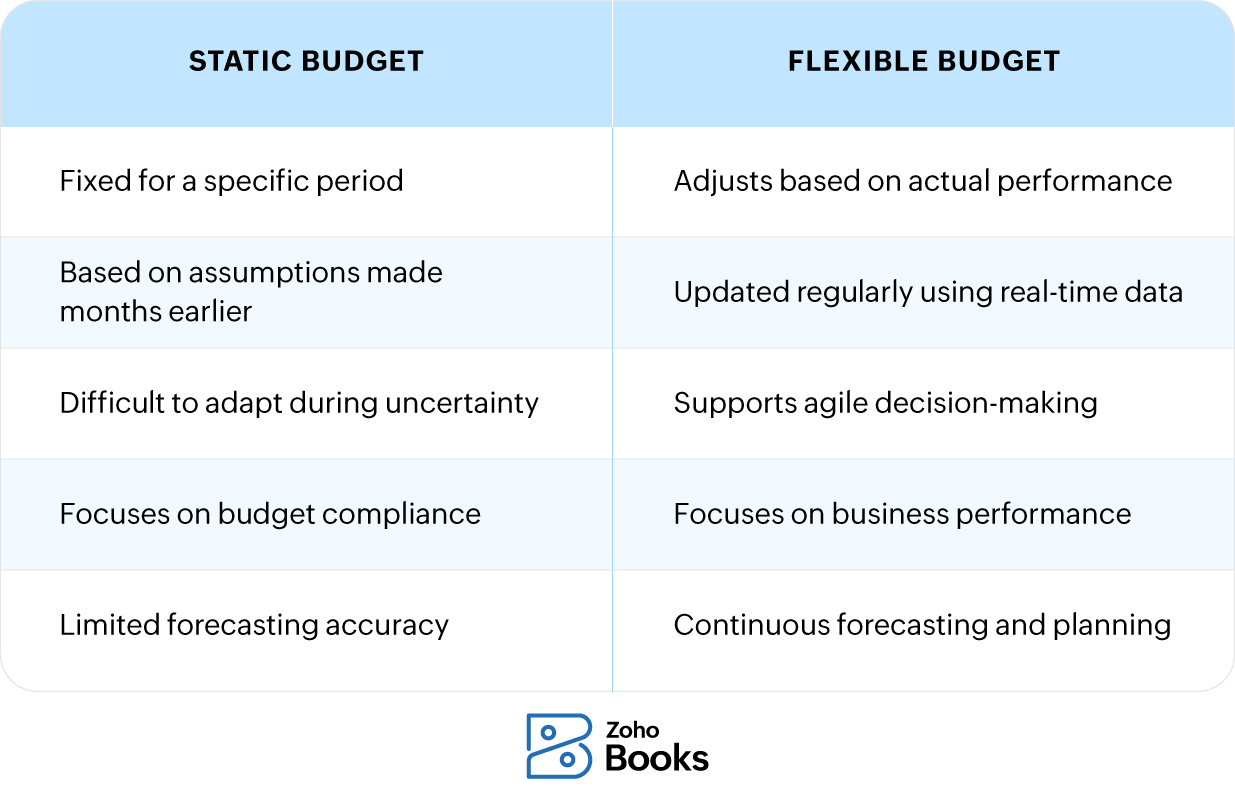
Static budget refers to a budget that is calculated based on projected revenue and expenses. It is done for a fixed period, typically annually. Once fixed, the budget remains unchanged throughout the period irrespective of the market conditions. Even if sales decline or if operating costs increase considerably, the overall budget remains untouched.
Static budgets work well in stable environments where revenue and expenses are accurately predicted. However, that's typically not the case in today's business environment.
Why static budgets don't work
The business environment is rapidly changing
In today's business world, no two days are the same. What looks fine on a given day can flip the very next day. Businesses are operating in dynamic environments where factors like tech advancements, geopolitics, inflation, and consumer behavior shifts are common. These factors are outside a business's control and can impact financial performance within days. A budget created in the first quarter can become outdated in the second quarter.
Reactive decision-making
Even a correct decision is wrong when it's made too late. When budgets are fixed ahead of time, business decisions tend to be more reactive than proactive. The business misses all relevant signals and waits for something to happen before they can even act. This could lead to missing valuable growth opportunities.
Forecasting takes a hit
Static budgets are determined based on future revenue and expenses forecasts. While these estimates may look solid at the beginning of the year, they quickly lose rigidity as time passes. A business that was predicted to grow at 20% might find itself growing at 60%. While this is very healthy growth, sticking to the original budget might lead to understaffing, inventory shortages, and missed growth opportunities as the business won't have the flexibility to make decisions on the go.
Static budget hides cash flow problems
A static budget fails to flag cash flow issues on time. The budget focuses on estimated revenue and expenses and doesn't focus on when the money is coming in and going out. A business might have acquired more customers in a given month, but if those customers fail to pay on time, the business faces a cash crunch. Without frequent cash flow checks, businesses may be sitting on a growing problem and by the time they discover it, it might be too late to fix it.
What is a flexible budget?
Today, many businesses are adopting a dynamic approach to financial planning through flexible budgeting. Instead of relying on a fixed plan for the year, a flexible budget allows businesses to stay agile by constantly evaluating their revenue and expenses, look out for market conditions that affect the bottom line numbers, and make the changes accordingly. This allows businesses to adjust their financial plan based on real-time market conditions instead of assumptions made earlier. The result is better cash flow visibility, accurate forecasting, and improved decision-making.
Static budget vs. Flexible budget: What's the difference?
How technology helps in business budgeting
Accounting software and financial management solutions have made flexible budgeting easier for businesses.
Cloud-based accounting software can help businesses:
Track real-time performance
Record revenue and expenses easily
Monitor budget variances
Automate reporting
Generate cash flow forecasts
Collaborate across teams
Make faster financial decisions
With integrated financial data, businesses gain better visibility into overall performance and can adjust plans proactively instead of waiting for the complete period to act on it.
Final thoughts
Static budgets were best suited for a stable and predictable business world. Today, businesses need financial planning that allows course correction at any point. Flexible budgeting helps businesses with that. By providing real-time financial visibility and accurate forecasting of the path ahead, businesses can plan better and chart their way.
The goal is no longer to stay within budget, it is to build financial agility. With the right financial tools and processes, businesses can move beyond outdated budgeting methods and create plans that evolve alongside their operations.
Businesses using modern accounting platforms like Zoho Books can streamline budgeting, automate financial reporting, monitor cash flow in real time, and make faster, data-driven financial decisions.