Stop re-entering Shopify order details in Zoho CRM

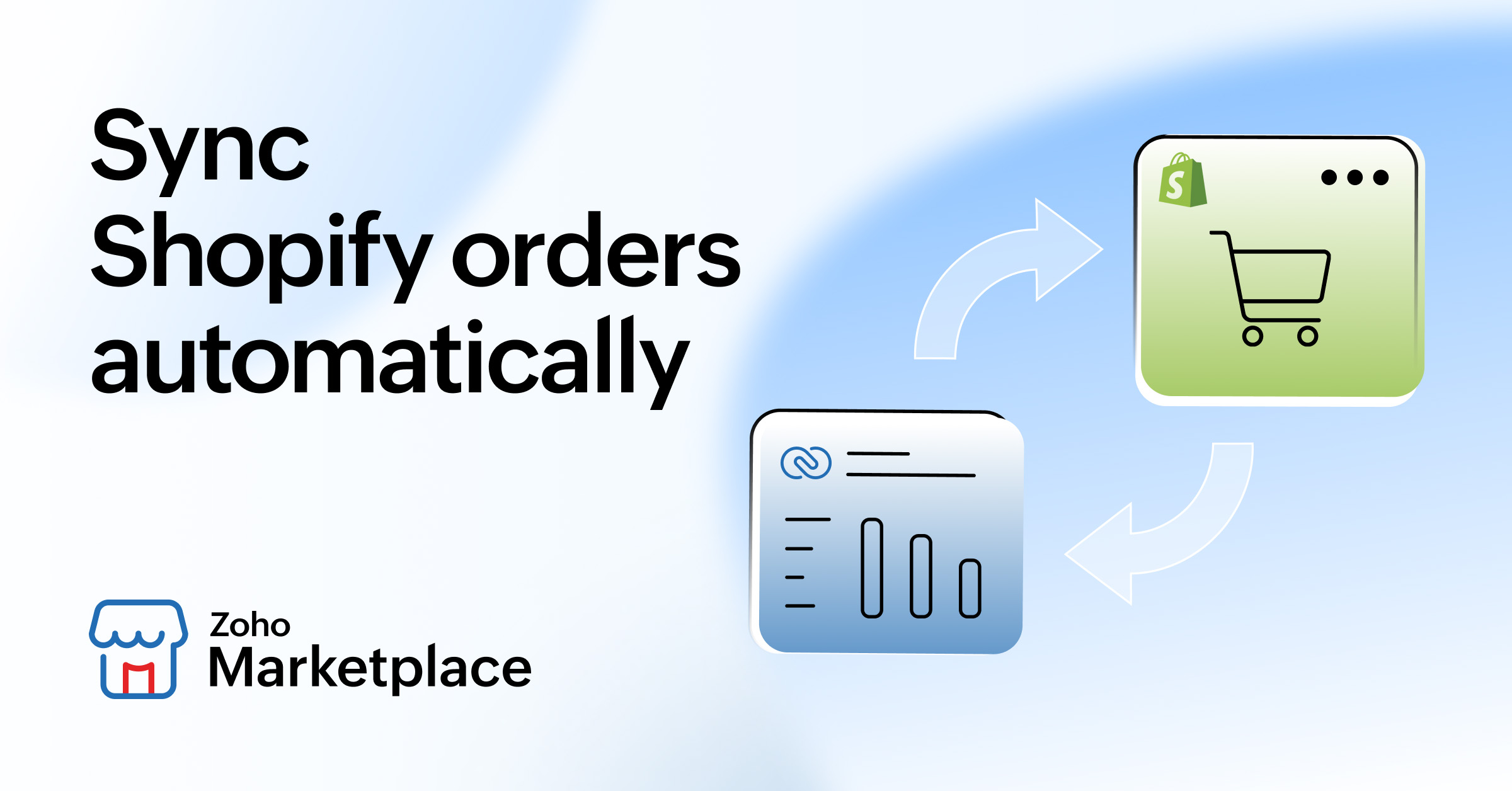
This is a guest blog from Xapplets (Zeeyes AI Inc).
Here's a scene that plays out in many growing Shopify stores every day: a customer places an order, payment is confirmed, and everything looks perfect inside Shopify. But keeping customer and order data synchronized is challenging. The customer's purchase history isn't updated, the order isn't visible to the sales or support team, and anyone who needs that information has to open another application to find it.
For a business processing a handful of orders each month, this may seem like a minor inconvenience. But as order volumes grow, teams expand, or businesses begin selling through multiple storefronts or currencies, the gap between Shopify and Zoho CRM becomes a daily operational challenge.
The hidden cost of disconnected systems
Without automatic synchronization in place, order information doesn't flow between Shopify and Zoho CRM. The impact goes well beyond a few extra clicks.
Support teams work without complete customer context: When a customer reaches out with a question about an order, support representatives often have to leave the CRM and manually search Shopify for purchase details.
Sales teams miss valuable opportunities: Purchase history helps sales teams identify repeat buying patterns, recommend relevant products, and build stronger customer relationships.
Manual reconciliation becomes part of the daily routine: As businesses add multiple storefronts, sell internationally, or manage partial fulfillments, comparing records across different systems quickly becomes time-consuming.
Why this happens
Shopify is built to manage online commerce, including products, carts, checkout, payments, inventory, and fulfillment. Zoho CRM is designed to manage customer relationships, sales activities, and business communications.
Since each platform serves a different purpose, they don't automatically share information with one another unless an integration solution connects both systems. Without that connection, someone on the team becomes responsible for checking both platforms, updating records manually, and ensuring customer information stays synchronized.
This becomes increasingly challenging as order volumes increase or teams become larger.
Modern integrations eliminate manual work
Rather than relying on manual updates, businesses can integrate Shopify and Zoho CRM so customer, product, and order information moves automatically between both platforms. Some key capabilities include:
Keeping customer records synchronized
Automatically updating orders and products
Supporting multiple storefronts and currencies
Providing clear synchronization activity and error visibility
The goal isn't simply automation; it's giving every team access to accurate, up-to-date information without switching between applications.
Setting it up without a developer
Setting up an integration no longer requires custom development or ongoing maintenance.
Modern integration solutions provide guided setup experiences that allow businesses to connect both platforms. Once configured, data stays aligned with minimal manual effort, helping teams focus on serving customers instead of updating spreadsheets or copying data between systems.
The takeaway
If your team still switches between Shopify and Zoho CRM to answer customer questions, update records, or reconcile orders manually, you're spending valuable time on work that automation can eliminate.
A reliable integration gives sales, support, and operations a shared, up-to-date view of every customer while improving data accuracy. Shopify Pro for Zoho CRM helps automate the synchronization of customers, products, draft orders, completed orders, and order updates between Shopify and Zoho CRM, allowing your team to spend less time managing data and more time growing your business.
Comments