What are drip campaigns, and how do you set them up?
- Published : April 29, 2026
- Last Updated : April 29, 2026
- 285 Views
- 6 Min Read

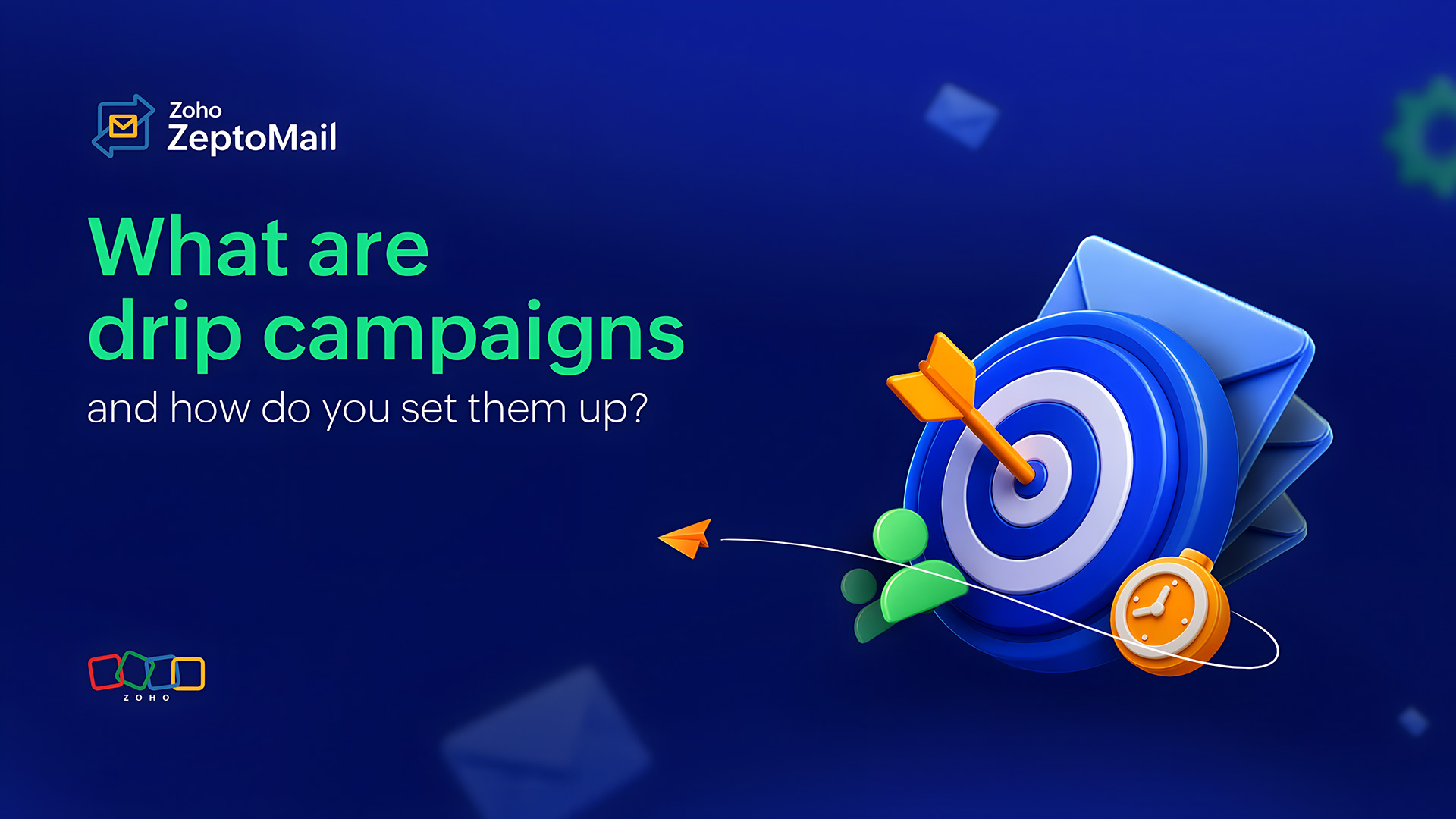
A drip campaign is a sequence of automated emails or messages sent to users based on predefined triggers, actions, or time intervals. Instead of sending a one-time bulk email to all users, drip campaigns deliver relevant information at different touchpoints of a specific journey.
The term “drip” refers to the gradual release of messages, much like water dripping slowly over time. Each message in the sequence is designed to move the recipient closer to a goal, such as activating an account, completing a purchase, or adopting a product feature. Drip campaigns are commonly used in email marketing, customer onboarding, lead nurturing, and product engagement workflows.
For example, when a user signs up for a SaaS product, they may automatically receive a series of onboarding emails over the next few days explaining how to set up their account and use key features. Each of these emails is mapped to different stages of the onboarding.
Typical triggers for a drip campaign include:
User signup.
Free trial activation.
Product purchase.
Cart abandonment.
Feature usage.
Customer inactivity.
Are drip campaigns considered transactional emails?
Drip campaigns can include both transactional and marketing emails. Whether a drip campaign is transactional or marketing depends on the context and purpose of the messages.
Transactional drip campaigns
Transactional emails are triggered by specific user actions or system events and provide essential information as opposed to inducing sales or promotion. Some drip campaigns fall into this category.
Examples include:
Account verification followed by onboarding guidance.
Password reset confirmation with security tips.
Purchase confirmation followed by delivery updates.
These messages are directly related to a user’s interaction with a product or service and are often sent through email APIs or SMTP relay services to ensure high deliverability.
Marketing drip campaigns
Many drip campaigns are designed for marketing and customer engagement purposes. These emails focus on nurturing leads, promoting features, or encouraging conversions.
Examples include:
Educational email sequences for new leads.
Promotional campaigns introducing product features.
Re-engagement emails for inactive users.
In practice, many businesses combine both approaches, creating drip campaigns that start with transactional messages and gradually introduce educational or promotional content.
Why should you use drip campaigns?
Drip campaigns help businesses automate communication while delivering messages that feel timely and personalized.
Consistent user communication: Drip campaigns maintain consistent contact with customers without overloading them with multiple emails at once.
Automated customer journeys: Drip emails are a “set it and forget it” engine that allows you to scale communication with thousands of users without manual effort.
Higher success rates: Because drip campaigns deliver targeted messages at the right moment, they tend to generate better open rates, click-through rates, and conversions than one-off email blasts.
Improved onboarding and product adoption: In SaaS products, onboarding drip campaigns help users understand the platform step by step, increasing the likelihood that they will adopt key features.
Lead nurturing: For B2B companies, drip campaigns gradually educate prospects about a product or industry, building trust before a sales conversation.
Reduced churn: Re-engagement campaigns can bring inactive users back to the product by highlighting new features, updates, or helpful content.
How are drip campaigns used? (real examples)
Drip campaigns work on a trigger model. Businesses set triggers such that an associated email is sent out at each trigger event. These triggers can be largely categorized into two groups:
Date-based triggers: Emails at desired intervals after an event or action.
User behavior triggers: Emails at different touchpoints or milestones of a user journey.
Drip campaigns are used across industries to guide customers through different stages of the lifecycle.
SaaS onboarding campaign
When a user signs up for a SaaS platform, they may receive a sequence like this:
Day 0, welcome email: Introduction to the product and account confirmation.
Day 1, setup guide: Instructions for creating the first project.
Day 3, feature introduction: Explanation of collaboration features.
Day 7, advanced tips: Automation and workflow suggestions.
Day 14, upgrade reminder: Encouragement to upgrade to a paid plan.
This drip campaign helps users learn the product gradually and increase activation rates.
E-commerce abandoned cart campaign
If a customer adds items to their cart but doesn’t complete the purchase, a drip sequence might include:
Email 1 (1 hour later): Reminder about the items left in the cart.
Email 2 (24 hours later): Product benefits or reviews.
Email 3 (48 hours later): Limited-time discount or free shipping offer.
These campaigns are widely used to recover lost sales and improve conversion rates.
Educational lead-nurturing campaign
A B2B software company may run a drip campaign after a user downloads a whitepaper.
Email 1: Thank-you email with download link.
Email 2: Educational blog article and case study.
Email 3: Webinar invitation/product demo invitation.
This approach gradually builds trust and product awareness before sales outreach.
How do you create a drip campaign?
Setting up a drip campaign involves defining goals, triggers, and message sequences.
Step 1: Define the goal
Are you trying to sell a product, educate a user, or win back a lost customer? Start by identifying the purpose of the campaign, such as:
User onboarding.
Lead nurturing.
Sales conversion.
Customer retention.
Clear goals help drill down the most optimized structure and messaging.
Step 2: Identify triggers
What action starts the drip? Drip campaigns are activated by specific triggers such as:
User signup.
Trial start.
Purchase completion.
Feature usage.
Cart abandonment.
User inactivity.
Step 3: Plan the email sequence
Determine how many emails there are in the series and the intervals (delays) between them. Design a series of emails that gradually guide the user toward the desired outcome. Ensure that the overall number of emails or the interval doesn’t overwhelm the recipient.
Step 4: Create the content
Write the subject lines and body copy for each stage. The content of each email should be relevant to the stage or action during which the email is sent. Ensure that each email has one clear call to action (CTA).
Step 5: Choose the sending platform
Drip campaigns can be implemented using:
Marketing automation tools.
Customer engagement platforms.
Transactional email services with workflow automation.
Email APIs integrated with application logic.
Choose the right type of service based on the type of drip campaign you’re looking to send. Onboarding emails can be sent using transactional email services, while feature adoption emails should be sent using marketing automation tools.
Step 6: Test and monitor performance
Use a test group to ensure that the automation logic works and the emails look perfect on both desktop and mobile. Before launching the campaign, test:
Email content.
Trigger logic.
Timing between emails.
Personalization variables.
After launch, track metrics such as the open rate, click rate, and conversions to optimize performance.
Best practices to optimize drip campaigns
To maximize your ROI, follow these optimization methods:
Segment your audience: Don’t send the same drip to a CEO and an entry-level intern. Group users by behavior or industry for better relevance.
Monitor analytics: If the second email in your series has a massive drop in engagement like open rates or click rates, the subject line or timing likely needs adjustment.
Don’t overwhelm: Sending an email every single day can lead to high unsubscribe rates. Space them out according to the user’s typical decision-making speed. In most cases, more than three emails may be overkill.
Personalize messages: Drip campaigns come with the advantage of being relevant to the user at the time.
Focus on value-driven content: Avoid making every email promotional. Instead, include helpful tips, educational content, product tutorials, and real customer success stories. Providing value builds trust and keeps users engaged.
A/B test everything: Test two different subject lines for your “Welcome” email to see which yields a higher open rate. Play around with the primary CTA to see which has most success rate.
Maintain brand voice: Even though it’s automated, the tone should feel human and consistent with your overall brand identity.
Wrapping up
Drip campaigns are a powerful strategy that helps businesses deliver relevant and timely communication at scale. A structured email sequences can guide customers through the user journey so companies can improve onboarding, nurture leads, recover lost sales, and increase customer engagement. When they’re designed with clear triggers, valuable content, and optimized timing, drip campaigns become a critical component of modern email marketing and customer lifecycle automation.