What is the Google Map Pack?
- Last Updated : April 16, 2026
- 164 Views
- 3 Min Read

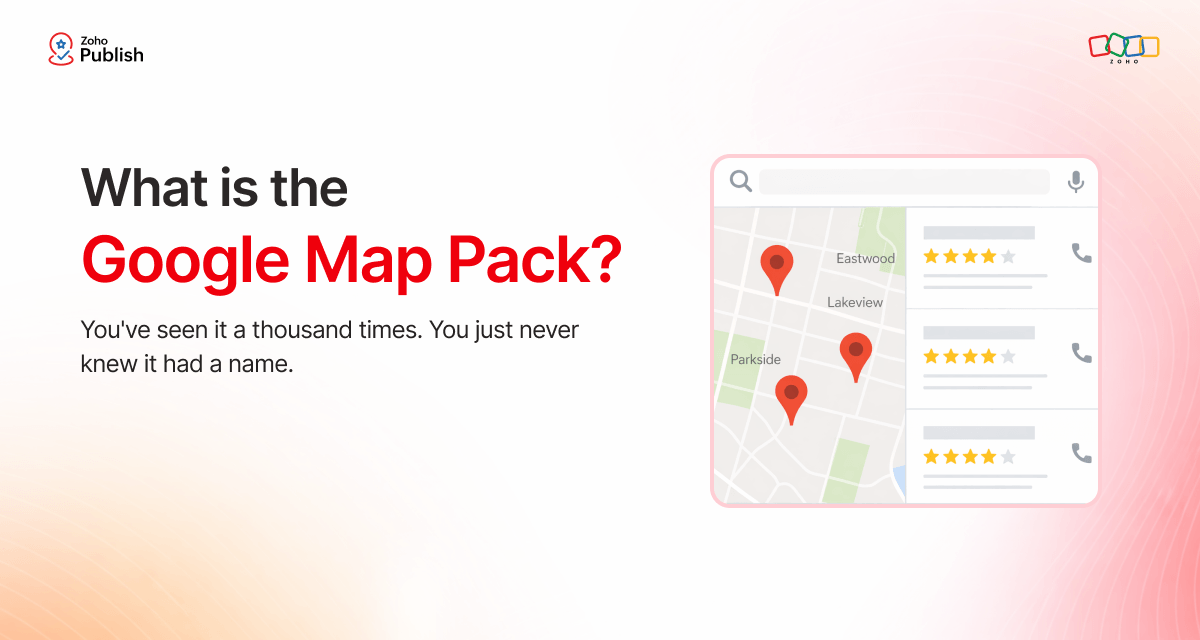
Every time you search for a business on Google, something interesting happens before you even see a single website link. Google makes a decision for you. It picks three businesses it thinks are the best fit and puts them front and center, right at the top of the page.
You type "pizza near me". Before anything else loads, there it is: a small map with red pins, and three business listings stacked beside it with names, star ratings, addresses, and business hours. Clean. Tidy. Impossible to miss.
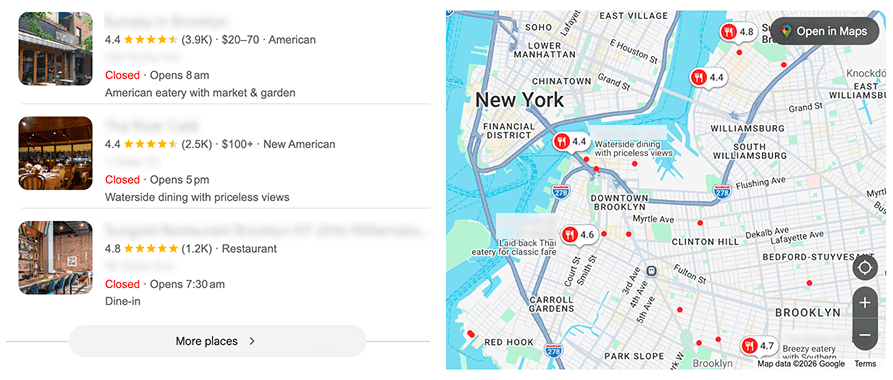
That little section is called the Google Map Pack, also known as the Local Pack, the 3-Pack, or Local 3-Pack. Different names all representing the same thing.
Google shows this pack when it detects a local intent in your search. Meaning, when you're looking for something nearby like a restaurant, a dentist, a plumber, a gym, Google understands that and presents three local businesses right at the top, before any regular website links.
Three spots. Millions of searches. You want in.
Want to show up here?
Your Google Business Profile is the single most important thing that gets you into the Map Pack. We put together a complete guide on how to set it up and optimize it the right way.
Why does it matter so much?
Here's the uncomfortable truth: most people never scroll past that Map Pack. They see three options, they pick one, and they move on. The rest of the businesses on the page remain invisible for all practical purposes.
A business sitting in that first position in the Map Pack gets more than double the traffic of a business just outside it. That's not a marginal edge; that's the difference between a packed dining room and empty tables on a Friday night.
"Being in the Map Pack is like having a billboard at the busiest intersection in town. Being outside of it is like being around the corner."
— Local SEO 101
What shows up in there, exactly?
Each listing in the Map Pack shows the business name, star rating, number of reviews, address, and whether it's open at that moment. Sometimes, you'll also see a phone number or a link to their website. All of that information comes from the business's Google Business Profile (formerly Google My Business).
No Google Business Profile? You won't appear in the Map Pack. It's as simple as that. Your profile is your ticket to the game.
💡 Fun fact: The Map Pack used to show seven results. Back in 2015, Google shrank it to just three. Now with AI reshaping search results, some are already seeing this shrink to two. Fewer spots, higher stakes, more competition. The fundamentals still matter: reviews, your profile, accurate listings. But this space is evolving fast, and staying on top of it is no longer optional.
How does Google decide who gets in?
Google looks at three main things when deciding which businesses earn those three coveted spots.
📍 Proximity - How close is the business to the person searching? The nearer you are, the better your chances.
⭐ Prominence - How well-known and trusted is the business online? Reviews, ratings, and your overall web presence all play into this.
🏷️ Relevance - Does your business actually match what the person searched for? Category, keywords, and your profile completeness matter here.
Reviews are a massive piece of this puzzle. Industry data suggests review signals can account for over 15% of how you rank in the local pack. That means what your customers say about you on Google directly affects whether new customers ever find you. Your reviews aren't just social proof. They're ranking fuel.
So what do you do about it?
Start with the basics. Claim and create your Google Business Profile. Get your business information right across the web. Consistently collect reviews from happy customers. Respond to those reviews, good and bad.
None of this is rocket science, but most businesses either ignore it or half-do it. That's exactly why showing up in the Map Pack is still very much winnable, even in competitive markets.
Managing your Google presence, your reviews, and your listings across the web is exactly what Zoho Publish is built for. One place to stay on top of all of it, without the chaos.