2026 IoT trends in India
- Last Updated : June 17, 2026
- 1.1K Views
- 7 Min Read

The world is changing faster than ever. Since the .com bubble in 2000, everything has become more connected. The internet is now part of our daily lives, and we all want to make things smarter and more efficient.
IoT has been a popular topic in India for quite some time. While many manufacturers still use Industry 3.0 standards, growing demand is encouraging a shift toward Industry 4.0.
Adding fuel to this shift is the Indian government’s vision of a $5 trillion economy. Initiatives like Digital India, Make in India, and the Smart Cities Mission are accelerating digital adoption and creating fertile ground for IoT and AI-led transformation across industries.
As we move closer to 2026, IoT in India is no longer about experimentation. It is about real adoption, real outcomes, and real scale.
1. IoT Trends Indian Businesses Should Watch in 2026
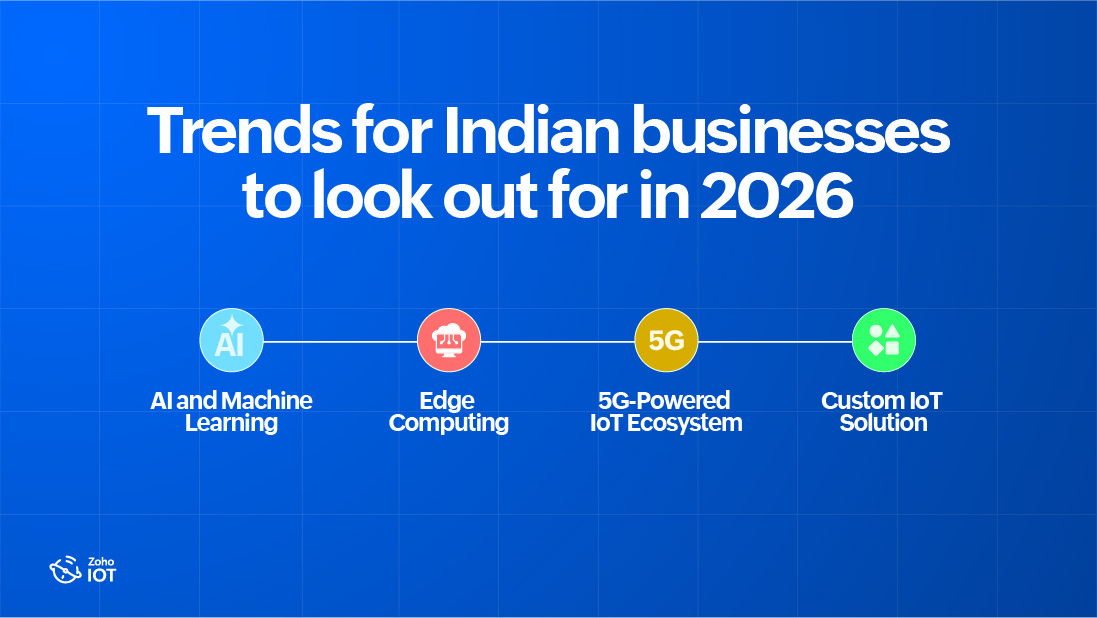
Edge Computing: The term "data is everywhere" is very true for any industry. Sensors, machines, meters, and devices generate massive volumes of information every second. The real challenge, however, is not collecting data but using it at the right time. This is where edge computing steps in. By processing data closer to the source, businesses can make faster decisions, reduce latency, and avoid unnecessary data transfers to the cloud. For industries that rely on real-time actions such as manufacturing, energy, and fleet operations edge computing is becoming a necessity rather than a choice.
5G-Powered IoT Ecosystem: One of the biggest roadblocks to IoT adoption in India has always been connectivity especially in remote or industrial locations. The rollout of 5G networks is changing that narrative. With ultra-low latency and higher data speeds, 5G enables real-time monitoring, faster automation, and more reliable device communication. Sectors such as industrial automation, healthcare, energy, and autonomous tracking stand to benefit significantly as 5G-powered IoT ecosystems mature across the country.
AI and Machine Learning: In 2026, an IoT system without AI will feel outdated. AI and machine learning are transforming IoT platforms from passive monitoring tools into intelligent systems that can predict failures, detect anomalies, and recommend actions. From predictive maintenance in factories to energy optimization in buildings, AI-driven IoT solutions are helping businesses move from reactive decision-making to proactive operations.
Custom IoT solution: Every business operates differently. Off-the-shelf IoT solutions often fail to address specific operational needs, workflows, or industry nuances. However, building custom IoT solutions from scratch is time-consuming and requires specialized development skills. This is driving demand for flexible IoT platforms that allow businesses to customize dashboards, workflows, and automation logic without heavy coding. Low-code and no-code capabilities are becoming essential for faster IoT adoption.
2. IoT Is Rapidly Penetrating the Indian Market
India has taken a giant leap and is continuously evolving. The revenue in the Indian IoT market is set to reach US$26.93bn by 2025, with an annual growth rate of 16.63% from 2025 to 2029, and by 2026, India is expected to have around 500 million IoT connections. Here are a few industries that are showing promising potential.
Manufacturing
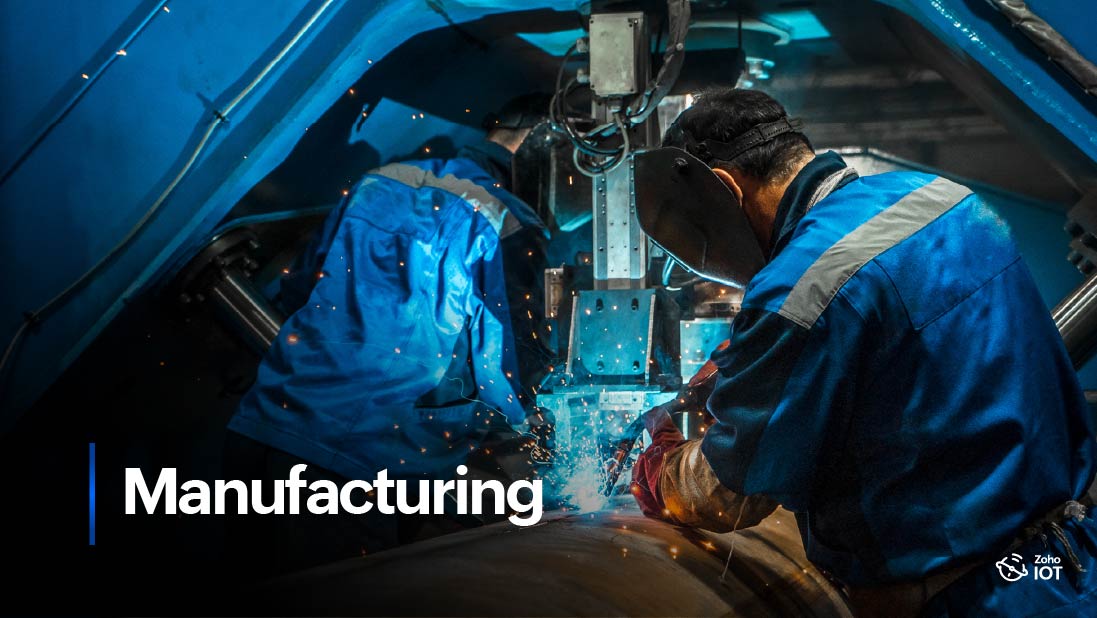
Industrial IoT emerges as the dominant player in the Indian market, with a projected market volume of US$7.12bn in 2026. The major boost for this growth has been the pull towards Industry 4.0. Manufacturers are enabling automation in their workplace through IoT, and they are also able to improve their operational efficiency far better than before through real-time monitoring and taking immediate data-driven actions.
As per the latest estimate, by the end of 2026, over 50% of industrial enterprises will adopt a hybrid approach to integrate edge and cloud resources for maximum efficiency.
Predictive Maintenance: IoT sensors and AI algorithms are enabling real-time monitoring and predictive analytics. According to reports, it can cut downtime by up to 50% and maintenance costs by 25%, as reported by Deloitte.
Industry 4.0 Practices: Smart factories with interconnected machinery, robotics, and data-driven insights are enhancing operational efficiency.
Energy
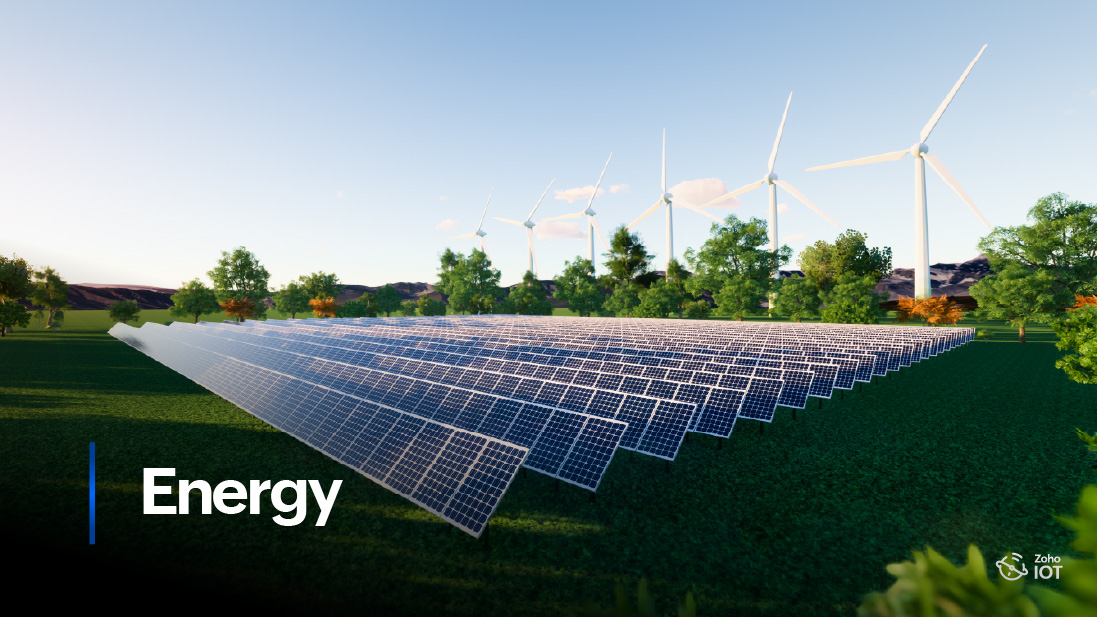
Every country in the world is working towards a greener future, and so is India. We have set a goal of reducing carbon emissions by 50% by 2030 and achieving net zero by 2070. In striving for cleaner energy and energy management, IoT plays a vital role.
The implementation of the Real-time Energy Management (RTEM) through smart grids is vital for tracking energy consumption and usage across various industries such as oil and gas, energy and utilities, and building automation.
Advanced analytics and AI are helping organizations track consumption patterns and implement energy-saving measures.
Smart Cities
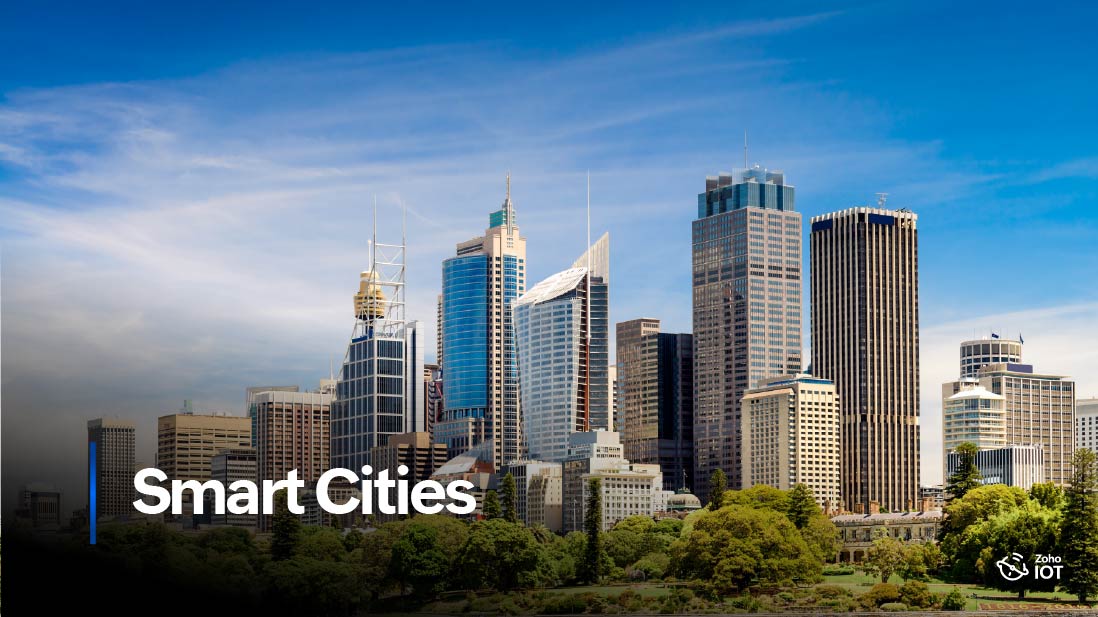
Smart city projects are no longer just plans on paper. A lot of private and government projects are happening actively in this sector; in fact, in the interim budget 2024-25, $12 billion was allocated towards smart cities, with the emphasis on investing in IoT technologies. Various projects like Smart street lighting, traffic, and water management are in different stages of deployment in the various Indian cities.
For example, New Delhi’s plan to install 90,000 smart street lights aims to reduce energy consumption and carbon emissions. Under the Smart Cities Mission, India plans to invest over $30 billion across 100 cities, making IoT a central pillar of urban development.
3. Enterprise Scalability in IoT
For enterprises, adopting IoT is just the first step. The real challenge lies in scaling.
Enterprises' main goal is to scale in business using IoT, and companies adopting recent advancements in 5G technology, edge computing, AI, and Security can easily scale in 2026. Scalability involves not only the ability to handle increasing workloads but also the flexibility to adapt to evolving business needs.
Companies should prioritize building scalable IoT architectures that can evolve with business needs. Cloud-native solutions and microservice architectures can support this scalability. Partnering with service providers that offer managed IoT services can help enterprises focus on core business objectives while ensuring robust infrastructure management.
4. The Rise of No-Code/Low-Code Platforms
No-code and low-code platforms are becoming the new norm in the IT industry. In the IoT world, where customization is critical to cater to every business. This would increase both the time and cost of the IoT solutions; the best way to overcome this is through no-code/low-code IoT platforms.
As per estimates Low-code solutions can reduce enterprise application development time by up to 60%, and about 84% of businesses are adopting low-code or no-code tools to fill the technical gap left by the shortage of developers.
5. Artificial Intelligence in IoT
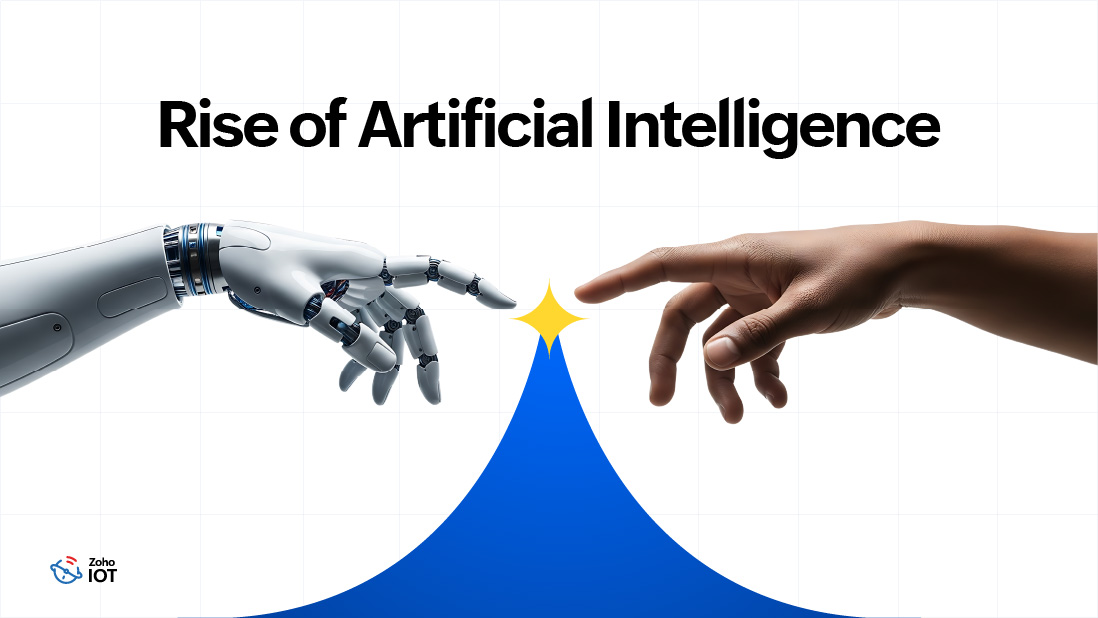
AI has left its mark in every industry, and it's a cutting-edge technology that is revolutionizing the IoT. Before AI developers had to handle many complex algorithms, which helped companies to study and understand the huge amount of machine data, and later turn this data into a visual format to take action. Global AIoT Market is set to reach $81.04 billion by 2030 with a CAGR of 26.1%
But now with AI, real-time insights have become a new normal; it can easily understand the data and derive plausible solutions to increase efficiency, and in some instances, it can automatically apply the recommendations based on data to prevent machine failure and optimize operations.
Government Initiatives like Digital India, Make in India, and Smart Cities Mission are fostering an ecosystem conducive to IoT and AI adoption. Increasing adoption of Industry 4.0 enables integrating IoT, AI, and data analytics, which ultimately helps in optimizing operations, enhancing productivity, and workplace efficiency.
We have already seen the power of edge computing; merging it with AI would bring out a huge potential, it would analyze the data at source or close to source and aid in real-time decision thus reducing latency.
6. Business Application Integrations
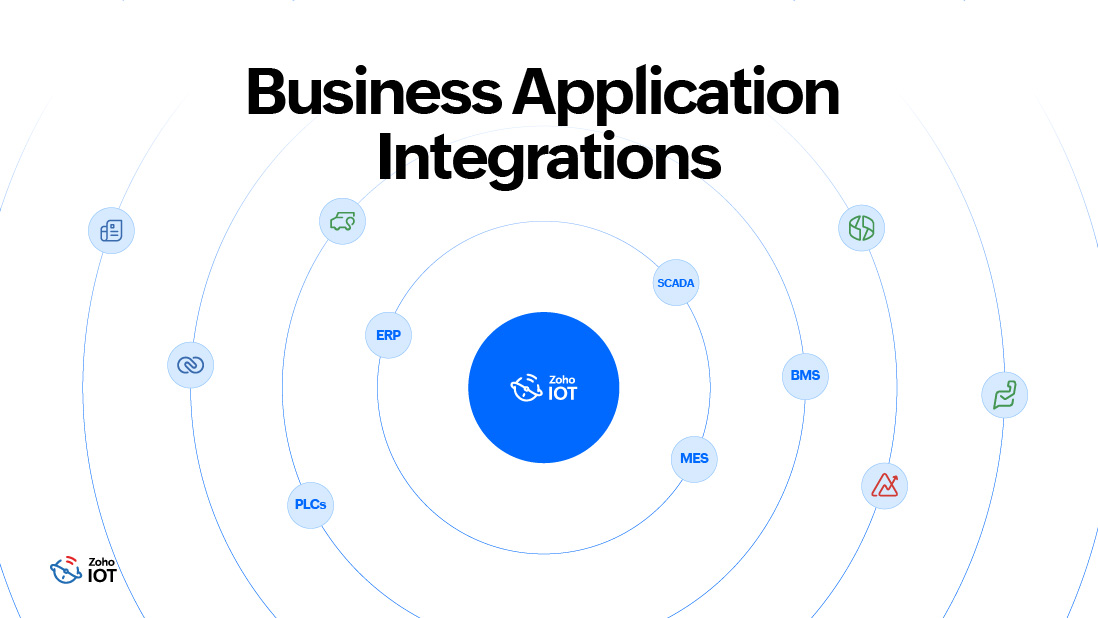
Today, most of the businesses are digitally well-equipped or are turning digital at a quick pace; these companies are accumulating a lot of data in solutions like ERP, CRM, and supply chain management. Integrating all this data in one place should be the priority, and IoT tools should support interoperability. This helps companies create unified dashboards that provide a holistic view of operations and can enhance decision-making.
One of the key strengths of Zoho IoT is its ability to integrate with over 50 Zoho applications, along with third-party tools and APIs. This allows businesses to bring devices, data, and business processes together on a single platform.
Scope for IoT in India in 2026
India’s IoT landscape in 2026 will be dynamic and full of opportunities. By staying ahead of technological advancements and focusing on security, sustainability, and customer-centric solutions, organizations can thrive in this rapidly evolving market. IoT requires not just technological expertise but also a deep understanding of industry needs and societal trends. The time to act is now.
Bringing IoT Trends into Real-World Implementation
While discussions around IoT trends in 2026 often focus on emerging technologies, the real challenge for businesses lies in implementation. Turning concepts like AI-driven insights, edge computing, digital twins, and scalable device management into operational systems requires a flexible and interoperable IoT platform.
Platforms such as Zoho IoT are built to support this transition by enabling organizations to connect diverse devices, manage data at scale, and build domain-specific IoT solutions across manufacturing, energy, smart buildings, and fleet operations. By combining device connectivity, real-time visualization, automation, and analytics within a unified platform, Zoho IoT demonstrates how modern IoT trends can move beyond experimentation and deliver measurable business outcomes.
As IoT continues to evolve in 2026 and beyond, success will depend not just on adopting new technologies but on choosing platforms that can adapt, integrate, and scale alongside business needs.