- HOME
- Events and Industry News
- World No Tobacco Day special with Dr. Naveen Padmanabhan
World No Tobacco Day special with Dr. Naveen Padmanabhan
- Last Updated : May 29, 2026
- 83 Views
- 6 Min Read

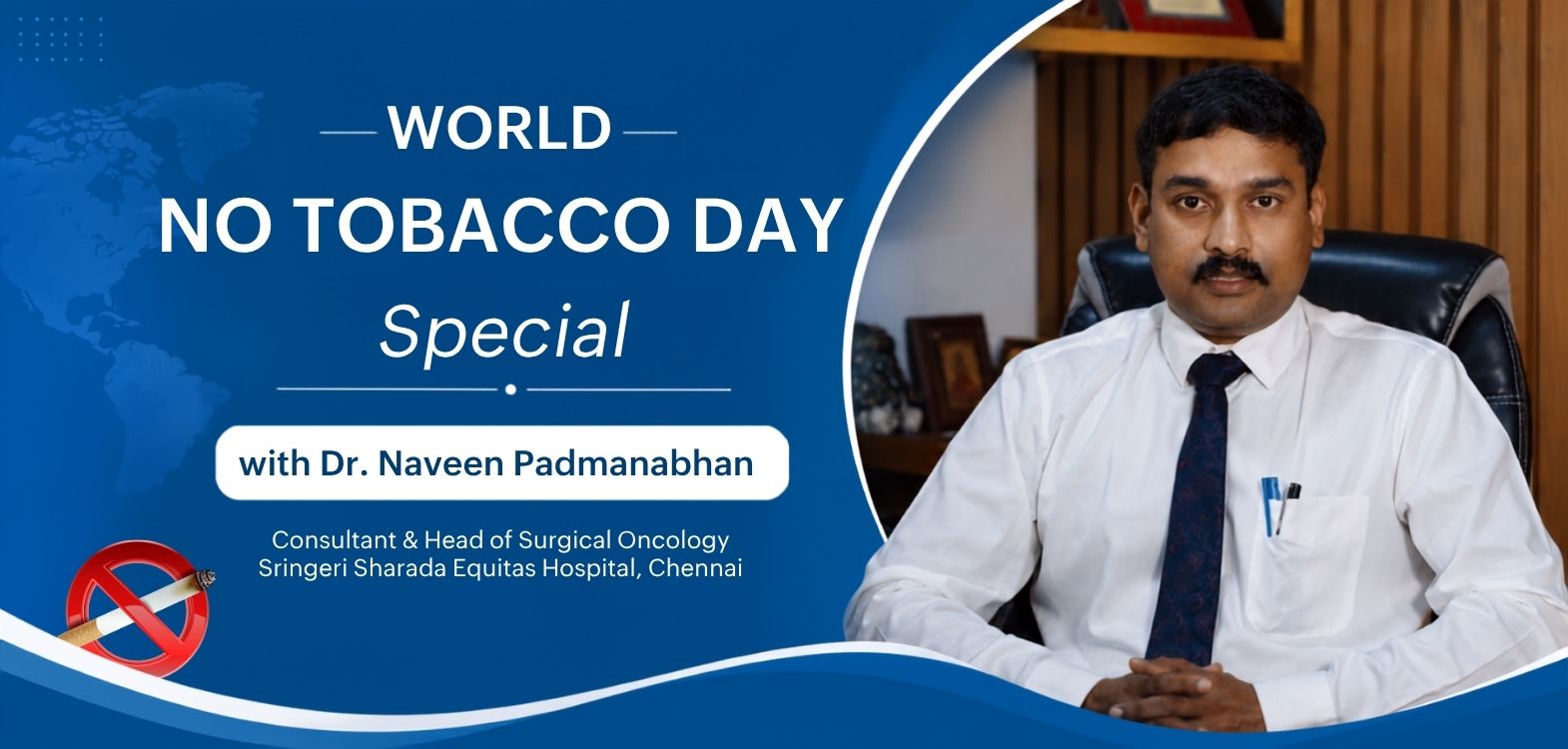
On the occasion of World No Tobacco Day 2026, we spoke with Dr. Naveen Padmanabhan, Consultant and Head of Surgical Oncology at Sringeri Sharada Equitas Hospital, Chennai, to understand the real impact of tobacco addiction, the importance of early cancer detection, and the growing need for public awareness.
This year’s World No Tobacco Day theme, “Unmask the Appeal,” highlights a growing global concern: Nearly 15 million adolescents aged 13 to 15 worldwide already use e-cigarettes. The campaign focuses on exposing how tobacco and vaping industries use flavored products, attractive packaging, and social media influence to make nicotine use appear harmless and appealing to younger generations.
Dr. Naveen has trained and worked at premier institutions including All India Institute of Medical Sciences (AIIMS), New Delhi, and has gained international exposure through clinical experience in Japan and the United States. With over a decade of experience in oncology, he brings extensive expertise in the management of complex cancers.
His areas of specialization include head and neck cancers, thyroid cancers, breast cancer, and gynecological cancers. Deeply committed to patient-centered care, Dr. Naveen strongly advocates for early detection, preventive healthcare, and awareness-driven cancer care.
In this conversation, he shares powerful real-life experiences, explains the science behind tobacco addiction, and discusses why awareness can often make the difference between life and death.
What inspired you to become a doctor and eventually specialize in cancer surgery?
I am the first doctor in my family, so the inspiration mainly came from my parents. They motivated me to pursue medicine, and by the time I completed my 12th standard, I had naturally developed an interest in the field. After successfully joining medicine, surgery became my preferred specialization. Initially, like many students, I was fascinated by cardiac surgery. But during my medical training, as I rotated through different departments, I found oncology to be far more inspiring. I developed a natural attraction toward cancer care and surgical oncology, and that is what ultimately shaped my journey into becoming a cancer surgeon.
Have there been any patient experiences that reinforced the importance of early cancer detection and prevention?
Yes, I remember two patients in particular: an auto driver and a tailor, both with a history of tobacco use. Because of awareness campaigns and regular check-ups, they noticed small ulcers early and sought medical attention immediately. Their cancers were detected at a very early stage, requiring only minor surgery without extensive treatments like radiation or reconstruction. Today, both are healthy and leading a good quality of life. These experiences clearly show how awareness, quitting tobacco, and early screening can make cancer highly treatable.
What do you think is the biggest gap in our healthcare system when it comes to early cancer detection?
The biggest gap is lack of awareness. Many people do not recognize the early symptoms of cancer and only associate cancer with advanced stages. Access to healthcare is another challenge, especially for people in remote areas or elderly individuals without support. Social stigma and denial also delay diagnosis, as many patients ignore symptoms or hesitate to seek help. In addition, regular screening programs are still not widely accessible or utilized. The good news is that with awareness, timely screening, and following medical advice, many cancers can be detected early when treatment is simpler and outcomes are much better.
Why is it so difficult for people to quit smoking, even after knowing its harmful effects?
Most people who use tobacco already know it is harmful, but nicotine is highly addictive. Tobacco addiction usually starts with experimentation due to peer pressure or social situations, then gradually becomes a daily habit and eventually a dependency. Nicotine creates a dopamine surge in the brain, which temporarily improves mood and alertness, making people crave it repeatedly.
Over time, this addiction becomes behavioral, psychological, and physical. People begin associating smoking with routines like tea breaks, stress relief, work pressure, or social gatherings. That is why quitting tobacco is not just about willpower. It often requires awareness, support, counseling, and sometimes medical help to overcome the addiction completely.
Many people believe smoking just one or two cigarettes a day is harmless. Is there any “safe” level of tobacco use?
No amount of tobacco use is safe. Even one or two cigarettes a day can increase the risk of heart disease, lung problems, and cancer.
Many people believe only heavy smokers develop cancer, but that is not true. We have seen patients develop tobacco-related cancers even after a short duration of smoking.
Another common misconception is, “I can quit anytime.” Tobacco addiction is not just a habit—it involves behavioral, psychological, and physical dependence, making quitting difficult without support.
The best step is to avoid starting tobacco use altogether. For those already using it, medical guidance and support can greatly improve the chances of quitting successfully.
Is there any scientific or effective way to quit smoking and tobacco use?
Quitting tobacco can be difficult, but it is possible with the right support. The first step is recognizing that tobacco is harmful and making a personal commitment to quit.
Occasional smokers may find it easier to stop, but regular users often need professional help because tobacco addiction involves behavioral, psychological, and physical dependence. Counseling, support groups, and treatments like nicotine patches can help reduce cravings and improve the chances of quitting successfully.
There are tobacco cessation clinics, counselors, psychologists, and psychiatrists who can guide individuals through the process. They help identify triggers, manage cravings, and create strategies to avoid relapse.
It is also important to understand that relapses can happen. Tobacco dependence is a medical condition, and many people may need multiple attempts before quitting permanently. Seeking help again after a relapse is part of the recovery process, not a failure.
How serious is the tobacco problem in India?
Tobacco use remains a major health concern in India, with nearly 28% of the population using tobacco in some form. India is also one of the largest consumers of tobacco globally.
The biggest concern is that tobacco use is common among people aged 15 to 40, affecting them during their most productive years. It increases the risk of heart disease, lung disease, cancer, and premature death. Passive smoking or second-hand smoke also harms non-smokers, including family members and children.
Creating awareness and encouraging people to seek help for quitting is extremely important.
What is the theme of this year’s World No Tobacco Day?
This year’s World No Tobacco Day theme is “Unmasking the Appeal.” The focus is on exposing how tobacco companies target young people through attractive marketing, flavored products, e-cigarettes, and social media influence.
Many tobacco products are promoted as “cool” or “safer,” especially vaping and e-cigarettes, but they still carry serious health risks and can lead to addiction. The campaign aims to help people, especially adolescents and young adults, recognize these tactics and understand the real dangers of tobacco use.
What message would you like to give to the younger generation?
If you have never used tobacco, the best decision is to never start—not even out of curiosity or experimentation. Any form of tobacco use, including cigarettes, chewing tobacco, or e-cigarettes, can seriously harm your health and lead to addiction.
If you are already using tobacco, understand that quitting is possible and extremely important for your long-term health. There are many support systems available today, including counseling, tobacco cessation clinics, and medical guidance.
And if you have tried quitting but relapsed, do not feel ashamed. Relapse is common in tobacco addiction. What matters is making the decision to try again and seek the right support to quit successfully.
Need help quitting tobacco?
Quitting tobacco is difficult, but support is available.
The Government of India offers the National Tobacco Quitline Services (NTQLS), where trained counselors provide guidance, support, and tobacco cessation advice for individuals trying to quit smoking or tobacco use.
As Dr. Naveen emphasized during the discussion, tobacco addiction isn’t simply a habit. It’s a medical condition that often requires professional help, counseling, and continuous support. Seeking help is a sign of strength, not weakness.
Conclusion
World No Tobacco Day isn’t just about awareness campaigns—it’s about starting conversations that can save lives.
As Dr. Naveen emphasized throughout the discussion, tobacco addiction isn’t simply a habit; it’s a medical condition that often requires awareness, counseling, medical support, and continuous effort to overcome.
Sometimes, recognizing one small warning sign, going for an early screening, or making the decision to quit tobacco can completely change a person’s future.
Awareness remains the first and most powerful step toward prevention.
To learn more, please watch our podcast, The Healthcare Pod.