- HOME
- Events and Industry News
- World Health Day 2026: What does being really healthy mean today?
World Health Day 2026: What does being really healthy mean today?
- Last Updated : April 7, 2026
- 201 Views
- 4 Min Read

In an age of burnout, increasing incidence of lifestyle diseases, and digital overload, health is no longer just about treating illness—it’s about building balance, resilience, and sustainable well-being.
It’s not just a date on the calendar. It’s a reminder—a date that compels us to pause and reflect.
Beyond professional roles and industry conversations, it brings us back to something deeply personal as we balance work, responsibilities, and life. It’s as simple as asking: What does health truly mean?
Observed every year on April 7, World Health Day was established by the World Health Organization as a global reminder that health is both a personal and collective priority.
To understand this better, we spoke with a neurosurgeon who has spent decades treating the long-term consequences of lifestyle-related illnesses.
To gain deeper insight, we asked a renowned and experienced neurosurgeon
This World Health Day, we asked a simple yet meaningful question to a medical expert with more than 25 years of experience on the frontlines of neurological care:
“What does being healthy mean to you?”
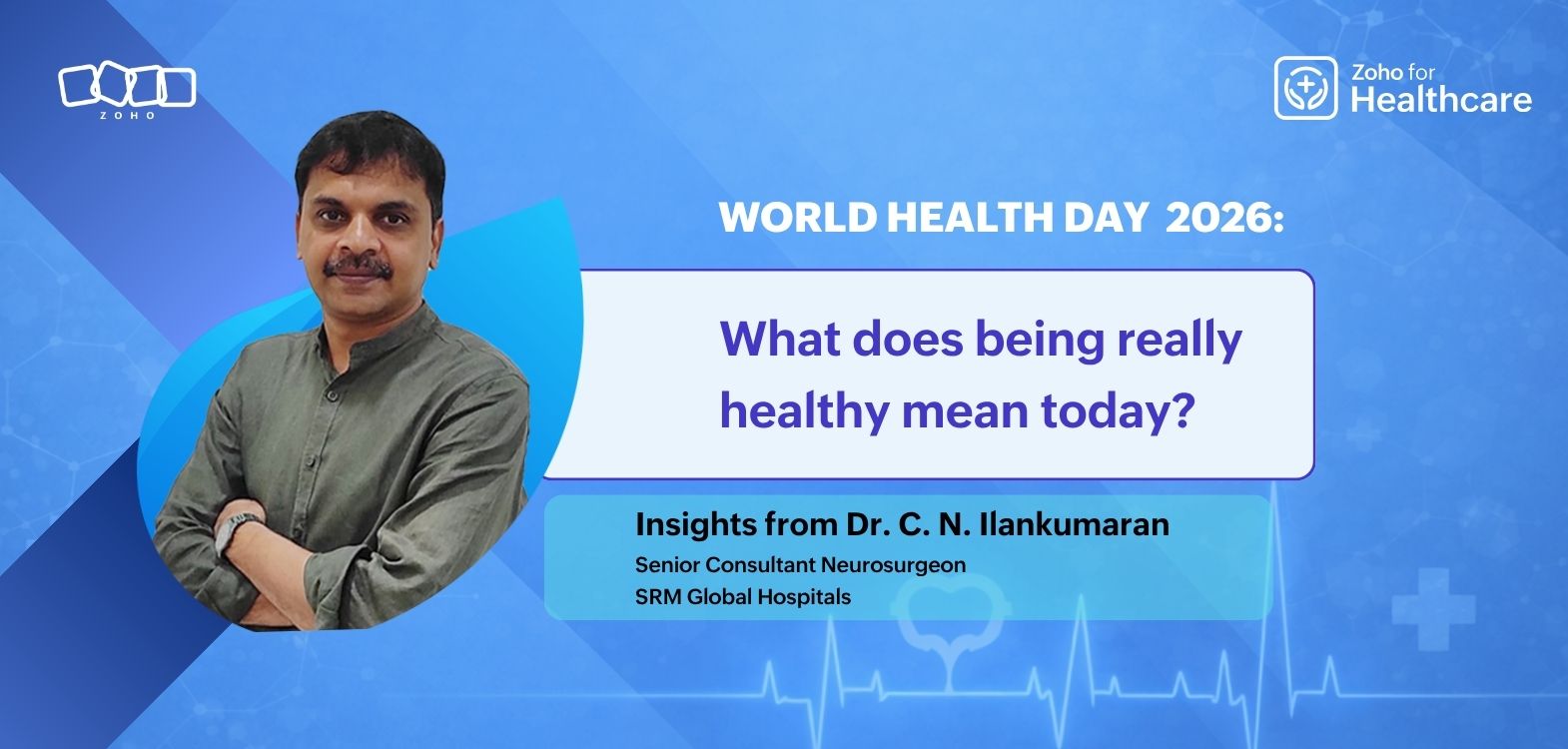
Dr. C. N. Ilankumaran is a Senior Consultant Neurosurgeon at SRM Global Hospitals, Thailavaram, with more than 25 years of experience in neurosurgery.
He specializes in the diagnosis and treatment of complex neurological conditions, including brain tumors, spinal disorders, neurotrauma, and stroke management. Dr. Ilankumaran is known for his expertise in advanced and minimally invasive neurosurgical techniques and has successfully treated numerous stroke patients, supporting their rehabilitation and recovery.
He holds an MBBS and MS from Rajah Muthiah Medical College and an MCh in Neurosurgery from Madras Medical College, Chennai, and is also actively involved in research and academic contributions in the field of neurosurgery.
In his own words:
Dr. Ilankumaran opened with a powerful observation—one that reframes how we think about health in 2026. He described a fundamental shift from an era dominated by communicable diseases caused by infections, to today’s era of non-communicable diseases—hypertension, diabetes, obesity, and cancer.
"Think of life as a bullock cart with two wheels. One wheel is your physical fitness. The other is your mental fitness. Both are equally important for a happy journey."
From a neurosurgeon’s perspective, the consequences of ignoring physical health are stark. Dr. Ilankumaran shared that he regularly encounters patients—some in their twenties—brought in unconscious, with alarming brain hemorrhages caused simply by unchecked blood pressure. Conditions that were once seen in people in their forties are now appearing decades earlier, accelerated by sedentary lifestyles and highly processed diets rich in carbohydrates and unhealthy fats.
His prescription for physical health comes down to three clear mantras:
Eat with intention: Choose a diet low in refined carbohydrates, rich in healthy proteins and vitamins. What you eat is, quite literally, what your body becomes.
Move every day: Aim for at least 10,000 steps daily. Cardio activities, such as walking on natural ground, swimming, or cycling, protect your joints.
Protect your sleep: Quality sleep of six hours or more is non-negotiable. Sleep deprivation is one of the most underestimated health risks of our time.
On the subject of mental health, Dr. Ilankumaran was equally direct. He pointed to the relentless stimulation of smartphones and social media as key drivers of sleep deprivation, anxiety, and stress—conditions fueled by a constant flood of information that the brain was never designed to process around the clock.
"Your mobile phone feeds your brain continuously—good, bad, and ugly. You must take back control. Step away from screens after 10 PM. Read. Meditate. Move. These small, daily choices protect your mind as much as your body."
He closed with a message directed especially at India’s younger generation—a call to act now, before lifestyle diseases take hold:
"I pray that the youth of India build the best physical and mental health—not just for their own happiness, but to make the nation proud."
The responsibility of healthcare technology leaders
Healthcare systems worldwide are under unprecedented pressure. Rising demand, administrative complexity, clinician burnout, and fragmented workflows aren’t just operational challenges—they’re deeply human ones.
For those of us building tools and systems within this space, the responsibility is clear: Our work must reduce the burden on caregivers, not add to it.
Technology should simplify healthcare—not complicate it.
Healthy beginnings, in the context of digital healthcare, means designing systems that respect the time, attention, and energy of the people who use them. It means building tools that make the important things easier—documentation, coordination, access to information—so that clinicians like Dr. Ilankumaran can spend more time being present with patients.
This World Health Day, that commitment feels more important than ever.
Conclusion
World Health Day reminds us that health isn’t defined only in hospitals or prescriptions. It’s built quietly through the habits we practice every day, the balance we maintain, and the systems that support us.
As Dr. Ilankumaran emphasizes through his three simple mantras—eat with intention, move every day, and protect your sleep—simple lifestyle habits quietly build the foundation of good health. When we take care of our mind, stay physically active, eat nourishing food, and live with discipline, we build a stronger foundation for life.
In many ways, health is balance—the strength to move forward with purpose, and the steadiness to navigate life’s challenges with resilience.
Ultimately, healthy lives are built over time through our habits, our communities, and the systems that make care more human. These are the foundations that shape hopeful futures.