- HOME
- Legal Insights
- Understanding the force majeure clause
Understanding the force majeure clause
- Last Updated : March 10, 2026
- 453 Views
- 3 Min Read
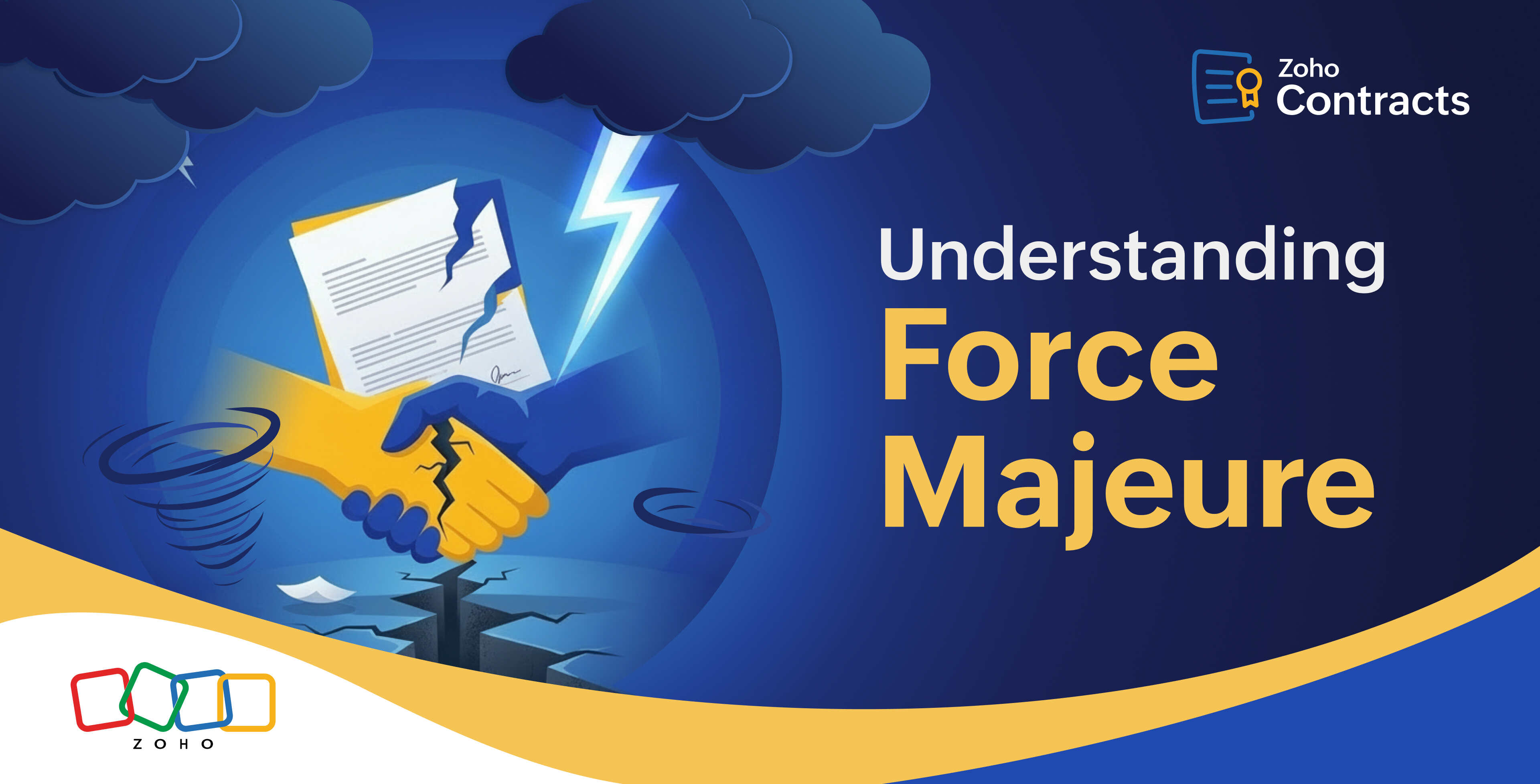
Contracts rarely remain static, especially during global volatility, and reviewing clauses such as force majeure can help protect your interests and manage unexpected risks.
Force majeure meaning
Force majeure is French for ‘‘superior force.’’ In contracting, a force majeure clause excuses a party from obligations when an extraordinary, unforeseen event outside its control interrupts performance. It offers protection by permitting suspension or termination when fulfilling obligations is impossible or illegal.
What counts as force majeure?
Force majeure literally means 'superior force'. ‘‘Acts of God’’, such as earthquakes or floods, or man-made disruptions like war, strikes, or government-imposed lockdowns, may qualify as force majeure.
What is the anatomy of a force majeure clause?
When drafted well, a force majeure clause serves as a risk-allocation tool. It typically outlines three critical elements:
Trigger events: They specifically list the events that qualify as force majeure.
Performance standard: Does the event make performance impossible, illegal, or merely impractical?
The consequence: In such an event, does the contract or obligation pause temporarily, or does the clause allow for termination of the contract?
The importance of a force majeure clause
A force majeure clause offers several benefits to the parties to the contract. The clause:
Protects businesses from unforeseen events that could cause financial loss.
Prevents disputes by outlining the procedures to be followed during force majeure.
Provides clarity on roles and responsibilities during a force majeure event.
Ensures that no party is unfairly burdened when a force majeure event arises.
What to do when a force majeure event occurs
If force majeure is invoked, review your agreements and consider these steps:
Audit for specificity: Examine the events your force majeure clause explicitly references. Specific events such as government actions, war, or hostilities are generally easier to invoke than broadly worded clauses.
Mitigate the impact: Most jurisdictions require a party to show they took significant steps to mitigate the impact of an event before claiming force majeure.
Follow notice requirements: Review and adhere to the notification procedures outlined in your contract. Delaying notification may result in losing the right to seek relief.
How CLM technology provides clarity during a force majeure event
Accessing contracts is challenging during crises. Manually searching for every force majeure provision is slow and error-prone.
A contract lifecycle management (CLM) tool becomes a valuable asset during this time. It helps legal and procurement teams to:
Instantly surface contracts containing specific clauses using reports and AI-powered filters.
Identify at-risk obligations in agreements such as vendor, supplier, or service agreements.
Maintain a clear audit trail of notices sent and received to stay compliant during turbulent times.
Filter contracts by counterparty location if the force majeure is localized.
Identify upcoming deadlines and delivery dates linked to a contract where force majeure has been invoked.
The force majeure clause is your safety net. Understanding its meaning in your agreements enables you to mitigate risks and minimize liabilities during unexpected events. Modern CLM tools with their auditability and improved governance ensure that you stay prepared and resilient through challenges.
FAQs
1. Who decides if an event is a force majeure?
Usually, the party seeking relief declares an event to be a force majeure event. However, if the counterparty disputes it, an arbitrator or a judge decides based on the governing law and the contract wording.
2. Is “pandemic” or “war” always considered force majeure?
Not always. The event must be specifically listed in the force majeure clause or covered under “Acts of God” or “Government Action.” If a contract is signed after a war begins, that war doesn’t qualify as force majeure because it isn’t unforeseen.
3. What’s the first thing you should do if you receive a force majeure notice?
First, confirm the notice was sent following the contract’s notices provision. Then, request evidence and a detailed mitigation plan showing how the counterparty tried to prevent the delay.
4. Can a force majeure clause be used to terminate a contract permanently?
A force majeure clause typically suspends obligations temporarily. A contract may also include a provision allowing termination of contract if the event continues beyond a set period, called a “long-stop” provision.
5. Do you have to pay your invoices in the event of a force majeure?
It depends on your clause. Most clauses only excuse certain obligations, such as delivery or services. Generally, you must still pay for work already done or ongoing rent, unless your contract says otherwise.
 Akshaya Ganesh
A journalist turned marketer who loves to travel.