

- HOME
- Ecommerce insights
- Social media is the new discovery engine
Social media is the new discovery engine
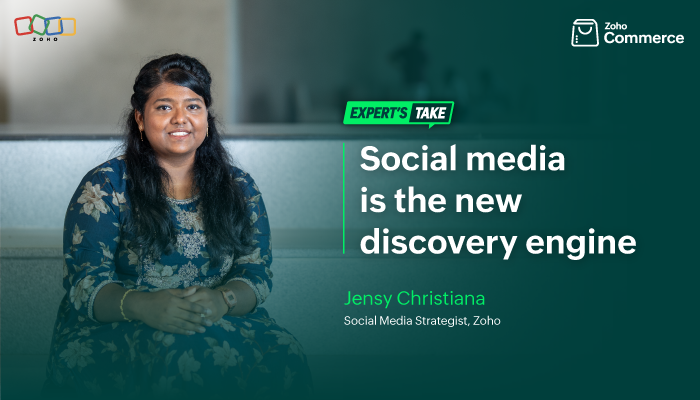
There's a moment every ecommerce founder realizes that customers aren't starting on their website anymore. They're starting on Instagram. On Facebook. On TikTok. Social media is no longer a branding side channel. It's where discovery happens, where trust is built, and where sales are made.
In this episode of Expert's Take, we sat with Jensy Christiana, Social Media Strategist who scales ecommerce and inventory management software, to understand how the most successful companies are leveraging social media differently. What she shared reveals why brands treating social as optional are falling behind.
Social media is the new storefront
Today's customers discover products on social platforms, not search engines. Your Instagram profile is your storefront. Simply posting product images isn't enough anymore.
According to Jensy: "Brands that stand out show use cases and relatable scenarios. When customers see how your product fits into their life, discovery turns into intent to purchase. Your social media should be a lifestyle magazine combined with a product demo, not just a catalogue."
Content builds trust, not claims
Most customers evaluate for weeks before purchasing. They scroll. They read comments. They look for proof. High-performing brands structure content around four pillars: product education, social proof through user-generated content, behind-the-scenes transparency, and value-driven problem-solving content.
Jensy notes: "One authentic post from a real customer saying 'this product changed my life' builds more trust than a thousand perfectly targeted ads."
Community matters more than follower count
A brand with 50,000 followers and 0.5% engagement is less valuable than one with 5,000 followers and 10% engagement. Brands that respond to comments, repost customer content, and build relationships create advocates who amplify your reach organically.
According to Jensy: "Community drives repeat purchases, word-of-mouth, and organic reach. It's a long-term competitive advantage that insulates you from algorithm changes."
Measure everything, optimize always
Without data, social media remains a branding effort, not a revenue channel. Use Google Analytics and native platform insights to track traffic sources, measure content-to-conversion pathways, and identify high-performing formats. Strategic experimentation backed by data is what separates scaling brands from stagnating ones.
Timing matters
There's no universal best time to post. However, strong starting points for ecommerce brands typically include: weekdays 11 AM – 2 PM (lunch breaks), evenings 6 PM – 9 PM (post-work browsing), and Sundays for lifestyle products.
But here's what truly matters. "When a post gets early engagement within 30 minutes of publishing, the platform amplifies it to a wider audience. That early traction directly impacts reach and can translate into traffic spikes and same-day revenue. Test your own audience patterns and optimize from there," says Jensy.
Social media is no longer optional
For ecommerce, social media is now foundational. The brands that scale treat it not as an add-on, but as an integrated growth channel powered by content, community, and continuous optimization. The gap between brands that leverage social strategically and those that don't will only widen.
