
- HOME
- Ecommerce business
- How to start a low-cost, high-income business as a woman
How to start a low-cost, high-income business as a woman
Years ago, starting a business required physical locations, strong networks, and significant capital. Today, technology has changed the equation.
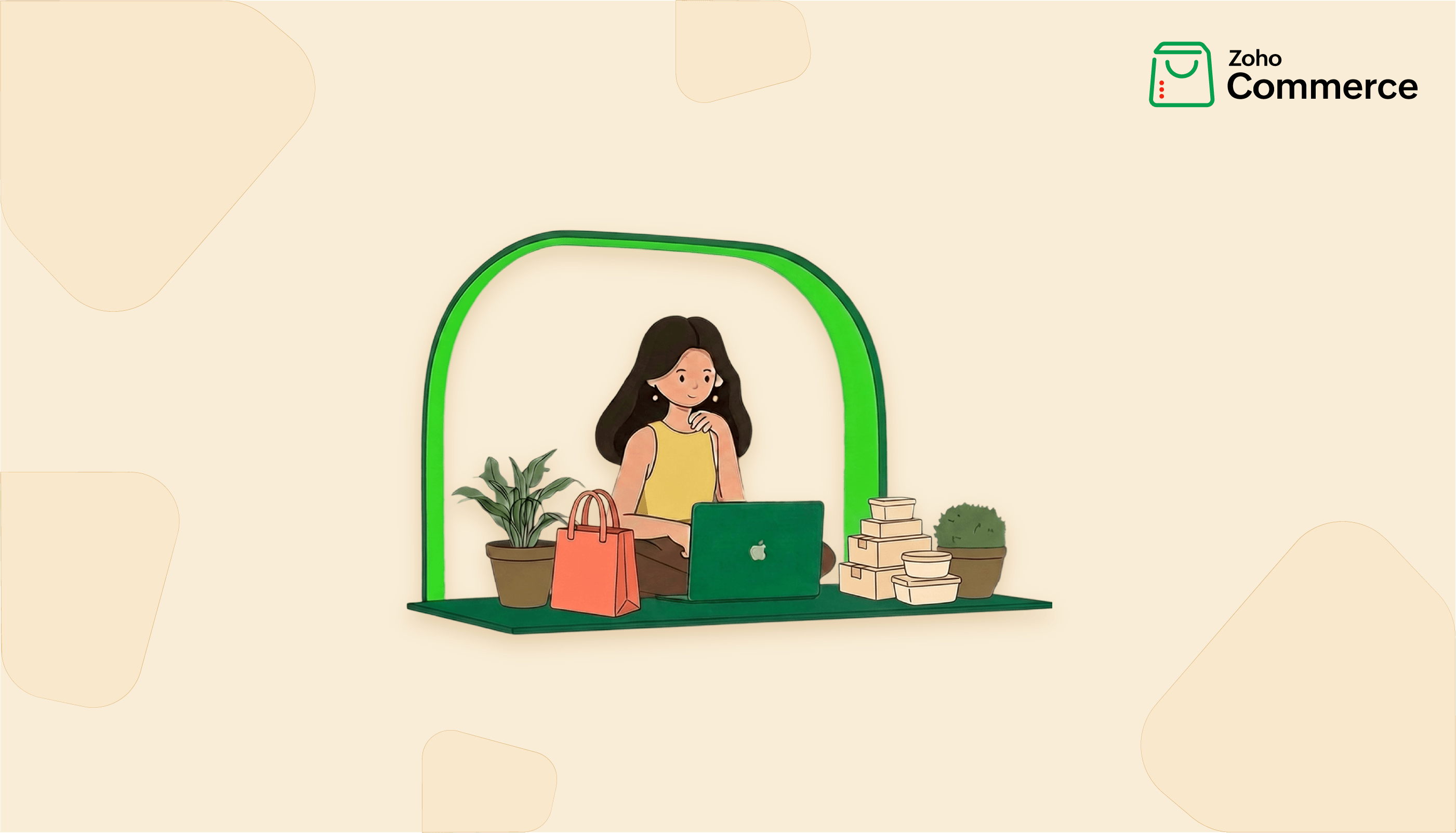
With just a strong internet connection and a powerful online store, women everywhere are building profitable businesses from their living rooms, on their own schedules, and with remarkably little startup capital.
Celebrating International Women's Day, this opening article, in a women-focused business launch series, explains how to start a small business, along with various funding options to support aspiring female founders.
How to start a small business as a woman in 2026
Here are the key steps for women to start a small business:
1. Find a profitable business idea that fits your life.
2. Build your idea with long-term freedom and scalability in mind.
3. Validate your idea through proper research.
4. Create a clear and actionable business plan.
5. Start lean to minimize financial risk.
6. Don't shy away from marketing your brand.
Let's get into each step in detail.
1. Find a profitable business idea that fits your life
As a woman, you are probably no stranger to responsibility, and are often balancing multiple roles as a daughter, wife, mother, or caregiver.
Building a business may require you to adjust those priorities and be clear about what you can realistically give up. That's why choosing the right idea that complements your lifestyle and connects with your passion matters.
To ensure your idea has real profit potential, make sure it checks these boxes:
□ Solves real problems people face.
□ Has a strong moat.
□ Targets a specific niche.
Tip: One of the simplest ways to start a business as a woman is by choosing a home-based business idea and launching it through an online store.
This reduces rent, commuting costs, operational stress, and other overhead expenses while giving you greater control over your time and work environment.
2. Build your idea with long-term freedom and scalability in mind
Major life transitions like marriage or motherhood are natural chapters in every woman's life. So, it is important that you build a business that can eventually generate income even when you are not constantly working.
But, how do you actually do that?
Start your business with active income (freelancing, services, selling products) and gradually explore ways to add passive revenue streams such as digital products, online courses, subscription models, or affiliate partnerships.
Here are some business ideas to generate passive/scalable income:
Small business idea | Active income | How it can be turned into passive/scalable income |
Freelance writing/Content creation | Writing for clients on a per-project or retainer basis | Create writing templates, launch a content writing course, sell SEO guides, build a paid newsletter |
Social media management | Managing accounts for clients monthly | Sell content calendars, create Instagram growth courses, offer pre-made Canva templates |
Home baking/Catering | Baking and selling custom orders | Launch online baking classes, sell recipe ebooks, create paid workshops, build a YouTube channel with monetization |
Handmade crafts | Selling handmade products per order | Create DIY kits, post online craft tutorials |
Tuition | Teaching students individually | Record online courses, create subscription-based learning groups, offer downloadable study materials |
3. Validate your idea through proper research
Once you have decided on a business idea, take a step back and validate it with proper research, before investing your time and money.
Harvard Business School outlines five key steps to properly validate a business idea.
Write down your goals and hypotheses: Clarify what your product/service offers, who it is for, and what assumptions you are making about value, pricing, and the business model.
Assess market size and share: Estimate how big the target market is and how much of it your product/service could realistically capture.
Research search volume of related terms: Check search demand for related terms to gauge consumer interest and need.
Conduct customer interviews: Talk with potential customers to test your assumptions and learn their needs and preferences.
Test your product or service: Use alpha and beta testing with real users to refine the offering and ensure it meets market needs.
In addition to these steps, study how your competitors operate online. A recent survey revealed that 59.5% of offline businesses have expanded to online channels due to their high growth potential and increasing market demand.
This means that even if your competitors run physical stores, most of them are likely to have an online presence as well.
Carefully evaluate their websites, pricing strategies, customer reviews, and digital marketing efforts. This will help you identify gaps and opportunities you can strategically leverage.
4. Create a clear and actionable business plan
If you are someone who is already juggling work and family, the last thing you need is additional confusion. Without a clear business plan, you may end up feeling overwhelmed and stressed instead of actually moving forward.
This is why creating a proper business plan is essential.
Sit down and map out the fundamentals. Define your core offer, set realistic financial goals, and outline your operational logistics. Also, think about how you want your business to evolve over time, not just in the next few months, but in the next few years.
Once your plan is in place, open a dedicated business bank account, set up your online store, invest in quality product photography, and build clear and consistent branding.
To make the process easier, here is a ready-made business plan template you can download and use.
5. Start lean to minimize financial risk
Lower expenses mean lower pressure. Instead of investing large amounts of money upfront, you can test your idea with minimal resources and grow gradually.
Begin with a minimum viable product (MVP). Recent data states that 62.7% of small business owners believe starting with an MVP drastically reduces risk.
Launch from home through a proper ecommerce website, instead of renting a space. This again keeps your risk low while giving you valuable market exposure.
Next, test your product before you scale. Run small marketing campaigns, take pre-orders, offer limited batches, collect feedback, and improve. Then, expand.
This phased approach will make your business more sustainable, protect your finances, and give you the confidence to grow at the right pace.
6. Don't shy away from marketing your brand
Finally, focus on marketing your brand.
Many women hesitate to market themselves because it feels uncomfortable or self-promotional. But marketing, at its core, is simply communicating and letting people know how you can help them. In fact, statistics reveal that effective marketing campaigns can yield an ROI of 400%.
There are many female entrepreneurs who have done exceptional marketing and made remarkable success through that.
Some examples are Sarah Blakely, the founder of Spanx, who turned her personal experience of solving an everyday problem into a powerful marketing pitch.
Or, Anita Roddick, who gained global recognition for her brand, The Body Shop, by marketing ethical beauty products long before sustainability became popular.
So, start your marketing campaigns by clearly communicating your value. Along with that, share behind-the-scenes moments, customer testimonials, small wins, lessons learned, and real stories. People connect with authenticity far more than with a picture-perfect image.
How to fund your own business
Unlike what most women think, funding your business does not only mean taking out a huge loan. There are multiple ways to finance your idea and the right choice depends on your goals and risk tolerance.
Here are some methods to fund your own business:
Self-funding (bootstrapping)
Starting small and reinvesting profits
Funding from family and friends
Bank loans or small business loans
Government schemes for female entrepreneurs
Angel investors
Venture capital funding
Crowdfunding
Business grants
Startup competitions and incubator programs
Supplier credit (buy now, pay later for inventory)
Pre-orders from customers
Closing thoughts
Every successful self-made female entrepreneur once started with uncertainty. The only difference between them and other women is they began anyway.
Today, women entrepreneurs are making great progress across several industries. For instance, data from the World Bank shows that women-owned firms in the United States are growing at more than twice the rate of other firms.
With technology making everything possible, there is no better time to start than now. So, focus on building your business in a way that empowers you financially, mentally, and personally.
If you are ready begin, take the first step by building a fully-functional online store with Zoho Commerce and run your entire business from a single platform.
 Divyashree Durai
Divyashree Durai is a content marketer at Zoho Commerce, a key product within Zoho's finance suite. As the lead voice behind the platform's Academy blogs, she draws on extensive industry research and close collaboration with the product team to deliver practical, research-informed insights that support meaningful growth for online businesses. Her work spans a wide range of ecommerce topics, including digital selling trends, global market shifts, business strategy, and the core fundamentals shaping modern commerce.