

- HOME
- Financial Management
- Fiscal Year-End Accounting Checklist for Canadian Small Businesses
Fiscal Year-End Accounting Checklist for Canadian Small Businesses
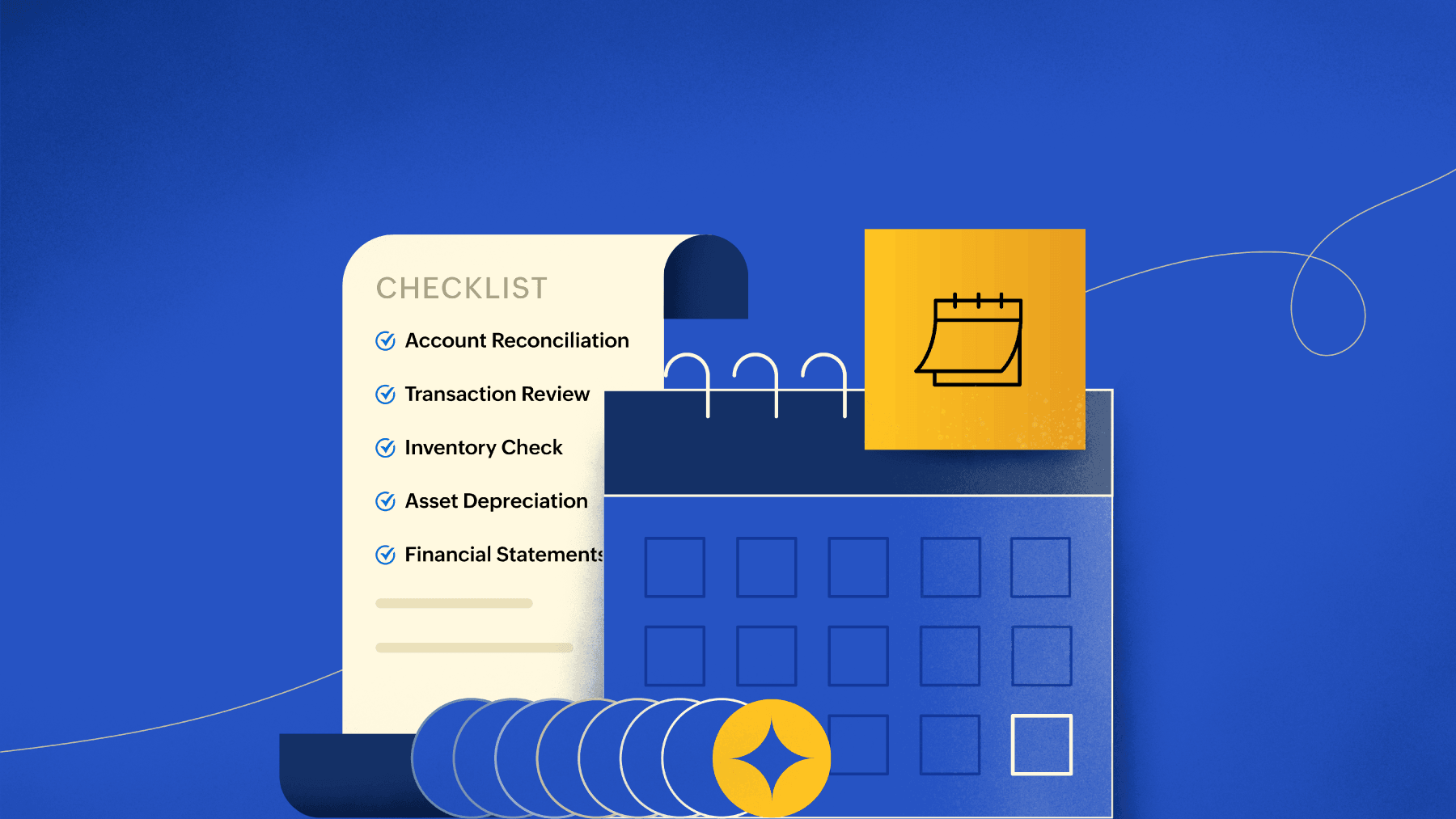
Year-end accounting can often feel overwhelming for Canadian small business owners. Tax season is often dreaded because most people are not prepared for the complexities and nuances involved. However, with the correct approach, it becomes an easy process that sets you up for success in the new year. This guide breaks down the essential steps to navigate year-end accounting efficiently while ensuring compliance with Canadian tax regulations. Start off your new year on the right track; your company will thank you!
Why year-end accounting matters
Year-end accounting is not just a regulatory requirement. It helps provide a clear financial snapshot of how your business is doing while helping identify tax-saving opportunities. It also ensures you're prepared for the Canada Revenue Agency (CRA) filing deadlines. For most Canadian businesses, the fiscal year-end falls on December 31, though incorporated businesses can choose a different date. [1]
Start with organized records
Before diving into year-end tasks, round up all of your financial documents from the past year. This includes bank statements, invoices, receipts, payroll records, and expense reports. Digital accounting software can streamline this process by automatically categorizing transactions and generating reports.
Key documents to organize:
Sales invoices and revenue records
Purchase receipts and vendor invoices
Bank and credit card statements
Payroll records and T4 slips
GST/HST documentation
Investment and loan statements
Pro Tip: Digitize all paper documents; 57% of office workers say quickly finding files is a top problem. Digital documents eliminate physical storage, prevent loss from damage, and enable instant access.[2]
Reconcile your accounts
Account reconciliation ensures your records match your actual bank balances. Review each account to identify discrepancies. This step catches errors early, prevents audit issues, and gives you accurate financial data for decision-making.
Pay special attention to outstanding invoices and bills. Follow up on overdue customer payments and ensure all supplier invoices are recorded, even if they'll be paid in the new year.
Pro Tip: Reconcile accounts monthly, not yearly. Monthly reconciliation catches fraud early (month 1 vs. month 12), requires only 10 minutes versus a half-day annually, and is considered an essential best practice for detecting errors while transactions are fresh.
Review your income and expenses
Analyze your profit and loss statement to understand your business performance. Find your most profitable products or services and areas where expenses can be reduced. This analysis helps with strategic planning for the upcoming year.
Canadian-specific considerations:
Ensure all GST/HST collected and paid is accurately recorded.
Verify CRA-approved business expense deductions.
Review Capital Cost Allowance (CCA) for depreciable assets [3].
Check eligibility for small business deductions [4].
Claim all eligible GST/HST Input Tax Credits (ITCs) to recover tax paid on business purchases [22].
Pro Tip: Review financial statements monthly, not annually. Monthly reviews let you track trends, catch mistakes early, and make quick adjustments before small issues become major problems. Quarterly-only reviews miss opportunities for timely course correction.
Prepare for tax season
Year's end is the perfect time to maximize tax deductions. Contribute to your Registered Retirement Savings Plan (RRSP) before the deadline, consider purchasing necessary equipment before year's end to claim capital cost deductions, and review eligible business expenses you may have missed throughout the year.
For incorporated businesses, consult with your accountant about optimizing your salary-dividend mix to minimize tax liability. Income splitting rules (TOSI) can be complex—professional advice here is worth the investment. [6]
Pro Tip: If your business is incorporated as a CCPC, ask your accountant about the small business deduction (SBD). It significantly reduces your tax rate on the first $500,000 of active business income—but it can be reduced if your corporation earns passive investment income above $50,000.[4]
Handle inventory accurately
If your business holds inventory, conduct a physical count at year's end. Accurate inventory valuation affects your cost of goods sold and ultimately your taxable income. The CRA requires businesses to use consistent inventory valuation methods year over year.
Pro Tip: Implement barcode scanning for your physical count. Barcode technology eliminates manual data entry errors, speeds up the counting process, and provides precise tracking with instant system updates, significantly improving accuracy during year-end inventory counts.[8][9]
Generate financial statements
Prepare your three core financial statements: balance sheet, income statement, and cash flow statement. These documents provide insights into your business health and are essential for tax filing, loan applications, and investor presentations.
Modern accounting software generates these reports automatically, but review them carefully to ensure accuracy. Look for unusual patterns or discrepancies that need investigation.
Pro Tip: Before finalizing, make sure all income and expenses are recorded in the correct year. For example, if you received payment in December for work done in January, or paid for a subscription that covers next year, these need adjusting so your statements reflect reality.[10][11]
Plan ahead for next year
Use your year-end review as a planning opportunity. Set realistic financial goals, create a budget based on past performance, and identify areas for improvement. Consider implementing better bookkeeping practices or upgrading your accounting software if current processes are inefficient.
Pro Tip: Base your budget on actual numbers, not guesses. Review this year's income and expenses category by category, then set realistic targets for next year. Clean, accurate records make this straightforward.[12][13]
Work with a professional
While many small business tasks can be handled independently, partnering with a Canadian accountant or bookkeeper for year's end ensures compliance and often uncovers tax-saving opportunities you might miss. They stay current with CRA regulations and can provide strategic advice specific to your industry.
When to seek professional help:
First year in business
Significant business changes (incorporation, new partnerships)
Complex tax situations
Preparation for business growth or financing
If you're falling behind on bookkeeping
Each of these is a decision point rather than a rule. Do I need an accountant for my small business? works through the seven signs in detail, with the CRA deadlines and penalties behind each one.
Pro Tip: Hire early for better ROI. CPAs provide comprehensive financial oversight including tax planning, cash flow management, and compliance updates. Early hiring prevents costly mistakes and frees you to focus on growth rather than fixing financial issues.
Key deadlines to remember
Mark these important dates in your calendar:
Last day of February - T4 slip filing deadline. Employers must issue T4 slips to employees and file with the CRA. [23]
March 1 (or next business day) - RRSP contribution deadline for prior tax year (exact date shifts annually, 60 days after December 31). [16]
March 15, June 15, September 15, December 15 - Quarterly installment payment dates for self-employed individuals. [17]
March 31 - Partnership return filing deadline (where all partners are individuals). [18]
April 30 - Tax return filing deadline for most individual taxpayers, including sole proprietors. Also the payment deadline for all taxpayers, including self-employed. [19]
June 15 - Extended tax return filing deadline for self-employed individuals (though any balance owed is still due April 30). [20]
6 months after fiscal year-end - T2 corporate income tax return filing deadline for incorporated businesses. [24]
Quarterly - GST/HST filing and payment due 1 month after the end of each reporting period. [21]
Year-end accounting quick-reference checklist
Gather all financial documents (bank statements, invoices, receipts, payroll records, T4 slips).
Reconcile all bank accounts, credit cards, and loans.
Review profit and loss statement and verify expense deductions.
Claim all eligible GST/HST Input Tax Credits.
Review asset deductions and consider year-end equipment purchases.
Conduct physical inventory count (if applicable).
Maximize RRSP contributions before the deadline.
Prepare and review financial statements (balance sheet, income statement, cash flow).
Ensure all income and expenses are recorded in the correct fiscal year.
File T4 slips for employees by end of February.
File T2 corporate return within 6 months of fiscal year-end (if incorporated).
File personal tax return by April 30 (or June 15 if self-employed).
File GST/HST return by the quarterly or annual deadline.
Set financial goals and budget for the upcoming year.
Consult with an accountant for tax optimization strategies.
Final thoughts
Year-end accounting doesn't have to be stressful. Start early, stay organized throughout the year, and leverage technology to automate routine tasks. By following this systematic approach, you'll not only meet your compliance obligations but also gain valuable insights to drive your business forward in the coming year.
The effort you invest in thorough year-end accounting pays dividends through reduced stress during tax season, better financial decision-making, and a solid foundation for business growth. Tools like Zoho Books can simplify the entire process with automated bank reconciliation, GST/HST tracking, financial reporting, and CRA-compliant invoicing so you can focus on running your business.