Introducing qualified electronic signatures via SIGN8 for the EU

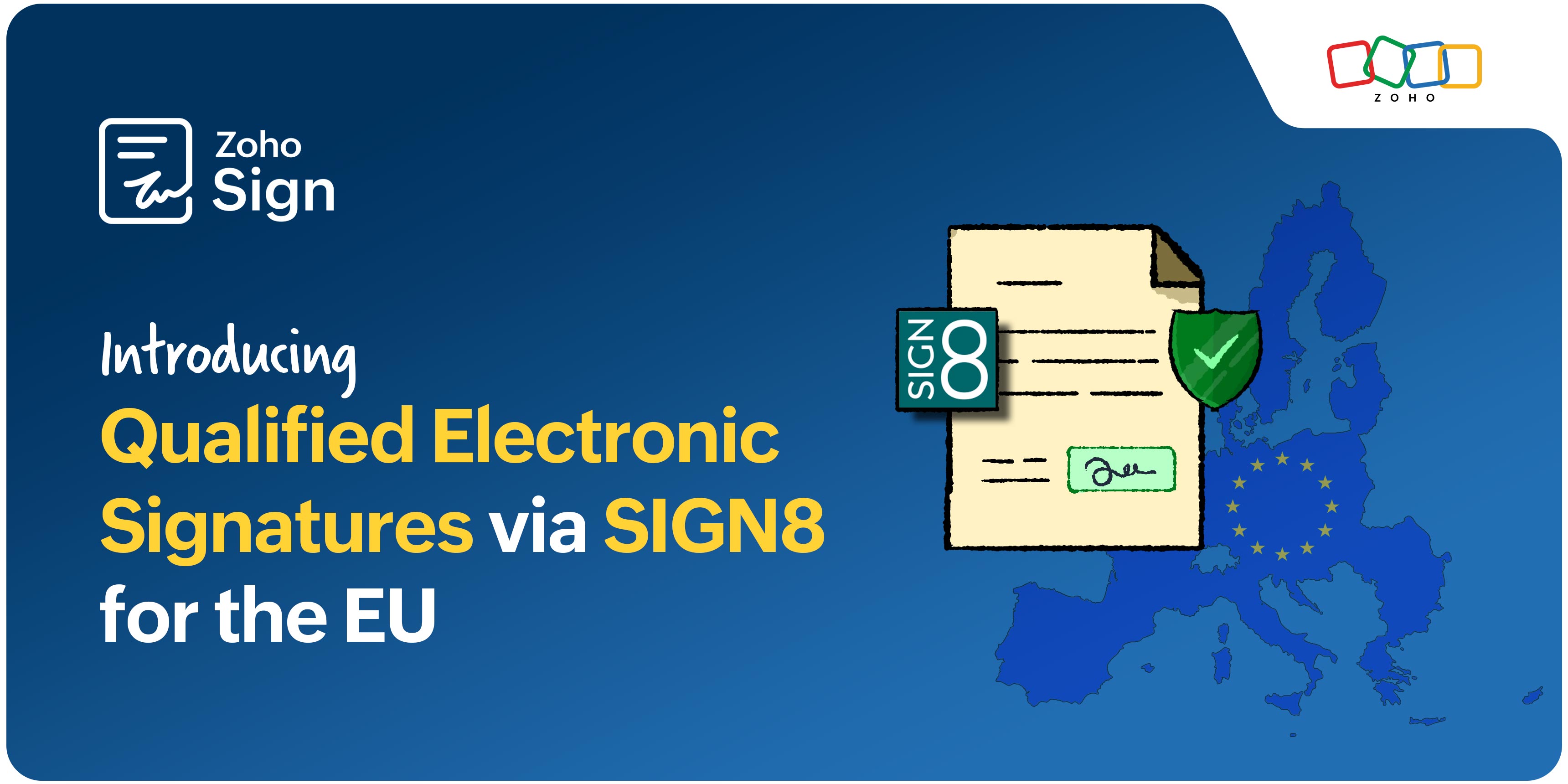
Every document carries a different level of risk, and the type of electronic signature you choose should reflect that. While a standard electronic signature is perfectly suited for everyday approvals, agreements with significant legal or compliance implications require stronger identity verification and greater assurance. Whether it's a loan agreement, a property transaction, or a regulated financial contract, choosing the right electronic signature is essential to meeting applicable legal and regulatory requirements.
What constitutes a legally valid electronic signature depends on the jurisdiction. In the European Union, the eIDAS regulation defines three levels of electronic signatures: simple (SES), advanced (AES), and qualified (QES). Of these, only a QES is legally equivalent to a handwritten signature, making it the preferred choice for transactions where legal certainty is essential.
To help businesses meet these standards, Zoho Sign now integrates with SIGN8, a qualified trust service provider (QTSP) in the EU. This latest addition expands our ecosystem of QTSP integrations, enabling organizations to sign documents with qualified electronic signatures directly from Zoho Sign while meeting the EU's regulatory requirements.
What is SIGN8
SIGN8 is a Germany-based QTSP certified by Germany's Federal Network Agency (Bundesnetzagentur) and listed on the EU Trust List. Its signing infrastructure is developed entirely in-house and supports both remote and local signing while meeting the stringent requirements of the eIDAS regulation.
For organizations operating in the European Union, this means QES issued through SIGN8 are legally recognized across all EU member states, giving organizations a trusted foundation for legally compliant digital transactions.
How the integration works
Setting up the SIGN8 integration in Zoho Sign takes just a few minutes. Once the integration is configured using your SIGN8 credentials, it becomes available as a signing method for documents.
Alternatively, when you're sending a document, you can specify SIGN8 as the signing method for selected recipients after enabling the integration. Your signers receive the document as usual, complete any required fields, and choose SIGN8 from the Sign via dropdown. Zoho Sign then redirects them to SIGN8, where they verify their identity using one of six supported methods: Cidaas, fidentity, Adesso ODIS, EUDI Wallet, AusweisApp, or Nect. Once the verification is complete, they're automatically returned to Zoho Sign, where the document is signed with a QES.
After signing, the QES details are embedded in the signed document and can be viewed in PDF readers such as Adobe Acrobat and Foxit PDF Reader. The same information is also included in the completion certificate, providing a comprehensive audit trail of the entire signing process.
For detailed setup instructions, refer to our help documentation.
Who is this integration for?
The SIGN8 integration is valuable for businesses that operate in regulated environments or routinely handle documents that require the highest level of legal assurance. This includes industries such as financial services, legal, healthcare, insurance, real estate, and the public sector. Whether you're signing loan agreements, employment contracts, patient consent forms, procurement documents, or other legally significant records, Zoho Sign and SIGN8 help you meet the EU's QES requirements.
Ready to get started? Enable the SIGN8 integration in Zoho Sign to make QES a seamless part of your document workflows. If you're not already a Zoho Sign customer, head over to zoho.com/sign and sign up for a 14-day free trial.
Please feel free to email us at support@zohosign.com to share your feedback or request a personalized demo.
Until next time, happy signing!
Comments