How to build an event strategy that works?

From setting objectives to measuring success, here’s everything you need to build a winning event strategy in the coming year.

Think about the last big event you attended. Maybe it was a conference, a product launch, or even a large company offsite. The lights, the speakers, the energy, all of it looked flawless from the outside. But behind the scenes, it might have been a very different story.

Now, imagine yourself as the organizer. You’ve booked the perfect venue, confirmed a great lineup of speakers, and registrations are flowing in. Everything seems on track. But when the day arrives, things start slipping. Sessions run late, attendees complain about limited networking opportunities, and sponsors quietly wonder if they’ll get enough value to return next year.

This is what happens when there’s no clear event strategy guiding the process. And it’s a common issue: surveys show that while 77% of marketers consider events their most powerful marketing channel, not every event lives up to expectations. Without a strategy, even the most carefully planned event can fall short of its expectations and won't be as impactful as you may want it to be. So, how can you prevent this from happening to you?

That’s where this guide comes in. This guide will take you through every step of building a proper event strategy. Along the way, we'll highlight how Zoho Backstage can help streamline event strategy and planning and reduce the likelihood of skipping important action items.

What an event strategy is and why you need one

What is an event strategy?

An event strategy guides you through planning, managing, and executing your event from beginning to end. It answers questions such as:

Key Capabilities:

  • Why are we hosting this event?
  • Who is it for?
  • What will be the outcome?
  • How will we know we've succeeded?

A strategy sets the vision and long-term direction for your event; it defines why you’re hosting it, who it’s for, and what outcomes you want to achieve. A good strategy helps keep everyone focused and means using resources as efficiently as possible.

In contrast, a plan outlines the specific actions you’ll take to make that strategy happen, like booking a venue, designing the agenda, or scheduling social media campaigns.

However, without a clear event strategy, a event planning can become reactive, where you have to decide everything at the eleventh hour without any backup or guidance. The right event planning software can help you manage your event and ensure that everything goes smoothly.

What’s the difference between an event strategy and an event plan?

An event strategy provides the overall direction and defines why you’re hosting the event, who it’s for, and what outcomes you want to achieve. It’s the big picture that connects your event to your organization’s goals.

An event plan, on the other hand, focuses on execution. It lays out the how: the timelines, tasks, budgets, and resources needed to bring that strategy to life. For example, your strategy might be to strengthen customer relationships through a user conference, while your plan would include the agenda, speaker lineup, and promotional activities to make it happen.

The strategy is the “why” and “what,” while the plan is the “how” and “when.” Both are essential, but without a strategy, a plan risks being just a checklist of tasks. And without a plan, even the best strategy will stay an idea on paper.

How to make a powerful and impactful event strategy?

If you're trying to make an effective and fail-proof event strategy from scratch, then follow these steps:

Common mistakes people make while making an event strategy

Even the best of event strategists can make mistakes. Here are some common mistakes you should be careful of:

  • Not setting measurable objectives.
  • Neglecting contingency plans.
  • Overloading the agenda with back-to-back sessions.
  • Relying too much on various, unconnected tools.
  • Collecting data without analyzing it.

These are the pitfalls to avoid so your strategy remains bulletproof from beginning to end.

Build a successful event strategy with Zoho Backstage

Great events don't happen by chance; they are a result of proper event strategy, clear goals, and the right tools. Having a good event strategy ensures that your event provides the highest ROI possible and is linked to the big picture. If you feel stuck in your event strategy, then an event planning software like Zoho Backstage can help.

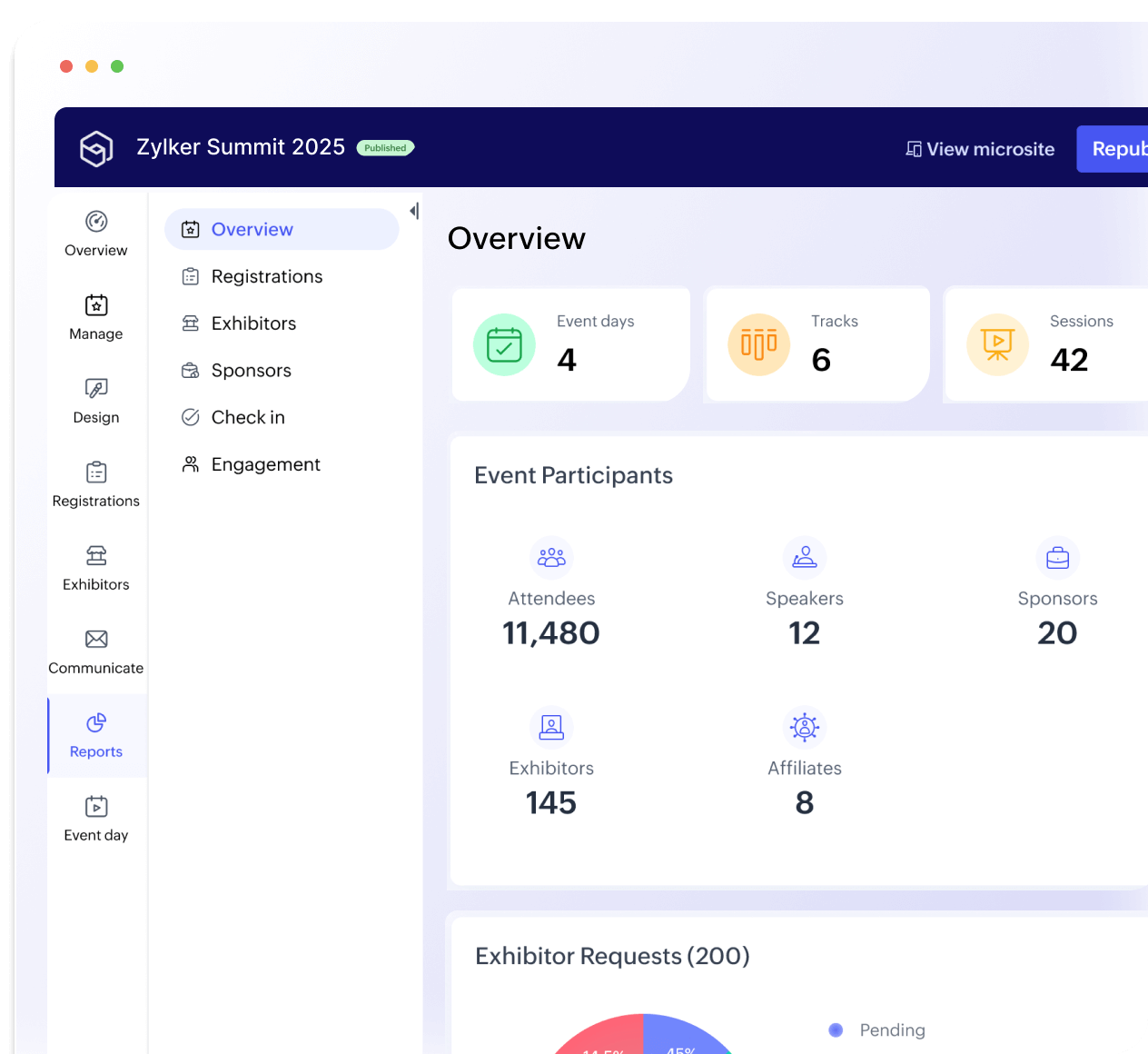
Zoho Backstage provides everything you need to put these strategies into practice. From ticketing and registration to attendee engagement and analytics, it helps streamline event strategy and event planning so you can focus on delivering meaningful experiences.

event management software dashboard

FAQ

Your goals should be measurable and tied to outcomes like leads generated, attendee satisfaction scores, or sponsorship revenue, and not vague targets like “increase engagement.”

A good rule of thumb is 60% structured sessions and 40% networking or breaks to keep attendees energized and engaged.

On average, 10–20% of total budgets go toward event tech, but hybrid or virtual events may require more.

Start with your audience. Consider where they are, what they value, and how accessible you need your event to be, then match the format to those needs.

Look at session participation, app interactions, sponsor leads, and post-event survey results for a fuller picture of success.