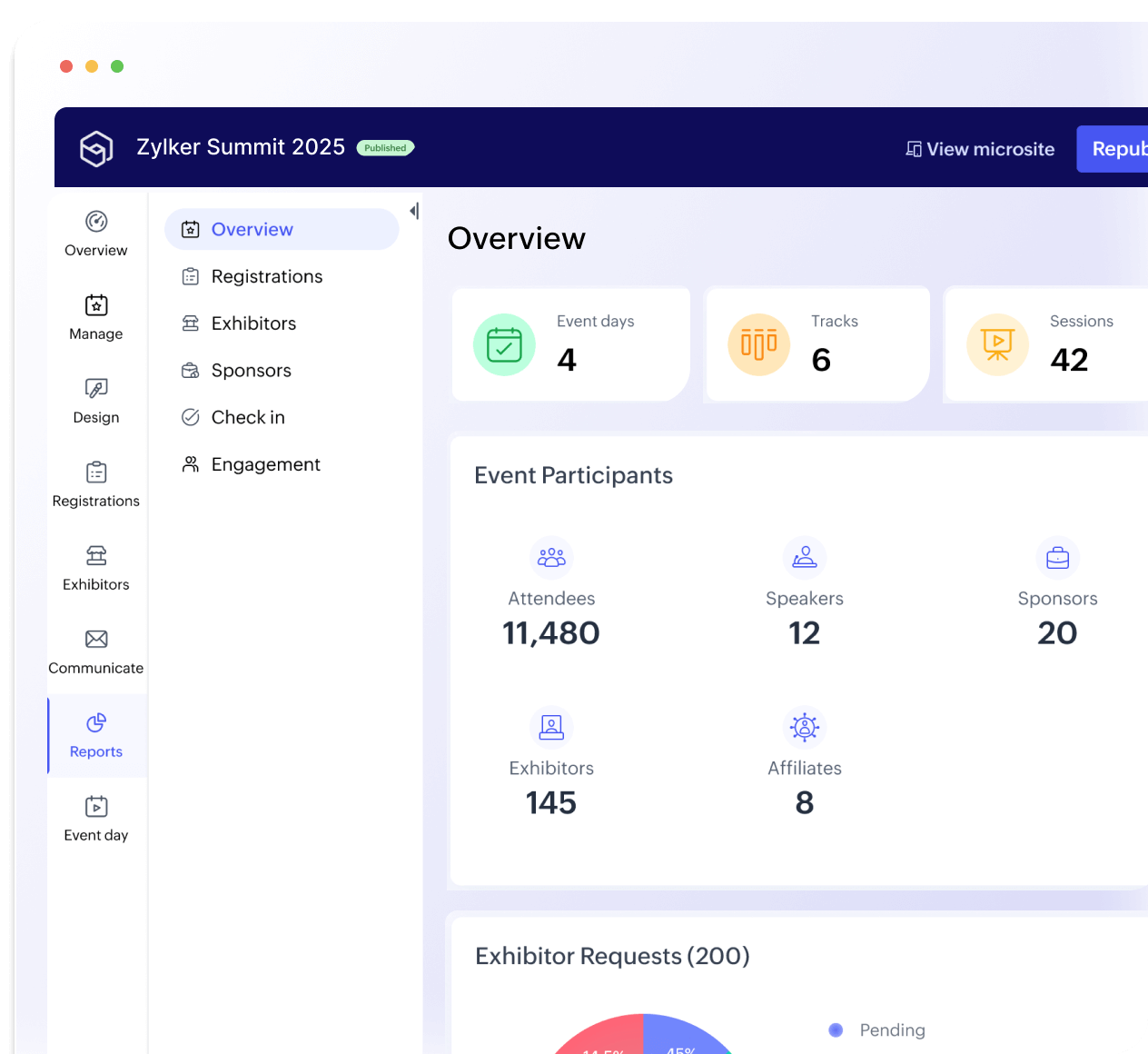
Event coordination covers a wide range of tasks that keep an event running smoothly from start to finish. Below are the six main responsibilities every coordinator manages, along with the common challenges they face and how Zoho Backstage can help solve them.
1. Equipment management
From stage setup and lighting to AV equipment and managing your team, coordinators are the backbone of operational flow. They ensure every resource arrives at the right place, at the right time, and in the right condition. Coordinators also work closely with vendors to ensure technical rehearsals, installations, and deliveries are completed according to schedule. This requires exceptional timing, organization, and cross-team communication.
Challenge: Since there are multiple vendors and tight timelines, even a single delay can lead to other aspects getting delayed as well.
How Backstage can help solve this problem:
- Manage vendor information, calendars, and contracts all in one place.
- Use announcements to notify employees right away of delivery adjustments or room changes.
- Make a master timeline so everyone can see their deadlines.
2. Registration and attendee experience
Registrations are the first touchpoint attendees have with your event, and they set the tone for everything that follows. Coordinators manage ticketing, confirmations, check-ins, and badge printing, ensuring the process is seamless from start to finish. They also monitor entry flow and ensure attendees can access sessions without long queues or technical delays. Registrations are the backbone of any event.
Challenge: System malfunctions or extended check-in queue time irritates attendees and discredits the value of the event.
How Backstage can help solve this problem:
- Self-configurable sign-up forms to manage approvals and block double-sign-ups.
- QR-code scanning to speed up entry and reduce bottlenecks.
- Branded badge printing for a great first impression for attendees.
- Real-time dashboards that display attendee counts and check-in status.
3. Vendor and supplier management
Vendors are the invisible machinery of every event, from caterers and decorators to AV teams, security, and transport. Coordinators are the single point of contact managing all these moving parts. They ensure vendors follow schedules, meet quality standards, and communicate effectively to prevent mix-ups.
Challenge: Vendors work in silos, and out-of-sync schedules or unclear instructions can lead to expensive mistakes.
How Backstage can help solve this problem:
- Centralizes vendor scheduling and alerting.
- Offers exhibitor management tools, such as an interactive floor plan builder.
- Helps with sponsor brand pages and lead capture apps to let sponsors and vendors get more value out of the event.
4. Event day execution
Every event coordinator's biggest nightmare is the event day. The event day is where everything comes together, and where everything can go wrong if not managed precisely. Coordinators oversee on-site operations, manage volunteers, ensure sessions stay on schedule, and troubleshoot problems in real time. They're constantly monitoring every detail to ensure attendees, speakers, and staff are aligned.
Challenge: Live events are unpredictable, and speakers can cancel at the last minute, the weather can change suddenly, or some AV technology can malfunction. Hence, coordinators need to react on the fly.
How Backstage can help solve this problem:
- The mobile event app keeps the attendees, volunteers, and staff on the same page with real-time information.
- Coordinators can alert participants in real-time if sessions are running late, rooms are being changed, or there's an emergency.
- Gamification and activity integrations keep people occupied if schedules are inevitably delayed.
5. Safety and compliance
Safety and accessibility are non-negotiable parts of event coordination. Coordinators must ensure compliance with venue regulations, crowd control protocols, and insurance coverage. They also verify accessibility standards to make sure that the event is inclusive for all attendees.
Challenge: Lack of safety prioritization not only hurts attendees but also puts organizers at risk of legal repercussions.
How Backstage can help solve this problem:
- Can store permits, compliance checklists, and safety procedures in one library.
- Ensures accessibility with mobile-optimized event sites and multilingual support for worldwide audiences.
- Offers stakeholders audit-ready reports.
6. Data and reporting
Coordination does not stop when the event ends. Gathering feedback and keeping track of engagement are necessary to enhance future events.
Challenge: Without organized data, coordinators are at the mercy of anecdotal feedback, which won't always be reliable.
How Backstage can help solve this problem:
- Offers post-event surveys with customizable forms.
- Offers analytics on attendance, ticket sales, and session participation.
- Creates shareable reports for sponsors and stakeholders, demonstrating ROI.