What are subscription renewal emails, and why do they matter?
- Published : May 29, 2026
- Last Updated : May 29, 2026
- 274 Views
- 6 Min Read

Every subscription business faces the same recurring challenge: getting customers to renew. No matter how good your product is, subscribers lapse. They forget. They second-guess. They get distracted. And when renewal time comes around, the difference between a retained customer and lost revenue could come down to a single email.
Retaining customers is far easier than gaining new ones. Subscription renewal emails are one of the highest-leverage touchpoints in the entire customer lifecycle. Done well, they don't just remind people to pay but they also re-sell the value of your product, reactivate dormant users, and build the kind of loyalty that keeps customers renewing year after year.
This guide covers everything you need to know: what renewal emails are, when to send them, what to write, and how to optimize them for maximum conversion.
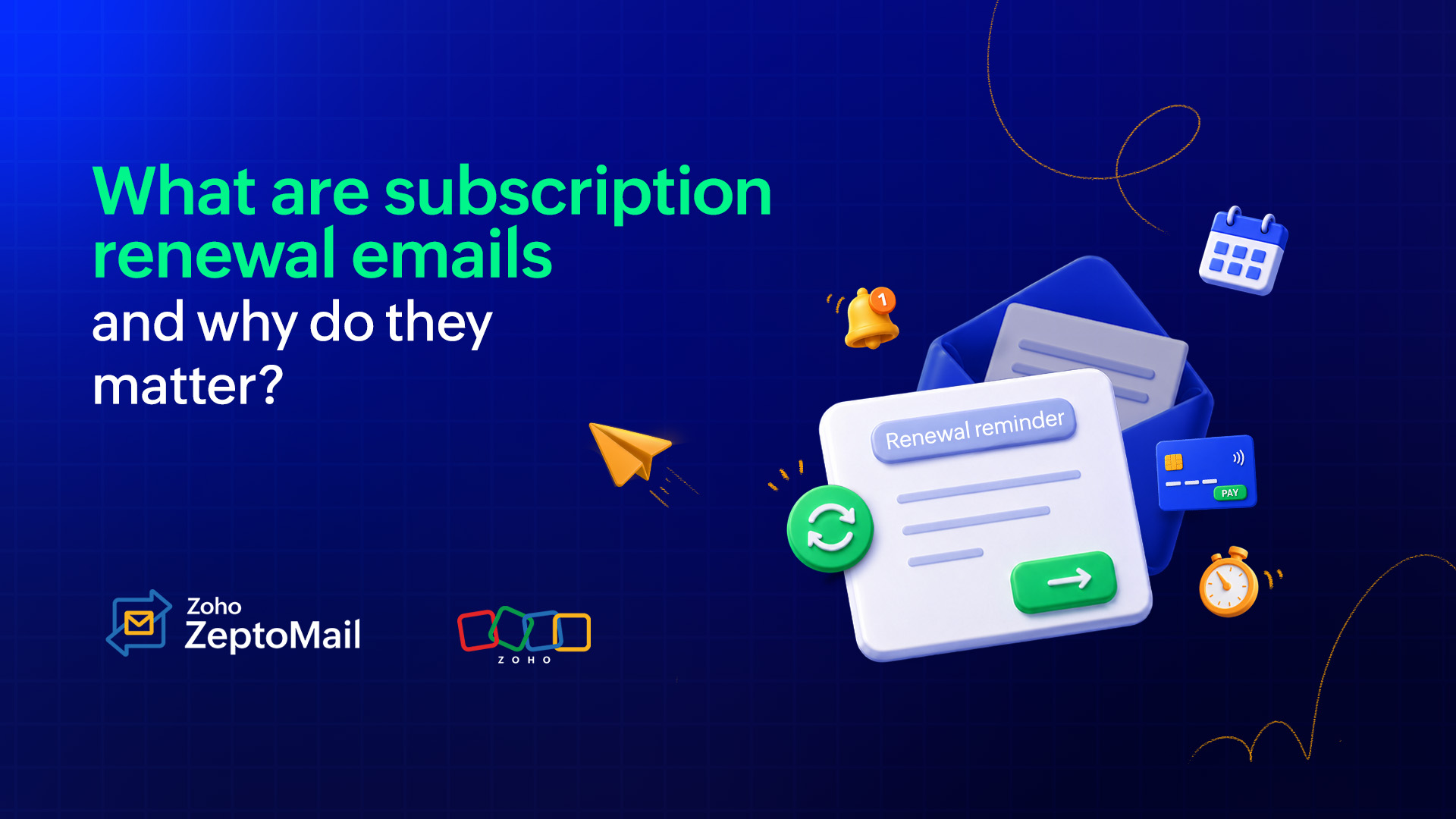
What are subscription renewal emails?
Subscription renewal emails are transactional messages sent to customers before, during, or after their subscription period ends. Their primary goal is to encourage the subscriber to continue their membership or service rather than allowing it to lapse.
They serve several functions simultaneously:
Reminder: Alerting customers that their subscription is expiring soon.
Value reinforcement: Reminding customers of the product's value.
Action driver: Prompting customers to take a specific renewal action.
Churn prevention: Catching at-risk customers before they're lost.
Renewal emails are different from general marketing emails because they target customers at a specific, high-stakes moment in the customer journey. Failing to show up at this moment actively increases churn.
Why subscription renewal emails matter
Retention
Customer acquisition is expensive. Depending on your industry, acquiring a new customer can cost five to seven times more than retaining an existing one. For subscription businesses, churn is existential: Even a modest monthly churn rate of 5% means losing more than half your customer base in a year.
A well-executed renewal email sequence can meaningfully move churn numbers. Studies consistently show that personalized, timely renewal emails improve retention rates depending on the vertical and email quality.
Involuntary churn
Not all subscriptions auto-renew. Even those that do face involuntary churn like failed payments, expired cards, and billing errors that silently end subscriptions. Renewal emails address both active decisions and passive failures.
Trust
A renewal moment is also a trust moment. How a company handles renewals shapes how customers feel about the brand long-term. Done poorly, renewal emails feel manipulative or spammy. Done well, they feel like genuine service.
Types of subscription renewal emails
Understanding the different categories of renewal emails helps you build a complete, strategic sequence rather than relying on a single "reminder" message.
1. Advance renewal notice (30–60 days before expiry)
This email is sent well before the subscription ends. Its purpose isn't urgency but awareness. Give customers time to evaluate, ask questions, or address payment issues without feeling pressured. For annual subscriptions, this lead time is especially important since customers may not be thinking about the renewal at all.
2. Renewal reminder (7–14 days before expiry)
This is the core renewal email. It's timely, specific, and action-oriented. At this point, customers should have enough time to act without feeling caught off guard.
3. Final reminder (1–3 days before expiry)
The urgency email. Short, direct, and focused on one action. This email works best when it's genuinely helpful rather than alarmist. You're doing the customer a favor by reminding them before access is interrupted.
4. Expiration day email
Sent on the day of expiry, this email serves customers who may have missed previous reminders. It should acknowledge they may have intentionally chosen not to renew while making the door easy to walk back through.
5. Win-back/post-expiry email (1–7 days after expiry)
For customers who didn't renew, this email attempts to reactivate them. It's different from a standard win-back campaign because the customer just recently lapsed which means they may simply have missed the deadline.
6. Failed payment/dunning email
A specialized type of renewal email for subscriptions that auto-renew but encounter payment failures. Dunning emails should be prompt, clear, and solution-focused. They're one of the most impactful recovery mechanisms for involuntary churn.
The anatomy of a high-converting renewal email
Subject line
The subject line determines whether your email gets opened. For renewal emails, clarity beats cleverness. Your subscriber needs to understand immediately that this email is about their subscription.
Examples:
Direct and specific: "Your [Product] subscription renews on June 15".
Benefit-led: "Another year of [key benefit] — your renewal is coming up".
Conversational: "Time to check in on your [Product] subscription".
What to avoid:
Vague teasers that obscure the email's purpose.
Excessive urgency ("URGENT: Act now!!!").
Misleading subject lines that feel like tricks.
Personalization
Generic renewal emails underperform. At minimum, include the subscriber's name and their specific renewal date. Stronger personalization uses actual usage data like how many projects they've created, how many sessions they've had, and which features they use most. This data-driven personalization does more than make customers feel warm. It re-demonstrates the product's value and reminds them what they like at the exact moment a renewal decision is being made.
Value recapping
One of the most common mistakes in renewal emails is focusing entirely on the transaction ("Your subscription is renewing, here's the price") without recapping why the customer should want to renew. A brief, genuine summary of value received, especially if it's quantifiable is highly effective.
Examples:
"This year, you completed 47 projects using [Product]."
"You've saved an estimated 12 hours this month with [Feature]."
"Your team has collaborated on 200+ documents since joining."
If you don't have usage data, highlight the features or outcomes the customer cares about most based on their plan, segment, or behavior.
Pricing transparency
Never hide or obscure renewal pricing. Customers who discover an unexpected charge feel deceived, and even customers who choose to renew will do so with less trust. State the renewal price clearly, early in the email. If prices have changed, explain why.
Call to action
The CTA should be singular, prominent, and frictionless. Don't ask customers to do three things in one email. The primary action—renew, update payment, confirm subscription—should be impossible to miss.
Good CTAs:
"Renew My Subscription".
"Keep My Access".
"Update Payment & Continue".
"Renew for Another Year".
Avoid vague CTAs like "Learn More" or "Click Here" in renewal contexts.
Tone
Renewal emails that feel transactional and cold drive disengagement. Those that feel genuinely helpful and human build loyalty. Strike a tone that:
Respects the customer's intelligence.
Expresses appreciation for their continued membership.
Avoids guilt or emotional manipulation.
Makes it easy to reach support if they have questions.
Common renewal email mistakes to avoid
Sending too many emails
A renewal sequence should be helpful, not overwhelming. If a customer renews after your first email, stop the sequence. Use behavioral triggers to suppress follow-ups for customers who have already acted.
Ignoring mobile optimization
More than half of emails are opened on mobile devices. Renewal emails with small CTAs, dense paragraphs, or non-responsive layouts underperform on mobile. Design for thumb-friendly interaction and scannable content.
Generic, impersonal messaging
"Your subscription is expiring" is a missed opportunity. Any time you can make the email feel like it was written for that specific customer, you improve both engagement and conversion.
No easy cancel or manage option
Ironically, making it easy to cancel or manage a subscription builds more trust than hiding that option. Customers who can't find the "manage subscription" link feel trapped, and trapped customers churn harder and louder. Include a straightforward link to account management in every renewal email.
Waiting too long after churn
The window for winning back a lapsed subscriber is short. If you wait weeks to send a win-back email, the customer has mentally moved on. Send the first post-expiry email within 3–5 days.
Key takeaways
Subscription renewal emails are one of the most impactful levers a subscription business can pull. When done right, they don't feel like transactional reminders. They feel like a genuine continuation of the relationship between a company and its customers.
The most successful renewal email strategies share several characteristics:
They start early, giving customers time to make an informed decision.
They're transparent about pricing, changes, and what customers are getting.
They re-sell value and not just the transaction, but the outcome and impact.
They're personalized, using real data to make each email feel relevant.
They make it easy with one clear action, frictionless path to renewal.
They test and iterate treating renewal emails as an evolving system, not a set-and-forget task.
Start with a solid three-email sequence (30-day notice, 7-day reminder, expiry day), measure rigorously, and build from there. Even a 5% improvement in renewal rate, compounded across your subscriber base over a year, can represent a significant difference in revenue and business health.