
A D2C skincare brand launches a campaign centered on barrier-friendly hydration. The ads perform well, click-through rates are up, and engagement on social media climbs by 20%. On paper, everything looks promising. But ask potential customers what they remember about the brand and the answers tell a different story. They talk about the pastel packaging or the influencer promoting it, while the hydration benefits barely come up. The campaign attracted attention, but the message behind it didn't land in quite the way the brand intended.
It's easy to assume that strong campaign numbers reflect a healthy brand, but that isn't always the case. Clicks show that something caught people's attention, and sales confirm that some of them made a purchase. What those numbers don't reveal is how customers now think about the brand or what they'll remember a few weeks later. That's information analytics alone can't provide.
D2C brands have plenty of ways to reach their customers, but that doesn't always mean they understand them. People might like your content, follow your brand or click on your ads without fully understanding what makes your product different. When that happens, turning interest into sales becomes more difficult, and customer acquisition costs can start to rise. Consumer awareness surveys help by showing how people actually see your brand, not just how they interact with it.
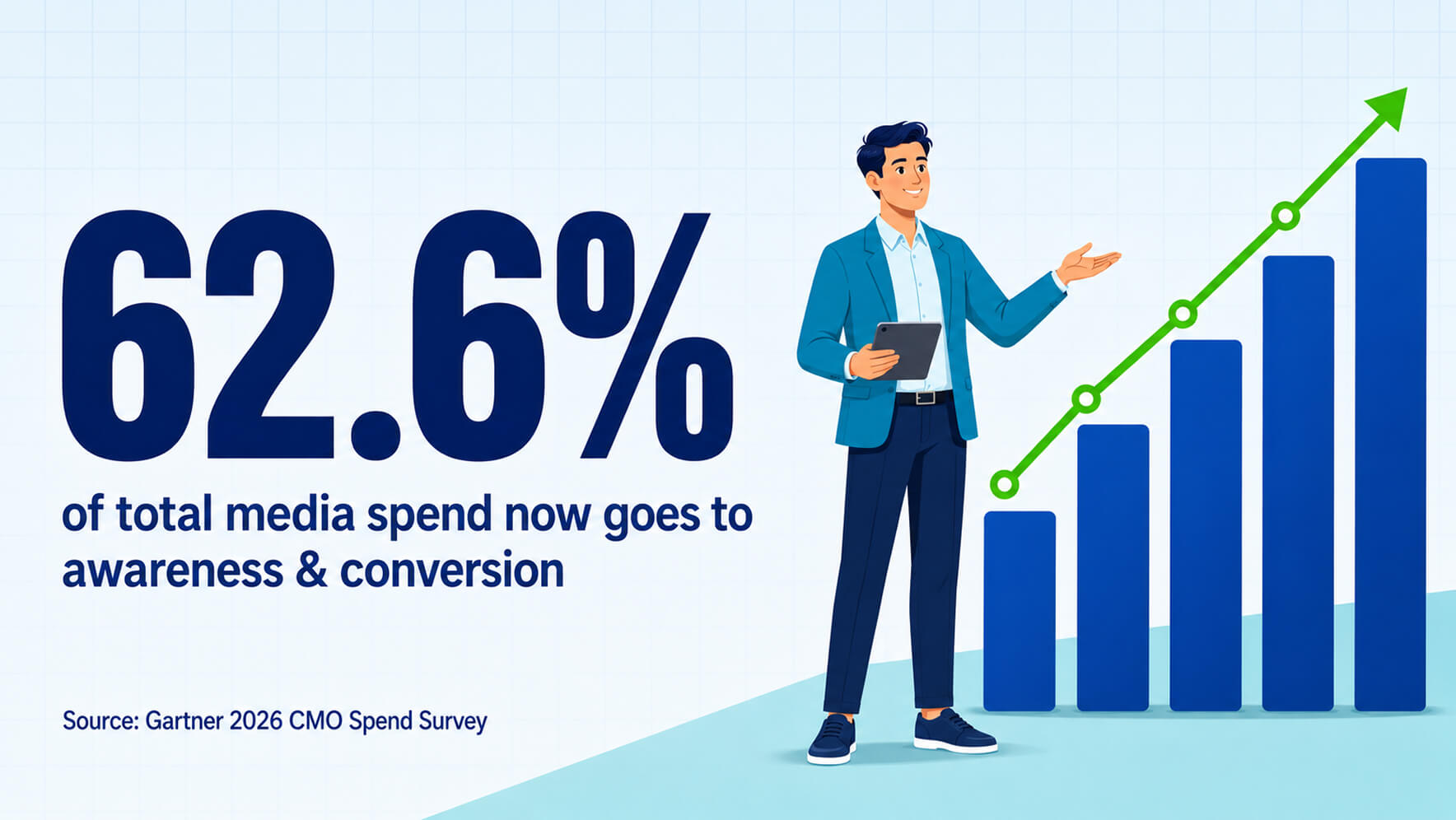
As of June 2026, Gartner reports that awareness and conversion now make up over 60% of total media spend among marketing leaders. This reflects how closely awareness is tied to day-to-day marketing decisions, and how it influences where budgets are allocated, which campaigns are expanded, and which ones need to be reworked.
What is consumer awareness?
Think of consumer awareness as the mental real estate your brand occupies; every brand is fighting for a plot of land in the consumer's brain. But there's a vital distinction between recognition and understanding. Recognition is knowing the name, whereas understanding is knowing the purpose. If people recognize your logo but think you sell yoga mats when you actually sell sustainable sneakers, your brand awareness is built on a faulty foundation.
This awareness isn't static; it fluctuates throughout the customer journey. In the discovery phase, awareness might be a vague sense of seeing the brand somewhere without recollecting where or when the moment of discovery happened. By the time they reach consideration, that awareness needs to evolve into a specific association with a problem they need to solve. If you sell protein snacks, do people think you're only for elite athletes? That's a signal that your consumers aren't getting the message that the product is meant for anyone looking for healthy snack alternatives.
The science of mental availability
To understand why awareness is far more than a vanity metric, we have to look at the concept of mental availability. In his book, How Brands Grow, Byron Sharp challenges traditional marketing perspectives by arguing that brands don't grow by focusing solely on loyalty among a small group of heavy buyers. Instead, growth is driven by increasing a brand's physical and mental availability among a vast pool of light and non-buyers.
Mental availability is the likelihood that a buyer will notice, recognize, and think of a brand when they're ready to make a purchase. Brand recognition is only part of it. What matters is whether the brand comes to mind naturally when a buying decision is being made.
For a D2C brand, getting someone to click is only part of the job. The bigger challenge is making sure the brand comes to mind when a specific need arises. That's where category entry points (CEPs) come in. They're the situations, needs, or thoughts that prompt someone to start looking for a product. A traveler with sensitive skin, for example, might realize they need a moisturizer before a flight. If your brand is one of the first they think of, you've created a strong association. Consumer awareness surveys can help measure whether those associations are actually forming.
Connecting awareness to revenue
Top-of-funnel marketing has never been the easiest thing to measure. You can see clicks, traffic, and sales, but those numbers don't tell you whether more people actually remember your brand after seeing a campaign. Rather, brand lift studies track changes in awareness and recall over time, giving teams another way to judge whether a campaign is likely to have a lasting effect beyond the first wave of sales.
By connecting awareness metrics to revenue outcomes, businesses can move away from the last-click trap. Customers with high brand awareness are more likely to have a higher lifetime value (LTV) and a lower churn rate. Most consumers make repeat purchases because the brand has occupied a permanent place in their mind. Using surveys to quantify this kind of awareness enables marketing leaders to justify the spend required to build a sustainable brand that doesn't just survive on performance marketing but thrives on genuine consumer demand.
Why D2C businesses need consumer awareness surveys
Even with first-party data, D2C brands often mistake activity for progress. Surveys provide the why behind the what. Consumer awareness surveys can help D2C businesses understand real customer behaviors that aren't just based on purchase data, but on genuine desires, the parameters they consider during purchases, price preferences, and more. Additionally, this is how consumer awareness can become a valuable tool for D2C businesses:
- Separate exposure from recall: It's useful to look beyond impression numbers. Consumer awareness surveys can show whether people remember your advertising after they've seen it. If they don't, it may be worth reviewing the creative, the message, or both.
- Find the right channels: Attribution bias is often the silent enemy of marketing budget. The last click often gets all the credit for a sale, but a survey might reveal that the customer first discovered you via a podcast three months ago. Awareness surveys help you reallocate funds to the top-of-funnel channels that actually start the journey.
- Check your positioning: Products don't always end up being used the way they're marketed. An energy drink might be bought less for sport and more by students looking for something they can drink while studying late at night. Surveys are often the first place that difference shows up.
- Optimize your spend via pulse surveys: Rather than one giant annual survey, pulse surveys are short, frequent check-ins that enable you to tweak your messaging in real time while a campaign is live and ensure you aren't throwing good money after bad creative.
How to build a great consumer awareness survey for your D2C brand
Building an effective survey is an art. To get clean data, you must avoid leading questions that nudge the user toward a specific answer (e.g., "How much do you love our new logo?"). Instead, use neutral, open-ended questions. Consider your sample size carefully. You need enough responses to be statistically significant, but you must also guard against question fatigue by keeping the survey under five minutes. Start with broad, unaided questions before moving to specific, aided ones to ensure you aren't biasing the respondent's memory.
Check out this writeup from Zoho Survey to learn in detail how to create a survey.
Turning data into action
Data without a framework is just noise. Plot your results on an awareness ladder across the three categories shown below to see exactly where the friction lies:
- Unaware to aware: If people haven't heard of your brand yet, the first priority is reaching more of the right audience.
- Aware to understand: If they know your name but not your why, invest in educational content and clear value propositions.
- Understand to consider/purchase: If they get what you do but won't buy, address trust, pricing, or shipping barriers.
The bottom line
The shift from vanity metrics like clicks to meaningful metrics like message resonance marks the professionalization of a D2C brand. By measuring awareness, marketing stops feeling like an expensive guessing game and starts feeling like a deliberate strategy. In a world of increasing privacy regulations and rising ad costs, the brands that win will be those that truly understand the mental real estate they own in the minds of their customers.