Coping with Suicidal thoughts:

What to know?

Trigger warning: Please note that this write up contains a discussion on suicide, self- injurious behavior, depression, and reference to distressing situations that may act as emotional triggers. If you believe you are someone who is currently vulnerable or is sensitive towards the topic discussed, please continue on your own discretion.

Helpline Number:+91 44 2464 0050

Quick way to assess the risk of suicide.
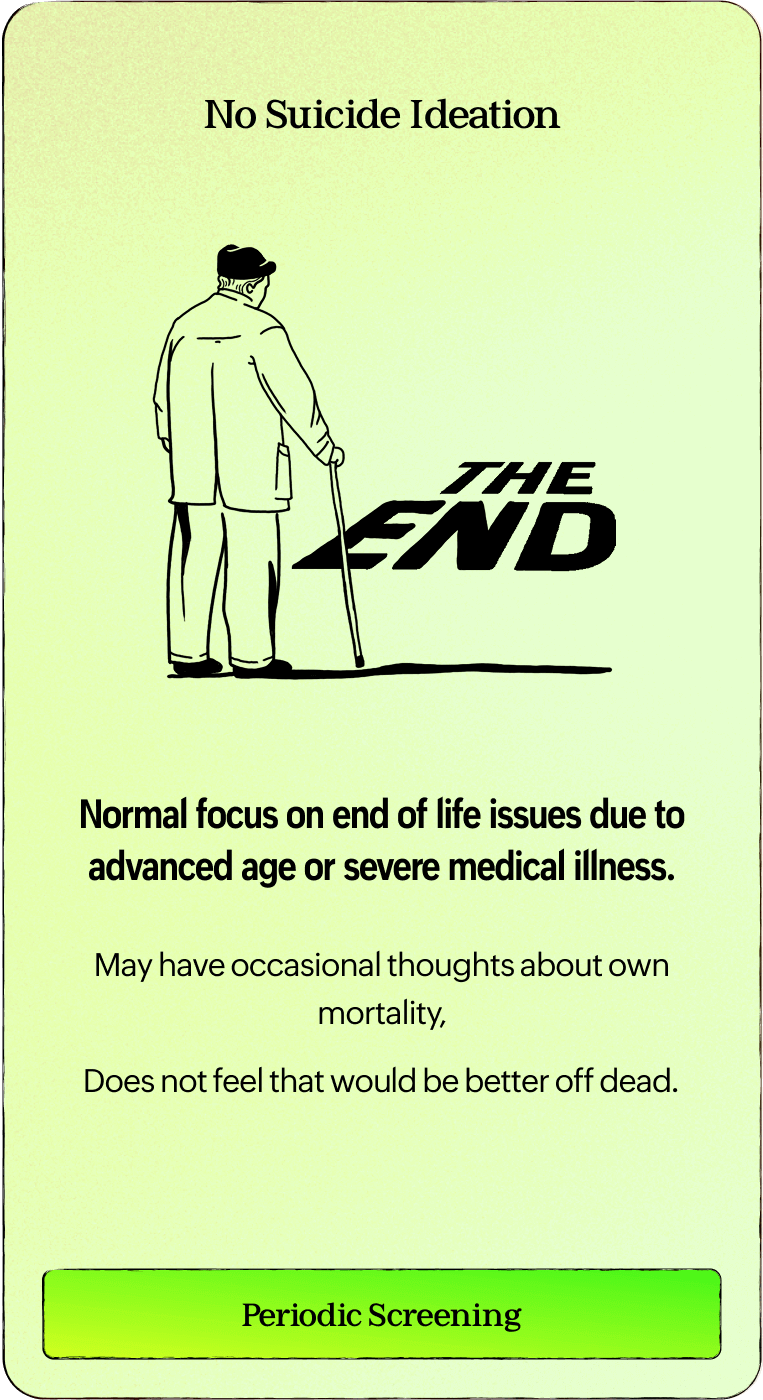
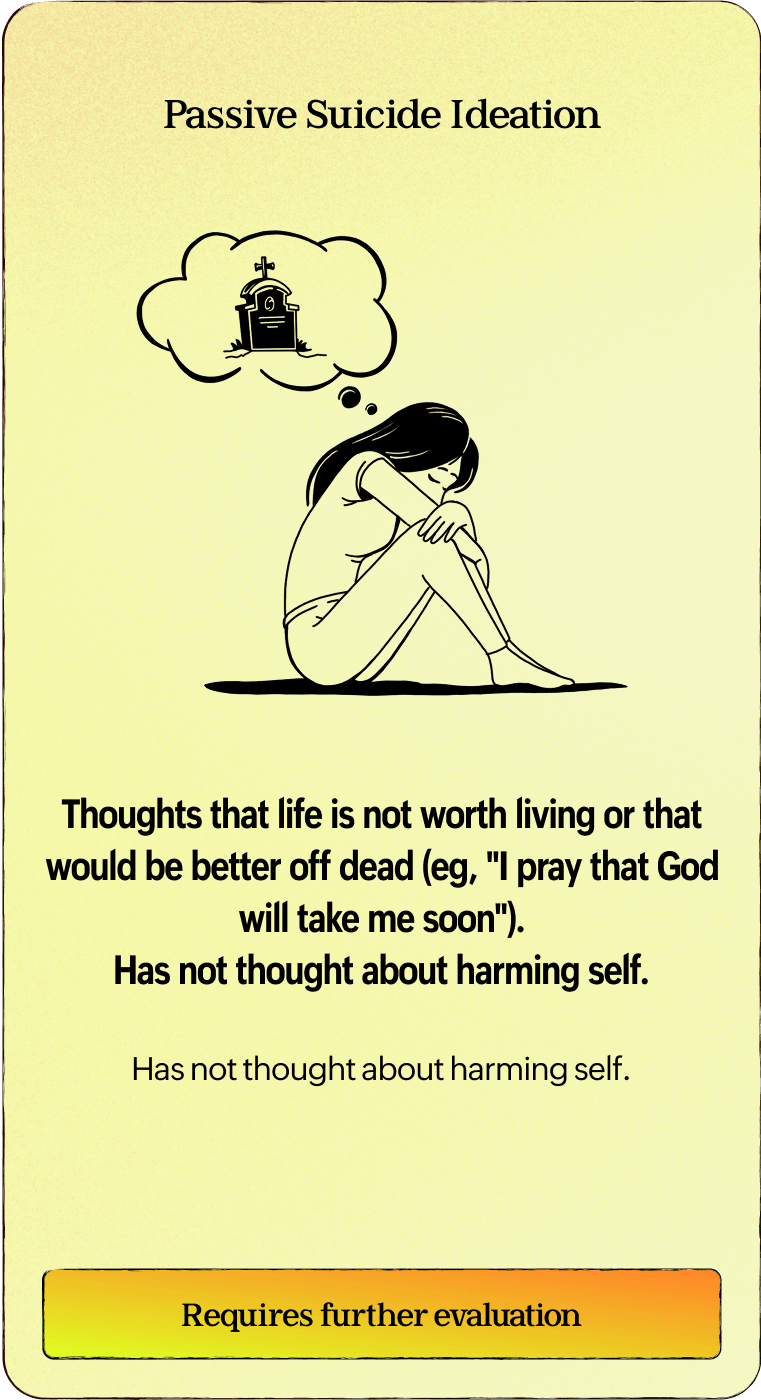
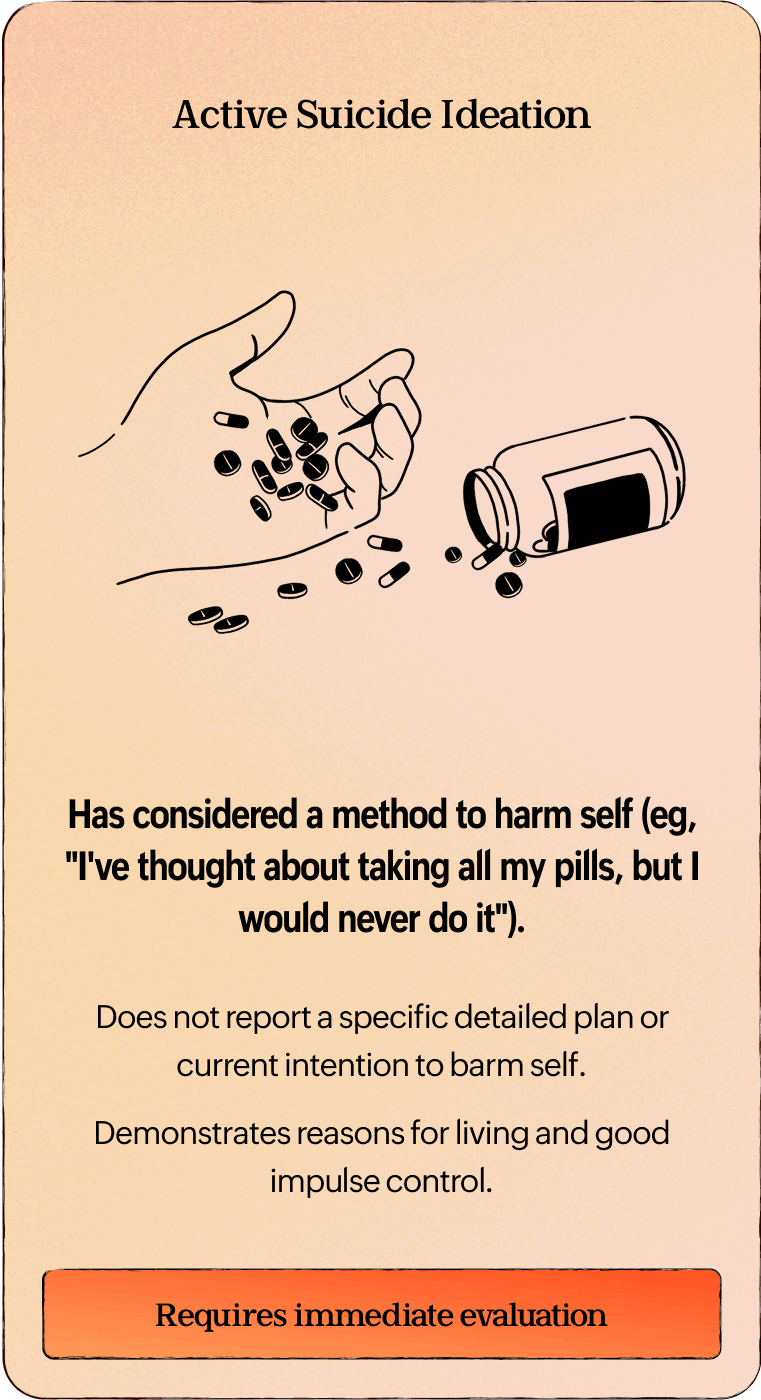
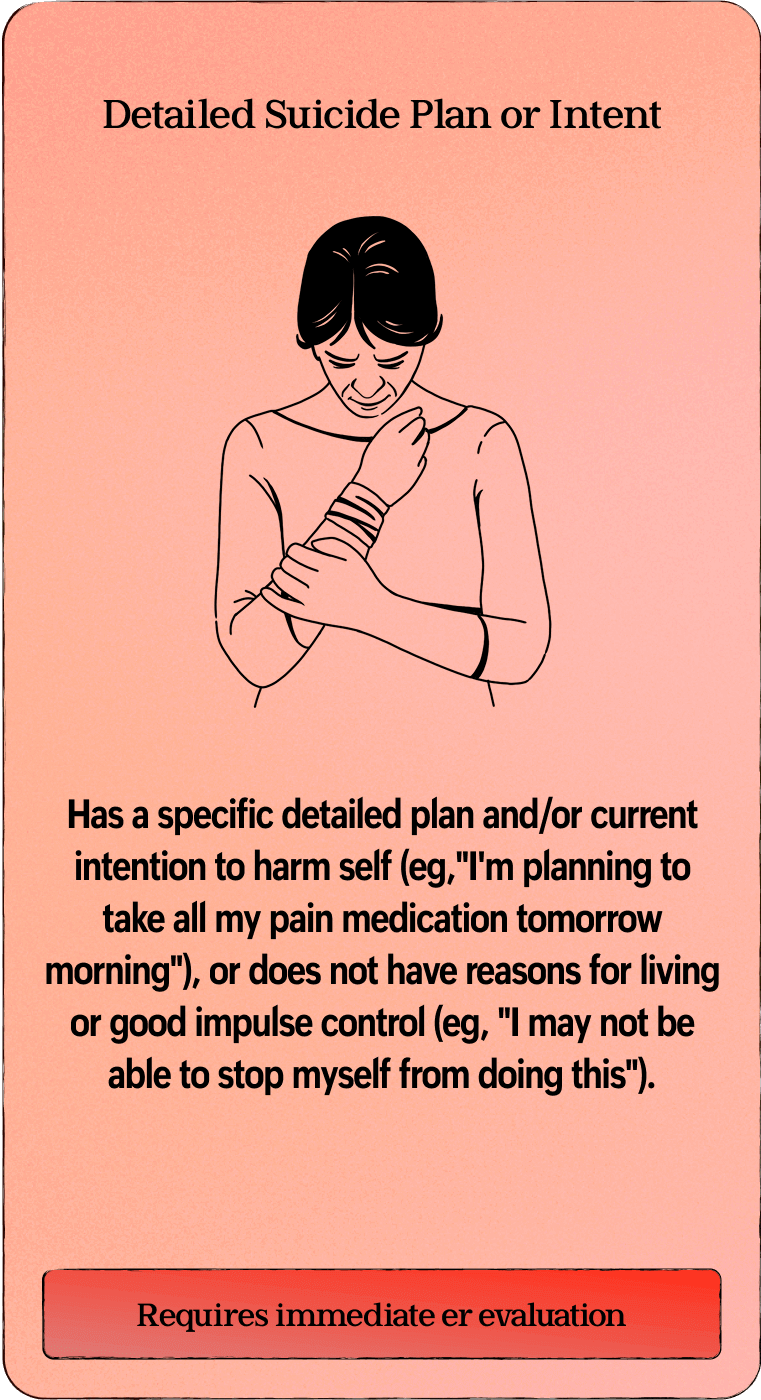
Low Suicide Risk


Imminent Suicide Risk

If you find yourself in the orange or red zone. Please reach out to one of the below helplines or set an appointment with any of the three psychologists present at Zoho.

Helplines

iCALL (TISS)

91529 87 821

Sneha Suicide Prevention Helpline

+91 44 2464 0050

Vandrevala Foundation

9999666555

AMBULANCE

102 OR 108

WOMEN HELPLINE

1091

CHILD LINE

1098

Quick warning signs of suicidal ideation:

IS PATH WARM? (An Acronym by WHO)

Some other Possible signs

IS PATH WARM? (An Acronym by WHO)

  • Ideation (thoughts)
  • Substance abuse
  • Purposelessness
  • Anxiety
  • Trapped
  • Hopelessness
  • Withdrawal
  • Anger
  • Recklessness
  • Mood changes

Some other Possible signs

  • Loss of Interest in activities which they once enjoyed
  • Reduction in Self Care
  • Withdrawal from people and activities
  • Lack of concern for personal safety and health
  • Giving away their priced possession . Preparing a will
  • Increased substance abuse
  • Changes in appetite
  • Drastic changes in sleep patters
  • Making Good Bye comments

Note: These signs do not always point to serious suicidality but should not be avoided in individuals who already have risk factors such as mental health conditions, chronic physical illness/ pain, major losses, crisis, history of trauma, transitions, lack of social support system, and a history of suicide attempts.

How to seek help for yourself?

Whatever thoughts you are having, and however bad you are feeling, remember that you have not always felt this way, and that you will not always feel this way.

  • Catastrophisation

    Your mind can turn into a fortune teller (Your future is going to be miserable and never improve!).

  • Labeling

    You are useless/ worthless/ a bad person.

  • Mental filters

    Discounting all the positive in your life and hyper- focusing on the negative.

  • Intolerance

    I can't do it! I can't take it anymore". Thoughts that proote helplessness.

  • Global statements

    This is how it is going to be forever in all aspects of my life. Nothing will ever change.

  • Over Generalization

    Because I don’t have X, nothing good will ever come my way.

Guidelines to help you get through suicidal thoughts

  • Ensure that any means of committing suicide have been removed.
  • Ensure that the opportunity to commit suicide is lacking. The surest way of doing this is by remaining in close contact with one or more people.
  • Reach out to a 24 x 7 suicide hotline.
  • Going to sleep can give you a temporary break from suicidal thoughts.
  • Once you are stable, make an appointment with a mental health care provider.
  • Preparing your own safety kit and having it handy. A safety kit can include the following:

Suicide Safety Kit Must contain the following items,

  • A list of positive things about your life
  • Distractions that you can rely on (Books, Music, Movie)
  • A note that says "Waiting for at least 48 hours after a suicidal thought"
  • Having a list of contact numbers of friends or family
  • Go to a place where you feel safe
  • Setting an appointment with a mental health professional (having contact details)
  • Visiting the nearest hospital (having a list of hospital numbers, ambulance contact details)

How to help someone with suicidal ideation?

1

Learn the warning signs and risk factors of suicide

2

Don’t be afraid to talk about suicide

3

How to start the conversation?

“I noticed that you’ve been seeming really down lately. You mentioned that you feel like you’ve lost the will to live. Do you have thoughts about hurting yourself?”

“When you say that you want to die, do you mean that you want to end your life? Does it ever feel so bad that you think about suicide?”

“Do you have a plan for when or how to kill yourself?”

To remember

4. Active steps to take

  • Offer to stay with them till they feel safe to be alone
  • Offer to help them reach out to their family or friends
  • Share contact details of nearby hospitals, helplines, ambulances, and emergency centers with them
  • Ask them if you can hold onto at -risk objects for them (like drugs, sharp objects)
  • Taking them out for food
  • Collaboratively come up with a plan for the next few days
  • Encourage them to schedule an appointment with a mental health worker
  • Even as you offer help, talk with them about bringing others into their support network.
  • Check with them if you can call on their behalf.

5. Don’t forget to take care of yourself

Breathe. You can't fix them right away. Understand your limitations. Take care of your nutrition, sleep, and self-care. Have your own support system. Just by listening and being there, you are doing your best.