- HOME
- Digital Health
- Cardiology practice management software: The operating system for connected heart care
Cardiology practice management software: The operating system for connected heart care
- Last Updated : August 4, 2026
- 83 Views
- 5 Min Read

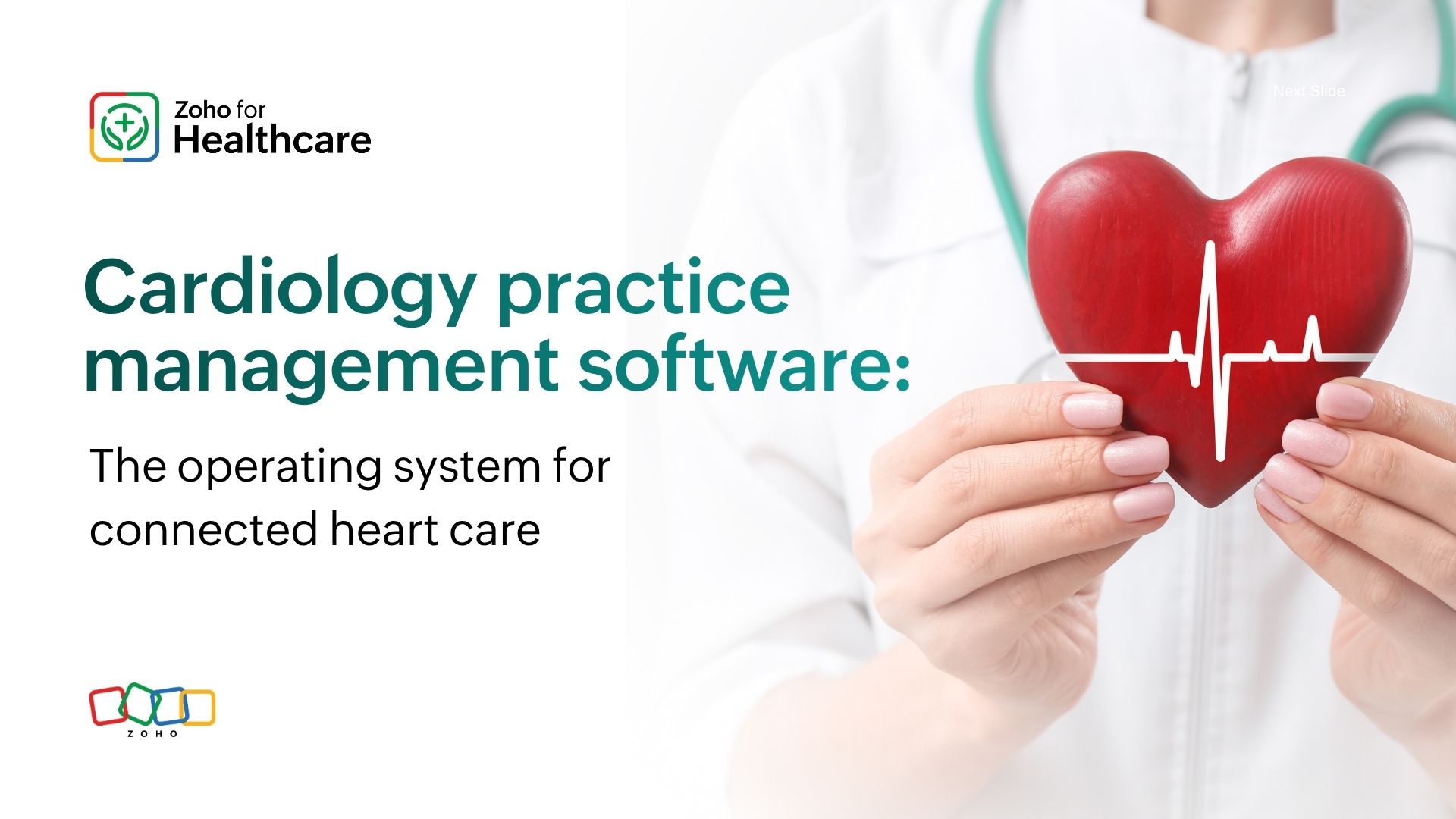
Cardiovascular disease remains one of the world’s most significant health challenges, accounting for roughly one-third of global deaths. Managing it, however, extends far beyond a single consultation.
Patients with cardiovascular conditions often require years of monitoring, diagnostic testing, medication adjustments, referrals, rehabilitation, and coordinated follow-up care.
Meanwhile, cardiology practices are managing rising patient volumes, growing volumes of clinical data, expanding diagnostic capabilities, and increasing administrative demands.
This changes what cardiologists need from technology.
Appointment scheduling and digital patient records remain essential, but they’re no longer enough. Cardiology practices need systems that connect clinical information, support long-term care, streamline specialty-specific workflows, and give care teams the right context at every stage of the patient journey.
The conversation has moved beyond digitizing clinic operations. It’s now about building a connected care model around cardiovascular health.
For cardiologists, practice owners, hospital leaders, and healthcare administrators, the question is no longer: Do we need practice management software?
Now the question is: Can our technology help us manage cardiovascular care—not just the administrative work around it?
What is cardiology clinic management software?
Cardiology clinic management software is a specialized platform that helps heart clinics manage clinical, administrative, and operational workflows from one system.
Depending on the platform, it may include:
- Appointment and resource scheduling.
- Patient records and cardiology EMR workflows.
- Diagnostic and procedure documentation.
- Follow-up and chronic care management.
- Patient communication.
- Billing and claims.
- Clinical and operational reporting.
But its real value lies in how well these capabilities work together. In cardiology, every consultation depends on what came before. A patient’s current symptoms may need to be compared with previous ECG findings, medication changes, imaging reports, laboratory results, and intervention history. When this information is fragmented, clinicians spend more time searching and less time making decisions.
Cardiology requires continuity, not isolated appointments
A typical cardiovascular care journey may include patient intake, clinical assessment, diagnostic testing, reporting, treatment planning, recurring reviews, and billing. Each stage creates new information and follow-up actions.
For example, a patient referred for chest pain may require:
- An initial consultation and risk assessment.
- An ECG, echocardiogram, or stress test.
- A diagnostic review.
- Medication or lifestyle recommendations.
- A specialist procedure or referral.
- Regular follow-ups over several months.
If these steps are managed across spreadsheets, paper records, disconnected diagnostic tools, and manual reminders, important context can be lost. Cardiology software should support the complete care pathway, not just the individual appointment.
Three capabilities that matter most in cardiology software
1. Structured chronic care management
Many cardiovascular conditions, including hypertension, heart failure, arrhythmias, and coronary artery disease, require continuous management. Yet follow-ups are often coordinated manually. This can result in:
- Missed reviews.
- Delayed medication assessments.
- Incomplete patient histories.
- Unresolved test results.
- Lost referrals.
- Increased administrative workload.
Practice management software can help standardize these workflows through:
- Diagnosis-based follow-up schedules.
- Medication review reminders.
- Heart failure and hypertension care plans.
- Risk-factor tracking.
- Post-discharge follow-ups.
- Preventive screening schedules.
- Cardiac rehabilitation coordination.
The goal isn’t to automate clinical judgment. It’s to ensure that routine care actions are visible, assigned, and completed consistently.
2. Monitoring workflows beyond the clinic
Increasingly, cardiac care extends outside the consultation room. Patients may use home blood pressure monitors, wearable devices, remote ECG tools, or implanted cardiac devices. The challenge isn’t simply collecting this information. It’s ensuring that the right person reviews it and that necessary action follows.
Heart clinic software should help teams:
- Schedule monitoring reviews.
- Record patient-reported readings.
- Document observations and alerts.
- Assign follow-up actions.
- Coordinate nurse outreach.
- Track unresolved cases.
- Maintain a complete patient timeline.
Without a structured workflow, remote monitoring can create more administrative burden. With the right system, it becomes part of a coordinated care process.
3. Reporting for clinical and business decisions
Cardiology practices need more than appointments and revenue reports. Clinical and operational reporting should help leaders understand how effectively care is being delivered.
Useful measures may include:
- Follow-up adherence.
- Missed investigations.
- Medication review completion.
- Post-discharge follow-up rates.
- Appointment utilization.
- Procedure volumes.
- Referral conversion.
- Waiting times.
- Physician workload.
- Diagnostic resource utilization.
These insights help practice owners and hospital leaders answer important questions:
- Where are patients dropping out of the care pathway?
- Which follow-ups are being delayed?
- Where are diagnostic bottlenecks developing?
- How effectively are clinicians and resources being used?
- Which services are experiencing the greatest demand?
The purpose of reporting isn’t to create more dashboards. It’s to turn operational data into decisions.
The role of a cardiology EMR
A cardiology EMR should provide a longitudinal view of the patient, not simply store documents. Clinicians should be able to quickly review:
- Previous diagnoses.
- Medication history.
- ECG and echocardiography findings.
- Imaging and laboratory reports.
- Procedure history.
- Risk factors and allergies.
- Referral notes.
- Clinical observations.
- Follow-up plans.
The faster clinicians can understand a patient’s history, the more time they can spend on assessment, treatment planning, and communication.
What to look for in cardiology practice management software
When evaluating a platform, healthcare leaders should prioritize:
- Specialty-specific cardiology workflows.
- Connected cardiology EMR capabilities.
- Chronic disease and follow-up management.
- Diagnostic and procedure documentation.
- Remote monitoring workflows.
- Appointment and resource scheduling.
- Clinical and operational reporting.
- Billing and revenue-cycle support.
- Secure patient communication.
- Role-based access and audit trails.
- Multi-location scalability.
- Integration with existing clinical systems.
- Flexible workflows that can adapt as the practice grows.
The best solution isn’t necessarily the one with the longest feature list. It’s the one that fits naturally into the way the cardiology practice delivers care.
Choosing cardiology software is a strategic decision
Practice management software affects more than administrative efficiency. It influences how quickly clinicians find information, how consistently patients receive follow-up care, how effectively teams coordinate responsibilities, and how easily the organization can scale.
Decision-makers should ask:
- Can this platform support long-term patient journeys?
- Can it reduce manual coordination?
- Can it connect clinical and operational information?
- Can it support growth across physicians and locations?
- Can it provide visibility into care gaps and bottlenecks?
- Can it adapt to our existing workflows?
For cardiology practices, software selection is ultimately a decision about how care will be delivered—not simply how appointments will be managed.
Building cardiology workflows around the way your practice operates
Cardiology practices don’t all follow the same care model. Workflows vary based on the conditions treated, diagnostic services offered, team structure, patient volume, and number of locations.
This is why flexibility matters when choosing a platform.
Zoho for Healthcare enables practices to configure workflows for appointment management, clinical documentation, patient communication, follow-ups, care-team coordination, and reporting. Cardiology teams can structure these processes around their existing model of care rather than adapting every workflow to a rigid, predefined system.
As the practice grows, the same platform can support more physicians, locations, patient pathways, and operational requirements—while keeping clinical and administrative information connected.
Explore how Zoho for Healthcare can support the workflows of a growing cardiology practice.
FAQ
What is cardiology practice management software?
Cardiology practice management software is a specialized platform that helps heart clinics manage scheduling, patient records, billing, diagnostics, follow-ups, reporting, and long-term cardiovascular care workflows.
How is heart clinic software different from general practice software?
Heart clinic software is designed for recurring and data-intensive cardiovascular care. It can support diagnostic workflows, longitudinal patient histories, chronic disease management, cardiac monitoring, and specialty-specific documentation.
What features should a cardiology EMR include?
A cardiology EMR should support structured clinical notes, medication history, diagnostic reports, imaging results, procedure records, risk-factor tracking, follow-up plans, and a longitudinal view of the patient.
Why is chronic care management important in cardiology?
Many cardiovascular conditions require continuous monitoring, medication review, lifestyle management, and recurring follow-ups. Structured chronic care workflows help practices coordinate these activities consistently.
Can cardiology software support remote monitoring?
Yes. This software can help practices document remote observations, schedule reviews, assign follow-up actions, coordinate outreach, and maintain a complete patient timeline. Direct device integrations depend on the platform.